Chemical Bull
1129
12-Jan-2026
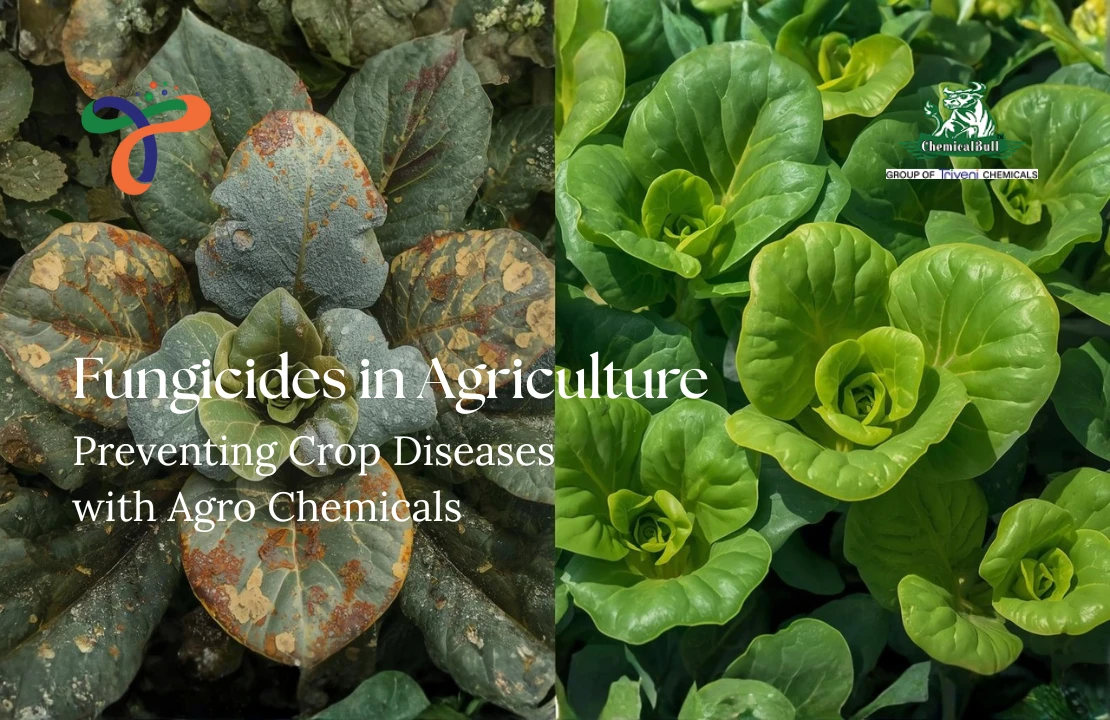
Fungal diseases remain one of the most persistent and economically damaging challenges in agriculture. Across diverse climatic zones and cropping systems, fungal pathogens silently reduce crop vigour, lower yields, and compromise produce quality. As agriculture shifts toward intensive production and climate variability increases disease pressure, fungicides in agriculture have become essential tools for reliable crop protection.
Agricultural fungicides are a core category of crop protection chemicals, supporting effective plant disease management and long-term crop yield protection. This cluster page provides a comprehensive understanding of fungicides, their types, applications, safety considerations, and how they integrate with modern agrochemical solutions.
Understanding Fungal Diseases in Crops
Fungal diseases in crops spread rapidly through air, soil, water, seeds, and infected plant material. Unlike nutrient deficiencies or pest damage, fungal infections often remain invisible until significant internal damage has occurred.
Common fungal diseases include:
- Powdery mildew
- Downy mildew
- Rust diseases
- Leaf blight and leaf spot
- Root and stem rot
- Smut and bunt diseases
These infections interfere with photosynthesis, nutrient transport, and plant metabolism, making agricultural disease control a critical priority in modern farming systems.
What Are Fungicides in Agriculture?
Fungicides are agrochemicals designed to prevent, control, or suppress fungal pathogens that attack crops. They function by disrupting key biological processes in fungi such as enzyme activity, cell membrane formation, and energy production.
In agriculture, fungicides are used to:
- Protect healthy crops from infection
- Control early-stage disease outbreaks
- Prevent disease spread across fields
They form a fundamental part of agrochemicals for farming, particularly in regions with high humidity or recurring disease cycles.
Why Are Fungicides Important for Crops?
Farmers often ask, why are fungicides important for crops? The answer lies in risk prevention and production stability.
Without fungicides:
- Disease outbreaks escalate rapidly
- Yield losses become unpredictable
- Crop quality deteriorates
- Farm profitability declines
The importance of fungicides in agriculture lies in their ability to stabilise yields, protect investment, and ensure consistent food production.
Role of Fungicides in Modern Agriculture
The role of fungicides in modern agriculture has expanded as farming practices evolve. High-yield crop varieties, dense planting, and extended growing seasons increase disease pressure, making fungicides essential components of modern farming chemicals.
Fungicides support:
- Commercial-scale agriculture
- Export-quality crop production
- Climate-resilient farming systems
- Food security at the regional and global levels
Types of Fungicides in Agriculture
Understanding the types of fungicides in agriculture is essential for effective disease control.
Systemic Fungicides
Systemic fungicides are absorbed by plant tissues and transported internally. They provide both preventive and curative action, protecting new growth and internal plant structures.
They are widely used where recurring disease pressure demands long-lasting protection.
Contact Fungicides
Contact fungicides remain on the plant surface and act as a protective barrier, preventing fungal spores from establishing infection.
They are particularly valuable in resistance management programs and preventive disease control strategies.
Broad-Spectrum Fungicides
Broad-spectrum fungicides control multiple fungal pathogens simultaneously, reducing the need for multiple applications and improving operational efficiency.
How Fungicides Protect Plants
Many growers ask, how do fungicides protect plants? Their effectiveness depends on the mode of action.
Fungicides protect crops by:
- Preventing spore germination
- Disrupting fungal cell membranes
- Inhibiting enzyme systems
- Stopping disease progression within plant tissues
This chemical control of plant pathogens ensures plant health during critical growth stages.
Fungicide Application in Crop Protection
Effective fungicide application in crop protection requires correct timing, dosage, and coverage.
Best practices include:
- Applying fungicides at early disease stages
- Ensuring uniform spray coverage
- Rotating active ingredients
- Integrating fungicides with other crop protection strategies
Responsible fungicide use in farming reduces resistance risk and improves long-term effectiveness.
Key Agrochemical Products Used in Crop Disease Management
Modern fungicides for plants and disease management systems rely on a wide range of agrochemical products that support direct fungal control, plant health, and resistance management.
Fungicidal & Disease-Control Compounds
Several chemical compounds play a role in fungicides used to control plant diseases:
- 2-Chlorobenzonitrile – applied in targeted disease-control formulations for specific fungal challenges.
- 2,6-Difluorobenzamide – supports selective fungal suppression in crop protection programs.
- 1,2,4-Triazole – a critical building block for many systemic fungicides used in agriculture.
These compounds contribute directly to crop disease control, and fungicides are used in commercial farming.
Integrated Pest & Disease Management Inputs
Fungicides in integrated pest management often work alongside pest monitoring and behavioural control solutions:
- Cuelure – supports pest monitoring strategies that reduce disease spread linked to insect vectors.
- Diatomaceous Earth – a natural mineral used in sustainable farming systems to support pest and disease management.
Botanical & Natural-Origin Crop Protection Inputs
Sustainable farming increasingly incorporates botanical solutions alongside conventional fungicides:
- Azadirachtin – derived from neem, widely used in eco-conscious crop protection programs.
- Pyrethrum – a natural extract integrated into IPM systems for broad crop protection.
These inputs align with fungicides for sustainable agriculture.
Nutrient-Based Disease Resistance Enhancers
Plant nutrition plays a vital role in preventing crop diseases by strengthening natural defence mechanisms:
- Potassium Sulphate
- Potassium Nitrate
- Potassium Silicate
- Magnesium Sulphate Anhydrous
- Zinc Sulphate Heptahydrate
Balanced nutrition improves cell wall strength, stress tolerance, and resistance to fungal diseases in crops.
-
Growth Regulation & Crop Development Support
Healthy crop development improves disease resilience: As a trusted 1-Naphthaleneacetic Acid Supplier, we provide NAA that supports root development and plant establishment, enhancing crop response to fungicide programs.
Specialised & Regulated Agrochemicals
Some agrochemicals are applied under strict regulatory guidance:
Their controlled use highlights the importance of compliance in fungicide use in farming.
Fungicides for Crop Protection Systems
Fungicides for crop protection are most effective when integrated into complete disease management systems that include resistant varieties, monitoring, and cultural practices.
Fungicides in Integrated Pest Management (IPM)
Fungicides in integrated pest management are applied strategically based on disease thresholds, reducing unnecessary chemical use while maintaining effective control.
Fungicides for Sustainable Agriculture
The use of fungicides for sustainable agriculture emphasises efficiency, resistance management, and environmental responsibility rather than the elimination of chemical inputs.
Are Fungicides Safe for Crops?
A common question remains: are fungicides safe for crops?
When applied according to guidelines:
- Crop growth remains unaffected
- Yield and quality are preserved
- Residue levels stay within regulated limits
Preventing Crop Diseases Through Agro Chemicals
Preventing crop diseases is more effective than reacting to outbreaks. Fungicides remain a cornerstone of preventive disease management within agrochemicals for farming.
Relationship with Other Crop Protection Chemicals
Fungicides function alongside other crop protection chemicals:
- Crop Protection Chemicals: Types & Uses
- Pesticides and Insecticides: Essential Agro Chemicals for Pest Control
- Role of Herbicide Chemicals in Weed Management and Crop Protection
For a complete foundation, visit the main page:
👉 https://www.chemicalbull.com/blogs/agro-chemicals-complete-guide-to-agricultural-chemical-solutions-for-modern-farming
Choosing a Trusted Supplier and Traders
Reliable disease control depends on sourcing quality products. Working with trusted suppliers and traders of chemicals ensures consistency, compliance, and dependable supply chains.
Chemical Bull supports agricultural businesses with reliable sourcing solutions for agricultural fungicides and agrochemical products.
Conclusion
Fungicides remain indispensable to modern agriculture. From controlling fungal diseases in crops to supporting crop yield protection, fungicides form a critical layer of agricultural risk management.
When integrated responsibly into crop protection systems, fungicides help prevent disease, protect yields, and sustain long-term agricultural productivity.

Comment Section