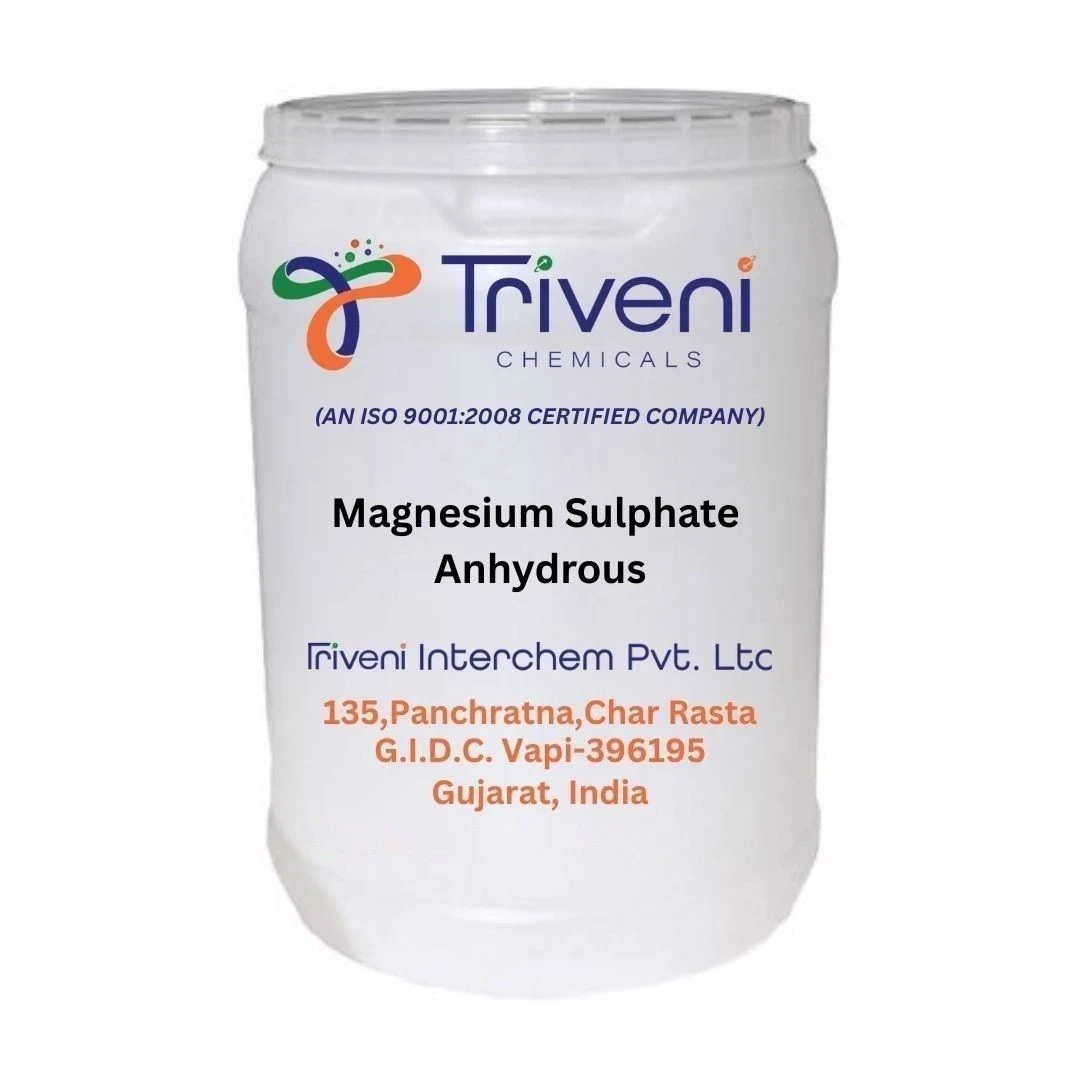
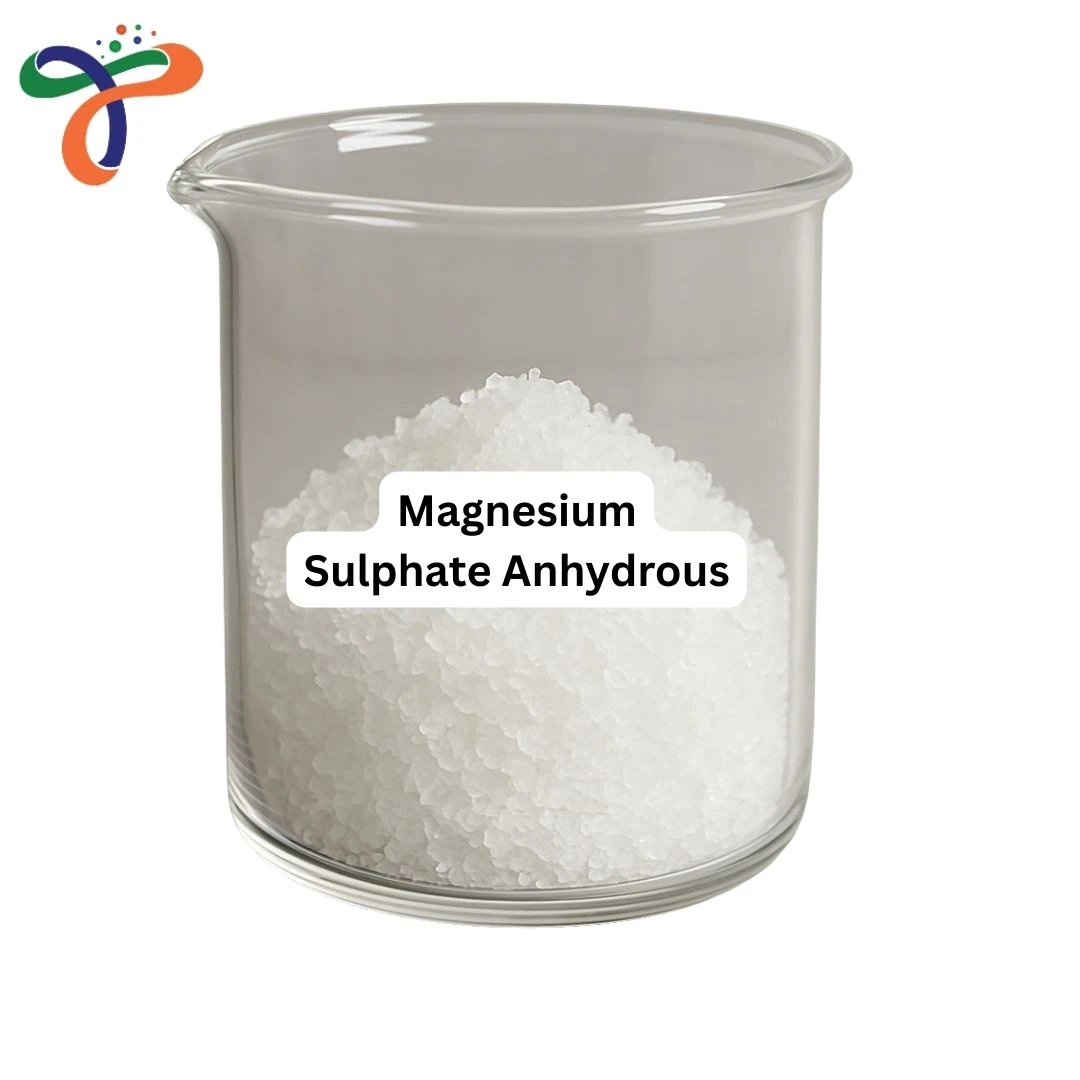
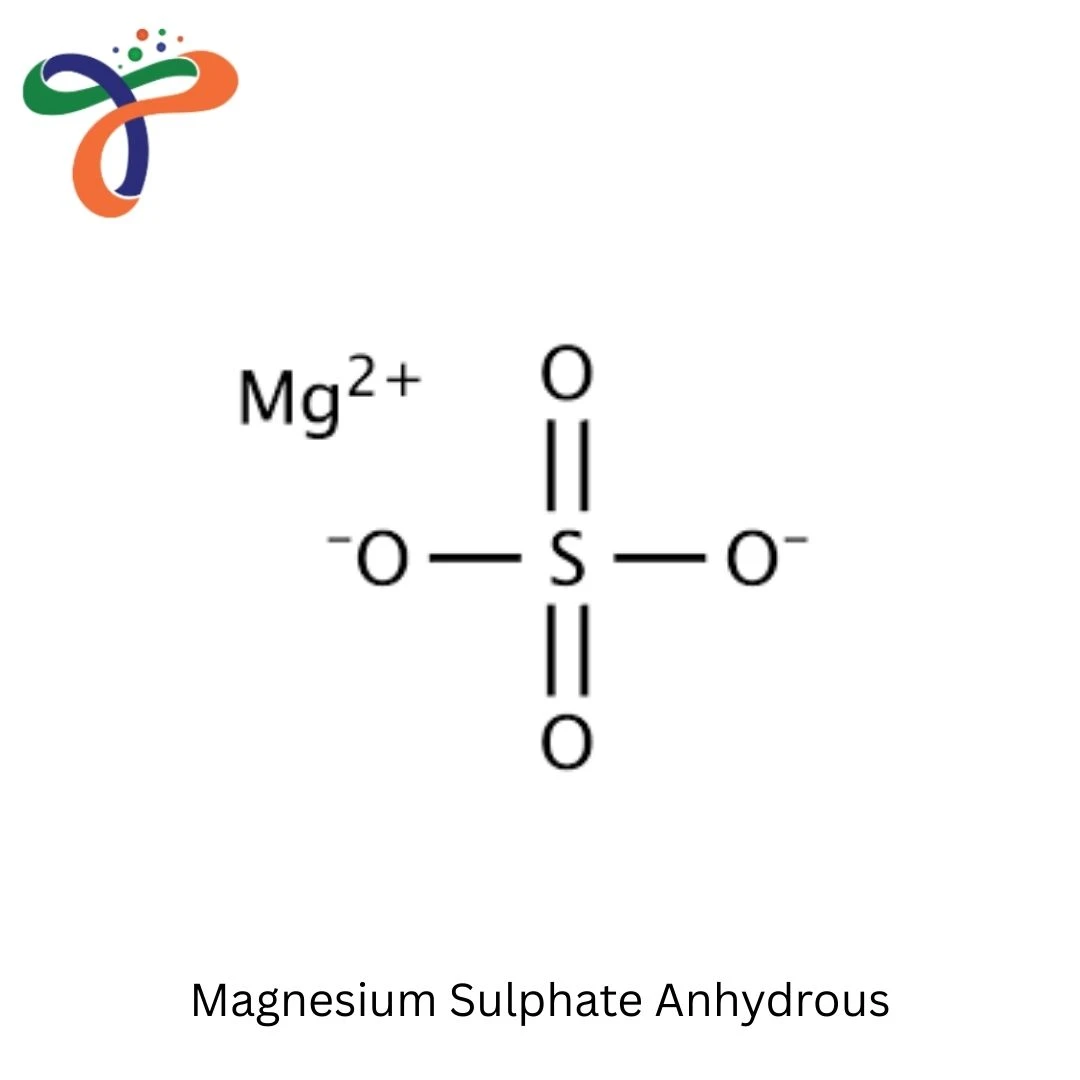
Magnesium Sulphate Anhydrous | 7487-88-9
Cas No :
7487-88-9
Molecular Weight :
120.37 G/mol
Molecular Formula :
MGSO4
Boiling Point :
1124 °c
Flash Point :
0 °c
Solubility :
Soluble In Water
Description :
Overview of Magnesium Sulphate Anhydrous
Magnesium Sulfate Anhydrous (MgSO4) is widely used as an agrochemical fertilizer that provides essential nutrients like magnesium and sulfur, which are crucial for plant growth and crop productivity. It plays a key role in improving chlorophyll production, nutrient absorption, and soil health.
Magnesium Sulfate Anhydrous is a source of magnesium for plant chlorophyll. It is used as a dye mordant for textiles, as well to dry the fabric within diverse sectors. As it's anhydrous it can deliver magnesium with no additional water.
Applications of Magnesium Sulphate Anhydrous
1. Soil Nutrient Enhancement
- Magnesium Sulphate Anhydrous corrects magnesium deficiencies in crops, improving photosynthesis and crop quality.
- Used in fertigation and foliar sprays for rapid magnesium uptake.
- Enhances overall soil fertility
- Complements Rock Phosphate phosphorus nutrition programs.
2. Fertilizer & Crop Nutrition
- Used as a magnesium-based fertilizer
- Helps in balanced nutrient supply
- Supports healthy plant growth and yield improvement
3. Crop-Specific Applications
- Used in fruits, vegetables, cereals, and plantation crops
- Improves crop quality and productivity
- Prevents leaf yellowing caused by magnesium deficiency
4. Foliar Spray & Soil Treatment
- Applied through foliar spray for quick nutrient absorption
- Used in soil treatment for long-term nutrient balance
- Enhances plant resistance and growth performance
Safety & Handling Guidelines
Follow the safety guidelines for working with Magnesium Sulfate anhydrous, similar to other Agrochemical substances.
- It should be stored in a dry, cool location away from moisture in order to avoid hydration and caking.
- Put on gloves, wear goggles as well as dust shields when handling or transferring.
- Be sure to keep Magnesium Sulphate Anhydrous clear of powerful acids and other materials that are incompatible with it.
- Beware of dust inhalation, and clean thoroughly after contact with skin.
- Review your Material Safety Data Sheet (MSDS) for more detailed safety as well as first aid guidelines.
Magnesium Sulphate Anhydrous MSDS
The MSDS for Magnesium Sulfate Anhydrous gives detailed information about its magnesium sulfate anhydrous specification, purity levels, safe handling, solubility characteristics, and industrial applications. This information is important for quality control, procurement, and regulatory compliance.
ChemicalBull includes the MSDS, magnesium sulfate anhydrous specification sheets, and COA for every order from magnesium sulfate anhydrous manufacturers.
Where to buy Magnesium Sulphate Anhydrous?
Magnesium Sulphate Anhydrous Manufacturer
Magnesium Sulfate Anhydrous is manufactured by leading magnesium sulfate anhydrous manufacturers for the Agriculture Industry requiring high-purity magnesium compounds.
Magnesium Sulphate Anhydrous Supplier & Distributor
ChemicalBull is a trusted magnesium sulfate anhydrous supplier, offering high-quality material for agricultural and fertilizer applications. You can find it at chemical bull meeting strict magnesium sulfate anhydrous specification standards.
Bulk Supply & Packaging
- Available in bulk quantities for agrochemical buyers
- Suitable for fertilizer manufacturers and distributors
- Supplied with COA, TDS & MSDS
- Reliable for domestic and export supply
Frequently Asked Questions (FAQs)
-
What is the magnesium sulphate anhydrous specification for agriculture?
Agriculture grade requires 98%+ MgSO₄ purity, <0.5% chlorides, water-soluble magnesium >19.5%, and particle size suitable for fertigation systems. -
Is Magnesium Sulphate Anhydrous safe for organic farming?
Yes, high-purity Magnesium Sulphate Anhydrous is approved for organic farming as a magnesium soil amendment when meeting OMRI or equivalent standards. -
Can Magnesium Sulphate Anhydrous be used with other fertilizers?
Yes, compatible with most fertilizers except calcium-based products; complements Temephos and Tributyltin Oxide programs.
ChemicalBull supplies Magnesium Sulphate Anhydrous across India, serving customers in Andhra Pradesh, Arunachal Pradesh, Assam, Bihar, Chhattisgarh, Goa, Gujarat, Haryana, Himachal Pradesh, Jharkhand, Karnataka, Kerala, Madhya Pradesh, Maharashtra, Manipur, Meghalaya, Mizoram, Nagaland, Odisha, Punjab, Rajasthan, Sikkim, Tamil Nadu, Telangana, Tripura, Uttar Pradesh, Uttarakhand, and West Bengal, as well as the Union Territories of Andaman & Nicobar Islands, Chandigarh, Dadra & Nagar Haveli and Daman & Diu, Delhi, Jammu & Kashmir, Ladakh, Lakshadweep, and Puducherry. We serve pharmaceutical, chemical, research, academic, laboratory, manufacturing, and industrial customers with reliable nationwide delivery.