Chemical Bull
1417
10-Jan-2026
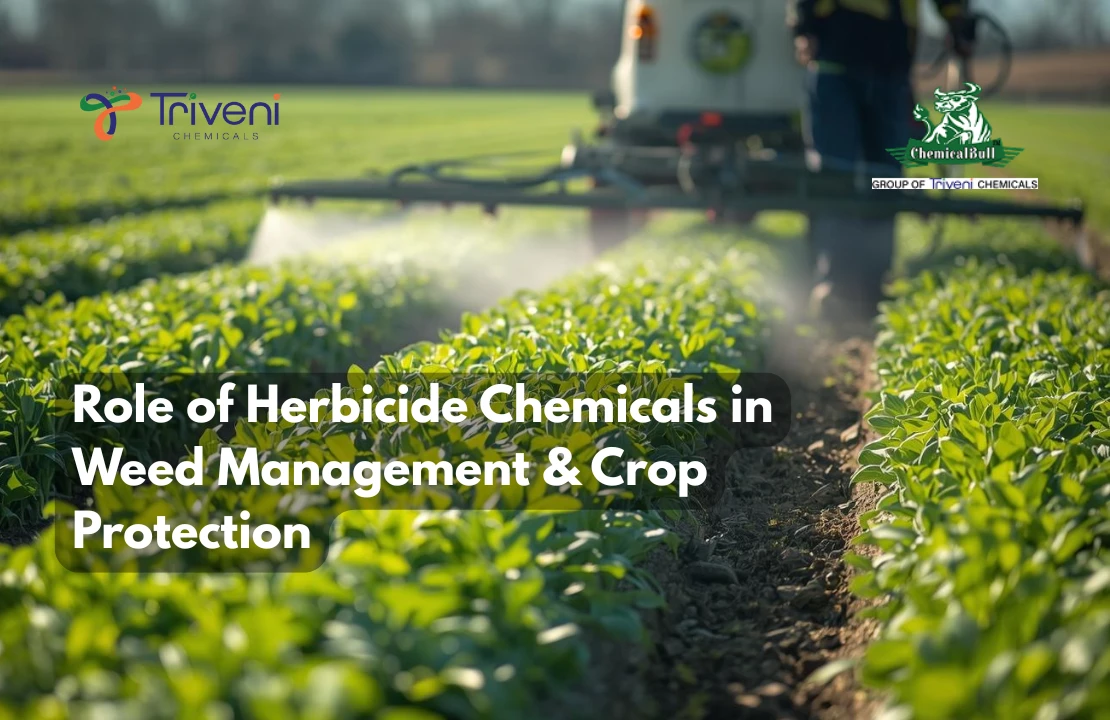
When farmers prepare their fields, their main focus is on healthy crop growth. However, weeds often grow faster than crops and compete for water, nutrients, sunlight, and space. If weeds are not controlled at the right time, they can reduce crop yield and quality significantly.
In modern farming, herbicide chemicals play a vital role in managing weeds efficiently and consistently. They help farmers protect crops, reduce manual labour, and maintain productivity across large agricultural areas.
As an Agrochemicals supplier, Chemicalbull Pvt. Ltd. supports weed management programs by supplying reliable herbicide raw materials and crop protection chemicals used by formulators, agri-brands, and agricultural chemical distributors within the broader agrochemicals segment.
Understanding Herbicide Chemicals
Herbicides are chemicals that are designed to eliminate unwanted plants that can grow with crops. These unwanted plants, commonly known as weeds, compete with crops for water, nutrients, sunlight, and space. If weeds are not managed at the right time, they can significantly reduce crop yield and quality.
From the perspective of the chemical industry Herbicides are developed to impact certain plant functions like growth and photosynthesis or the development of roots. This specific action enables farmers to manage weeds and safeguarding crops when the right application technique and product is used.
In modern agriculture, herbicides are a core component of crop protection programs and are commonly used alongside pesticides and insect control solutions in integrated field management practices. These integrated approaches are also covered in our comprehensive blog on a wide range of farming solutions, Agro Chemicals: Complete Guide to Agricultural Chemical Solutions for Modern Farming.
Types of Herbicide Chemicals
Herbicide chemicals are classified by how they work, when they are applied, and the types of plants they control. This classification helps farmers and formulators choose the right solution for different crops and weed problems.
Pre-Emergence Herbicides
Pre-emergence herbicides are applied before weeds start growing. They prevent weed seeds from germinating and are commonly used during land preparation or immediately after sowing. These products are widely used in preventive weed control programs, including pre-emergent herbicides.
Post-Emergence Herbicides
Post-emergence herbicides are applied after weeds have already emerged. These products are used when weed growth is visible and needs to be controlled quickly to protect crops during critical growth stages.
Selective Herbicides
Selective herbicides are designed to control specific weed species without harming the crop. These are widely used in cereals, pulses, oilseeds, and vegetable crops where crop safety is essential.
Non-Selective Herbicides
Non-selective herbicides affect all plant growth and are mainly used for land clearing, field preparation, and weed control in non-crop or fallow areas.
Difference Between Selective and Non-Selective Herbicides
|
Aspect |
Selective Herbicides |
Non-Selective Herbicides |
|
Purpose |
Control specific weed species |
Control all plant growth |
|
Effect on Crops |
Do not harm the crop when used correctly |
Can damage or kill crops |
|
Usage Area |
Applied directly in crop fields |
Used in land preparation and non-crop areas |
|
Weed Control |
Targets broadleaf or grassy weeds selectively |
Eliminates all weeds and vegetation |
|
Application Timing |
Used during crop growth |
Used before sowing or in fallow land |
|
Common Use Cases |
Cereals, pulses, oilseeds, vegetables |
Field clearing, pathways, industrial areas |
|
Risk Level |
Lower risk to crops |
Requires careful handling |
Why Weed Control Directly Impacts Crop Protection
Weeds reduce crop productivity by competing for essential resources such as nutrients, moisture, and sunlight. In many cases, weeds grow faster than crops and dominate the field if not controlled early.
Impact on Crop Growth and Yield
Uncontrolled weeds weaken crop plants, slow their growth, and reduce overall yield. Effective weed control allows crops to establish strong roots, grow uniformly, and make better use of available nutrients.
Link Between Weeds and Crop Diseases
Weeds can also host insects and plant diseases, increasing the risk of crop infection. Managing weeds helps reduce this indirect pressure on crops and supports overall field hygiene.
Common Herbicide Chemicals Used in Agriculture
Modern weed management programs rely on a range of well-established herbicide molecules selected according to crop type and weed pressure.
-
2,4-Dichlorophenoxyacetic Acid is widely used for controlling broadleaf weeds
-
Metribuzin is commonly applied in soybean and potato crops
-
Paraquat Dichloride is used for fast, non-selective weed control
-
Ammonium Sulfamate is effective against perennial weeds
-
2,6-Dichlorobenzonitrile is used for both grassy and broadleaf weed control
These raw materials are used by formulators to develop crop-specific weed control products suited to different agricultural regions and farming practices.
Benefits of Herbicides in Modern Farming
Herbicides offer practical benefits that support today’s agricultural needs, particularly in large-scale farming systems. They help manage weeds efficiently where manual removal is not feasible and allow farmers to focus on timely crop operations.
Key advantages include improved crop establishment, reduced labour dependency, better utilisation of soil nutrients, and more predictable farming outcomes. When applied responsibly, herbicides contribute to stable yields and consistent crop performance.
Role of Chemical Manufacturers in Weed Management
Behind every effective herbicide product is strong chemical expertise. Chemical manufacturers play a critical role by supplying consistent raw materials, supporting formulation development, and ensuring product reliability at scale.
As an agricultural chemicals distributor, Chemicalbull(Group of Triveni Chemicals) works closely with formulators, agri-input brands, and distributors to support weed management programs across crops and regions, in line with real-world agricultural practices.
Frequently Asked Questions (FAQs)
-
What are herbicide chemicals used for?
Herbicide chemicals are used to control weeds that compete with crops for nutrients, water, and sunlight. -
Do herbicides help crops grow better?
They help indirectly by removing weed competition, allowing crops to grow more efficiently. -
How are herbicide chemicals selected for crops?
Selection depends on crop type, weed species, soil conditions, and growth stage. -
Can herbicides be used with other crop protection chemicals?
Yes, they are often used as part of integrated crop protection programs. -
Why is formulation quality important in herbicides?
Good formulation ensures consistent performance, safety, and effective weed control.
Herbicide Chemicals: A Key Pillar of Modern Weed Management
Weed control is essential for protecting crop yield and ensuring efficient farming operations. Herbicide chemicals provide farmers with reliable tools to manage weeds at scale and maintain consistent crop performance.
For B2B buyers and agri-brands, working with an experienced chemical manufacturing partner helps ensure product reliability, formulation consistency, and long-term success in modern agriculture. Explore Crop Protection Chemicals: Types, Uses & Benefits for Agricultural Manufacturers blog — Detailed insights on various crop protection chemicals beyond herbicides.


Comment Section