Chemical Bull
5024
09-Jan-2026
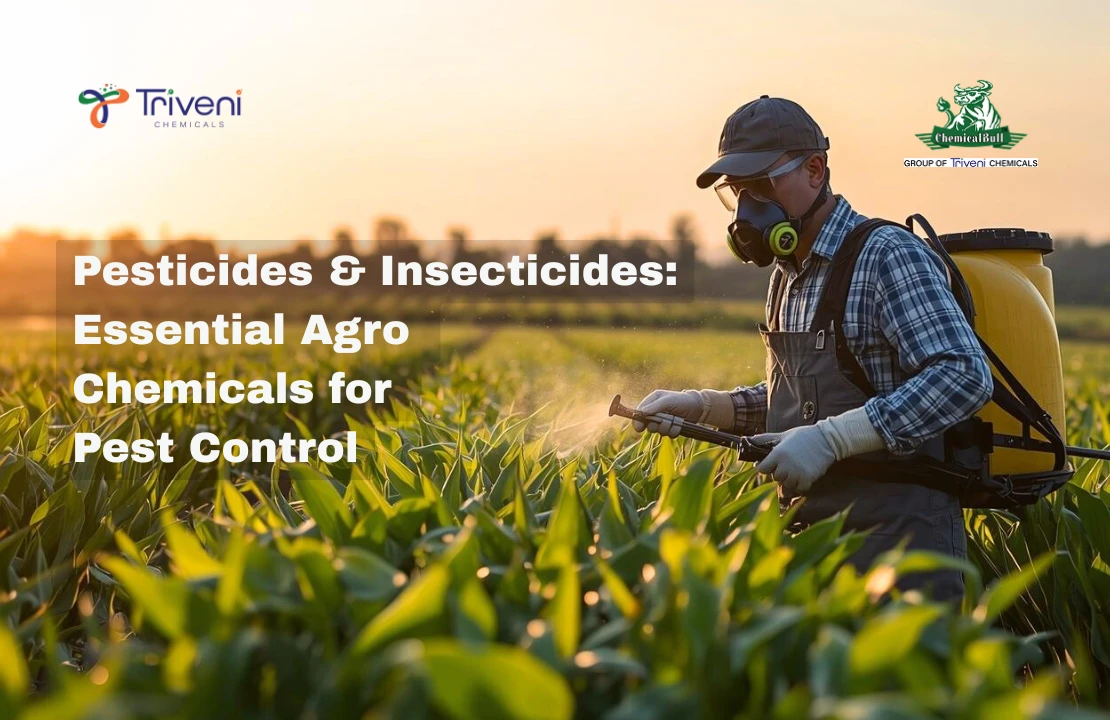
Imagine a healthy crop field ready for harvest—only to be damaged by insects within a few days. This is one of the biggest challenges faced by modern agriculture. With rising food demand and limited farmland, protecting crops has become more critical than ever. This is where essential agrochemicals for pest control play a vital role.
Pesticides and insecticides help farmers control insects, weeds, and crop diseases that reduce yield and quality. For agricultural manufacturers and agri-input brands, these chemicals are not just products—they are science-driven solutions that support productivity, consistency, and food security.
As a trusted agrochemical manufacturer and supplier, Chemicalbull Pvt. Ltd. supports the agriculture industry with high-quality pesticides and insecticides, designed for effective, scalable pest control.
Explore our complete range of Agrochemical Products.
What Are Pesticides and Insecticides?
Pesticides are chemical substances used to prevent, control, or destroy pests that damage crops. These pests include insects, weeds, fungi, rodents, and microorganisms.
Insecticides are a specific category of pesticides that target insects only. They are widely used in agriculture to control insects at different stages of crop growth.
These solutions are widely used across various agricultural applications, such as herbicides, fungicides, etc., to protect crops and improve productivity.
Why Pest Control Is Critical in Modern Agriculture
Pests directly impact farming by:
-
Reducing crop yield
-
Lowering the quality of produce
-
Increasing cultivation costs
-
Spreading plant diseases
To overcome these challenges, farmers rely on effective crop protection chemicals such as:
- Copper Oxychloride for fungal and bacterial disease control
- Herbicides like 2,4-Dichlorophenoxyacetic Acid for weed management
- Selective chemicals such as Methyl 2-Chloropropionate
Read more on how crop protection solutions are used in large-scale farming in our blog Agro Chemicals: Complete Guide to Agricultural Chemical Solutions for Modern Farming.
Pesticide vs Insecticide: Understanding the Real Difference
|
Aspect |
Pesticide |
Insecticide |
|
Definition |
Chemicals used to control all types of pests |
Chemicals used to control insects only |
|
Scope |
Broad category |
Sub-category of pesticides |
|
Targets |
Insects, weeds, fungi, rodents |
Insects (larvae, adults, eggs) |
|
Examples |
Herbicides, fungicides, insecticides |
Cypermethrin, Emamectin Benzoate |
|
Usage |
Crop protection and storage |
Crop protection from insect damage |
All insecticides are pesticides, but not all pesticides are insecticides.
Types of Pesticides Used in Agriculture
There are several types of pesticides, each serving a specific purpose:
-
Insecticides – control insect pests
-
Herbicides – control weeds
-
Fungicides – prevent fungal diseases
-
Rodenticides – control rodents
These categories together form the foundation of crop protection chemicals used across agricultural systems.
Browse our full Crop Protection Chemicals Category for detailed product solutions.
Types of Insecticides and Their Role in Pest Control
The four types of insecticides commonly used in agriculture include:
-
Contact insecticides
-
Systemic insecticides
-
Stomach insecticides
-
Fumigants
Each type is selected based on pest behaviour and crop conditions.
As a leading chemical distributor, we provide solutions for large-scale agricultural use.
Organic vs Synthetic Pesticides: Choosing the Right Solution
|
Factor |
Organic Pesticides |
Synthetic (Inorganic) Pesticides |
|
Source |
Derived from natural materials |
Chemically manufactured |
|
Effectiveness |
Moderate, short-term control |
High and long-lasting control |
|
Stability |
Lower shelf life |
High stability and consistency |
|
Usage Scale |
Small or organic farms |
Commercial and large-scale farming |
|
Cost Efficiency |
Higher cost per application |
More cost-effective |
|
Regulation |
Suitable for organic farming |
Used under regulated guidelines |
|
Examples |
Neem-based formulations |
Inorganic insecticides |
Synthetic solutions such as industrial insecticides and fungicides offer consistent performance in commercial agriculture, especially when integrated with soil enhancers like Humic Acid.
Benefits of Pesticides and Insecticides in Agriculture
The benefits of pesticides in agriculture include:
-
Protection against crop loss
-
Improved crop yield and quality
-
Reduced labour and time
-
Consistent pest control results
While discussions often include the positive and negative effects of pesticides, proper formulation, dosage, and application significantly reduce risks.
Common Agrochemicals Used in Pest Control
Modern agriculture uses a combination of insecticides and supporting chemicals for the best results. Commonly used products include:
- Copper Oxychloride → for disease control
- 2,4-Dichlorophenoxyacetic Acid → for weed management
- Methyl 2-Chloropropionate → selective herbicide use
- Humic Acid → improves plant recovery and soil health
- Ammonium Lignosulfonate → enhances formulation stability
These products help create balanced and effective integrated pest management systems.
Industrial Applications of Pesticides and Insecticides
Pesticides and insecticides are widely used in:
-
Field crops and plantations
-
Vegetable and fruit farming
-
Grain storage facilities
-
Commercial agriculture operations
Their usage varies based on the cycle of crops and pest activity, as well as the climatic conditions. Learn how innovation is shaping this sector in
Future of Agrochemicals: Innovations and Sustainable Practices.
Role of Chemical Manufacturers in Crop Protection
As a leading chemical supplier, Chemicalbull Pvt. Ltd. ensures:
- High-quality raw materials
- Reliable bulk supply
- Consistent formulations
- Regulatory compliance
This expertise supports manufacturers and agri-brands in developing effective crop protection products.
Frequently Asked Questions (FAQs)
-
Which pesticide is used for pest control?
Different pesticides are used depending on pest type, crop, and conditions, including insecticides, herbicides, and fungicides. -
Are insecticides and pesticides the same?
No. Insecticides target insects only, while pesticides include chemicals for weeds, fungi, and rodents. -
What chemical protects crops from pests?
Crop protection chemicals, such as insecticides and fungicides, protect crops from pests. -
Is insecticide a fertiliser?
No. Insecticides control insects, while fertilisers provide nutrients. -
What are the positive and negative effects of pesticides?
They improve yield and quality, but misuse may affect the soil and the environment.
Pesticides & Insecticides: The Backbone of Modern Crop Protection
Pesticides and insecticides remain essential agrochemicals for pest control, supporting food production and agricultural sustainability. From protecting crops against insects to ensuring consistent yields, these chemical solutions are vital for modern farming.
For B2B buyers and manufacturers, partnering with a reliable chemical manufacturing company ensures product quality, performance, and long-term success in the agriculture industry. Check out our categories and applications of products to learn more.
Comment Section