Chemical Bull
2287
11-Nov-2025
Introduction: The Power of a Fresh Lemon Scent in Chemistry
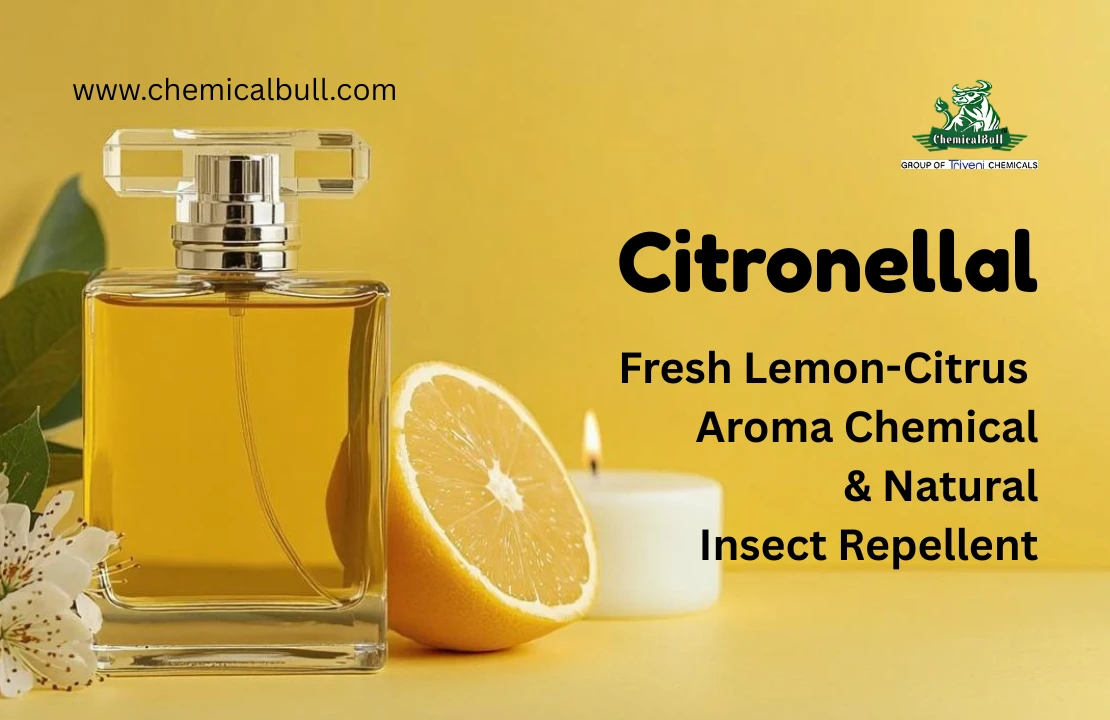
Citronellal, the hidden hero behind many perfumes, candles, and mosquito repellents you use every day.
Famous for its fresh lemon-citrus aroma and natural insect-repelling ability, this compound connects nature’s scent with modern chemistry.
At Chemicalbull Pvt. Ltd., we manufacture and supply high-purity Citronellal for the fragrance, personal care, and home-care industries.
This blog explores everything — from its chemical nature and origin to uses, formulation benefits, fragrance notes, and safety tips.
What is Citronellal? The Lemon Note That Leads Every Fresh Fragrance
Citronellal is a monoterpenoid aldehyde with the chemical formula C10H18O.
It has a distinctive lemony and slightly green aroma, which makes it one of the most valuable aroma chemicals in perfumery and insect repellents.
Its structure includes an aldehyde group (-CHO) that allows Citronellal to blend easily with other compounds like citral, citronellol, geraniol, and hydroxycitronellal, forming balanced citrus and floral accords.
Citronellal belongs to the family of aldehydes known for creating clean, bright, and uplifting top notes in perfumes and candles. IUPAC Name: 3,7-dimethyloct-6-en-1-al
Citronellal Sources in Essential Oils and Plants
Citronellal naturally occurs in plants of the Cymbopogon genus, which includes lemongrass, citronella, and lemon eucalyptus.
These essential oils contain Citronellal as their main aromatic component, giving them that familiar lemon-fresh character.
To meet industrial demand, Citronellal is also produced synthetically from citronellol or isopulegol, ensuring consistency and purity for large-scale applications.
So, whether natural or synthetic, Citronellal captures the same vibrant, zesty lemon fragrance that industries love.
What Does Citronellal Smell Like?
The smell of Citronellal is instantly recognizable — fresh, lemony, green, and slightly floral.
It’s the aroma of cleanliness and freshness, often described as lemon peel mixed with leafy undertones.
Perfumers use Citronellal as a key top-note ingredient in:
- Citrus perfumes
- Floral-green compositions
- Soaps and detergents
- Eau de Parfum and Eau de Toilette
Citronellal itself is not a perfume type, but it acts as a building block in both luxury and everyday fragrances.
It gives perfumes their fresh opening note that makes users feel instantly refreshed.
Citronellal vs Citronella Oil – What’s the Difference?
Many people assume Citronellal and Citronella Oil are the same, but they are quite different in composition, aroma, and industrial use.
Here’s a clear comparison for better understanding:
|
Parameter |
Citronellal |
Citronella Oil |
|
Composition |
Pure single monoterpenoid aldehyde (C10H18O) |
Mixture of compounds including citronellal, citronellol, and geraniol |
|
Odor Profile |
Sharp, clean, lemony, and green aroma |
Grassy, sweet, and earthy lemon scent |
|
Source |
Found in lemongrass, citronella, and eucalyptus oils or made synthetically |
Extracted directly from citronella grass (Cymbopogon nardus or winterianus) |
|
Industrial Use |
Used in perfumes, candles, repellents, and cosmetics for consistency and purity |
Common in essential oils, sprays, and natural blends |
|
Purity & Stability |
High purity and chemically stable under processing |
Natural variation depending on plant and harvest conditions |
|
Ideal For |
B2B fragrance manufacturing, repellents, and home-care formulations |
Aromatherapy, natural oil diffusers, and traditional remedies |
5 Surprising Ways Citronellal Is Used Today
Citronellal is one of the most adaptable aroma chemicals. Let’s explore where it’s used the most.
1. Citronellal in Perfumery and Fragrance Manufacturing
- Used as a top-note fragrance compound in citrus and floral blends.
- Common in Eau de Parfum, deodorants, soaps, and detergents.
- Blends beautifully with citronellol, geraniol, and isopulegol.
- Adds a natural lemon tone and improves freshness in formulations.
2. Citronellal in Home Care and Candles
- Gives lemon-scented candles a clean, natural aroma.
- Acts as a dual-purpose agent — fragrance + mosquito repellent.
- Ideal for diffusers, room sprays, and air fresheners.
- Helps remove bad odors while keeping rooms naturally scented.
- Citronellal is one of the most used aroma chemicals in lemon-scented candles.
- It adds a pleasant fragrance while also acting as a natural mosquito repellent.
- Candles made with Citronellal are loved for their clean burn and long-lasting aroma — perfect for both home and outdoor use.
3. Citronellal in Cosmetics and Personal Care
- Used in creams, shampoos, and skincare products.
- Adds a pleasant lemon aroma and mild antibacterial property.
- Enhances the freshness profile of hair and body care lines.
4. How to Use Citronellal as a Natural Insect Repellent
If you are a formulator or manufacturer, here’s how to use Citronellal effectively:
- Dilution: Mix Citronellal with a carrier such as coconut oil or isopropyl alcohol.
- Concentration: Use 0.5–1% in skin-safe products and 3–5% in candles or diffusers.
- Blending: Combine with citral or citronellol to enhance mosquito protection.
- Testing: Always perform a patch test before skin use.
Best ways to apply Citronellal for bug protection: in candles, sprays, or body roll-ons.
5. Antimicrobial Agent: The Secret to Natural Cleaning
Beyond its scent, Citronellal has antifungal and antibacterial qualities.
It’s used in:
- Eco-friendly cleaning sprays.
- Natural surface sanitizers.
- Home remedies for fungal prevention.
This makes it a valuable ingredient in green formulations for sustainable home-care products.
More Than a Scent: The Wellness & Aromatherapy Benefits of Citronellal [Complete Guide]
The Relaxing Power of Citronellal’s Lemon Aroma
In aromatherapy, Citronellal is valued for its uplifting and stress-relieving scent.
It helps in:
- Calming the mind and body.
- Improving focus and alertness.
- Promoting relaxation and air freshness.
Blending Citronellal for Aromatherapy Use
Blend Citronellal with oils like lavender, geranium, or eucalyptus for soothing diffuser blends to provide both mood-lifting and purifying benefits, making these blends suitable for spas, offices, and wellness spaces.
Citronellal Benefits for Skin and Hair
Citronellal offers mild antifungal and antibacterial properties, making it useful in personal care products.
Here’s how it helps:
- Keeps skin clean and refreshed.
- Reduces irritation from mosquito bites.
- Helps control dandruff when used in hair care products.
- Provides a natural lemon scent to cosmetic formulations.
Is Citronellal Safe for Skin?
- Yes, Citronellal is safe when used in proper dilution.
- It should never be applied directly in pure form as it can irritate sensitive skin.
- Industrial users should follow Citronellal MSDS guidelines for safe handling, storage, and blending.
- At Chemicalbull Pvt. Ltd., every batch of Citronellal is quality tested for purity and safety compliance.
Natural vs Synthetic Citronellal – Which Is Better for Industry?
Natural Citronellal
- Extracted from lemongrass and citronella oils.
- Renewable and eco-friendly.
- Softer aroma but higher cost.
Synthetic Citronellal
- Produced chemically from isopulegol or citronellol.
- Consistent quality, affordable, and stable supply.
- Preferred for bulk industrial use.
At Chemicalbull Pvt. Ltd., both natural and synthetic Citronellal are available for B2B clients, ensuring quality and reliability in every order.
Why Choose Chemicalbull Pvt. Ltd. for Citronellal Supply
As a reputed chemical manufacturing and trading company, Chemicalbull Pvt. Ltd. provides reliable bulk Citronellal supply for fragrance, flavor, and industrial needs.
Why businesses prefer us:
- Consistent, high-quality production.
- The availability of bulk quantities and the speedy delivery.
- Expert technical support for formulators.
- Product range covering citronellol, hydroxycitronellal, citral, isopulegol, and geraniol.
Explore more products at:
👉 Chemicalbull Aroma Chemicals
Frequently Asked Questions (FAQ)
-
What is Citronellal used for?
Citronellal is used in perfumes, candles, mosquito repellents, and skincare products.
It provides a natural lemon scent and acts as an effective insect repellent in an eco-friendly formulation. -
Does Lemongrass Have Citronellal?
Yes. Lemongrass oil naturally contains Citronellal — that’s what gives it its bright, lemony aroma.
This makes lemongrass one of the most common natural sources for Citronellal extraction in the aroma industry. -
What perfume scent do mosquitoes hate?
Mosquitoes dislike fresh citrus, lemon-eucalyptus, lavender, rosemary and herbaceous scents. For example, fragrances with Citronellal / Citronella oil, lavender oil, or lemon-eucalyptus oil are used.
Explore more blogs :
Citral In Perfumery And Food Flavoring: Lemon Aroma Ingredient For Industry
Geraniol: The Secret Behind The Rose Magic In Luxury Perfumes
Conclusion – Nature’s Freshness, Industry’s Innovation
Citronellal perfectly captures the zesty freshness of lemon with the functional strength of natural insect protection.
From perfumery to repellents, it continues to bridge nature and modern chemistry.
At Chemicalbull Pvt. Ltd., we deliver premium Citronellal and related aroma chemicals for global B2B clients.




Comment Section