
Bismuth Carbonate
Form :
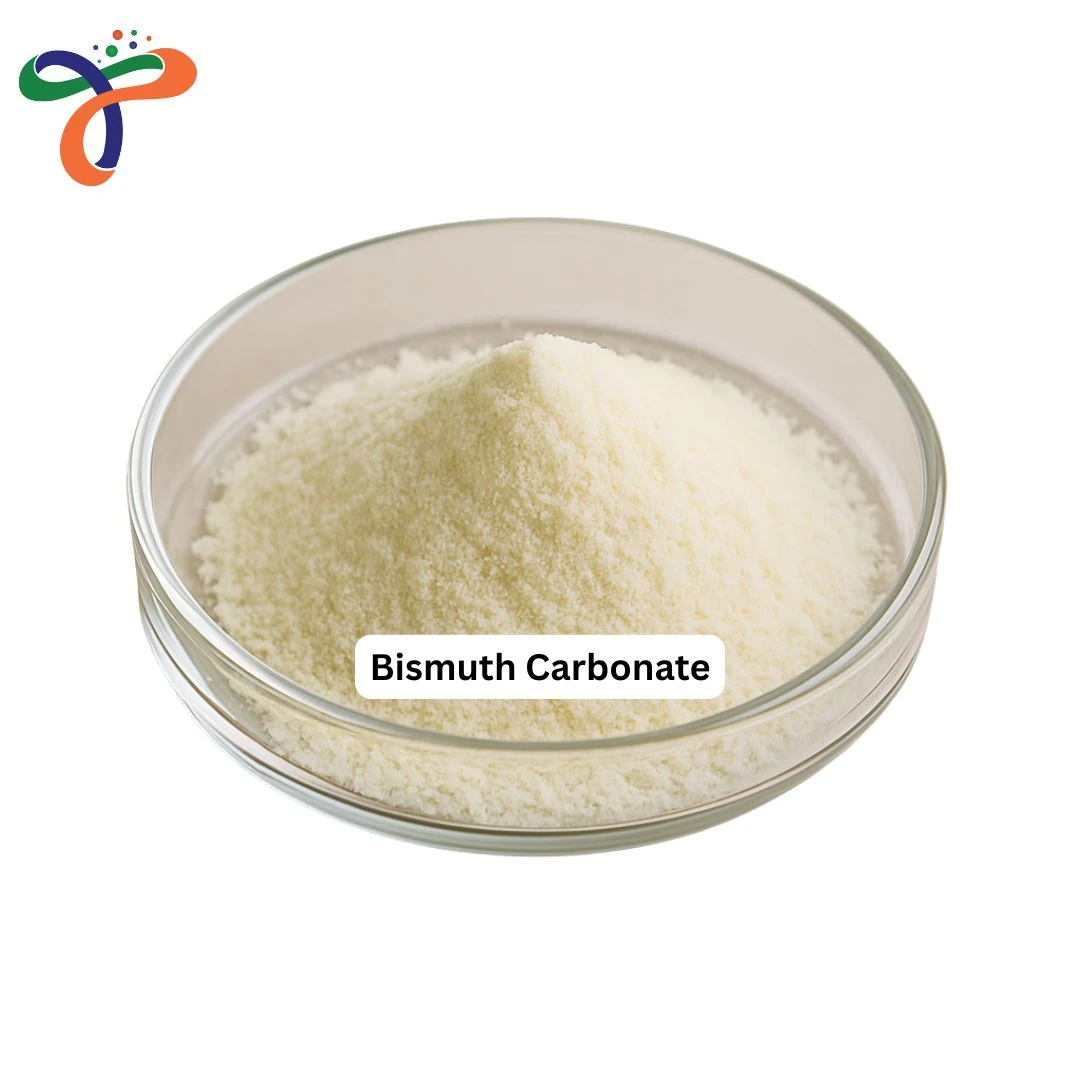
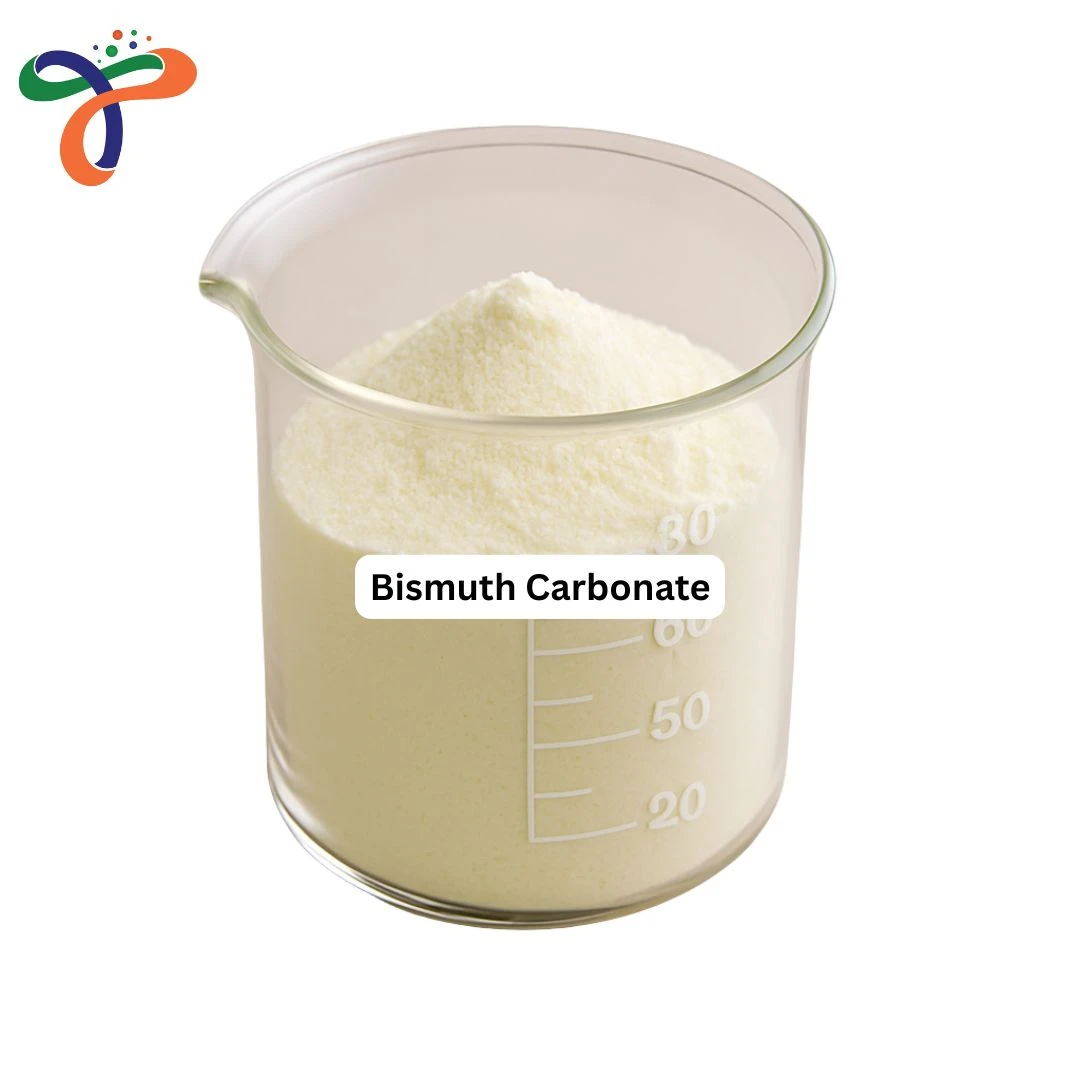
Powder
Molecular Weight :
597.98 G/Mol
Boiling Point :
300 °C
Melting Point :
350 °C
Flash Point :
400 °C
Solubility :
Insoluble In Water; Soluble In Acids
Description :
Overview of Bismuth Carbonate
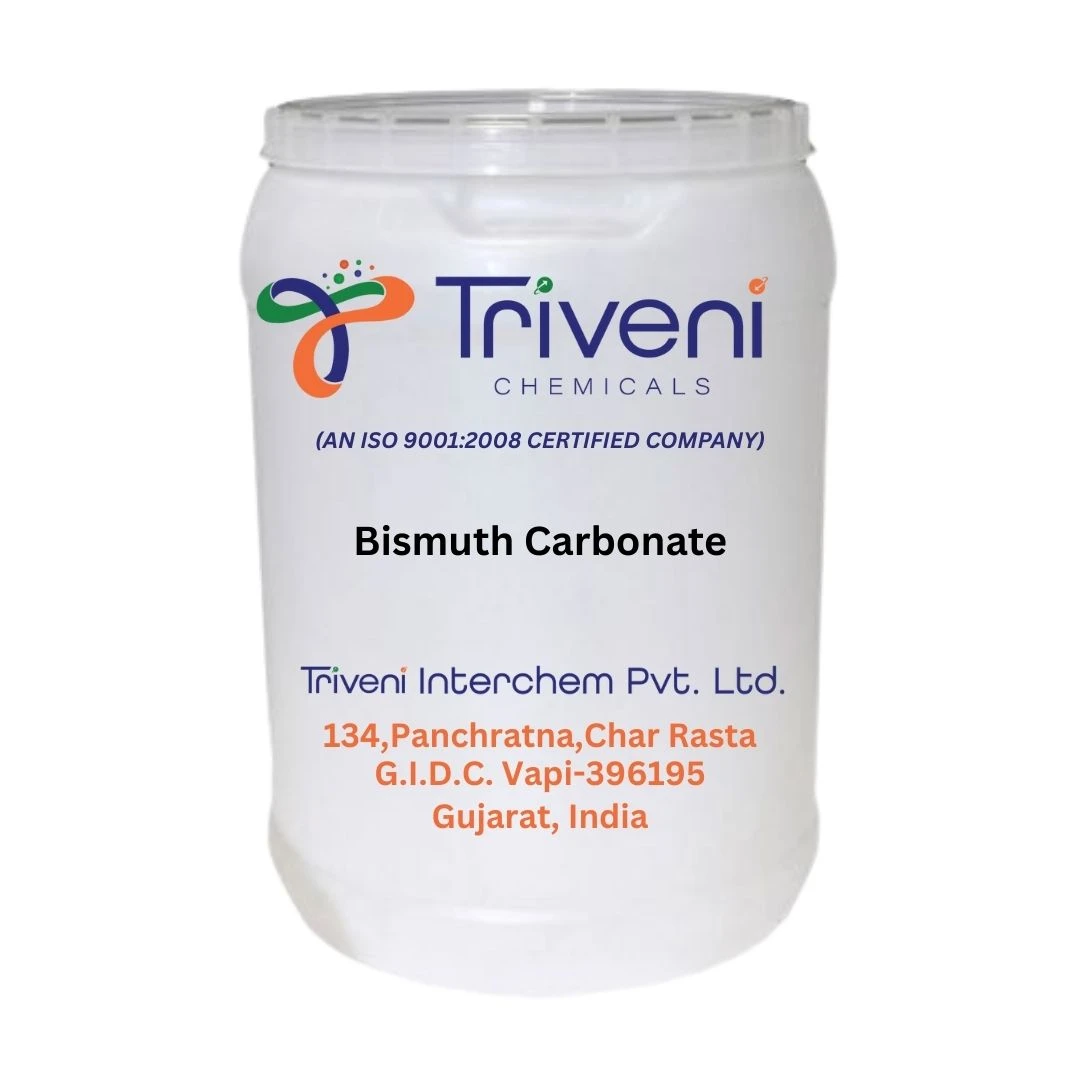
Bismuth Carbonate is a pharmaceutical-grade inorganic bismuth compound that is used mostly in gastrointestinal formulations of pharmaceuticals. It's notable for its the low solubility of water, excellent chemical stability, and good safety profile when utilized within controlled drug applications.
In pharmaceutical manufacturing, Bismuth Carbonate is produced under regulated conditions to ensure controlled purity, particle characteristics, and consistency. It is commonly supplied as a fine powder suitable for oral dosage forms and suspension-based formulations.
As a pharma chemical, Bismuth Carbonate is used where localised gastrointestinal action and minimal systemic absorption are required.
Applications of Bismuth Carbonate
Pharmaceutical & Gastrointestinal Formulations
Bismuth Carbonate is used in oral pharmaceutical formulations intended for gastric protection and digestive system support. Its insoluble nature allows it to act locally within the gastrointestinal tract.
In formulation development, it is often evaluated alongside Bismuth Subsalicylate for comparative gastric protective behaviour.
Pharmaceutical Chemistry & Physicochemical Properties
From a pharmaceutical chemistry standpoint, Bismuth Carbonate is an inorganic salt of bismuth and carbonic acid. Its limited solubility in water contributes to controlled local activity without significant absorption.
The compound exhibits good stability under normal pharmaceutical storage and processing conditions, making it suitable for solid and suspension dosage forms.
Industrial & Regulated Manufacturing Use
Bismuth Carbonate is manufactured as a pharmaceutical raw material with strict control over heavy metal impurities and carbonate content. It is suitable for use in regulated pharmaceutical production environments.
In bismuth-based formulation studies, it may also be compared with Bismuth Subnitrate and Bismuth Subgallate for selection based on formulation requirements.
Safety & Handling Guidelines
- Store in a cool, clean, controlled space
- Be sure to protect yourself from contamination and moisture
- Make sure containers are tightly sealed and label them properly
- Avoid inhalation of fine powder during handling
- Use appropriate personal protective equipment
- Handle under controlled pharmaceutical manufacturing conditions
- Dispose of waste according to regulatory guidelines
Where to Buy Bismuth Carbonate?
Bismuth Carbonate Manufacturer
Bismuth Carbonate is manufactured for pharmaceutical use where controlled quality, purity, and regulatory compliance are required.
Bismuth Carbonate Supplier & Distributor
Pharmaceutical-grade Bismuth Carbonate is supplied in suitable packaging for formulation manufacturers. As a pharmaceutical chemicals supplier and distributor, Chemicalbull Pvt. Ltd. supports reliable sourcing with standard documentation.
MSDS for Bismuth Carbonate
The MSDS for Bismuth Carbonate includes information on the handling and storage precautions, storage conditions, exposure control, and emergency precautions. It is recommended to review it prior to using it in the pharmaceutical manufacturing process.
Frequently Asked Questions (FAQs)
-
What is Bismuth Carbonate used for?
It is used in pharmaceutical formulations focused on gastrointestinal applications where local action is preferred. -
Is Bismuth Carbonate soluble in water?
Bismuth Carbonate has very low water solubility, which supports its localised pharmaceutical activity. -
Is Bismuth Carbonate an active pharmaceutical ingredient?
Depending on formulation design, it may function as a therapeutic inorganic compound or as a functional pharmaceutical component. -
Is Bismuth Carbonate suitable for regulated manufacturing?
Yes, pharmaceutical-grade Bismuth Carbonate is produced under controlled conditions for regulated use. -
Is Bismuth Carbonate chemically stable?
It shows good stability when stored and handled under recommended pharmaceutical conditions.