Chemical Bull
37
08-Sep-2026
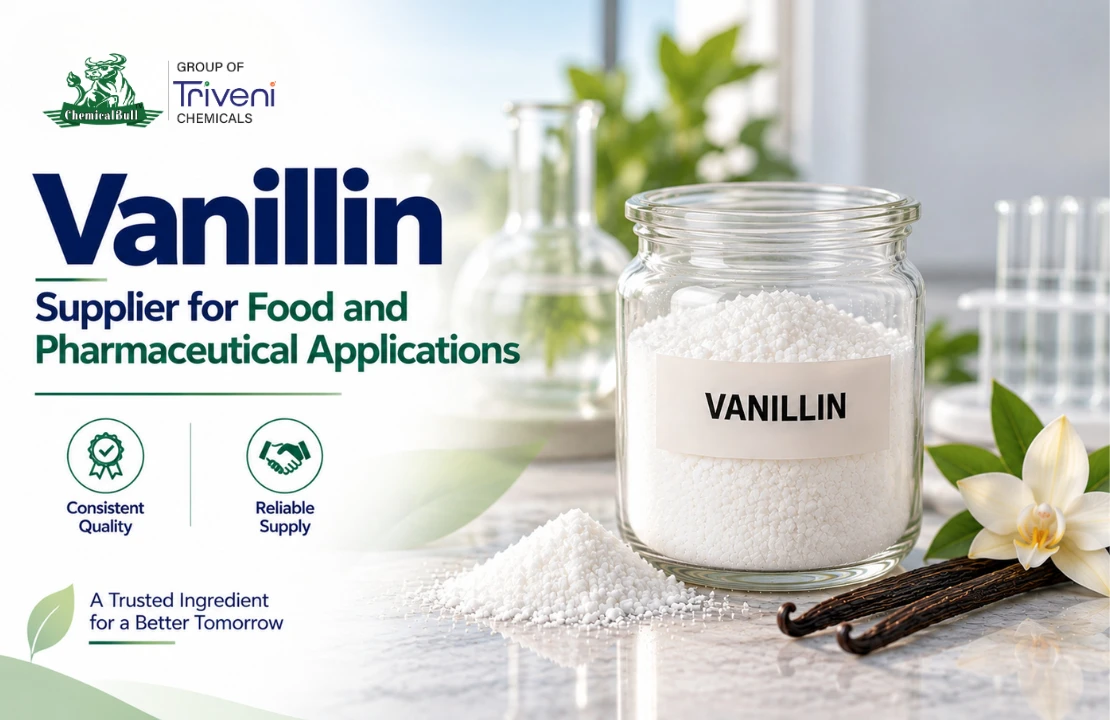
Vanillin is widely used across food, flavour and pharmaceutical manufacturing because of its familiar sweet, creamy and vanilla-like profile. For industrial buyers, however, sourcing Vanillin is not only about flavour performance. Product grade, purity, application suitability, documentation, packaging, order quantity and delivery reliability all influence whether a material is suitable for regular production.
ChemicalBull Pvt. Ltd. supports B2B buyers sourcing Vanillin for food processing, flavour manufacturing, pharmaceutical formulations and other industrial requirements. Buyers may include bakery manufacturers, confectionery companies, dairy processors, beverage formulators, pharmaceutical companies, flavour houses, distributors and procurement teams handling repeat or bulk requirements.
This guide explains how Vanillin is used in food and pharmaceutical applications, what buyers should review before purchase, and how to evaluate supply conditions for regular manufacturing.
Vanillin for Food Manufacturing
Vanillin is commonly used in food formulations to provide, strengthen or balance a vanilla-like flavour profile. Its consistent sensory character makes it suitable for industrial production where manufacturers need predictable flavour performance across multiple batches.
Compared with ingredients that may vary due to agricultural origin or seasonal supply, industrial Vanillin can offer greater consistency in large-scale flavour systems. This is important for manufacturers that need the final product to taste the same across different production runs.
Manufacturers comparing ingredient options can also review our guide on natural vs synthetic flavor compounds for broader context on formulation choices in food production.
Bakery and Confectionery Applications
Vanillin is widely used in bakery and confectionery formulations where sweetness, warmth and a creamy vanilla character are required.
Typical applications include:
- Cakes and biscuits
- Bakery premixes
- Cookies and wafers
- Chocolates
- Candies and toffees
- Cream fillings
- Dessert mixes
- Sweet flavour systems
In bakery products, Vanillin can help support a recognizable vanilla profile even after processing. It is often incorporated into formulations where a smooth, rounded sweetness is needed to complement other ingredients.
In confectionery, Vanillin may be used to improve flavour balance in chocolate, cream-based fillings, candies and compound products. It can help soften harsher notes and provide a more familiar sensory profile.
For industrial buyers, Vanillin uses in food are not limited to products labelled as vanilla flavour. It can also be part of more complex flavour systems where a small vanilla note is used to improve overall depth and sweetness.
Vanillin in Dairy and Beverage Applications
Vanillin may also be used in selected dairy and beverage formulations.
Possible applications include:
- Ice cream
- Flavoured milk
- Dairy desserts
- Milk-based beverages
- Beverage flavour systems
- Nutritional formulations
- Dessert beverages
In these products, Vanillin can contribute a creamy and sweet flavour note that supports milk, cocoa, caramel, fruit or dessert-style profiles.
For beverage manufacturers, product selection should be based on formulation requirements, processing conditions and the final flavour profile. The same Vanillin grade may not be equally suitable for every food or beverage application, so buyers should confirm specifications before use.
For additional formulation context, see how aroma chemicals support food preservation and stability across different food systems.
Food Grade Vanillin for Industrial Formulations
Buyers searching for food grade Vanillin should review both sensory and technical factors before approving a supply source.
Important checks may include:
- Purity
- Appearance
- Odor profile
- Product specification
- Batch consistency
- Supporting documentation
- Packaging condition
- Storage requirements
Consistent purity helps support predictable flavour performance, while a uniform physical appearance can also indicate reliable product handling and storage.
For commercial food production, batch-to-batch consistency is especially important. Even small differences in raw material characteristics can affect finished-product flavour when manufacturing at scale.
Food manufacturers should also review the relevant product documents and make sure the selected material is suitable for the intended formulation and applicable market requirements.
Buyers looking for more background on Vanillin chemistry, aroma and wider industrial uses can refer to our Vanillin structure, uses and aroma guide.
Vanillin Uses in Pharmaceuticals
Vanillin is also used in selected pharmaceutical and healthcare formulations, particularly where flavouring or taste improvement is required.
Many oral pharmaceutical products can have bitter, metallic or otherwise unpleasant taste characteristics due to active ingredients or formulation components. Vanillin may be used as part of a broader flavour system to help create a smoother and more acceptable sensory profile.
Taste-Masking Applications
Taste masking is important in oral formulations because patient acceptance can be affected by unpleasant taste.
Vanillin may be considered in:
- Oral syrups
- Liquid medicines
- Chewable formulations
- Flavoured oral preparations
- Selected healthcare formulations
Its sweet and creamy character can help support flavour systems designed to reduce harsh taste perception.
However, Vanillin should not be treated as a universal solution for every pharmaceutical formulation. Suitability depends on the formulation, intended use, dosage form and internal quality requirements.
Pharmaceutical buyers should therefore review product specifications carefully and complete the necessary technical approval before commercial use.
How to Select Vanillin for Food or Pharmaceutical Use
The correct Vanillin grade depends on the final application.
A food manufacturer may focus strongly on flavour profile and batch consistency, while a pharmaceutical buyer may place greater importance on specification, traceability and internal qualification.
Before placing an order, buyers should review the following:
|
Requirement |
What to Check |
|
Application |
Food, flavour or pharmaceutical |
|
Grade |
Suitability for intended use |
|
Purity |
As required by the formulation |
|
Quantity |
Trial, production or bulk |
|
Packaging |
Preferred commercial pack |
|
Documentation |
COA, SDS and specification |
|
Delivery |
Destination and required timeline |
For product-specific details, buyers can review the Vanillin specifications and bulk supply information before sending a commercial enquiry.
Sharing this information early helps suppliers understand the actual requirement and prepare a more relevant commercial offer.
It also reduces the risk of receiving a quotation for a grade or pack size that does not match the buyer's production needs.
Vanillin Powder for Bulk Manufacturing
Vanillin is commonly supplied as a crystalline powder, making it practical for weighing, blending and controlled addition in industrial production.
Manufacturers sourcing Vanillin powder should review:
- Physical form
- Purity
- Storage conditions
- Packaging
- Batch documentation
- Required order volume
For regular production, order planning should ideally match manufacturing consumption.
A company purchasing Vanillin every month may need a different supply arrangement from a business testing the material for the first time.
Bulk buyers should therefore consider not only the immediate order quantity, but also likely repeat consumption.
Factors That Influence Vanillin Bulk Pricing
The Vanillin price per kilogram can vary according to the buyer’s specific requirement rather than following one fixed market rate.
Key pricing factors include:
- Grade and purity
- Order quantity
- Packaging type
- Product origin
- Current availability
- Delivery destination
- Purchase frequency
Small trial quantities may be priced differently from regular production or bulk orders. Buyers comparing domestic and export offers should also consider logistics, documentation and delivery terms alongside the quoted product price.
For procurement teams, the most accurate way to evaluate the Vanillin price per kilogram is to request a quotation based on the required quantity, application, packaging and destination.
MOQ, Packaging and Lead Time
MOQ, pack size and lead time are closely connected in B2B chemical sourcing.
The available minimum order quantity may depend on the commercial packaging offered by the supplier. Lead time can vary depending on whether the material is in stock, scheduled for production, imported or being arranged against a confirmed order.
For a more accurate quotation, buyers should provide:
required quantity + preferred packaging + delivery location + target delivery date
This helps the supplier assess stock, commercial pack options and dispatch planning more efficiently.
Buyers with recurring requirements may also benefit from sharing approximate monthly or quarterly consumption so supply can be planned more effectively.
COA and Technical Documentation
Documentation is an important part of Vanillin sourcing for both food and pharmaceutical buyers.
Depending on the application, buyers may request:
- Certificate of Analysis
- Safety Data Sheet / MSDS
- Product specification
- Packaging information
- Batch details
- Country-of-origin information where applicable
The COA helps buyers review batch-specific product information, while the SDS provides relevant safety and handling information.
For regulated or formulation-sensitive applications, technical documents should be reviewed as part of the approval process before the material is introduced into production.
How to Evaluate a Vanillin Supplier
A reliable Vanillin supplier should be evaluated on more than price alone.
Product Consistency
Repeated supplies should meet agreed product specifications. This is especially important for manufacturers that need stable flavour performance across production batches.
Documentation Support
Required documents should be available for buyer review when applicable.
Commercial Transparency
The quotation should clearly mention quantity, packaging, price and delivery conditions so procurement teams can compare offers accurately.
Supply Reliability
Regular buyers should consider whether the supplier can support repeat requirements and communicate clearly about availability.
The lowest quoted price may not always be the best commercial option if supply interruptions affect production schedules.
Vanillin Suppliers and Manufacturers in India
Buyers searching for Vanillin manufacturers or domestic suppliers often compare several sources before finalizing procurement. For bulk requirements, Vanillin supply information can help buyers review commercial availability and sourcing options.
However, supplier selection should not depend only on whether a company is classified as a manufacturer, distributor or trader.
More useful factors include:
product specification, documentation, availability, commercial terms and delivery capability.
This is particularly important for businesses using Vanillin regularly in food or pharmaceutical production.
A reliable supply relationship should support both product quality and continuity of operations.
Vanillin for Global Export
International buyers sourcing Vanillin may need additional commercial information related to packaging, shipping and documentation.
A typical export enquiry should include:
- Required quantity
- Intended application
- Preferred pack size
- Destination country
- Required documents
- Expected purchasing frequency
This allows the supplier to evaluate the requirement more accurately and discuss suitable logistics arrangements.
For repeat export buyers, forecast information can also help with supply planning.
What to Include in a Vanillin RFQ
A detailed RFQ usually receives a more useful response than a simple request asking only for price.
Buyers should ideally include:
Product: Vanillin
Application: Food or pharmaceutical
Quantity: Required volume
Grade: If specified
Packaging: Preferred pack size
Destination: Delivery location
Documents: Required technical documents
Timeline: Expected delivery date
This reduces unnecessary back-and-forth communication and helps procurement teams receive quotations that are closer to the real purchasing requirement.
Frequently Asked Questions
1. What are the uses of Vanillin in food?
Vanillin is used in bakery, confectionery, chocolate, dairy, beverage and flavour formulations to provide or enhance a sweet, creamy and vanilla-like flavour profile.
2. What are the uses of Vanillin in pharmaceuticals?
Vanillin may be used in selected oral pharmaceutical formulations as part of flavouring and taste-masking systems where improvement of sensory characteristics is required.
3. What is the price of Vanillin per kilogram?
Vanillin price per kilogram depends on grade, purity, order quantity, packaging, availability and delivery requirements. Bulk buyers should request a quotation based on their actual requirement.
4. What should buyers check before purchasing Vanillin?
Buyers should review grade, purity, specification, documentation, packaging, quantity, intended application and delivery conditions before confirming an order.
5. Is Vanillin available for bulk and export requirements?
Vanillin can be sourced for bulk and international requirements subject to availability, destination, packaging and commercial terms.
Source Vanillin for Food and Pharmaceutical Applications
Choosing the right Vanillin supply source requires more than comparing prices. Food and pharmaceutical buyers should consider application suitability, product consistency, documentation, packaging and dependable supply before finalizing procurement.
For food, flavour or pharmaceutical requirements, buyers can contact ChemicalBull Pvt. Ltd. with their required grade, quantity, packaging preference and delivery destination.
Comment Section