Chemical Bull
1835
16-Dec-2025
Introduction
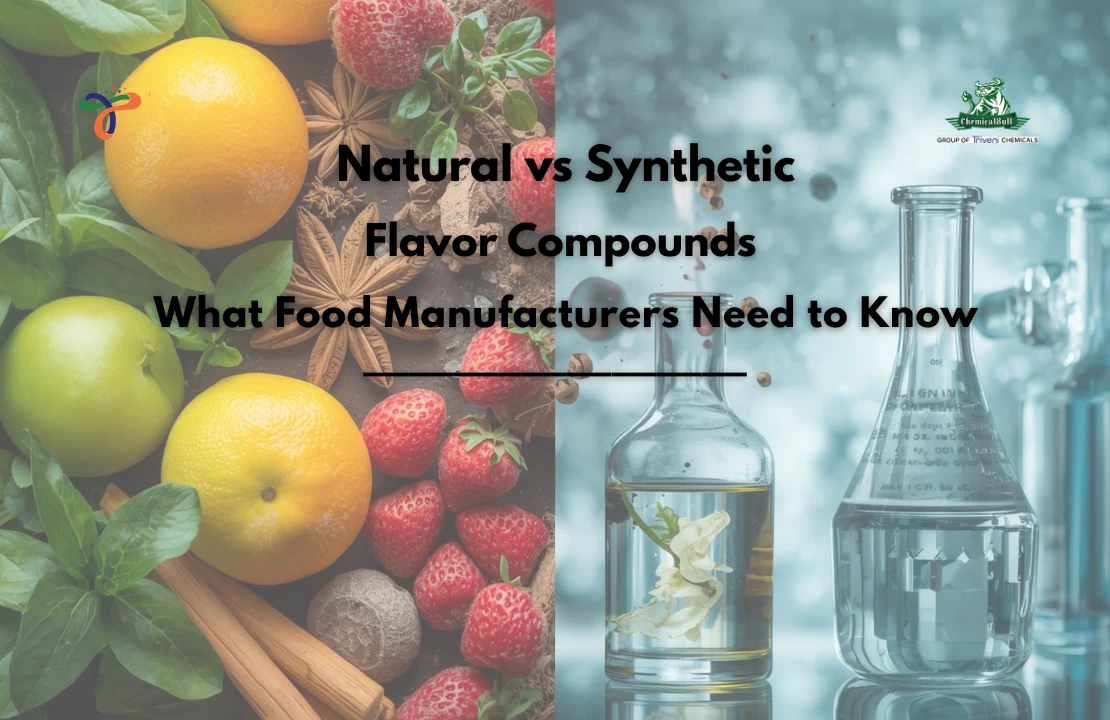
In today’s competitive food and beverage industry, choosing the right flavour is critical for creating products that delight consumers while ensuring cost-efficiency and regulatory compliance. Understanding the difference between natural and synthetic flavours helps manufacturers make informed decisions that impact taste, product stability, and commercial success. This guide explores natural flavour compounds for food manufacturing, synthetic flavour compounds for beverages, and the best practices to source, formulate, and implement flavours in modern food products.
Food manufacturers looking for high-quality natural food flavours or cost-effective synthetic flavours can also explore trusted suppliers like Chemical Bull for commercial solutions.
Natural Flavour Compounds: Definition, Sources & Benefits
Natural flavours are derived from real food ingredients such as fruits, vegetables, herbs, spices, and essential oils. They are widely used in beverages, confectionery, dairy products, and snacks, providing authentic taste experiences. Some popular aroma chemicals for the confectionery industry include vanillin from vanilla beans, ethyl maltol, and citral.
Benefits of Natural Flavours
-
Clean-label appeal – Increasingly, consumers prefer products with natural ingredients.
-
Authentic taste – Offers more genuine flavour profiles compared to synthetic alternatives.
-
Health perception – Products with natural flavours are perceived as healthier.
-
Regulatory acceptance – Compliant with food safety standards globally.
Manufacturers can source bulk natural flavour compounds for the food industry from trusted suppliers. To explore our premium flavour products, visit our product catalogue.
Common Natural Flavour Products Used in the Food Industry
In real-world food manufacturing, natural flavours are widely applied across multiple product categories to deliver authentic taste and clean-label appeal. Some of the most commonly used natural flavour products include:
-
Vanilla Flavour – extensively used in dairy products, bakery items, ice creams, and desserts for its smooth and comforting taste profile.
👉 example: High-quality natural Vanilla Flavour for dairy applications -
Chocolate Flavour – widely applied in biscuits, beverages, confectionery, and bakery products, offering rich and indulgent taste experiences.
👉 example: Natural Chocolate Flavour for food and beverage manufacturing -
Fruit Flavours (Mango, Strawberry, Orange) – commonly used in juices, soft drinks, flavoured water, and confectionery to deliver fresh and vibrant taste notes.
👉 example: Natural Fruit Flavours for beverage applications -
Coffee Flavour – popular in ready-to-drink beverages, desserts, ice creams, and bakery fillings, especially for premium product positioning.
👉 example: Natural Coffee Flavour for beverage and dessert formulations
Synthetic Flavour Compounds: Overview & Advantages
Synthetic flavours are lab-made chemicals designed to mimic natural flavours. These are extensively used in beverages, bakery, and dairy products, offering consistency, cost-efficiency, and longer shelf life.
In bakery manufacturing, flavour compounds are often used alongside other functional ingredients that influence dough, batter, texture and processing performance. For related formulation guidance, explore our guide on bakery emulsifiers: types, uses and applications.
Advantages of Synthetic Flavours for Manufacturers
-
Cost-effective – Cheaper than sourcing natural ingredients.
-
Stability & consistency – Ensures uniform taste across batches.
-
Wide variety – Enables creation of flavours not naturally available.
-
Scalable for large production – Ideal for commercial food manufacturing.
For manufacturers seeking bulk synthetic flavours for beverages or bakery, Chemical Bull provides commercial flavour solutions tailored to industrial needs.
Synthetic Flavour Product Examples for Cost-Effective Manufacturing
Synthetic flavours play a crucial role in large-scale food production where cost control, consistency, and stability are critical. Common synthetic flavour products include:
-
Synthetic Chocolate Flavour – widely used in bakery products, biscuits, and cocoa-based applications due to its strong flavour impact and affordability.
👉 example: Synthetic Chocolate Flavour for the bakery industry -
Synthetic Strawberry Flavour – frequently used in beverages, confectionery, syrups, and dairy-based drinks, ensuring consistent taste across batches.
👉 example: Synthetic Strawberry Flavour for beverage manufacturing -
Synthetic Vanilla Flavour – preferred in dairy and bakery industries where cost efficiency and flavour stability are essential for mass production.
👉 example: Cost-effective Synthetic Vanilla Flavour for the dairy industry
Natural vs Synthetic Flavour Compounds: Key Differences
|
Feature |
Natural Flavors |
Synthetic Flavors |
|
Source |
Extracted from plants, fruits, and herbs |
Lab-created chemicals |
|
Cost |
Higher |
Lower |
|
Stability |
Less stable |
Highly stable |
|
Consumer Perception |
Healthier, premium |
Neutral, cost-effective |
|
Applications |
Dairy, snacks, beverages |
Bakery, beverages, and chocolates |
Manufacturers must understand these differences to optimise food flavour ingredient sourcing and improve product quality.
Regulatory & Safety Compliance for Flavour Compounds
Food manufacturers must ensure that the flavours they use comply with national and international safety standards. Regulatory compliance not only guarantees consumer safety but also protects manufacturers from legal and quality issues.
Key points for compliance:
-
FSSAI (India): Ensures that natural and synthetic flavours meet food safety standards in the Indian market.
-
FDA & FEMA (USA): Natural and synthetic flavour compounds must comply with Generally Recognised As Safe (GRAS) regulations.
-
EU Regulations: Flavours imported or used in Europe must meet EFSA guidelines and labelling requirements.
-
Labelling & Documentation: Accurate declaration of natural vs synthetic flavours is mandatory for transparency and consumer trust.
By partnering with trusted flavour suppliers, manufacturers can access flavours that are tested, certified, and documented, ensuring full compliance with regulatory requirements. This reduces risk, improves product reliability, and enhances brand reputation in both domestic and global markets.
How to Choose the Right Flavour for Food Products
Selecting the ideal flavour involves balancing taste, cost, stability, and consumer expectations:
-
Identify the product category – dairy, bakery, confectionery, beverages.
-
Evaluate flavour stability under production and storage conditions.
-
Consider regulatory compliance for flavour chemicals.
-
Decide between natural, synthetic, or blended solutions.
-
Partner with reliable food flavour chemicals suppliers in India.
For detailed guidance on flavour formulation tips for the beverage industry, you can check our blog resources.
Emerging Trends in Food Flavours
Modern manufacturers are moving towards:
-
Functional flavours in modern food products – flavours that enhance health benefits.
-
Clean-label natural flavours for snacks – meeting consumer demand for transparency.
-
Flavour encapsulation technology – protecting flavours during processing.
-
Taste enhancers for beverages – creating more intense and long-lasting flavours.
-
Sustainable sourcing of aroma chemicals – eco-friendly production methods.
Stay updated with top flavour trends for food and beverages to maintain a competitive advantage.
Commercial Benefits of Using the Right Flavours
Choosing the right flavour compounds can:
-
Improve product taste and consumer satisfaction
-
Reduce production costs with cost-effective synthetic flavours for the bakery
-
Enable differentiation in crowded markets
-
Ensure compliance with natural vs synthetic flavour safety standards
Explore premium aroma chemicals for industries and request samples directly via our contact page.
Conclusion
Understanding the difference between natural and synthetic flavours is essential for any food manufacturer. By choosing the right combination, businesses can enhance product quality, ensure regulatory compliance, and meet consumer expectations.
For sourcing bulk flavour compounds for the food industry or exploring high-quality natural food flavours, visit Chemical Bull Global Presence today. To know more about our range of flavour chemicals for chocolate, coffee, beverages, and dairy products, explore our product pages and blogs.





Comment Section