Chemical Bull
294
24-Jul-2026
Why Is TMPTA Used in Industrial Coatings?
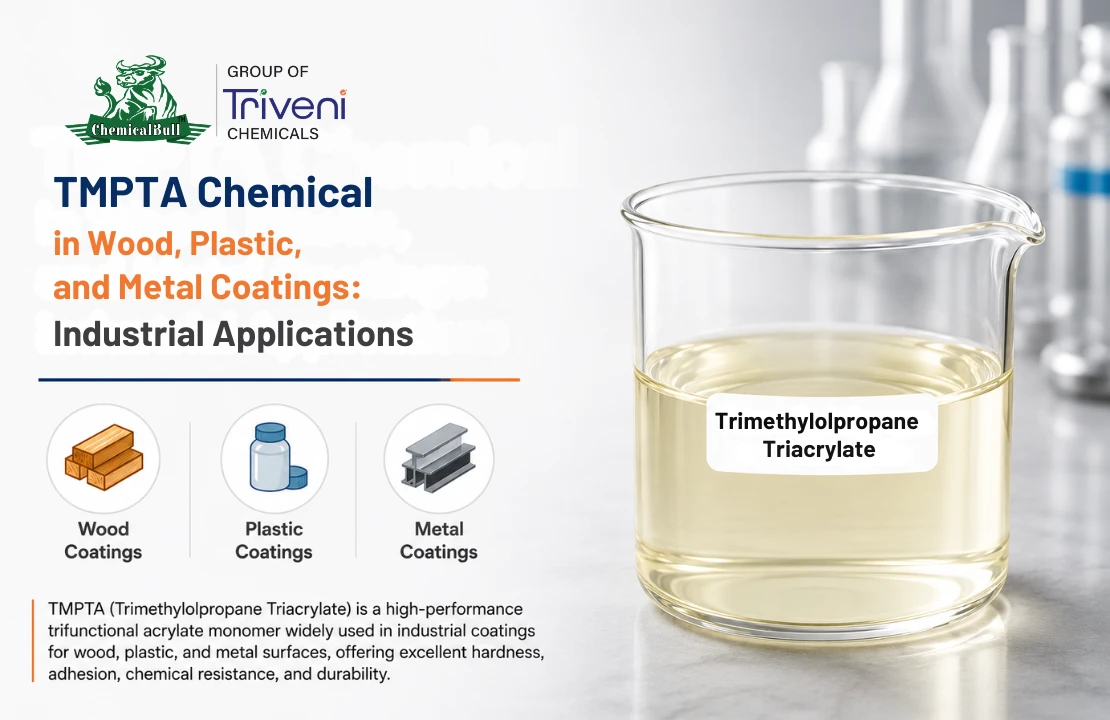
TMPTA (Trimethylolpropane Triacrylate) is widely used in industrial UV-curable coating formulations as a multifunctional reactive component that helps improve coating hardness, scratch resistance, chemical resistance, and durability. It is commonly used in wood coatings, plastic coatings, and metal protective coatings where manufacturers require fast curing, strong surface performance, and long-lasting finishes.
In industrial applications, TMPTA in wood coatings improves flooring and furniture finishes, while TMPTA for plastic coatings scratch resistance enhances the durability of automotive, electronic, and decorative plastic surfaces. For metal applications, TMPTA for metal protective coatings UV-curable supports high-performance protective layers with improved wear resistance and surface strength.
Need TMPTA for UV-curable wood, plastic, or metal coatings? Get in touch with ChemicalBull for quality supply and technical information.
Introduction
Industrial coating manufacturers continuously look for materials that provide faster processing, superior surface protection, and improved durability. With increasing demand for high-performance finishes in furniture, automotive components, electronics, flooring, and metal products, UV-curable coating technology has become an important solution.
Among various reactive components used in UV-curable coating formulations, Trimethylolpropane Triacrylate (TMPTA) plays an important role because of its ability to create highly durable coating networks during curing. For a detailed overview of TMPTA characteristics, applications, and industrial uses, explore our guide on Trimethylolpropane Triacrylate (TMPTA) uses and applications.
Unlike conventional coatings that require longer drying periods, UV-curable coatings containing TMPTA can achieve rapid curing under ultraviolet light, helping manufacturers improve production efficiency while maintaining premium surface quality.
This article explains the industrial applications of TMPTA in wood coatings, plastic coatings, and metal protective coatings, including its role in improving scratch resistance, surface durability, and coating performance.
TMPTA Role in Industrial Coating Applications
TMPTA is selected by coating manufacturers based on the required performance characteristics of different substrates. The application requirements vary depending on whether the coating is applied on wood, plastic, or metal surfaces.
TMPTA Applications in Industrial Coatings
TMPTA is selected by coating manufacturers based on the required performance characteristics of different substrates. The application requirements vary between wood, plastic, and metal surfaces.
|
Application Area |
Role of TMPTA |
Main Benefits |
Common Uses |
|
Wood Coatings |
Improves UV coating durability and surface strength |
Scratch resistance, abrasion protection, gloss retention |
Flooring, furniture, decorative panels |
|
Plastic Coatings |
Enhances protective coating performance |
Better scratch resistance, chemical resistance, surface durability |
Automotive plastics, electronics, consumer products |
|
Metal Protective Coatings |
Supports durable UV-cured coating films |
Wear resistance, hardness, protective performance |
Industrial equipment, metal components |
In UV-curable coating systems, TMPTA acts as a multifunctional reactive component that helps improve coating hardness, durability, and film performance. For a detailed explanation of its role in crosslinking and UV curing efficiency, read our article on TMPTA as a crosslinking agent for UV-curable coatings, inks, and adhesives.
TMPTA in Wood Coatings
Wood surfaces require protective coatings that maintain appearance while providing resistance against scratches, stains, moisture, and daily wear. UV-curable wood coatings are widely used for flooring, furniture, panels, and decorative surfaces because they provide high-quality finishes with faster production cycles.
TMPTA in Industrial Wood Flooring Finishes
Industrial wood flooring is exposed to continuous foot traffic, impact, cleaning chemicals, and surface abrasion. Therefore, flooring manufacturers require coatings that provide excellent hardness and long-term protection.
TMPTA in industrial wood flooring finishes helps improve the mechanical strength of UV-cured coatings by creating a durable surface layer. This allows flooring coatings to maintain gloss, appearance, and protective performance even after extended use.
Applications include:
- Hardwood flooring
- Engineered wood flooring
- Commercial flooring panels
- Laminate flooring finishes
TMPTA-containing UV coatings are preferred in flooring production because they provide fast curing speeds and allow multiple coating layers to be applied efficiently during manufacturing.
Furniture and Decorative Panels
Furniture manufacturers use UV coatings to achieve attractive finishes with strong resistance against scratches, stains, and household chemicals.
In furniture applications, TMPTA helps coating systems provide:
- Smooth surface finishing
- Improved hardness
- Better resistance to handling damage
- Enhanced gloss retention
It is commonly used in:
- Wooden cabinets
- Office furniture
- Decorative panels
- Kitchen surfaces
- Interior wood components
For high-end decorative surfaces, maintaining visual appearance is important. TMPTA-based UV coatings help manufacturers produce durable finishes without compromising surface aesthetics.
Surface Hardness and Durability Improvement
Wood coatings must balance hardness and flexibility. Excessive hardness can make coatings brittle, while insufficient hardness can reduce durability.
TMPTA helps formulators achieve improved surface performance by increasing coating strength and resistance against external damage. This makes it valuable for industrial wood applications where long service life and premium appearance are required.
TMPTA for Plastic Coatings
Plastic components are widely used in automotive, electronics, consumer products, and decorative applications. However, plastic surfaces can easily develop scratches, marks, and wear during handling.
To improve surface performance, manufacturers use UV-curable plastic coatings containing reactive components such as TMPTA.
TMPTA for Plastic Coatings Scratch Resistance
One of the major advantages of TMPTA-based UV coatings for plastic surfaces is its ability to contribute to harder protective films after UV curing.
Plastic coating applications require resistance against:
- Scratches from handling
- Surface abrasion
- Chemical exposure
- Repeated cleaning cycles
TMPTA-based coating systems are used to improve the durability of coated plastic surfaces while maintaining appearance and functional performance.
Common applications include:
- Automotive interior plastics
- Electronic device housings
- Appliance components
- Decorative plastic panels
Automotive Plastic Coatings
Modern vehicles contain many plastic components that require attractive finishes and long-lasting protection. Interior parts such as dashboards, control panels, trims, and decorative elements often use protective coatings.
TMPTA helps automotive coating formulations achieve:
- Improved scratch resistance
- Better surface hardness
- Enhanced gloss retention
- Resistance against cleaning agents
This makes TMPTA useful in automotive plastic finishing where appearance and durability are critical requirements.
Electronics and Decorative Plastics
Electronic products often require coatings that protect surfaces from fingerprints, scratches, and daily handling damage.
TMPTA-containing UV coatings are used for:
- Mobile device components
- Computer accessories
- Consumer electronics housings
- Decorative plastic surfaces
The fast curing capability of UV coatings allows manufacturers to achieve high production efficiency while maintaining consistent surface quality.
TMPTA for Metal Protective Coatings
Metal surfaces require protective coatings to prevent corrosion, wear, and environmental damage. Industries such as automotive, electronics, machinery, and metal fabrication use advanced coating systems to improve product lifespan.
UV-curable metal coatings containing TMPTA are increasingly used where rapid curing and strong protective performance are required.
TMPTA for Metal Protective Coatings UV-Curable
UV-curable TMPTA metal coating systems applications helps manufacturers develop coatings with improved hardness and resistance properties.
These coatings are suitable for:
- Metal components
- Aluminum surfaces
- Industrial equipment parts
- Decorative metal products
UV-curable metal coatings offer advantages such as:
- Rapid curing
- Reduced processing time
- High surface durability
- Lower solvent requirements
TMPTA contributes to the formation of durable coating films that protect metal surfaces from mechanical stress and environmental exposure.
Corrosion and Wear Protection
Metal components used in industrial environments are exposed to moisture, chemicals, friction, and temperature changes. Protective coatings must provide reliable performance under these conditions.
TMPTA-based formulations can improve:
- Surface hardness
- Abrasion resistance
- Chemical resistance
- Coating durability
Applications include:
- Machinery components
- Metal panels
- Hardware products
- Industrial tools
By improving coating strength, TMPTA helps extend the operational life of metal products.
TMPTA Use Level in UV Wood, Plastic & Metal Coatings
The TMPTA use level in UV wood coatings, plastic coatings, and metal coatings depends on the desired coating performance and formulation requirements.
Typical usage levels vary based on:
- Coating resin system
- Required hardness
- Flexibility requirements
- Curing speed
- Application method
In many UV-curable formulations, TMPTA may be used as part of the reactive component blend rather than as a standalone ingredient. Formulators adjust the concentration to achieve the desired balance between hardness, adhesion, flexibility, and durability.
Factors Affecting TMPTA Performance in Coatings
The effectiveness of TMPTA depends on several formulation and processing factors:
Resin Compatibility
TMPTA must be compatible with the selected oligomers and reactive components to achieve uniform coating performance.
Photoinitiator Selection
Proper photoinitiator systems ensure efficient UV curing and complete polymerization.
Coating Thickness
Thicker coatings may require optimized curing conditions to achieve consistent performance.
Surface Preparation
Proper substrate preparation improves adhesion and long-term durability.
Additive Selection
Leveling agents, stabilizers, and other additives influence the final appearance and performance of TMPTA-based coatings.
TMPTA Selection Guide for Coating Manufacturers
When selecting TMPTA for industrial coating applications, manufacturers should consider:
- Required coating hardness
- Target substrate
- UV curing equipment
- Desired scratch resistance
- Chemical exposure conditions
- Production requirements
For wood flooring and furniture coatings, focus on durability and appearance retention.
For plastic coatings, prioritize scratch resistance and surface protection.
For metal coatings, consider corrosion resistance and mechanical durability.
Working with a reliable TMPTA supplier ensures consistent quality, technical support, and dependable supply for industrial coating production.
Frequently Asked Questions (FAQ)
-
What is TMPTA used for in coatings?
TMPTA is used in UV-curable coatings to improve hardness, scratch resistance, durability, and surface protection. It is commonly used in wood, plastic, and metal coating applications. -
Why is TMPTA used in wood coatings?
TMPTA is used in wood coatings to improve surface hardness, abrasion resistance, and durability in applications such as flooring, furniture, and decorative panels. -
How does TMPTA improve plastic coating performance?
TMPTA improves plastic coating performance by helping create durable UV-cured films with better scratch resistance and surface protection. -
Is TMPTA suitable for metal protective coatings?
Yes, TMPTA is used in UV-curable metal protective coatings to improve hardness, wear resistance, and coating durability. -
What affects TMPTA use level in UV coatings?
TMPTA concentration depends on coating type, resin system, required performance, substrate, and curing conditions. -
Can TMPTA be used in UV-curable wood flooring coatings?
Yes, TMPTA is widely used in UV-curable wood flooring coatings to improve surface hardness, abrasion resistance, and durability. It helps manufacturers produce finishes suitable for commercial and industrial flooring applications.
-
Why is TMPTA preferred in UV coating formulations?
TMPTA is preferred because it supports rapid UV curing and helps improve coating properties such as hardness, scratch resistance, and chemical durability across multiple industrial applications.
Conclusion
TMPTA is an important reactive component for modern industrial UV-curable coating systems. Its application extends across multiple industries where manufacturers require fast curing, durable surfaces, and improved protection.
From TMPTA in industrial wood flooring finishes to TMPTA for plastic coatings scratch resistance and TMPTA for metal protective coatings UV-curable, this material supports the development of high-performance coatings for demanding applications.
As industries continue moving toward efficient and durable coating technologies, TMPTA remains a valuable ingredient for coating manufacturers seeking improved surface quality, productivity, and long-term performance.
Source High-Quality TMPTA for Industrial Coating Applications
With experience in industrial chemical sourcing and B2B distribution, ChemicalBull supports coating manufacturers with reliable raw material supply for advanced UV-curable coating applications.
Connect with our team for product availability, technical details, documentation, and bulk supply solutions tailored to your coating requirements.
Request a TMPTA quotation today and discuss your industrial coating requirements with our chemical experts.

Comment Section