Chemical Bull
41
09-Oct-2026
Xanthan Gum for Food Industry: Applications and Buying Guide
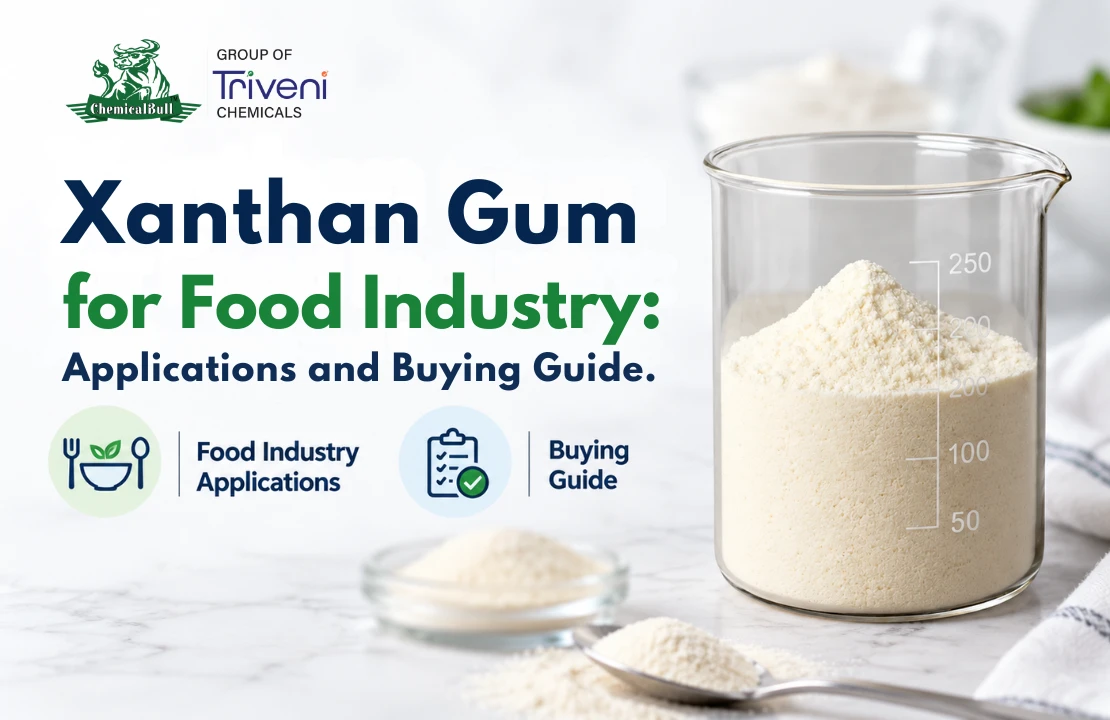
Xanthan Gum is one of the most widely used hydrocolloids in food manufacturing, valued for its ability to thicken, stabilize, and suspend ingredients at very low usage levels. From salad dressings to gluten-free bakery products, this versatile ingredient helps manufacturers achieve consistent texture and shelf stability across a wide range of food formulations.
Because viscosity, mesh size, and purity directly affect how Xanthan Gum Powder performs in a formulation, working with an established xanthan gum manufacturer helps food producers maintain reliable results from batch to batch. Chemical Bull supplies Xanthan Gum chemical in bulk quantities at competitive pricing for food and beverage manufacturers.
Chemical Identity & Properties:
|
Property |
Detail |
|
CAS Number |
11138-66-2 |
|
E Number |
E415 |
|
Classification |
Polysaccharide (microbial hydrocolloid) |
|
Appearance |
Cream to white free-flowing powder |
|
Solubility |
Dissolves in both hot and cold water |
|
Key Functional Behavior |
Pseudoplastic (shear-thinning) viscosity, stable across a wide pH and temperature range |
What Is Xanthan Gum Made From?
Xanthan Gum is produced through a fermentation process rather than extracted directly from a plant or animal source. The basic production steps are:
-
Fermentation:
The bacterium Xanthomonas campestris is grown on a sugar-based medium, typically glucose or sucrose, where it produces xanthan as an extracellular polysaccharide. -
Pasteurization:
The fermentation broth is heat-treated to deactivate the bacteria. -
Precipitation:
The xanthan is recovered from the broth using alcohol, commonly isopropyl alcohol. -
Drying and Milling:
The recovered gum is dried and milled to the required particle size, producing the finished xanthan gum chemical powder used in food formulations.
What Is Xanthan Gum Used For?
Xanthan Gum chemical uses in food center on controlling texture and keeping ingredients evenly distributed:
-
Sauces and Dressings:
Thickens and stabilizes emulsions, preventing oil and water from separating. -
Gluten-Free Bakery:
Mimics the elasticity and structure normally provided by gluten in breads, cakes, and doughs. -
Beverages:
Suspends particles such as fruit pulp or cocoa and improves mouthfeel in drinks. -
Dairy and Dairy Alternatives:
Stabilizes texture in yogurts, ice cream, and plant-based milks. -
Soups and Gravies:
Provides consistent thickness that holds up under heating and freezing. -
Frozen Foods:
Helps maintain texture through freeze-thaw cycles. -
Syrups and Toppings:
Controls pourability and prevents ingredient settling.
Xanthan Gum Chemical Uses Beyond Food
|
Industry |
Typical Function |
|
Cosmetics and Personal Care |
Thickener and stabilizer in creams, lotions, and toothpaste |
|
Pharmaceuticals |
Suspending agent in liquid medicines |
|
Oil and Gas |
Viscosity control in drilling fluids |
|
Paints and Coatings |
Anti-settling and rheology modifier |
|
Agrochemicals |
Suspension stabilizer in liquid formulations |
Xanthan Gum vs. Other Food Hydrocolloids
|
Hydrocolloid |
Key Strength |
Common Limitation |
|
Xanthan Gum |
Strong thickening at low dosage, stable across pH, heat, and salt |
Can feel slightly slippery if overdosed |
|
Guar Gum |
Cost-effective thickener |
Less stable in acidic or high-salt systems |
|
Carboxymethyl Cellulose (CMC) |
Good water binding |
Lower tolerance to acid and electrolytes |
|
Carrageenan |
Excellent gelling in dairy systems |
Narrower use outside dairy applications |
Xanthan Gum Powder: Buying Guide:
-
Mesh Size:
Finer grades (such as 200 mesh) disperse and hydrate faster, while coarser grades (such as 80 mesh) clump less when added directly to liquids. -
Viscosity Specification:
Confirm the viscosity range of a standard 1% solution matches your formulation target. -
Food-Grade Compliance:
Confirm the material meets relevant food additive specifications for your target market. -
Microbial and Heavy Metal Limits:
Request test data showing total plate count, yeast and mold, and heavy metal results within food-grade limits. -
Certifications:
Ask about Halal, Kosher, non-GMO, and quality management certifications where relevant to your brand. -
Packaging:
Powder is commonly supplied in 25 kg multi-wall bags with moisture protection.
How to Disperse Xanthan Gum Powder in Food Formulations
Getting consistent results from Xanthan Gum Powder depends heavily on how it is added to the batch:
-
Dry-Blend First:
Mix the powder with sugar, salt, or another dry ingredient before adding to liquid to separate the particles. -
Add Under Agitation:
Sprinkle the blend slowly into a vortex created by high-shear mixing to reduce lump formation. -
Allow Hydration Time:
Full viscosity develops after the gum is completely hydrated, so allow adequate mixing time before final viscosity checks. -
Check Dosage:
Usage levels are often a fraction of one percent, so accurate dosing matters. -
Run Pilot Batches:
Confirm texture and stability in a small batch before scaling up.
Grade Selection Guidance
|
Application |
Suggested Focus |
|
Instant drink mixes and dry blends |
Finer mesh for quick hydration |
|
Sauces and dressings |
Standard food-grade viscosity with consistent particle size |
|
Gluten-free bakery |
Reliable viscosity and clean dispersion in dough systems |
|
Cosmetics and personal care |
Low microbial counts and consistent clarity in solution |
|
Oil and gas |
Specialty or technical grades with high viscosity yield |
Supply Chain and Sourcing Considerations
- Raw Material Dependence: Xanthan Gum production relies on sugar feedstock and fermentation capacity, so supply and pricing can shift with commodity markets.
- Lead Time Planning: Confirm delivery timelines, especially for repeat bulk and export orders.
- Consistent Sourcing: Changing suppliers or grades frequently can affect product texture, so many manufacturers prefer a long-term supplier relationship.
Common Buyer Mistakes to Avoid
- Ignoring Mesh Size: The wrong particle size can cause lumping or slow hydration in your specific process.
- Buying on Price Alone: Lower-priced material with inconsistent viscosity can cost more through reformulation and rejected batches.
- Skipping Batch-Specific Documentation: A generic data sheet does not confirm that the delivered batch meets your specification.
- Not Testing Dispersion Method: Xanthan Gum clumps if dumped directly into water, so dry-blending with sugar or salt before adding is a common practice.
Handling and Storage Considerations:
Xanthan Gum Powder should be stored in sealed containers in a cool, dry place, since it absorbs moisture from the air and can cake over time. Dust control during bulk handling is recommended, along with reviewing the current Safety Data Sheet before use.
Frequently Asked Questions
-
What is xanthan gum used for?
It is used as a thickener, stabilizer, and suspending agent in sauces, dressings, bakery, beverages, and dairy products. -
What is xanthan gum made from?
It is made by fermenting sugar with Xanthomonas campestris bacteria, then precipitating, drying, and milling the result into powder. -
Is xanthan gum natural or chemical?
It is naturally derived through fermentation, but it is also an industrially processed ingredient, like all substances, a chemical compound. -
Is xanthan gum healthy or harmful?
It is an approved food additive used in small amounts, though high intakes may cause gas or bloating in some people. Consult a healthcare professional for specific health concerns. -
What mesh size of xanthan gum powder should I choose?
Finer mesh hydrates faster, while coarser mesh clumps less, so choose based on your mixing process. -
What documentation should I request from a xanthan gum supplier?
Request a batch-specific Certificate of Analysis, Safety Data Sheet, and food-grade compliance documents.
Conclusion
Xanthan Gum's ability to thicken, stabilize, and suspend at low dosage makes it a foundational ingredient across food manufacturing. Choosing the right mesh size, viscosity grade, and a supplier who provides consistent documentation helps food producers maintain texture and quality in every production run.


Comment Section



