Chemical Bull
24
09-Sep-2026
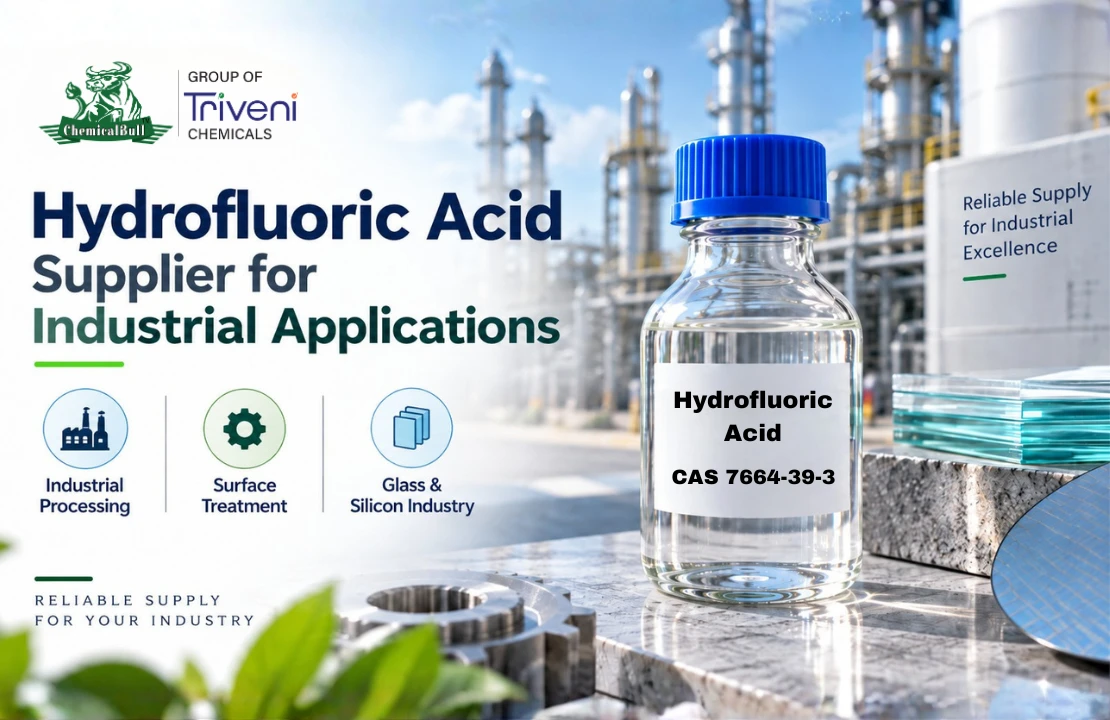
Hydrofluoric Acid (CAS No. 7664-39-3) is an important process chemical used in industries where strong surface reaction, oxide removal, silica treatment and fluorine chemistry are required. For manufacturing companies, the value of Hydrofluoric Acid depends not only on concentration, but also on consistent quality, suitable packaging, technical documentation and dependable supply.
ChemicalBull Pvt. Ltd. is a Hydrofluoric Acid supplier supporting industrial and bulk requirements for process industries. We supply Hydrofluoric Acid in different concentrations for applications such as metal treatment, glass processing, fluorochemical manufacturing, specialty chemical production and selected high-purity processes.
Industrial buyers can source Hydrofluoric Acid according to required concentration, quantity, packaging and application, with support for product specifications, COA, SDS/MSDS and commercial supply requirements.
This guide explains how Hydrofluoric Acid is used in industrial manufacturing, which sectors depend on it, what buyers should evaluate before sourcing, and what buyers should consider when sourcing HF for regular or bulk manufacturing requirements.
Where Hydrofluoric Acid Is Used in Process Industries
Hydrofluoric Acid has a unique role in industrial processing because it can react with silica, silicates and selected metal oxides. This makes it useful in applications where conventional mineral acids may not provide the required surface or chemical effect.
Typical users include:
- Metal treatment companies
- Stainless steel processors
- Tube and pipe manufacturers
- Glass processors
- Fluorochemical manufacturers
- Specialty chemical companies
- Electronics and semiconductor processors
- Surface treatment businesses
- Industrial cleaning and process chemical formulators
These applications often form part of broader industrial chemical manufacturing requirements, where consistent raw-material supply is important for uninterrupted production.
Hydrofluoric Acid for Metal Treatment and Surface Processing
Metal treatment is one of the most important industrial application areas for Hydrofluoric Acid.
In selected pickling and cleaning systems, HF can help remove oxide scale and surface contamination from stainless steel and certain alloys. It is commonly used as part of properly designed acid-treatment systems where difficult oxide layers must be removed before further processing.
In metal-finishing operations, Hydrofluoric Acid may also be used alongside other electroplating and surface-treatment chemicals, depending on the treatment sequence and process design.
Stainless Steel Pickling and Oxide Removal
Manufacturing units may use Hydrofluoric Acid during selected metal-treatment stages involving:
- Stainless steel pickling
- Scale removal
- Surface cleaning
- Oxide removal
- Pre-treatment before finishing
- Preparation before passivation or further processing
This makes Hydrofluoric Acid for metal treatment especially relevant for stainless steel processors, pipe manufacturers, fabrication units and metal-finishing companies.
The required concentration should be selected according to the process design, material being treated and plant operating conditions.
Hydrofluoric Acid for Glass Etching and Glass Processing
Hydrofluoric Acid is widely associated with glass processing because it reacts with silica-containing materials.
Selected industrial uses may include:
- Glass etching
- Glass frosting
- Decorative glass treatment
- Surface texturing
- Technical glass processing
- Controlled surface treatment
Manufacturers sourcing Hydrofluoric Acid for glass etching should pay close attention to concentration consistency and product quality because changes in acid strength can affect process control and surface results.
For large-scale glass-processing operations, buyers should usually confirm:
- Required HF concentration
- Product specification
- Purity
- Packaging
- Monthly consumption
- Delivery schedule
- Documentation requirements
A reliable supply arrangement is particularly important where glass treatment is part of continuous production.
Its strong relevance to silica-based surfaces also makes Hydrofluoric Acid an important material within ceramic and glass chemical applications.
Hydrofluoric Acid in Fluorochemical Manufacturing
Hydrofluoric Acid is a key raw material in many fluorine-based chemical processes. In downstream production, HF can serve as a feedstock for selected chemical intermediates and fluorine-containing compounds.
Fluorochemical manufacturers may use HF in the production of selected:
- Inorganic fluorides
- Fluorinated intermediates
- Specialty fluorochemicals
- Fluoride salts
- Fluorine-containing process chemicals
In these industries, Hydrofluoric Acid can be a core production raw material rather than only a processing aid.
That makes bulk Hydrofluoric Acid supply and long-term availability especially important.
Large-volume buyers may need:
- Consistent concentration
- Stable specifications
- Regular delivery schedules
- Batch documentation
- Supply planning
- Commercial forecasting support
For continuous fluorochemical production, dependable sourcing can directly influence manufacturing continuity.
Hydrofluoric Acid for Electronics and High-Purity Applications
Electronics-related processes may require tighter purity control than standard industrial applications.
In selected wafer cleaning, oxide removal and surface preparation steps, Hydrofluoric Acid may be used where low contamination levels are important.
Buyers in electronics and high-purity applications may focus on:
- Metallic impurity limits
- Concentration tolerance
- Particulate control
- Batch traceability
- Packaging cleanliness
- Technical documentation
A standard industrial grade should not automatically be considered suitable for electronics-related use.
The buyer should clearly communicate whether the requirement is for industrial, technical, high-purity or electronics-related processing. High-purity requirements are especially important in energy and electrical chemical applications, where contamination control can directly affect process performance.
Choosing the Right Hydrofluoric Acid Concentration
|
Hydrofluoric Acid Grade |
Typical Buyer Segment |
Common Industrial Focus |
|
Surface-treatment and process users |
Controlled cleaning and selected surface-treatment processes |
|
|
Industrial processors |
General process and treatment requirements |
|
|
Metal, glass and chemical manufacturers |
Metal treatment, glass processing and chemical manufacturing |
|
|
Fluorochemical and bulk industrial users |
Higher-strength process applications |
|
|
Specialty chemical and large-scale manufacturers |
Concentrated feedstock for selected industrial processes |
|
|
Laboratories, R&D teams and quality-control users |
Laboratory reagent, analytical and controlled testing applications |
The appropriate concentration should be selected according to the application, process design, purity requirement and plant handling system, rather than concentration alone.
What ChemicalBull Supports Along With Hydrofluoric Acid Supply
For industrial procurement teams, supplier support should go beyond material availability.
ChemicalBull can support buyers with commercial and technical information such as:
Concentration Confirmation
Clear identification of the HF concentration being offered.
Product Specification
Technical specification relevant to the supplied grade.
COA Support
Batch-specific Certificate of Analysis where applicable.
SDS / MSDS
Safety and handling documentation required for internal review.
Packaging Information
Details on pack size and suitable packaging for the supplied concentration.
Batch and Supply Information
Useful for quality checks and repeat procurement.
Commercial Supply Coordination
Support for quantity planning, delivery requirements and repeat orders.
Export Support
Commercial coordination for international buyers depending on destination and supply conditions.
This allows manufacturing companies to evaluate both the chemical and the complete supply arrangement.
Packaging Considerations for Hydrofluoric Acid
Packaging is especially important for Hydrofluoric Acid because the chemical is highly corrosive and incompatible with glass and several common materials.
Industrial buyers should confirm that the packaging is appropriate for the supplied concentration and transport conditions.
Commercial supply may involve suitable:
- HDPE containers
- Plastic drums
- IBC arrangements where technically appropriate
- Bulk handling systems
The correct option depends on quantity, concentration, logistics and the buyer's storage and unloading system.
For large users, packaging also affects handling efficiency, storage space and delivered cost.
Hydrofluoric Acid Supply for Continuous Manufacturing
Many process industries consume Hydrofluoric Acid regularly rather than through occasional purchases.
For such users, procurement planning should consider:
- Monthly consumption
- Order frequency
- Lead time
- Safety stock
- Packaging size
- Delivery schedule
- Production peaks
- Planned maintenance shutdowns
Manufacturers with predictable consumption can often improve supply planning by sharing expected monthly or quarterly requirements in advance.
This is particularly useful for companies searching for a bulk Hydrofluoric Acid supplier for ongoing production.
How Manufacturing Companies Should Evaluate a Hydrofluoric Acid Supplier
For Hydrofluoric Acid, supplier evaluation should not be based only on the lowest quoted price.
Application Fit
The offered concentration and grade should match the buyer's process.
Consistent Quality
Repeat supplies should remain within agreed specifications.
Compatible Packaging
Packaging should suit the concentration, quantity and transport conditions.
Documentation Availability
COA, SDS and technical specifications should be available where required.
Supply Continuity
The supplier should be able to support repeat or scheduled requirements.
Commercial Transparency
Quantity, packaging, pricing, lead time and delivery terms should be clearly communicated.
Logistics Capability
Delivery arrangements should suit the manufacturing location and order volume.
These factors become increasingly important when HF is a critical raw material for continuous production.
Hydrofluoric Acid Suppliers for Manufacturing Companies in India
Indian manufacturing companies may require Hydrofluoric Acid for metal treatment, glass processing, specialty chemicals, fluorochemical production, electronics and other industrial operations.
Buyers searching for Hydrofluoric Acid suppliers in India should compare sources based on:
- Concentration availability
- Product consistency
- Documentation
- Packaging
- Commercial terms
- Lead time
- Delivery capability
For process industries, dependable availability can be just as important as price because interruptions in raw-material supply can affect production schedules.
Hydrofluoric Acid for Bulk and Export Requirements
International and large-volume buyers should provide complete technical and commercial information when requesting Hydrofluoric Acid.
A useful enquiry should include:
Product: Hydrofluoric Acid
Concentration: 20%, 30%, 40%, 60%, 70% or required grade
Purity: If specified
Application: Metal treatment, glass processing, fluorochemical manufacturing, electronics or other
Quantity: Trial, monthly or bulk requirement
Packaging: Preferred pack type
Destination: City, country or port
Documentation: COA, SDS/MSDS, specification or other required documents
Supply Frequency: One-time or repeat order
Providing this information helps the supplier prepare a more relevant quotation and supply plan.
Safety Considerations Before Purchasing Hydrofluoric Acid
Hydrofluoric Acid presents severe health and handling hazards, so procurement and plant-safety teams should review the material carefully before approval.
Before commercial use, buyers should ensure that:
- The concentration is clearly identified
- Compatible storage systems are available
- Suitable transfer equipment is in place
- Current SDS information has been reviewed
- Trained personnel handle the material
- Appropriate PPE is available
- Site-specific emergency procedures are established
- Applicable transport and regulatory requirements are followed
Safety evaluation should form part of the sourcing decision, not only the plant-handling stage.
Frequently Asked Questions
1. What industries use Hydrofluoric Acid?
Hydrofluoric Acid is used in selected metal treatment, glass processing, fluorochemical manufacturing, electronics, specialty chemical and surface-treatment applications.
2. Which Hydrofluoric Acid concentration is used in industrial manufacturing?
The required concentration depends on the process. Commercial requirements may include 20%, 30%, 40%, 60% or 70% HF, depending on the application and operating conditions.
3. What should buyers check before purchasing Hydrofluoric Acid in bulk?
Buyers should review concentration, purity, packaging compatibility, application suitability, COA, SDS, quantity, delivery requirements and supplier reliability.
4. Is Hydrofluoric Acid used for metal treatment and glass processing?
Yes. Hydrofluoric Acid is used in selected metal-treatment processes and in glass etching or surface-treatment applications because of its ability to react with certain oxides and silica-based materials.
5. What information should be included in a Hydrofluoric Acid enquiry?
Buyers should provide the required concentration, quantity, application, packaging preference, delivery destination, documentation requirements and expected purchase frequency.
Source Hydrofluoric Acid for Industrial Applications
ChemicalBull Pvt. Ltd. supplies Hydrofluoric Acid for industrial and manufacturing requirements, including metal treatment, glass processing, fluorochemical production, electronics-related processing and other process-industry applications.
Buyers can contact ChemicalBull Pvt. Ltd. with their required concentration, quantity, application, preferred packaging and delivery destination to discuss commercial supply requirements.


Comment Section