
Chemical Bull
4289
14-Nov-2025
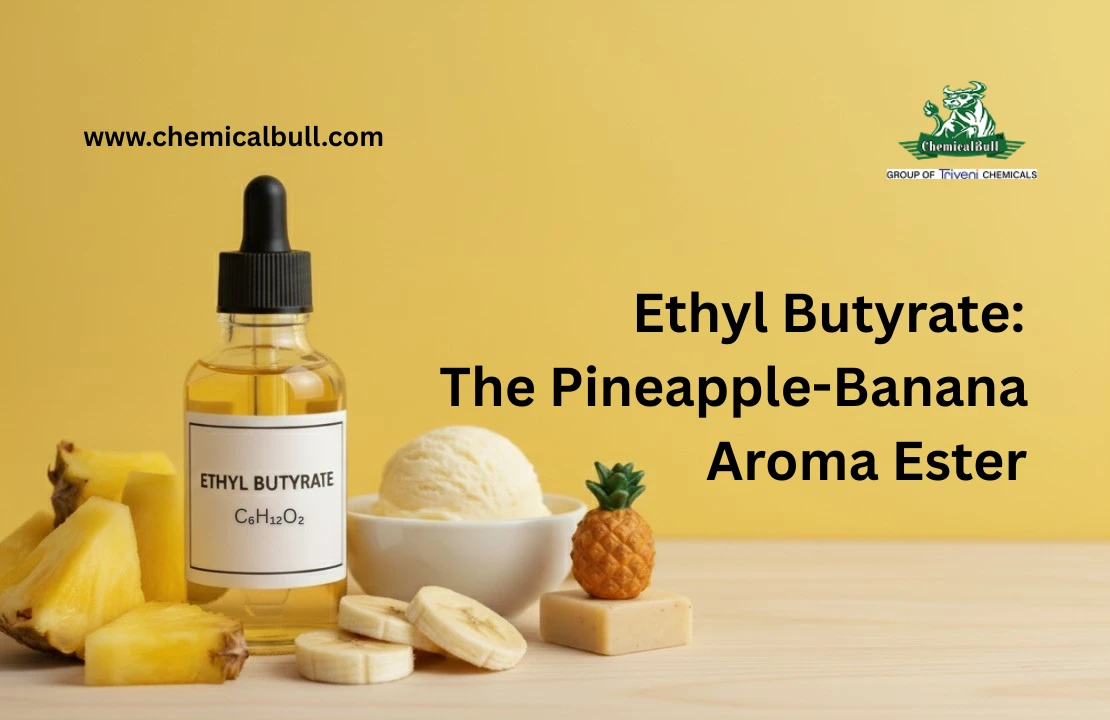
What is Ethyl Butyrate?
Ethyl butyrate (ethyl butanoate), also referred to as ethyl butanoate, is an ester with the molecular formula C6H12O2 and molecular weight of 116.16 g/mol that naturally occurs in nature. This colourless liquid features an aromatic profile reminiscent of pineapple, banana, and orange notes, and its versatility has become one of the most sought-after food flavouring agents on the global market.
As a versatile banana flavour chemical, ethyl butyrate naturally occurs in several fruits like apples, bananas, pineapples, and strawberries; however, most commercial applications rely on synthetically produced versions due to cost efficiency and consistent quality control.
Is Ethyl Butyrate Natural?
This is an intricate question with multiple layers of complexity. While most commercially available ethyl butyrate is synthetically produced, it occurs naturally in fruits. Both natural and synthetic versions of this food-grade flavouring have been approved by regulatory authorities worldwide - including FDA and EFSA - making its natural origin comforting to consumers who support the clean-label movement.
Clean-label food movements have increased demand for naturally derived ethyl butyrate. According to 2024 market data, over 90 food companies have added it into their formulations in place of synthetic flavouring agents to satisfy consumer preference for more identifiable ingredients.
Natural vs. Synthetic Ethyl Butyrate: A Comparative Analysis
|
Criteria |
Natural Ethyl Butyrate |
Synthetic Ethyl Butyrate |
|
Source |
Extracted from fruits (apples, bananas, pineapples) or fermented |
Chemical synthesis via esterification of butyric acid + ethanol |
|
Purity Level |
95-98% (may contain trace fruit compounds) |
99-99.8% (highly purified) |
|
Availability |
Limited supply, seasonal variations |
Consistent year-round supply |
|
Regulatory Status |
"Natural Flavor" labeling permitted |
"Artificial Flavor" or "Nature-identical" |
|
Consumer Perception |
Highly preferred for clean-label products |
Declining preference in premium products |
|
Sustainability |
Higher carbon footprint (extraction process) |
Lower when bio-based feedstocks are used |
|
Application Consistency |
May vary batch-to-batch |
Highly consistent performance |
What is Ethyl Butyrate Used For?
Applications in Food and Beverages
Ethyl butyrate in food applications dominates the market, accounting for over 52% of global consumption. Its primary uses include:
-
Fruit-Based Beverages: Enhances tropical fruit profiles in juices, smoothies, and soft drinks
-
Confectionery Products: Creates authentic banana and pineapple flavors in candies and gummies
-
Baked Goods: Adds fruity notes to cakes, pastries, and cookies
-
Alcoholic Beverages: Contributes to fruit-forward profiles in craft beers and cocktails
-
Dairy Products: Flavored yogurts, ice creams, and flavored milk products
Between 2022 and 2024, demand for ethyl butyrate in beverages rose by 37% due to global preference for natural fruit flavors and clean-label beverage formulations.
Ethyl Butyrate in Cosmetics and Personal Care
Ethyl butyrate in cosmetics represents approximately 18% of the market share. Its applications include:
-
Perfumery: As a fruity top note in fragrance compositions
-
Body Care Products: Scenting lotions, creams, and shower gels
-
Hair Care: Adding pleasant fruity aromas to shampoos and conditioners
-
Aromatherapy Products: Creating uplifting, mood-enhancing scents
Similar to Alpha-Ionone and Isoamyl Acetate, ethyl butyrate serves as an essential building block in modern perfume creation.
Key Benefits of Ethyl Butyrate in Personal Care Products
- Natural Fruit Aroma
- Provides an authentic pineapple-banana scent without artificial notes
- Used in body lotions, shower gels, hair mists
- Excellent Volatility
- Works as a strong top note that gives immediate sensory impact
- Used in eau de toilette, room sprays, air fresheners
- Mood Enhancement
- Fruity aromas are linked to positive emotions, freshness, and energy
- Used in aromatherapy products, bath bombs, candles
- Masking Agent
- Helps cover or reduce unpleasant odors from base ingredients
- Used in sulfate-free shampoos, natural deodorants
- Blending Versatility
- Combines well with floral, citrus, and woody notes
- Used in multi-layer fragrances, signature scent creations
- Skin-Friendly
- Non-irritating when used at recommended levels (0.1–2%)
- Used in sensitive skin formulations, baby care products
- Cost-Effective
- Provides a substantial aroma impact even at low usage levels
- Used in budget-friendly product lines, mass-market fragrances
- Clean-Label Appeal
- Accepted in natural and organic-certified product concepts
- Used in green beauty brands, eco-conscious personal care ranges
Industrial Applications
Beyond food and cosmetics, ethyl butyrate finds use in:
-
Pharmaceutical Formulations: Masking unpleasant medicinal tastes
-
Biofuel Additives: Contributing 6% of industrial utilization
-
Chemical Synthesis: As an intermediate in organic chemistry
Ester-Based Fragrance: The Chemistry Behind the Aroma
As an ester-based fragrance compound, ethyl butyrate belongs to a larger family of esters in fragrance that deliver fruity, sweet, and pleasant aromatic profiles. The esterification reaction between butyric acid and ethanol creates this versatile molecule:
Butyric Acid + Ethanol → Ethyl Butyrate + Water
This chemical structure gives ethyl butyrate its characteristic volatility and fruity aroma, making it invaluable for perfumers and flavorists. Much like how Aroma Chemicals are selected in perfumery, ethyl butyrate's purity and consistency determine its quality and application suitability.
Latest Market Trends and Industry Developments (2024-2025)
Bio-Based Production Revolution
The most significant trend reshaping the ethyl butyrate market is the shift toward bio-based production methods. Approximately 47% of new production facilities now use renewable raw materials such as corn, sugarcane, and biomass residues. Bio-based ethyl butyrate production increased by 48% between 2021 and 2024, driven by:
-
Consumer demand for sustainable ingredients
-
Regulatory pressure for eco-friendly manufacturing
-
Corporate sustainability commitments
In 2024, Treatt introduced encapsulated ethyl butyrate flavors, enhancing aroma stability in beverages by 30%. This innovation addresses shelf-life challenges while maintaining clean-label credentials.
Clean-Label Movement Impact
The clean-label trend continues to drive substantial growth in natural ethyl butyrate demand. Key statistics:
-
83% of shoppers are knowledgeable about clean-label products
-
Natural flavoring agents hold 32.1% market share in clean-label ingredients
-
68% of consumers associate natural flavor ingredients with environmental sustainability
-
Nearly 3 in 4 consumers reconsider purchases based on ingredient lists
This aligns with broader industry movements toward natural fruit flavors and transparent ingredient declarations, similar to trends observed in preservatives and other food additives.
To read more on Preservatives, explore the following blog. Types of Preservatives
Advanced Processing Technologies
Manufacturing innovations have significantly improved ethyl butyrate quality:
-
Advanced distillation techniques are improving yield by 22%
-
Purity levels reaching 99.8%
-
Enzymatic production methods reduce costs
-
Fermentation-derived butyric acid as sustainable feedstock
Sourcing Quality Ethyl Butyrate: Finding the Right Supplier
Selecting an ethyl butyrate supplier requires careful consideration of several factors:
Key Selection Criteria
-
Purity Standards: Food-grade ethyl butyrate should meet ≥99% purity for premium applications
-
Regulatory Compliance: GMP, ISO, FDA, and EFSA certifications
-
Supply Chain Reliability: Consistent availability and quality
-
Technical Support: Application guidance and formulation assistance
-
Sustainability Credentials: Bio-based sourcing options
Quality Indicators
-
Clear documentation of C.A.S. number verification
-
Batch-specific certificates of analysis
-
Traceability throughout the supply chain
-
Competitive pricing without quality compromise
Chemical Bull Pvt. Ltd. specializes in providing high-quality ethyl butyrate and other food-grade flavorings to B2B clients worldwide. Our portfolio includes complementary aroma chemicals like Alpha-Pinene and Beta-Pinene for diverse fragrance applications.
Formulation Considerations for Food & Cosmetic Applications
Optimal Usage Levels
-
Beverages: 1-10 ppm for natural fruit enhancement
-
Baked Goods: 10-50 ppm for pronounced banana-pineapple notes
-
Confectionery: 20-100 ppm depending on desired intensity
-
Perfumes: 0.5-5% in fragrance concentrates
-
Cosmetics: 0.1-2% in finished products
Stability Factors
-
pH Sensitivity: Stable in slightly acidic to neutral conditions
-
Temperature: Moderate heat stability; encapsulation extends shelf life
-
Light Exposure: Store in dark containers to prevent degradation
-
Oxidation: Antioxidants may enhance stability in long-shelf-life products
Future Outlook: Emerging Applications and Opportunities
Dairy Alternative Market
Clean-label ethyl butyrate shows promising growth in the dairy alternative segment, aligning with vegan and lactose-free diet trends. This emerging application offers new revenue streams as plant-based product innovation continues.
Functional Beverages
The functional beverage category increasingly incorporates natural fruit flavors like ethyl butyrate to mask nutritional additives while delivering pleasant taste experiences. This segment is expected to grow at a 4.93% CAGR through 2034.
Sustainable Production Focus
Environmental regulations and consumer preferences drive investment in:
-
Green chemistry synthesis routes (27% adoption rate)
-
Circular economy principles in production
-
Carbon-neutral manufacturing facilities
-
Biodegradable packaging solutions
Technology Integration
AI and machine learning increasingly optimize formulation development, with 18 new product launches in 2024 incorporating ethyl butyrate as a sustainable flavoring agent.
Related Flavor Compounds and Complementary Ingredients
For formulators seeking comprehensive flavor profiles, ethyl butyrate works synergistically with:
-
Isoamyl Acetate: For enhanced banana notes
-
Ethyl 2-Methylbutyrate: For apple nuances
-
Vanillin: For sweet undertones
-
Citrus Terpenes: For tropical complexity
Learn more about creating balanced fragrances through our guide on Perfume making with aroma chemicals.
Conclusion: The Future of Ethyl Butyrate in Global Markets
Ethyl butyrate lies at the intersection of consumer demand for natural ingredients, regulatory changes towards cleaner labels, and technological breakthroughs in sustainable production. With the global market projected to increase from USD 2.45 billion in 2024 to an anticipated USD 3.27 billion by 2030, opportunities abound for manufacturers, formulators, and suppliers dedicated to quality and sustainability.
No matter your flavor or fragrance formulation needs, ethyl butyrate remains an indispensable ingredient. Thanks to its versatility, safety profile, and consumer acceptance it forms a cornerstone of modern flavor and fragrance formulation.
Key Takeaways
- Natural fruit aroma with pineapple-banana character
- Approved worldwide as a food-grade flavoring and cosmetic ingredient
- Growing sustainably through bio-based production methods
- Market expansion driven by clean-label and health-conscious trends
- Versatile applications across food, beverage, cosmetic, and industrial sectors
About Chemical Bull Pvt. Ltd.
Chemical Bull Pvt. Ltd is a Premier Supplier of high-grade aroma chemicals, essential oils, and specialty ingredients for use in food, beverage, cosmetic, and pharmaceutical industries. We provide technical expertise, regulatory guidance, and reliable supply chain management so our clients can create exceptional products.
Contact us for samples, technical data sheets, and formulation support for ethyl butyrate and our complete range of food flavoring agents and ester-based fragrances.
Explore more insights on our Blog covering the latest trends in aroma chemicals, perfume manufacturing, and industrial applications.
Comment Section