Chemical Bull
1560
22-Nov-2025
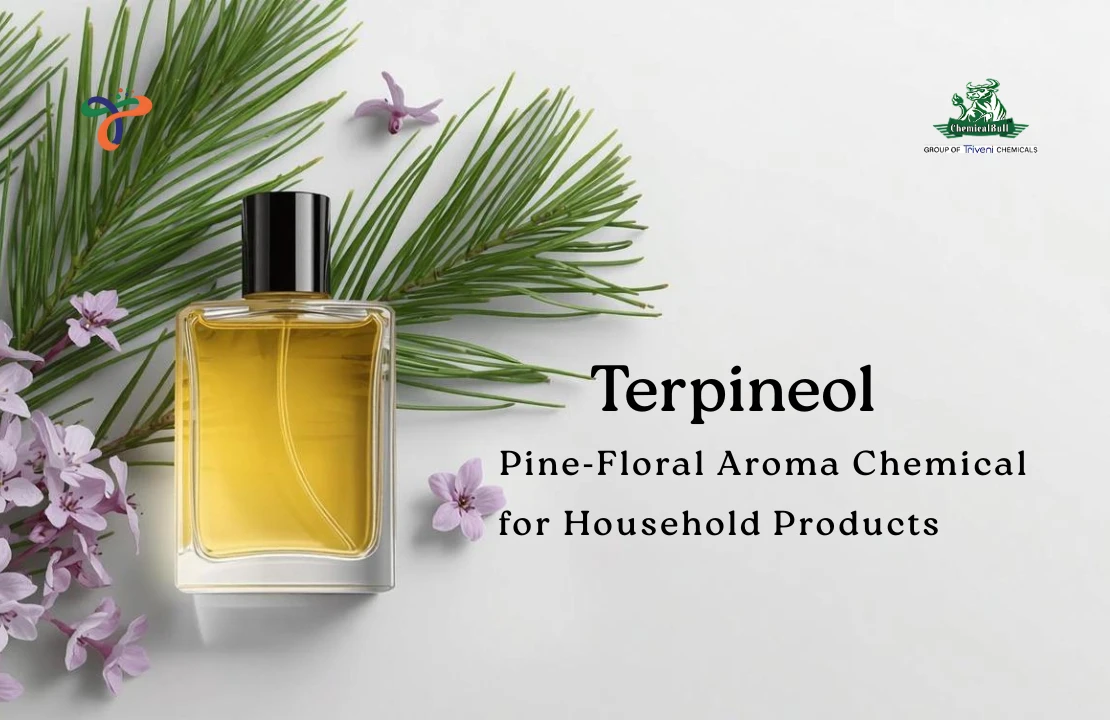
Terpineol is a highly versatile aroma chemical known for its pleasant pine‑floral scent. It plays a major role in the world of fragrance, cleaning, and personal‑care products. For B2B clients — manufacturers, distributors, and formulators — understanding Terpineol’s properties, uses, and safety is essential. In this blog, we explore everything you need to know: from its chemical profile to its industrial applications, production methods, regulatory aspects, and why sourcing it from a reliable company like ChemicalBull makes sense.
What Is Terpineol?
Terpineol is a type of alcohol that naturally comes from pine oils and some other essential oils. It exists in a few different forms, including alpha, beta, gamma, and terpinen-4-ol, but alpha-terpineol is the form most commonly used in commercial products. Chemically, its formula is C₁₀H₁₈O, and it appears as a clear to slightly yellow liquid. Its aroma is fresh and floral, combining the crisp scent of pine with soft lilac notes, making it highly appealing for both household and cosmetic products. Terpineol has a boiling point of around 214–224 °C and is favored by manufacturers because it blends well, maintains its fragrance, and performs reliably across a wide range of formulas.
How is Terpineol Produced?
Natural Production
Terpineol can be derived from natural sources such as pine resin and essential oils via steam distillation. This route is often preferred for “green” or premium perfumery-grade terpineol.
Synthetic Production
On an industrial scale, terpineol is typically made by hydration of α-pinene (derived from turpentine), followed by partial dehydration. This method gives consistent quality and is cost-effective — making it suitable for large-scale commercial applications.
Applications of Terpineol
Terpineol’s versatility makes it valuable across several industries:
Household Products
- Soaps & Detergents: Gives a fresh pine‑floral fragrance.
- Air Fresheners: Ideal for sprays, gels, and diffusers because of its lasting scent.
- Cleaning & Disinfectants: Its antimicrobial properties make it useful in surface cleaners and disinfectants.
Personal Care & Cosmetics
- Perfumes & Colognes: Acts as a middle or top note with a sweet-lilac scent
- In lotions and shampoos, combining Rose Oxide, Linalool, and Citronellol with terpineol creates a balanced pine-floral aroma.
Technical / Industrial Uses
- Solvent for Resins & Varnishes: Terpineol dissolves many resins and works in coatings
- Antimicrobial Agent: Effective in disinfectant formulations due to its antimicrobial activity.
- Other Uses: Found in adhesives, cleaning agents, and even in mineral flotation processes
Terpineol is widely used in soaps, detergents, and air fresheners. For instance, products like Linalool 99%, Geraniol Natural, and Citral are often blended with terpineol to enhance fragrance longevity.
Types of Terpineol
Terpineol exists in several isomeric forms, each with slightly different properties and applications. Understanding these types helps B2B clients choose the right grade for their formulations:
-
Alpha-Terpineol
-
Most commonly used commercially.
-
Strong pine-floral aroma, highly blendable.
-
Ideal for soaps, detergents, air fresheners, and perfumes.
-
Beta-Terpineol
-
Milder fragrance than alpha.
-
Sometimes used in cosmetic products where a subtle scent is preferred.
-
Gamma-Terpineol
-
Less common in commercial applications.
-
Used in specialty fragrances and industrial formulations requiring specific solubility.
-
Terpinen-4-ol
-
Noted for its antimicrobial properties.
-
Frequently used in disinfectants, cleaning agents, and formulations needing functional benefits beyond fragrance.
Tip for B2B Buyers: Alpha-terpineol is usually the preferred choice for household and personal care products due to its balance of fragrance strength, stability, and blending capability.
Benefits of Using Terpineol
- Pleasant & Recognizable Scent: The warm, pine‑floral fragrance is very appealing for consumers.
- Stability: It remains relatively stable under heat, which is useful for industrial and household formulations.
- Good Solubility: Terpineol mixes well with many organic solvents and resins.
- Bio‑functional Properties: Shows antimicrobial and anti‑inflammatory activity.
- Sustainable Potential: When sourced from natural pine or bio‑based feedstocks, it aligns with green chemistry trends.
Fragrance Profile & Blending Tips
Terpineol’s lilac and pine character makes it very blendable:
- With Citrus Notes: Lemon, bergamot or orange oils create a fresh, clean signature.
- With Floral Notes: Linalool or geraniol help balance and round out the floral‑pine scent.
- With Woody Notes: Cedarwood or sandalwood deepen the aroma and add longevity.
Pro Tip for B2B Manufacturers: Use terpineol in moderate concentrations to maintain its aromatic impact without overpowering other notes. For woody and citrusy blends, B2B formulators often mix terpineol with Cedarwood Oil, Lemon Terpenes, or Geraniol to achieve a long-lasting aroma.
Technical Guidelines for Formulation
Here’s a quick guideline for formulation in various product types:
|
Air Fresheners |
0.5% – 2% |
|
Soaps / Detergents |
0.2% – 0.5% |
|
Lotions / Creams |
0.1% – 0.3% |
Also, for B2B buyers, always request a Certificate of Analysis (CoA) from your supplier to check purity, isomer composition, and suitability for your application.
Safety, Handling & Regulatory Aspects
- According to the MSDS, terpineol can cause skin and eye irritation and may irritate the respiratory system.
- Use protective gloves, face protection, and proper ventilation during handling.
- Its flash point is about 95°C, so handle with care to avoid fire risk.
- For industrial usage, consult local regulations and fragrance‑safety guidelines (like IFRA) to ensure compliance.
Terpineol vs Other Aroma Chemicals
|
Property / Chemical |
Terpineol |
Linalool |
Geraniol |
|
Fragrance Type |
Pine‑Floral |
Floral‑Citrus |
Rose‑Citrus |
|
Volatility |
Moderate |
High |
Moderate |
|
Solubility |
Good in solvents & oils |
Moderate |
Moderate |
|
Antimicrobial |
Mild |
Low |
Low |
|
Stability (Heat) |
High |
Medium |
Medium |
Market Trends & Demand
The demand for terpineol is steadily increasing, especially in the household and personal care industries, thanks to its fresh pine‑floral scent and versatility. Brands are looking for ingredients that not only add fragrance but also offer functional benefits, like acting as a mild antimicrobial agent in cleaning products. With consumers increasingly preferring natural and eco-friendly scents, terpineol derived from pine oils or sustainable sources is gaining popularity. Industrial buyers, including manufacturers of detergents, air fresheners, and personal care items, see it as a reliable raw material that delivers consistent aroma and performance. For B2B suppliers, offering high-quality terpineol provides a competitive edge, as it caters to a wide range of products and meets the growing market demand for fresh, clean, and sustainable fragrance solutions.
Why Choose ChemicalBull for Terpineol?
If you are sourcing terpineol for your business, here’s why ChemicalBull is a smart choice:
- We offer industrial-grade and technical-grade terpineol, tailored to different applications.
- Bulk supply available, which is ideal for B2B clients, distributors, and resellers.
- We provide technical support for formulation — especially useful for our commercial clients.
- Full compliance: We support MSDS, CoA, and regulatory documentation.
- Competitive pricing with reliable supply management.
FAQs About Terpineol
What is Terpineol used for?
Terpineol is mainly used as a fragrance ingredient in household products, soaps, detergents, air fresheners, personal care products, and industrial formulations. It also acts as a mild antimicrobial agent and solvent in some applications.
Is Terpineol natural?
Terpineol can be both natural and synthetic. It naturally occurs in pine oils and other essential oils, while synthetic terpineol is produced from α-pinene for consistent quality and large-scale industrial use.
Is Terpineol good for skin?
Terpineol is used in skin and personal care products for its pleasant aroma, but it can cause irritation in sensitive skin if used in high concentrations. Always follow recommended usage levels.
Can Terpineol be used in air fresheners?
Yes, it is widely used in air fresheners, sprays, gels, and diffusers due to its fresh pine-lilac scent and long-lasting fragrance.
Conclusion
Terpineol is much more than just a fragrance chemical — it's a multi-functional ingredient that adds a unique pine-lilac aroma while also serving as a solvent and bio‑active agent. Its broad usability in household cleaners, soaps, personal care, and industrial products makes it a valuable asset for B2B manufacturers and traders.
By sourcing terpineol from a reliable company like ChemicalBull, you can ensure you get quality, regulatory compliance, and formulation support. If you're looking to create or improve your next product with a fresh, natural scent — terpineol is definitely a chemical worth considering.
Explore Related Products & Blogs
To enhance your formulations with Terpineol, check out our related products: Linalool 99% and Geraniol Natural.
For more insights on fragrance creation and performance:


Comment Section