Chemical Bull
1074
24-Jul-2026
Microcrystalline Cellulose Applications in Food and Beverage Industry
What is microcrystalline cellulose used for in the food industry?
Microcrystalline Cellulose (MCC) is a purified, food-grade form of cellulose produced from high-quality plant fiber. In food and beverage manufacturing, it functions as a texturizer, anti-caking agent, fat replacer, dietary fiber source, emulsion stabilizer, and bulking agent. It is one of the most versatile and widely approved food additives in global use, listed under E460 in the European food additive system and approved by the FDA under 21 CFR.
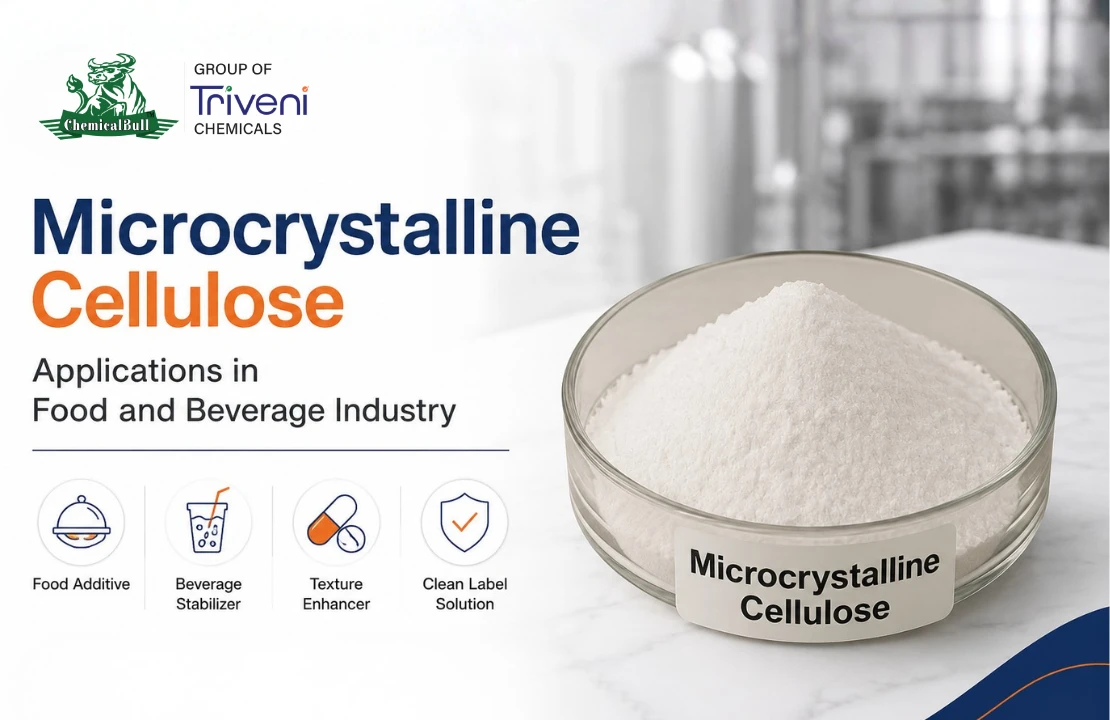
Microcrystalline cellulose powder is a white, odorless, tasteless material that is insoluble in water but swells when dispersed in water, forming a stable gel structure. This behavior is what makes it so useful in food formulation: it can modify texture, provide structure, replace fat, and improve stability without contributing flavor, color, or significant calories.
For food-grade and pharmaceutical-grade MCC supply with COA, MSDS, and consistent batch quality, Chemical Bull is a trusted microcrystalline cellulose manufacturer serving food manufacturers, dietary supplement producers, and specialty chemical buyers across India and global markets.
What Is Microcrystalline Cellulose?
Microcrystalline Cellulose is produced by partially hydrolyzing purified cellulose from plant-based raw materials such as wood pulp or cotton linters. The hydrolysis process removes the amorphous regions of the cellulose polymer while retaining the crystalline regions, producing a fine, white powder with a highly ordered crystalline structure.
|
Property |
Details |
|
Chemical Name |
Cellulose, Microcrystalline |
|
CAS Number |
9004-34-6 |
|
E Number (Food) |
E460 |
|
Molecular Weight |
Approximately 90,000 g/mol |
|
Physical Form |
White free-flowing powder |
|
Melting Point |
315°C |
|
Boiling Point |
360°C |
|
Solubility |
Insoluble in water; swells on hydration |
|
Origin |
Plant-derived (wood pulp, cotton linters) |
|
Caloric Value |
Essentially zero (not digested by humans) |
MCC is not digested or absorbed in the human gastrointestinal tract. It passes through the digestive system essentially intact, which is why it contributes dietary fiber content without adding caloric value to food products.
Microcrystalline Cellulose in Food: Key Functions
Microcrystalline cellulose in food industry applications is built around five primary functional roles:
|
Function |
How It Works in Food |
|
Anti-caking agent |
Prevents clumping and agglomeration in powdered food products |
|
Fat replacer |
Mimics the mouthfeel and texture of fat in reduced-fat formulations |
|
Emulsion stabilizer |
Maintains stable oil-water emulsions in sauces, dressings, and beverages |
|
Dietary fiber source |
Contributes insoluble fiber content to food and supplement products |
|
Bulking agent |
Adds volume and texture without adding calories or sugar |
|
Suspension stabilizer |
Keeps solid particles suspended in liquid food systems |
|
Texture modifier |
Improves mouthfeel, body, and consistency in processed food products |
Microcrystalline Cellulose Uses in Food: Application by Product Category
1. Processed Cheese and Dairy Products
One of the most established microcrystalline cellulose uses in food is in processed cheese. MCC is applied as a dusting agent or incorporated into the formulation to prevent shredded cheese pieces from sticking together, maintain free-flowing character in packaging, and improve shelf stability and appearance of grated products. In ice cream and frozen desserts, MCC stabilizes texture by preventing ice crystal growth during freeze-thaw cycling.
2. Low-Fat and Reduced-Calorie Food Products
MCC is widely used as a fat replacer in reduced-fat and low-calorie food formulations. When dispersed in water, MCC forms a gel-like structure that mimics the creamy, smooth mouthfeel of fat at a fraction of the caloric contribution.
Products using MCC as a fat replacer:
- Low-fat salad dressings and mayonnaise
- Reduced-fat spreads and margarine alternatives
- Low-fat ice cream and frozen desserts
- Diet sauces, gravies, and soups
- Reduced-calorie cream-based products
This is one of the most commercially important microcrystalline cellulose benefits in food: it allows manufacturers to reduce fat content and caloric density while maintaining the product texture and mouthfeel that consumers expect.
3. Powdered Food Products and Dry Mixes
Microcrystalline cellulose powder uses in dry food applications include:
- Powdered spice blends: MCC prevents caking and clumping in fine powder blends, keeping them free-flowing for accurate dosing
- Dry soup and sauce mixes: Acts as an anti-caking and free-flow agent that improves dispensing and reconstitution
- Protein powders and nutritional supplements: Used as a bulking agent and anti-caking agent in dietary supplement powders
- Baking premixes: Improves flow properties of pre-measured dry ingredient blends for bakery and confectionery applications
4. Sauces, Dressings, and Emulsified Products
In liquid and semi-liquid food products, MCC stabilizes oil-water emulsions and keeps solid particles suspended:
- Salad dressings: Stabilizes emulsions and suspends spice and herb particles throughout the product
- Tomato and pasta sauces: Improves body without starch thickening and maintains stability during heat processing
- Mayonnaise and aioli: Contributes to emulsion stability and smooth, consistent texture
- Gravies and cream sauces: Thickening and suspension agent that maintains consistency during reheating
5. Beverages and Nutritional Drinks
In beverages, MCC suspends insoluble vitamins, minerals, and protein particles uniformly through the product:
- Nutritional and meal replacement shakes: Contributes texture, mouthfeel, and dietary fiber
- Plant-based milk alternatives: Stabilizes particle suspension in oat, almond, and soy milk products
- Protein-fortified drinks: Maintains particle suspension and prevents sedimentation during shelf life
6. Baked Goods and Confectionery
In baking and confectionery, microcrystalline cellulose uses include:
- Low-calorie bakery: Replaces a portion of fat or starch to reduce calories while maintaining moisture retention and crumb structure
- Fiber-enriched bread and biscuits: Adds insoluble dietary fiber to improve the nutritional profile
- Chocolate and compound coatings: Improves the flow properties of molten chocolate during processing
- Tabletted confectionery: MCC functions as a binder and filler in compressed tablet candy formats. This is also relevant to the question of whether microcrystalline cellulose is a disintegrant, which is answered in the FAQ below.
7. Dietary Supplements and Nutraceuticals
Where is microcrystalline cellulose used most extensively beyond traditional food? In dietary supplements and nutraceuticals, MCC is the gold standard excipient for tablet and capsule manufacturing. It serves as:
- Binder: Holds tablet ingredients together during compression
- Filler/diluent: Adds volume to tablets containing low-dose active ingredients
- Disintegrant: Swells when it contacts water in the GI tract, helping tablets break apart and release active ingredients rapidly
This is the primary context for the question is microcrystalline cellulose a disintegrant? Yes, it does contribute to disintegration function in compressed tablet formats, though it is better characterized as a multifunctional excipient that combines binding, filling, and disintegration properties.
Microcrystalline Cellulose Rich Foods: Understanding the Term
Microcrystalline cellulose rich foods is a term sometimes encountered in consumer discussions. It is important to clarify this:
MCC is an added ingredient in processed food products, not a naturally occurring component in high concentrations in whole foods. Foods that are genuinely rich in dietary fiber (such as oats, vegetables, beans, and fruits) contain cellulose and other plant fibers, but not specifically microcrystalline cellulose in its processed powder form.
When you see MCC listed on a food label, it has been intentionally added by the manufacturer for functional purposes such as anti-caking, fat replacement, or fiber enrichment. Naturally fiber-rich foods such as vegetables, legumes, and whole grains contain cellulose as part of their plant cell wall structure, but this is not the same material as food-grade microcrystalline cellulose powder.
Microcrystalline Cellulose Benefits in Food Formulation
Microcrystalline cellulose benefits for food manufacturers and consumers:
|
Benefit |
Details |
|
Calorie-free bulking |
Adds volume and texture without calories, supporting low-calorie product development |
|
Fat replacement |
Mimics fat texture at zero fat content, enabling genuine fat reduction claims |
|
Dietary fiber contribution |
Counts as insoluble dietary fiber on nutrition labels |
|
Chemical inertness |
Does not react with food ingredients, flavors, or nutrients |
|
Thermal stability |
Stable during heat processing, baking, and sterilization |
|
Regulatory approval |
Approved under FDA, EU (E460), CODEX, and other global food safety frameworks |
|
Taste and odor neutral |
Adds no flavor, color, or odor to the finished product |
|
Clean label potential |
Can be labeled as "cellulose" or "microcrystalline cellulose" on ingredient lists |
Application of Microcrystalline Cellulose in Chemical Industry
Beyond food, application of microcrystalline cellulose in chemical industry includes pharmaceutical tablet binding, filling, and disintegration (its largest global industrial use), cosmetics and personal care powders, specialty coating rheology modification, and nanocellulose composite materials research.
Frequently Asked Questions
1. What is microcrystalline cellulose used for in food?
In food, MCC is used as an anti-caking agent, fat replacer, emulsion stabilizer, dietary fiber source, suspension agent, and texture modifier across dairy, sauces, beverages, dry mixes, and supplements.
2. Is microcrystalline cellulose safe to eat?
Yes. MCC is approved as a food additive (E460) by the EU, FDA, CODEX, and other global food safety authorities. It is not digested and passes through the body without being absorbed.
3. Is microcrystalline cellulose a disintegrant?
Yes, in compressed tablet formats (dietary supplements and pharmaceuticals), MCC acts as a disintegrant by swelling when it contacts water, helping the tablet break apart and release active ingredients. In food applications, it functions differently, primarily as a texture agent and stabilizer.
4. What are microcrystalline cellulose rich foods?
MCC is an added food ingredient, not naturally concentrated in whole foods. It appears in processed foods such as shredded cheese, low-fat dressings, protein powders, and nutritional beverages where it has been added for functional purposes.
5. What is the E number for microcrystalline cellulose?
E460. Microcrystalline cellulose is E460(i), and powdered cellulose is E460(ii) in the EU food additive classification system.
6. Does microcrystalline cellulose add calories to food?
No. MCC is not digested or absorbed by the human body, contributing essentially zero calories while counting as dietary fiber on nutrition labels.
7. Where to buy microcrystalline cellulose for food manufacturing?
Source from certified food-grade suppliers who provide a COA confirming compliance with FDA 21 CFR, EU E460, or relevant national food safety standards. Chemical Bull supplies MCC with full documentation for food, pharma, and nutraceutical applications.
Conclusion
Microcrystalline cellulose is a genuinely multifunctional food ingredient. Its uses in the food and beverage industry span anti-caking in powdered products, fat replacement in reduced-calorie formulations, emulsion and suspension stabilization in sauces and drinks, dietary fiber enrichment, and texture modification across dozens of product categories. Its regulatory approval across major global markets, its calorie-free profile, and its chemical inertness make it one of the most reliable functional ingredients available to food manufacturers.
For food-grade and pharmaceutical-grade Microcrystalline Cellulose with COA, MSDS, grade specifications, and reliable bulk supply, connect with Chemical Bull, a trusted microcrystalline cellulose manufacturer serving food manufacturers, dietary supplement producers, pharmaceutical companies, and specialty chemical buyers across India and global export markets.


Comment Section