Chemical Bull
11
14-Nov-2026
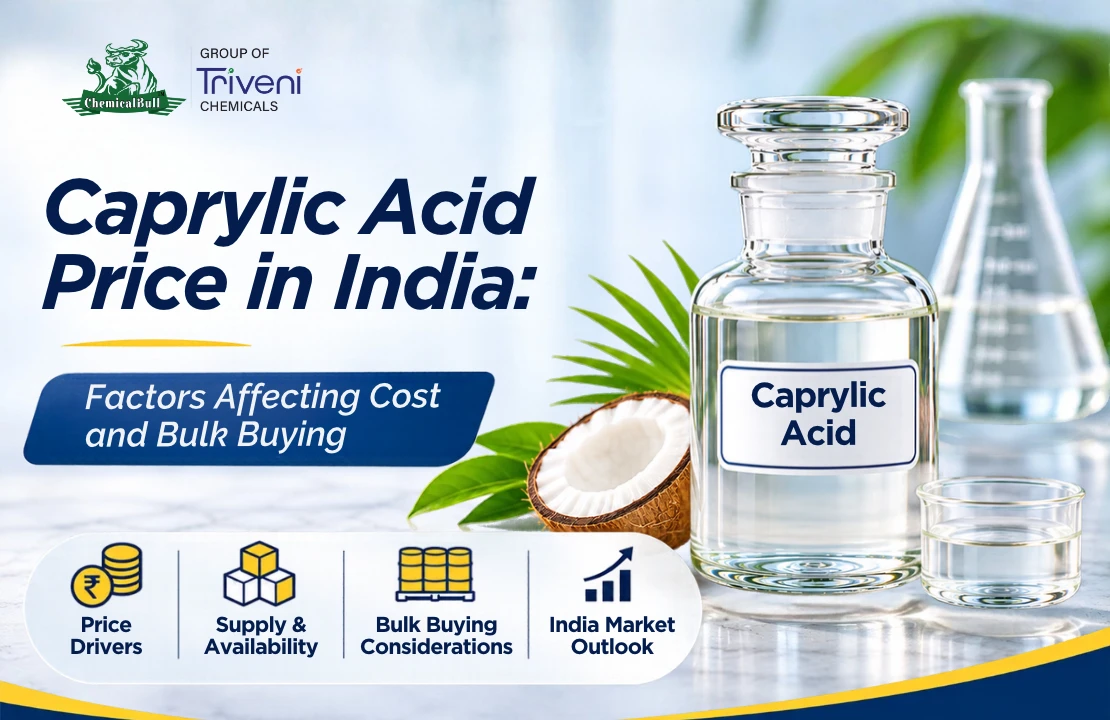
Caprylic Acid Price in India: Factors Affecting Cost and Bulk Buying
Caprylic acid, also known as octanoic acid, is a medium-chain fatty acid used in cosmetics, food ingredients, lubricants, cleaning products, and chemical synthesis. Its price in India can move noticeably from month to month, so buyers who understand what drives the cost are better placed to plan purchases and avoid overpaying.
Chemical Bull supplies Caprylic Acid in bulk quantities with competitive pricing, and working with a dependable caprylic acid manufacturer helps buyers confirm grade, documentation, and steady supply before placing large orders. This guide explains the main price drivers rather than quoting figures, because chemical prices change often.
Chemical Identity & Properties
|
Property |
Detail |
|
CAS Number |
124-07-2 |
|
Chemical Formula |
C₈H₁₆O₂ |
|
Molar Mass |
144.21 g/mol |
|
Appearance |
Clear, colorless oily liquid with a mild, unpleasant fatty odor |
|
Melting Point |
About 16°C (61°F), so it can solidify in cool conditions |
|
Boiling Point |
About 239°C (462°F) |
|
Solubility |
Slightly soluble in water; soluble in alcohol and most organic solvents |
|
Classification |
Saturated medium-chain fatty acid (C8) |
Where Caprylic Acid Is Used
- Esters and Emollients: A raw material for caprylic/capric triglycerides and other esters used in cosmetics and personal care.
- Food Ingredients: Used to make flavor esters and medium-chain triglyceride ingredients, subject to food-grade requirements.
- Lubricants and Plasticizers: Used in synthetic lubricant esters and plasticizer production.
- Cleaning and Sanitizing Products: Used in some sanitizer and disinfectant formulations, including peroxyacid-based products.
- Metal Salts: Used to make metal caprylates for driers, stabilizers, and catalysts.
- Chemical Intermediate: A starting material for the specialty chemicals and surfactants.
Key Factors That Affect Caprylic Acid Price in India
|
Price Factor |
How It Affects Cost |
|
Coconut and Palm Kernel Oil Prices |
The main natural sources, so edible oil market swings feed directly into price |
|
Fractionation Yield |
C8 is a small fraction of the oil, so supply is limited and price can be sensitive |
|
Grade and Purity |
Higher-purity, food, cosmetic, and pharma grades cost more than technical grade |
|
Order Volume |
Larger orders usually earn lower per-kilogram pricing |
|
Packaging |
Drums, IBC totes, or bulk tanker affect handling cost |
|
Freight and Logistics |
Distance and transport mode add to landed cost |
|
GST and Taxes |
GST is added to the invoice and affects net cost depending on input credit |
|
Import Dependence |
Imported oils and fatty acids are affected by exchange rates, duties, and shipping |
|
Demand Cycles |
Strong demand from cosmetics, food, and lubricant sectors can tighten supply |
|
Supplier Type |
Manufacturers and direct suppliers often price better than multi-layer traders |
How Raw Materials Influence Price
Most caprylic acid is made from the C8 fraction of coconut oil or palm kernel oil, which is separated through splitting and distillation. Because this fraction is only a small share of the oil, caprylic acid is more sensitive to oil price swings, harvest conditions, and crude oil trends than many bulk chemicals. India relies heavily on imports for palm-based oils, while coconut oil is also grown domestically, so both local harvest and global vegetable oil markets matter.
Grade Selection and Its Effect on Cost
|
Grade |
Typical Use |
Cost Consideration |
|
Technical Grade |
Lubricants, metal salts, general chemical use |
Lower cost, wider impurity tolerance |
|
Cosmetic Grade |
Esters and emollients for personal care |
Mid-range cost with tighter purity and odor control |
|
Food Grade |
Flavor esters and food ingredients |
Higher cost due to documentation and quality systems |
|
High-Purity or Pharma Grade |
Pharmaceutical and specialty uses |
Highest cost due to strict specifications |
Buying a higher grade than your process needs raises cost without adding value, while buying a lower grade than required can cause failed batches or compliance problems.
Domestic vs. Imported Caprylic Acid
|
Factor |
Domestic Supply |
Imported Supply |
|
Lead Time |
Shorter, with simpler logistics |
Longer, with customs and shipping |
|
Currency Risk |
Low |
Exposed to rupee-dollar movement |
|
Price Stability |
Generally steadier quotes |
More volatile with freight and duty changes |
|
Minimum Order |
Often more flexible |
Often tied to container loads |
|
Documentation |
GST invoicing handled domestically |
Added import paperwork and duties |
For regular production, domestic sourcing from established suppliers in the Gujarat chemical corridor usually gives a more predictable total cost.
GST, HSN, and Landed Cost
- GST on Invoice: Most organic chemicals attract GST, typically at 18 percent, so confirm the current rate with your supplier.
- Input Tax Credit: Registered manufacturers can usually claim credit, which lowers the real cost compared with the invoice amount.
- HSN Classification: Caprylic acid falls under heading 2915, and the exact code should be confirmed on the invoice.
- Freight and Packing: Include transport and packing in your comparison.
- Total Landed Cost: Compare suppliers on the delivered price to your plant, not just the ex-works rate.
Typical Bulk Order Tiers
|
Order Type |
Typical Packaging |
Buyer Consideration |
|
Trial or Sample Order |
Small packs |
Validate grade and odor before bulk purchase |
|
Standard Bulk Order |
Drums of about 180 to 200 kg |
Common for regular production needs |
|
Large Recurring Order |
IBC totes or bulk tanker |
Best pricing and supply planning |
How to Get an Accurate Bulk Quote
- State the Grade and Purity: Say whether you need technical, cosmetic, food, or pharma grade, and the minimum assay.
- Share Volume and Frequency: Recurring orders can earn better pricing.
- Specify Packaging: Confirm drums, IBC totes, or tanker.
- Give the Delivery Location: Delivered price depends on distance and route.
- Ask About Price Validity: Confirm how long the quote stays valid.
- Request Documentation: Ask for a Certificate of Analysis (CoA) and Safety Data Sheet (SDS) with the quote.
Storage and Handling Considerations
Caprylic acid should be stored in the tightly closed to containers in a cool, well-ventilated area, away from strong oxidizers and bases. Because it melts at about 16°C, it may solidify or thicken in cool weather, so storage and transfer systems should allow gentle warming. It is the corrosive and can cause skin burns and serious eye damage, so use gloves, eye protection, and good ventilation. Always review the current Safety Data Sheet.
Common Buyer Mistakes to Avoid
- Comparing Only Per-Kilogram Rates: Grade, packaging, and freight can reverse the apparent winner.
- Skipping Batch Documentation: A generic data sheet does not confirm that the delivered batch meets your specification.
- Ignoring Odor and Color Specs: These matter for cosmetic and food uses.
- Overlooking Solidification: Cool storage can cause thickening and handling problems.
Frequently Asked Questions
-
What affects caprylic acid price in India?
Coconut and palm kernel oil prices, grade, order volume, packaging, freight, GST, imports, and demand all influence the price. -
Is caprylic acid the same as octanoic acid?
Yes, caprylic acid is the common name for octanoic acid, a medium-chain fatty acid. -
Is caprylic acid cheaper in bulk?
Yes, larger and recurring orders usually earn lower per-kilogram pricing. -
What is the CAS number of caprylic acid?
The CAS number is 124-07-2. -
Does Chemical Bull supply caprylic acid in bulk?
Yes, Chemical Bull supplies Caprylic Acid in bulk quantities with competitive pricing.
Conclusion
Caprylic acid pricing in India depends on coconut and palm kernel oil markets, grade, volume, logistics, and taxes, so the best purchase is the one with the lowest total landed cost for the grade you actually need. Working with a supplier who offers consistent quality, clear documentation, and reliable bulk supply helps buyers control costs and avoid production delays.

Comment Section