Chemical Bull
8
14-Nov-2026
A fruit flavour may have the right identity but still need a sweeter aromatic impression. A gourmand perfume may need a caramel-like note that connects its fruity and vanilla elements. In both situations, formulators may evaluate ethyl maltol.
The development challenge is finding the right balance. Too little may provide insufficient effect; too much may push the composition away from the intended profile. Manufacturers must also consider dissolution, grade suitability and consistency between batches.
This guide explains ethyl maltol uses in flavours and fragrances, the formulation checks that matter and how to prepare a clear bulk purchasing requirement.
For specifications, sample availability and pricing, contact Chemical Bull with your application, required grade, quantity and delivery location.
What Is Ethyl Maltol?
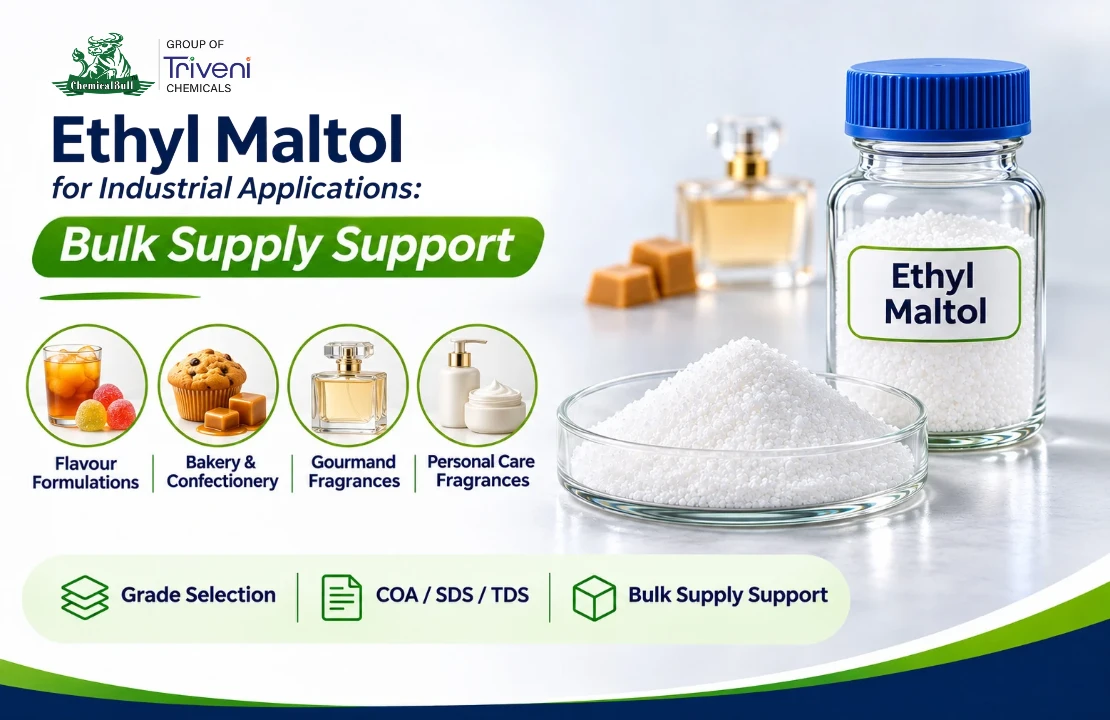
Ethyl maltol is an aroma ingredient used in flavour and fragrance formulations to contribute sweet, cotton-candy, fruity and caramel-like character. It is typically supplied as a white crystalline powder.
Its chemical name is 2-ethyl-3-hydroxy-4-pyrone, its CAS number is 4940-11-8, and its molecular formula is C₇H₈O₃. The Food Chemicals Codex describes its cotton-candy odour and sweet, fruit-like flavour in dilute solution.
For manufacturers, selecting Ethyl Maltol involves matching the supplied specification to the intended application. Chemical identity alone does not establish whether a grade is appropriate for food, fragrance or another commercial requirement.
Main Ethyl Maltol Uses
Ethyl maltol is relevant to flavour houses, food manufacturers and fragrance developers. Its function depends on the sensory result required from the complete formulation.
Ethyl maltol appears in FEMA’s flavour ingredient library under FEMA number 3487. Buyers should confirm the specification and documentation required for their particular application.
Ethyl Maltol in Flavour Formulations
Confectionery and Fruit Flavours
In confectionery development, ethyl maltol can be evaluated when a flavour needs an additional sweet aromatic contribution.
For example, a fruit-flavoured product may require a more rounded overall impression while retaining its recognisable fruit character. The development team should compare several concentrations against an unchanged reference.
Evaluate the ingredient in the actual confectionery base. Results from a flavour concentrate alone may not represent the finished product.
Its sweet aroma also does not establish that sugar or another sweetening ingredient can be reduced. Any such change requires separate development and sensory assessment.
Bakery and Dessert Flavours
Bakery and dessert products introduce processing conditions that belong in the approval process.
Assess the flavour after the relevant manufacturing steps and during storage. Record the addition stage and processing conditions so the evaluation can be reproduced.
Application references include bakery products, confectionery and dairy-based desserts. These references provide context; manufacturers must establish suitability for their own formulation and intended market.
Beverage Flavours
For beverage manufacturers, flavour quality and physical compatibility need equal attention.
Check whether the ingredient dissolves adequately, whether the finished beverage remains clear where required, and whether sediment appears during storage.
Assess flavour after dilution and processing. A concentrated flavour system may behave differently once incorporated into the drink.
Before approval, confirm that the selected grade and supporting documents meet the intended food or beverage requirements.
Ethyl Maltol in Perfumery
Ethyl maltol is relevant to gourmand fragrances that call for sugary or caramelised character. Perfumery supplier literature describes it as having a pronounced gourmand-caramelised profile.
Its value depends on how it works with the surrounding materials. One composition may require a noticeable sweet direction, while another needs only a restrained contribution.
Prepare controlled variations and evaluate the opening impression, development and balance over time. Compare fresh and aged samples before deciding on the final concentration.
If the material is added as a stock solution, record both the carrier and solution strength. This distinguishes the amount of solution added from the amount of ethyl maltol present.
Applications in Fragranced Personal-Care Products
When ethyl maltol forms part of a fragrance intended for a body wash, lotion or similar product, approval should include the complete finished formulation.
Check scent, colour, clarity or emulsion appearance, and separation during storage. Include the intended packaging where appropriate.
A fragrance approved in a concentrate still needs evaluation in the personal-care base. Changes to the fragrance concentration or base ingredients may require renewed testing.
The aim is a repeatable formulation that maintains its approved sensory and physical characteristics.
Ethyl Maltol Solubility and Incorporation
Because ethyl maltol is supplied as a crystalline powder, dissolution is an important manufacturing consideration.
The Food Chemicals Codex reports different solubility in water, alcohol and propylene glycol. The selected carrier, concentration and preparation conditions therefore influence incorporation.
Choose a carrier appropriate to the application and establish a documented preparation method. Confirm mixing conditions and any temperature requirements using technical guidance.
After preparation, assess whether the material remains dissolved under the intended storage conditions. Initial clarity is only the first check.
Document the concentration, addition sequence and mixing procedure. These records help production teams reproduce the approved laboratory result.
Why Crystals or Sediment May Appear
If a prepared solution develops crystals or sediment, review the complete system before attributing the problem to raw-material quality.
Check the carrier, concentration, mixing procedure and storage conditions. Compare the affected sample with an approved reference prepared under the same conditions.
Also examine what happens after dilution or addition to the finished-product base. A clear concentrate does not guarantee a clear final formulation.
These checks help identify whether the issue involves dissolution, compatibility, processing or a material that falls outside specification.
How to Select the Right Grade
Start with the intended application and an agreed purchasing specification.
For food and beverage requirements, confirm the relevant grade and application documentation. For fragrance manufacturing, establish the sensory reference and technical acceptance criteria.
Parameters may include assay, appearance, odour, moisture and application-specific impurity limits. Use the same methods when comparing samples and subsequent deliveries.
There is no universal ethyl maltol dosage for every flavour or fragrance. Establish the concentration through development, supplier guidance and the requirements applicable to the finished product.
Retain an approved sample where appropriate, and agree on how changes in manufacturing source or specification will be reviewed.
Ethyl Maltol MSDS and Quality Documentation
Request the current Ethyl Maltol MSDS or SDS, batch certificate of analysis and available technical specification before approving commercial supply.
The SDS provides handling and storage information. The COA reports batch results against the supplied specification. Additional documents may be required for the intended flavour or fragrance application.
Check that the chemical identity, grade and batch references match the quoted material.
Follow the documented storage instructions and keep packaging properly closed during use and storage.
Ethyl Maltol Price in India: Bulk Purchasing Factors
Ethyl maltol price in India can vary with grade, specification, order quantity, packaging, origin, availability and delivery terms.
Compare quotations against equivalent requirements. Different quality limits, documentation or freight arrangements can make apparently similar offers difficult to compare.
When evaluating an ethyl maltol supplier in India, consider technical responsiveness, traceability and the ability to supply the approved specification consistently.
For repeat purchasing, discuss expected consumption, lead time and packaging requirements. Confirm whether samples and documents are needed before the commercial order can proceed.
Chemical Bull supports ethyl maltol bulk supply enquiries from flavour houses, fragrance manufacturers and commercial formulators. Request specifications and bulk pricing with your application, grade, quantity, packaging preference, destination and delivery timeline.
Frequently Asked Questions
What is ethyl maltol used for?
It is used in flavour and fragrance formulations to contribute sweet, cotton-candy, fruity or caramel-like sensory character.
Is ethyl maltol a powder or liquid?
It is typically supplied as a white crystalline powder. Any supplied solution should identify its carrier and concentration.
Can ethyl maltol be used in perfumes?
Yes. It is relevant to gourmand fragrance development, subject to concentration, compatibility and finished-product evaluation.
How should manufacturers dissolve ethyl maltol?
Select an application-appropriate carrier and follow a validated preparation method. Check dissolution and stability before commercial production.
Can fragrance-grade ethyl maltol be used in food?
Do not assume grades are interchangeable. Confirm that the specification and documentation suit the intended food application.
What information is needed for a bulk quotation?
Provide the required grade or specification, application, quantity, packaging, delivery destination, timeline and documentation requirements.
Comment Section