Chemical Bull
9
12-Nov-2026
A rose fragrance can smell balanced on a blotter yet change when added to a shampoo, lotion or laundry product. The floral character may become less noticeable, the surrounding ingredients may alter the impression, or the finished formulation may develop appearance changes during storage.
For manufacturers, selecting Geraniol 60 therefore involves more than approving its initial odour. The ingredient needs to support the intended fragrance profile and perform consistently in the product being manufactured.
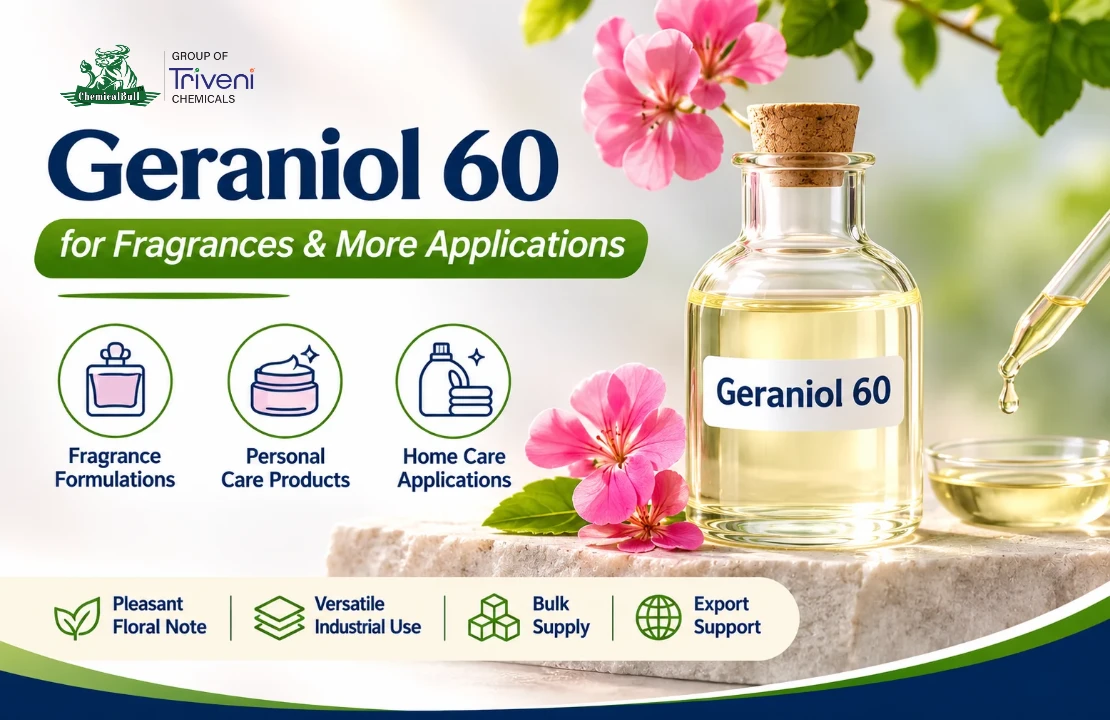
Geraniol 60 is a commercial aroma ingredient commonly containing geraniol and nerol. It contributes a fresh, rose-like floral character to suitable fragrance compositions. Its practical value depends on the supplied grade, fragrance blend and finished-product base.
Buy bulk Geraniol 60 from Chemical Bull for fragrance formulation requirements. Share your required specification, quantity and delivery location to request availability and pricing.
How to Evaluate Geraniol 60 for Rose Fragrance Formulations
Start by defining the rose character the fragrance should deliver. A fresh floral perfume, a creamy lotion fragrance and a laundry scent may share a rose direction while requiring different balances.
The development brief should identify the intended product, desired scent character and evaluation conditions. This gives the formulation team a clear basis for comparing samples.
Next, establish the exact grade being evaluated. Geraniol 60 commonly contains substantial nerol alongside geraniol. The number “60” should not automatically be interpreted as a dilution in water or another solvent.
For example, one manufacturer lists approximately 59–61% geraniol and 32–40% nerol for a commercial grade. The actual supply should be checked against its own specification.
Keep this composition review brief during fragrance development, but record it carefully. A later change in grade could affect the approved fragrance.
Compare Samples Under the Same Conditions
Prepare an unchanged reference and a small series of fragrance variations. Record the exact material, batch, concentration and preparation method used in each sample.
Evaluate the samples at comparable concentrations and intervals. Assess the opening impression, development over time and balance with the surrounding ingredients.
Avoid choosing a sample only because it smells strongest. The objective is to meet the fragrance brief consistently.
Evaluate the Complete Composition
Geraniol 60 should be assessed within the intended fragrance blend. Other aroma ingredients influence whether its floral character feels balanced, prominent or insufficient.
Related materials such as Citronellol may also be considered during development. Similar rose-associated descriptions do not make the ingredients interchangeable.
The preferred composition may use several complementary materials. Their selection and proportions should follow sensory evaluation rather than a fixed universal recipe.
Application Requirements at a Glance
Manufacturer guidance identifies Geraniol 60 uses in fine fragrances, toiletries and household scents, including shampoo, shower gel, soap, lotion and laundry products.
|
Fragrance application |
Main development question |
What to evaluate |
|
Rose perfume accords |
Does the ingredient support the intended rose character? |
Balance, development and stability of the composition |
|
Shampoos and body washes |
Does the fragrance perform in the cleansing base? |
Odour, clarity, viscosity and separation |
|
Bar soaps |
Does the approved character remain acceptable after processing? |
Scent, colour and changes during storage |
|
Creams and lotions |
Does the fragrance fit the emulsion? |
Scent balance, appearance and packaging compatibility |
|
Laundry products |
Does the fragrance deliver the intended experience during use? |
Concentrate stability and scent after washing or drying |
|
Household fragrance products |
Does the fragrance work with the delivery system? |
Carrier compatibility, appearance and scent delivery |
Geraniol 60 in Rose Perfume Accords
For a rose accord, the first question is the contribution required from Geraniol 60. Does the composition need a clearer floral impression, greater freshness or a different balance between its existing materials?
Manufacturer literature describes Geraniol 60 as floral, fresh and rose-like. That description is a useful starting point, but it does not predict the result in every fragrance.
Compare several controlled variations against the original accord. Assess whether the desired character remains balanced as the fragrance develops.
Once a version is preferred, evaluate it in the intended perfume base and packaging. Include fresh and aged samples in approval. This connects the creative decision with the conditions the commercial product will experience.
Geraniol 60 in Shampoos and Body Washes
In cleansing products, the fragrance becomes part of a system containing surfactants, electrolytes and other formulation ingredients.
A fragrance concentrate that looks clear may behave differently after incorporation. Evaluate the complete shampoo or body wash for clarity, separation, colour and viscosity, alongside its scent.
Sensory testing should also reflect use. Assess the product as supplied and under an appropriate dilution or washing procedure. Record the conditions so future samples can be compared consistently.
If the formulation changes, repeat the relevant evaluation. A surfactant or solubilising-system change can make previous approval results less representative.
Geraniol 60 in Soap Fragrances
Soap fragrance development should account for the manufacturing route and storage conditions.
Evaluate the fragrance in the actual soap base rather than transferring an approval from a perfume or liquid cleanser. Record the addition stage, processing conditions and fragrance concentration.
Compare scent and appearance after production and during storage. For a rose-fragranced bar, check whether the floral balance remains acceptable and whether colour or odour changes develop.
A successful initial batch should establish a repeatable process. Production records help distinguish raw-material variation from changes in mixing, processing or storage.
Geraniol 60 in Creams and Lotions
For creams and lotions, the fragrance must fit both the scent brief and the emulsion system.
Assess the initial fragrance impression, its development during application and any changes after storage. Evaluate emulsion appearance and physical stability at the same time.
Include the intended packaging in development trials. A fragrance approved in a laboratory container still needs assessment in the commercial pack.
Where the product has a restrained scent brief, compare whether the floral contribution feels appropriate at the selected concentration. A stronger fragrance is not automatically a better result.
Geraniol 60 in Laundry Fragrances
Laundry fragrance approval should consider the product’s intended use, rather than stopping at the smell inside the container.
For liquid detergents, evaluate physical compatibility and fragrance stability in the concentrate. For powders, include distribution and handling in the assessment.
Where fabric scent is part of the brief, compare the fragrance after a defined washing or rinsing procedure and at the relevant drying stage. Keep fabric type, product dose and test conditions consistent.
These comparisons help the team judge whether the fragrance supports the required experience. Results from one laundry base should not automatically be transferred to another.
Geraniol 60 in Household Fragrance Products
Household fragrance formats introduce different carrier and delivery requirements.
For a fragranced spray or diffuser composition, evaluate the complete combination of fragrance, carrier and packaging. Check appearance, storage stability and odour delivery under representative conditions.
In a reed diffuser, for example, the bottle and reeds form part of the performance assessment. Comparing fragrance ingredients separately from that system gives only part of the information needed for approval.
Geraniol 60 contributes aroma character within the composition. The complete formulation determines how that character is delivered.
Why Does a Rose Fragrance Change in the Finished Product?
A rose fragrance containing Geraniol 60 may smell different in a perfume concentrate, shampoo or lotion. The complete formulation and evaluation conditions influence the result. A change should not automatically be attributed to Geraniol 60 alone.
The Floral Character Becomes Less Noticeable
Compare the finished product with an approved reference at the same fragrance concentration. Review changes in the base, fragrance composition and processing conditions. Assess the scent under representative use conditions as well as directly from the container.
Haze or Separation Appears
Check the compatibility of the complete fragrance package with the product base. Review the incorporation method, mixing conditions and solubilising system. Compare fragranced and unfragranced samples to help identify where the problem begins.
Colour or Odour Changes During Storage
Compare fresh and aged samples in the intended packaging. Review raw-material batches, processing records and storage conditions before changing the formulation.
Document each adjustment and repeat the relevant tests. This helps manufacturers resolve the issue while maintaining a reproducible approval process.
Set Clear Approval Criteria Before Buying in Bulk
Once development identifies a preferred fragrance, translate the result into documented acceptance criteria.
For Geraniol 60, record the approved composition limits, sensory reference and relevant analytical requirements. Retain a representative approved sample where appropriate.
Agree on how changes in manufacturing source or specification will be reviewed. A material change should trigger the relevant comparison before routine purchasing continues.
For broader composition, handling and sourcing information, refer to the existing guide on Geraniol 60 for industrial applications and formulations.
Geraniol 60 MSDS and Fragrance Documentation
Request the current SDS or MSDS, technical specification and batch COA for the material being supplied.
Also obtain relevant fragrance-use and allergen information for the intended application. Review these documents against the complete fragrance composition and finished-product requirements.
There is no universal Geraniol 60 dosage for every perfume, cosmetic or household formulation. Establish the concentration through development, supplier guidance and the requirements applicable to the finished product.
From Sample Approval to Commercial Supply
When requesting bulk pricing, provide the approved grade, application, quantity, packaging preference and delivery schedule.
Compare quotations against equivalent requirements. A lower price may provide little benefit if a different composition requires fragrance adjustment or renewed qualification.
Chemical Bull supports sourcing enquiries for fragrance manufacturers, personal-care formulators and home-care producers. Request Geraniol 60 samples, specifications and bulk pricing with your application and approved requirements.
Frequently Asked Questions
How is Geraniol 60 evaluated in a rose fragrance?
Compare controlled variations against a reference, assess scent development and confirm performance in the intended finished-product base.
Can the same fragrance be used in perfume and shampoo?
It requires separate evaluation. The different bases may affect fragrance character, clarity and stability.
Can Geraniol 60 be replaced at the same concentration?
Equivalent performance should not be assumed. Review the replacement’s composition and repeat the relevant sensory and stability checks.
What should manufacturers check in a sample?
Check odour, appearance, specification conformity and performance in the actual formulation. Record the sample source and batch details.
What information is needed for a bulk enquiry?
Provide the required specification, application, quantity, packaging, destination, timeline and documentation requirements.


Comment Section