Chemical Bull
36
01-Oct-2026
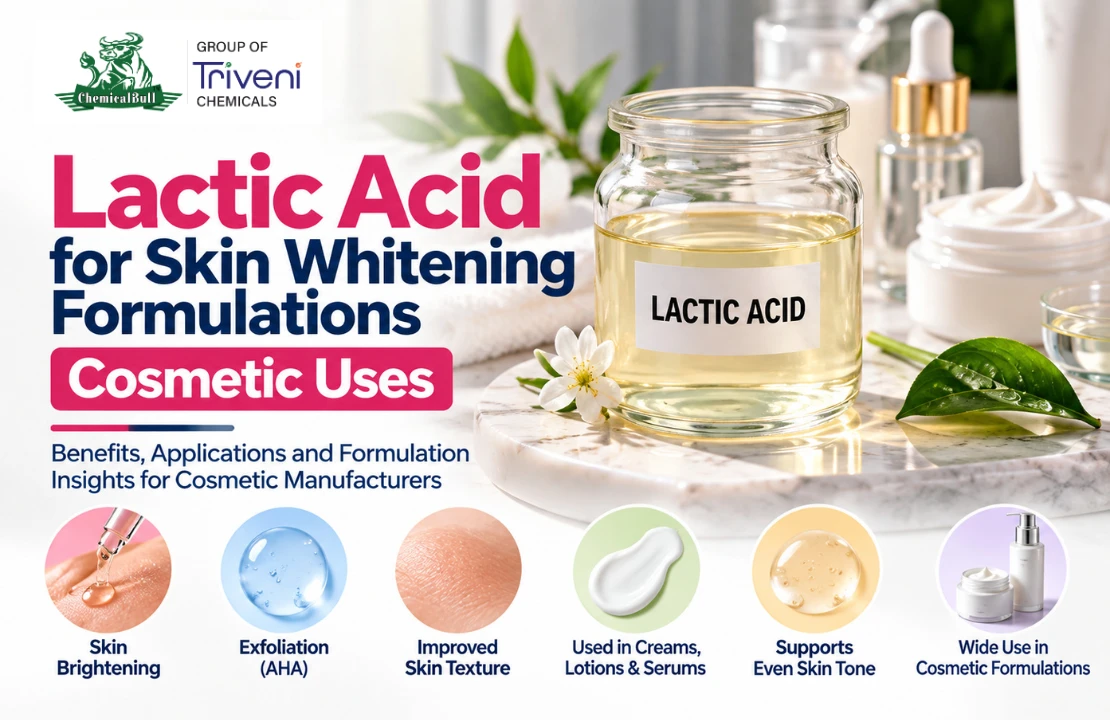
Lactic Acid for Skin Whitening Formulations | Cosmetic Uses
Lactic Acid has become a go-to active for Indian skin brightening and whitening formulations, valued for its dual action as a gentle exfoliant and a mild agent studied for its role in evening out skin tone. Unlike harsher depigmenting actives, its alpha hydroxy acid (AHA) profile makes it suitable for a wide range of product formats, from daily creams to targeted serums.
Chemical Bull supplies lactic acid chemical in bulk quantities with competitive pricing, and working with an established lactic acid distributor helps Indian cosmetic manufacturers maintain consistent purity and concentration across brightening and whitening product batches.
Quick Reference: Lactic Acid Properties
|
Property |
Detail |
|
CAS Number |
50-21-5 |
|
Classification |
Alpha Hydroxy Acid (AHA) |
|
Appearance |
Clear, colorless to pale yellow liquid (common cosmetic grade) |
|
Solubility |
Fully water-soluble |
|
Common Cosmetic Concentration |
1% to 10%, depending on product format and intended use |
How Lactic Acid Supports Skin Brightening and Even Tone
-
Surface Exfoliation:
Lactic Acid helps loosen the bonds between dead skin cells, supporting their removal and revealing fresher-looking skin underneath, which can reduce the dull, uneven appearance associated with surface buildup. -
Melanogenesis-Related Research:
Lactic Acid has been studied for its interaction with tyrosinase, an enzyme involved in melanin production, though formulators should rely on current peer-reviewed research and regulatory guidance rather than general marketing claims when positioning a brightening product. -
Humectant Action:
As a humectant, it draws moisture into the upper layers of skin, supporting a smoother, more even-looking surface that can enhance how a brightening formulation performs overall. -
Gentle AHA Profile:
Compared to stronger AHAs like glycolic acid, Lactic Acid's larger molecular size results in slower skin penetration, often making it a better-tolerated choice for daily-use brightening formulations.
Lactic Acid Concentration Guidance for Brightening Formulations
|
Concentration Range |
Typical Product Format |
Formulation Context |
|
1% to 5% |
Daily creams, lotions, cleansers |
Gentle, everyday brightening and tone-evening formulations |
|
5% to 10% |
Serums, targeted treatments |
Higher-strength leave-on products for more noticeable exfoliation |
|
Above 10% |
Professional peels |
Typically reserved for licensed professional use, subject to regulatory limits |
Formulators should always confirm current regulatory limits for their target market, since permitted concentrations and labeling requirements can vary and are periodically updated.
Formulating Lactic Acid Brightening Products
-
Combination with Other Brightening Actives:
Lactic Acid is frequently paired with Niacinamide, Alpha Arbutin, or Vitamin C derivatives to build a multi-mechanism brightening formulation. -
pH Considerations:
Lactic Acid's effectiveness as an exfoliant depends on formulating within an appropriate acidic pH range, which should be balanced carefully in combination formulas to maintain stability and skin compatibility. -
Product Format Selection:
Beyond creams and serums, Lactic Acid is also used in brightening soap bars and face wash formulations, a significant category in the Indian personal care market. -
Sun Protection Pairing:
Since AHAs can increase sun sensitivity, brightening product lines are commonly formulated or marketed alongside daytime SPF use guidance. -
Stability Testing:
As with any active ingredient, confirm the finished formulation maintains its labeled Lactic Acid concentration across the product's intended shelf life.
Lactic Acid vs. Other Brightening Actives
Formulators building a brightening product line often compare Lactic Acid to other common actives, since each works through a somewhat different mechanism:
|
Active |
Primary Mechanism |
Typical Formulation Role |
|
Lactic Acid |
Exfoliation, humectant, mild tyrosinase interaction |
Gentle, daily-use brightening base |
|
Niacinamide |
Reduces melanin transfer to skin surface cells |
Often paired with AHAs for a multi-mechanism approach |
|
Alpha Arbutin |
Tyrosinase inhibition |
Used at lower concentrations, often combined with AHAs |
|
Kojic Acid |
Tyrosinase inhibition |
More potency-focused, sometimes paired with milder actives for balance |
Most commercial brightening formulations combine two or more of these actives rather than relying on a single ingredient, since different mechanisms can complement each other within a stable, well-tolerated formula.
Common Formulation Mistakes to Avoid
-
Overestimating a Single Active's Effect:
No single ingredient, including Lactic Acid, should be marketed as delivering dramatic results on its own; formulations typically rely on a combination of actives plus consistent use. -
Ignoring pH Stability:
Combining Lactic Acid with actives that require a different optimal pH range without proper buffering can reduce the effectiveness of one or both ingredients. -
Skipping Patch and Stability Testing:
Brightening formulations should be tested for both skin compatibility and shelf-life stability before full-scale production. -
Underestimating Sun Sensitivity Guidance:
Since AHA-based brightening products can increase sun sensitivity, clear usage and SPF guidance should be part of the product's labeling and marketing materials.
India Market Considerations for Skin Brightening Products:
-
Regulatory Labeling:
Cosmetic claims and ingredient concentration limits in India fall under applicable cosmetic regulations, so confirm current compliance requirements before finalizing product claims. -
Domestic Sourcing Advantages:
Sourcing Lactic Acid from an Indian manufacturer typically offers shorter lead times and simpler logistics compared to importing, which matters for brands running continuous production. -
GST and Documentation:
Confirm GST-compliant invoicing and correct HSN classification when sourcing in bulk for domestic manufacturing. -
Growing Category Demand:
The brightening and tone-evening skincare segment continues to see strong demand across Indian personal care brands, supporting ongoing bulk sourcing needs for formulators in this space.
Explore our related Lactic acid Chemical information:
For a broader look at Lactic Acid's role across skincare and personal care beyond brightening formulations, see our guide on Lactic Acid in Cosmetics: Uses in Skincare and Personal Care. For applications of Lactic Acid outside cosmetics, including food, pharmaceutical, and industrial uses, see Lactic Acid for Applications Across Major Industries.
What to Look for in a Lactic Acid Supplier
-
Cosmetic-Grade Purity:
Confirm the material meets relevant cosmetic ingredient purity standards for brightening and whitening formulations. -
Batch Documentation:
Request a Certificate of Analysis (CoA) and Safety Data Sheet (SDS) for each batch. -
Concentration Consistency:
Since brightening claims often depend on hitting a specific concentration threshold, confirm the supplier can deliver consistent strength across repeat orders. -
Natural vs. Synthetic Sourcing:
Clarify whether the material is fermentation-derived or synthetically produced, since this may matter for labeling or brand positioning.
Frequently Asked Questions
-
Does Lactic Acid help with skin whitening?
Lactic Acid is used in brightening and tone-evening formulations for its exfoliating and humectant properties, and has been studied for its interaction with melanin-producing enzymes, though formulators should rely on current research and regulatory guidance when making specific claims. -
What concentration of Lactic Acid is used in brightening products?
Daily-use creams and lotions typically use 1% to 5%, while targeted serums may use 5% to 10%, with higher concentrations generally reserved for professional use. -
Can Lactic Acid be combined with other brightening ingredients?
Yes, it is commonly paired with Niacinamide, Alpha Arbutin, or Vitamin C derivatives to build a multi-mechanism brightening formulation. -
Does Chemical Bull supply Lactic Acid in bulk for cosmetic manufacturers?
Yes, Chemical Bull supplies lactic acid in bulk quantities with competitive pricing for cosmetic and personal care manufacturers across India. -
What documentation should I request from a Lactic Acid supplier?
At minimum, request a Certificate of Analysis and Safety Data Sheet for each batch to confirm purity and concentration before use in your formulation.
Conclusion
Lactic Acid's gentle exfoliating and brightening properties make it a valuable active across India's growing skin tone-evening and whitening product category. Chemical Bull supplies lactic acid chemical in bulk quantities with competitive pricing, helping Indian cosmetic manufacturers source consistent, well-documented material for their brightening formulations.


Comment Section