Chemical Bull
1958
23-Jan-2026
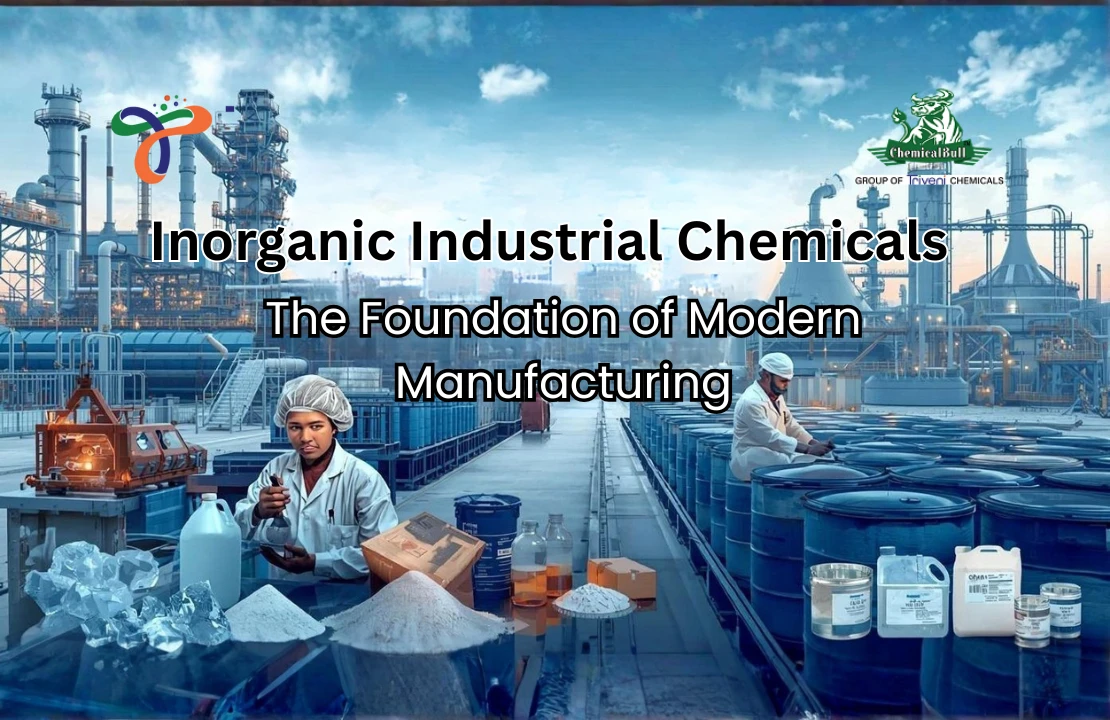
Understanding Inorganic Industrial Chemicals
Inorganic industrial chemicals are compounds with carbon-hydrogen bonding. They are composed of bases, acids and salts as well as oxides, minerals and metals, each of which is frequently used throughout the manufacturing sector. They are sought-after due to their chemical stability the strength and reactivity of their materials, as well as the resistance to corrosion and heat.
As part of the larger category of chemicals used in industrial processes, organic chemicals are typically produced in large quantities and are the essential building blocks for downstream chemical processes. Their consistency in quality and their predictable performance make them perfect for infrastructure and heavy industry construction.
They are essential components across multiple industrial applications such as construction, water treatment, metallurgy, and chemical processing.
To explore a broader overview, visit our Industrial Chemicals Category.
If you want to know more, visit our Understanding Industrial Chemicals: Selection, Properties & Real-World Manufacturing Applications.
What Are Inorganic Chemicals?
Inorganic chemicals are produced from natural resources such as ores, rocks, water, and air. They are typically manufactured through processes like electrolysis, calcination, neutralisation, and thermal treatment.
Common industrial examples include:
- Sulfuric Acid, Hydrochloric Acid, and Nitric Acid 70% → widely used in industrial reactions and processing
- Caustic Soda Lye and Potassium Hydroxide → used for cleaning, pH control, and chemical synthesis
- Soda Ash and Calcium Carbonate → used in bulk manufacturing and material processing
These chemicals act as raw materials, process agents, and reaction controllers in manufacturing.
Key Types of Inorganic Industrial Chemicals
Inorganic industrial chemicals may be classified broadly according to their chemical characteristics and industrial applications.
Acids and Bases
Bases and acids count among the essential Inorganic chemical compounds used in industrial processes.
- Sulfuric Acid is widely employed in fertilizer manufacturing, petroleum refining, metal processing, and large-scale industrial chemical reactions.
Buy Sulfuric Acid from trusted Sulfuric Acid suppliers in India - Hydrochloric Acid is vital for the steel picking process as well as chemical syntheses.
- Sodium Hydroxide has a crucial role in the manufacture of textiles, paper, soaps, detergents and other products.
These are critical in industrial processing applications.
Salts and Alkalis
Salts are inorganic compounds formed from acids and bases and are used extensively in manufacturing.
- Soda Ash is used in glass manufacturing and detergents.
- Calcium Chloride Anhydrous is used in construction, dust control, and de-icing.
- Ammonium Salts are vital in agriculture and fertilisers.
Salts are valued for their stability, solubility, and functional versatility in industrial applications.
Metal-Based Inorganic Chemicals
Metals and compounds made of metal are a different primary class of industrial chemical compounds that are inorganic.
- Aluminium Oxide is utilised in abrasives and ceramics.
- ZINC Oxide can be commonly used in rubber paints, as well as in pharmaceuticals.
- Iron salts can be utilised in water treatment and pigment manufacturing.
The materials provide the strength of a mechanical device, conductivity, as well as corrosion resistance, all of which are essential to industrial efficiency.
Production of Inorganic Industrial Chemicals
Production of inorganic chemicals involves large-scale industrial processes designed for efficiency and consistency.
Key methods include:
- Mining and extraction of raw materials
- Thermal processing (calcination, roasting)
- Electrolysis for chemicals like [Caustic Soda Lye]
- Neutralisation reactions for salt formation
These methods ensure cost efficiency, scalability, and consistent quality for industrial use.
Reliable sourcing is critical—partner with a trusted chemical supplier.
Industrial Applications of Inorganic Chemicals
Industrial chemicals made of inorganic materials are deeply embedded within nearly every industry.
Construction and Infrastructure
- Calcium Carbonate, Silicon Dioxide, Aluminium Oxide
- Used in cement, coatings, and structural materials
Chemical Manufacturing
- Inorganic chemicals are used as catalysts, raw materials and process agents.
- They are vital to produce the downstream organic chemicals, polymers and specific items.
Agriculture
- Ammonia, phosphates and potassium salts are the basis of fertilisers.
- These chemicals aid in world food production through increasing soil fertility and improving yields from crops.
Water Treatment
- Chemicals like aluminium sulfate or lime. They also contain chlorine. It can be utilised in the purification of drinking water and to remove toxins from wastewater.
- They assist in eliminating the contaminants, reducing pH and also disinfecting the water supply.
Learn more about water treatment chemicals on our Applications Page.
Energy and Metallurgy
- Inorganic chemicals are utilised for refining metals as well as battery production and energy storage systems.
- Metal salts and acidic substances are essential to electrochemical processes.
Safety and Environmental Concerns
Due to their reactive nature, inorganic industrial chemicals must be handled carefully.
Best practices include:
- Use of PPE (gloves, goggles, masks)
- Proper storage for acids, alkalis, and reactive materials
- Wastewater treatment and disposal compliance
- Adherence to industrial safety regulations
For a deeper understanding, refer to the Water Treatment & Industrial Safety Blog.
The Role of Inorganic Chemicals in Modern Manufacturing
Organic chemicals continue to be essential due to their ability to:
- Cost-effectiveness for large-scale applications
- Reliability and consistency
- High performance under extreme conditions
- Compatible with the most advanced manufacturing technology
From smart infrastructures to systems for renewable energy, inorganic industrial chemicals are a boon to both conventional and developing sectors.
Future Trends in Inorganic Industrial Chemicals
The chemical industry evolves to meet current issues.
The most important trends are:
- Cleaner production technologies to reduce emissions
- recycling and circular economic methods
- Advanced inorganic material for electronic devices and energy storage
- Digital automation and control for the chemical industry
These advances ensure that organic chemicals are still relevant in an environment that is increasingly focused on efficiency and sustainability.
Conclusion
Industrial chemicals made of inorganic materials are the core of modern production. Their use in the fields of agriculture, construction, the treatment of water, chemical manufacturing, and energy production makes their use essential for global industries. Although bio-based and organic chemical products are getting more notice for environmental sustainability, organic chemicals are still able to supply the structural durability, chemical stability and flexibility that businesses rely on.
At Group of Triveni chemicals, ChemicalBull Pvt Ltd is an ISO 9001:2015 certified manufacturer and supplier of industrial chemicals, pharmaceutical intermediates, agrochemicals, and cosmetic ingredients.
Explore our full Industrial Chemicals Category to discover more solutions.

Comment Section