Chemical Bull
8905
27-Dec-2024
Introduction
Every perfume you wear contains dozens — sometimes hundreds — of carefully selected fragrance chemicals. But before any of those ingredients reach your skin, they go through a rigorous process of safety evaluation and quality control. In today's highly regulated global fragrance industry, perfume quality standards are not optional — they are the foundation of consumer trust, brand reputation, and regulatory compliance.
Whether you are a fragrance supplier, a perfume manufacturer, or simply someone who wants to know how to check perfume quality, understanding the testing and safety evaluation process is essential. This blog covers every major aspect of perfume chemical testing — from fragrance safety standards and IFRA compliance to GC-MS analysis, stability testing, and how to choose certified fragrance ingredients from a reliable fragrance raw material supplier.
Looking for quality-assured, IFRA-compliant aroma chemicals from a trusted fragrance supplier? Explore the full range of certified aroma chemicals at ChemicalBull.
If you want to explore more about aroma chemicals so visit our full detailed blog: Complete Guide to Aroma Chemicals: Types, Applications & Sourcing in 2026
Understanding Perfume Chemicals and Their Ingredients
Perfume chemicals — also called fragrance raw materials or aroma chemicals — are the building blocks of every scent. They fall into two broad categories: natural ingredients extracted from plants, flowers, and resins, and synthetic fragrance compounds engineered in laboratories. Both types are used extensively in modern perfumery, and both require thorough safety and quality testing before use.
Key Components of Perfume Chemicals
- Natural extracts — essential oils from lavender, rose, sandalwood, jasmine, and citrus fruits.
- Synthetic aroma chemicals — laboratory-created molecules that replicate or enhance natural scents.
- Fixatives and base notes — compounds that anchor the fragrance and extend its longevity on skin.
- Solvents and carriers — ethanol, dipropylene glycol (DPG), and isopropyl myristate that dilute and stabilise the fragrance.
Role of Fragrance Chemicals in Perfume Formulation
- Deliver the desired scent profile across top, heart, and base notes.
- Improve fragrance durability, richness, and skin adhesion.
- Ensure formulation stability across different product types — from fine perfume to body wash.
- Meet fragrance ingredient safety standards for consumer and regulatory acceptance.
Fragrance Safety Standards: What Governs the Industry?
Before any fragrance chemical reaches the consumer market, it must comply with a range of international fragrance safety standards. These regulations protect consumers from skin sensitisation, allergic reactions, and other health risks associated with unsafe or unregulated perfume chemicals.
IFRA — International Fragrance Association Standards
The most important global regulatory framework for the fragrance industry is the IFRA (International Fragrance Association) standards. IFRA regularly publishes and updates its standards — currently at the 51st Amendment — which specify safe usage levels for fragrance ingredients across 12 product categories, from leave-on skin products to rinse-off formulations and air fresheners.
Any fragrance supplier or aroma chemical manufacturer supplying to responsible brands must ensure their products are IFRA-compliant. IFRA standards are based on safety assessments conducted by the Research Institute for Fragrance Materials (RIFM), a global safety authority for fragrance ingredients.
IFRA Compliance Means:
- Usage limits are specified per product category (e.g., fine fragrance, body lotion, shampoo)
- Ingredients are evaluated for skin sensitisation, phototoxicity, and systemic toxicity
- Prohibited and restricted ingredients are clearly listed
- Compliant suppliers provide IFRA certificates with each fragrance formulation
REACH Regulation (EU)
In the European Union, fragrance chemicals must comply with the REACH (Registration, Evaluation, Authorisation and Restriction of Chemicals) regulation. REACH requires manufacturers and importers to register chemical substances, assess their hazards, and communicate risks. For perfume chemical suppliers exporting to Europe, REACH compliance is mandatory.
EU Cosmetics Regulation — Allergen Labelling
The EU Cosmetics Regulation (EC 1223/2009) requires that 26 known fragrance allergens — including linalool, limonene, citronellol, and eugenol — must be declared on product labels when present above certain concentration thresholds. This regulation ensures full transparency and supports informed consumer choice regarding fragrance ingredient safety.
Key Methods of Testing Perfume Chemicals for Safety
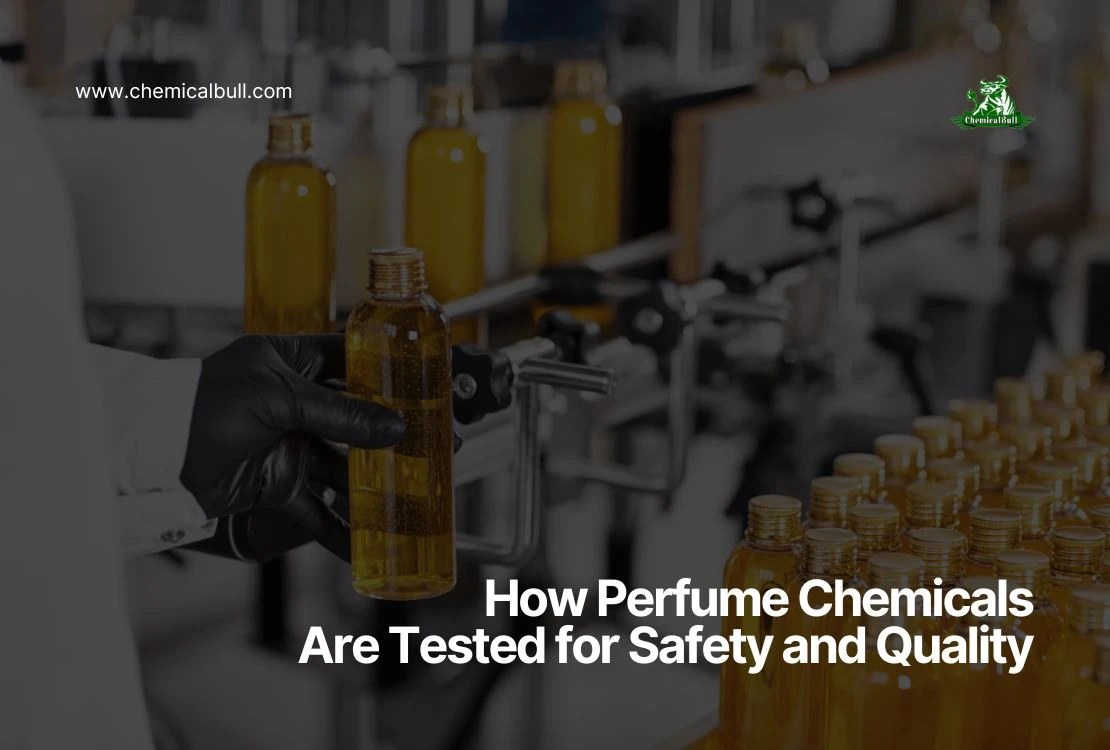
Modern perfume quality testing uses a combination of analytical, biological, and regulatory methods to ensure that every fragrance chemical is safe, pure, and effective before it enters a formulation. Here are the most important testing methods used in a professional perfume testing laboratory:
1. Patch Testing — Dermatological Safety Assessment
Patch testing is the most direct method for evaluating whether a fragrance ingredient causes skin sensitisation or allergic contact dermatitis. Small concentrations of the fragrance chemical are applied to a patch and worn on the skin for 24–48 hours. The skin's reaction — or lack thereof — determines whether the ingredient is safe for leave-on applications like perfumes, lotions, and creams. This is a fundamental part of any rigorous fragrance quality assurance process.
2. In-Vitro Testing — Safe and Ethical Lab Analysis
Modern fragrance safety testing has largely moved away from animal testing toward in-vitro methods using cell cultures. These tests evaluate the potential of fragrance chemicals to cause skin irritation, eye irritation, or sensitisation reactions at the cellular level. In-vitro testing is faster, more ethical, and increasingly required by regulatory bodies in the EU and globally.
3. GC-MS Analysis — Gas Chromatography-Mass Spectrometry
The GC-MS (Gas Chromatography-Mass Spectrometry) is the most reliable instrument used to analyse the contents of every important perfume testing lab. It is a method of separating and identifying the chemical constituents in a scent, as well as confirming the purity of the fragrance, as well as identifying contaminants as well as confirming the presence of controlled or restricted chemicals. The GC-MS test is crucial in both quality control and for final perfume quality control.
4. Olfactory Evaluation — Expert Sensory Assessment
Beyond chemistry, fragrance quality must be evaluated through the human nose. Trained perfumers and fragrance evaluators assess aroma chemicals and finished fragrances for scent accuracy, balance, and consistency. This sensory evaluation — combined with analytical testing — ensures that every batch of fragrance chemicals meets the expected scent profile and fragrance quality standards.
5. Stability Testing — Does the Fragrance Last?
Fragrance stability testing evaluates how a perfume chemical or finished fragrance performs over time under various environmental conditions — including heat, light, humidity, and pH variations. Stability tests typically run over 4–12 weeks and assess changes in scent profile, colour, clarity, and chemical composition. This testing is critical for assurance of product quality and ensuring the product remains consistent throughout its shelf life.
6. Regulatory Testing — IFRA and Legal Compliance
Before a fragrance formulation is approved for commercial sale, it must pass regulatory testing to confirm compliance with IFRA standards, REACH regulations, and local cosmetics legislation. A certified fragrance ingredients supplier will always provide documentation such as IFRA certificates, Safety Data Sheets (SDS), and certificates of analysis (COA) with every product batch.
Ensuring Fragrance Quality Assurance in Every Batch
Fragrance quality assurance goes beyond individual ingredient testing — it encompasses every stage of the supply chain, from raw material sourcing to finished product delivery. For a fragrance supplier committed to perfume quality standards, quality assurance is a continuous, systematic process.
Purity Testing
Every batch of aroma chemicals supplied by a reputable fragrance raw material supplier must be tested for purity. High-purity aroma chemicals ensure consistent scent profiles across formulations and eliminate the risk of off-notes caused by impurities. Purity is typically verified using GC-MS analysis, HPLC (High-Performance Liquid Chromatography), and refractive index measurements.
Performance Testing
Performance testing evaluates how a fragrance chemical interacts with other ingredients in a formulation. This includes assessing how the chemical blends with other aroma compounds, how it performs on different skin types, and how it behaves in different product bases — from eau de parfum to body cream and detergent. Performance testing is essential for building reliable, reproducible fragrances.
Batch Consistency Checks
One of the most critical aspects of fragrance quality assurance is ensuring batch-to-batch consistency. An ISO certified perfume manufacturer maintains strict quality control protocols to ensure that every batch of aroma chemicals meets the same purity, scent profile, and chemical specification standards. Consistent batches allow perfumers and brand owners to reproduce their fragrances reliably at scale.
How to Check Perfume Quality: A Practical Guide
Whether you are sourcing fragrance chemicals for professional use or evaluating a finished perfume product, knowing how to check perfume quality is an essential skill. Here are the key indicators of quality you should assess:
Check the Certificate of Analysis (COA)
Every reputable fragrance supplier should provide a Certificate of Analysis with every batch. The COA confirms the purity, chemical composition, physical properties, and compliance status of the aroma chemical. Always request and verify the COA before accepting a batch from any perfume chemical supplier.
Verify IFRA Compliance Documentation
For finished fragrance formulations, request an IFRA compliance certificate from your supplier. This document confirms that the fragrance has been formulated within IFRA's safe usage limits for your specific product category — whether it is a fine fragrance, a lotion, or a soap.
Conduct Sensory Evaluation
A trained nose is one of the most reliable perfume quality check tools. Evaluate the fragrance on a smelling strip and on skin, assessing the development of top, heart, and base notes over 30–60 minutes. Compare the sample against a reference standard to detect any off-notes, inconsistencies, or changes in scent profile.
Request Stability Test Results
Ask your fragrance raw material supplier for stability test data — particularly if you are formulating products that will be stored for extended periods or used in challenging environments like high-humidity climates. Stability data confirms that the fragrance will maintain its quality throughout the product's intended shelf life.
Assess Supplier Credentials
The quality of your fragrance chemicals is only as good as your supplier's quality systems. Always verify that your perfume chemical supplier holds relevant certifications — including ISO 9001 quality management, IFRA membership, and REACH compliance documentation.
Premium Aroma Chemicals Used in Quality Fragrance Testing
Understanding which specific aroma chemicals are used in high-quality fragrances helps both perfumers and quality assurance professionals assess fragrance ingredient safety and performance. Here are six of the most important fragrance chemicals available from ChemicalBull, each of which undergoes rigorous quality and safety testing:
→ Iso E Super — A smooth, woody-ambery aroma chemical with cedar-like warmth and exceptional skin diffusion. Widely used as a radiance enhancer and fixative in modern fine fragrances. IFRA-compliant and batch-tested for purity.
→ Ambroxan — One of the most sought-after base note aroma chemicals in contemporary perfumery. Ambroxan delivers a warm, skin-like ambery-musky character that enhances projection and longevity. A key fragrance ingredient in many luxury and niche perfumes.
→ Hedione — A classic synthetic fragrance compound with a soft, fresh jasmine-like character. Hedione is celebrated for its radiance-enhancing effect in floral and oriental fragrances. It also activates pheromone receptors, making it one of the most psychologically effective fragrance ingredients available.
→ Cashmeran — A rich, warm, woody-musky aroma chemical that adds depth, spice, and a cashmere-like texture to fragrances. Cashmeran performs brilliantly as a base and fixative note, contributing to both fragrance quality and longevity in fine perfumes and personal care products.
→ Vanillin — The most iconic sweet fragrance compound in perfumery. Vanillin is a key perfume ingredient in oriental, gourmand, and floral fragrances, delivering a warm, creamy vanilla character. Produced synthetically to the highest purity standards and fully IFRA compliant.
→ Galaxolide — One of the most widely used polycyclic musk aroma chemicals in the world. Galaxolide delivers a clean, sweet, and highly persistent musk scent that adds bloom, volume, and exceptional longevity to fragrances. A primary fixative in fine fragrance, detergents, and personal care formulations.
Explore the complete range of premium aroma chemicals and learn about their fragrance enhancement applications at ChemicalBull.
How to Choose Reliable Perfume Chemical Suppliers
Selecting the right fragrance supplier is one of the most important decisions a perfume manufacturer or fragrance brand can make. The quality, safety, and consistency of your finished fragrances depend directly on the quality of your raw material sources. Here is what to look for when evaluating perfume chemical suppliers:
ISO Certification and Quality Management
An ISO certified perfume manufacturer or fragrance raw material supplier demonstrates a formal commitment to quality management systems. ISO 9001 certification confirms that the supplier operates with documented quality control processes, consistent testing procedures, and continuous improvement protocols — all essential for reliable fragrance quality assurance.
IFRA Membership and Compliance
Choose a fragrance supplier that is an active member of IFRA or one that rigorously follows IFRA fragrance standards in their formulations and ingredient supply. IFRA-compliant suppliers proactively monitor updates to safety standards and ensure their products always meet the latest usage guidelines.
Transparency and Documentation
A trustworthy perfume chemical supplier will freely provide Certificates of Analysis (COA), Safety Data Sheets (SDS), IFRA compliance certificates, and REACH documentation for every product. Transparency in documentation is a direct indicator of a supplier's commitment to fragrance ingredient safety and assurance of perfume quality.
Track Record and Industry References
Look for certified fragrance ingredients suppliers with a proven track record in the fragrance and personal care industry. Ask for references from existing customers, review their client portfolio, and check for any industry awards or certifications that validate their quality and reliability.
Logistics and Supply Chain Reliability
The best fragrance raw material suppliers combine excellent product quality with reliable logistics — including proper packaging for chemical safety, temperature-controlled storage where required, and consistent on-time delivery. A disruption in your supply chain can directly impact your production schedule and product quality.
Frequently Asked Questions (FAQ)
-
How to check if perfume is original?
Check the Certificate of Analysis (COA), verify IFRA compliance documentation, assess the fragrance through sensory evaluation against a reference standard, and confirm your supplier holds ISO certification and provides full ingredient transparency. -
How is perfume tested for safety?
Perfume chemicals are tested for safety through patch testing for skin sensitisation, in-vitro cell culture testing, GC-MS analysis for purity and contaminants, and regulatory compliance testing against IFRA standards and EU REACH regulations. -
What are IFRA fragrance standards?
IFRA (International Fragrance Association) standards are globally recognised usage guidelines that specify safe concentration limits for fragrance ingredients across 12 product categories — based on safety assessments conducted by RIFM to protect consumers from allergic reactions and health risks. -
What chemicals are tested in perfumes?
Perfume quality testing covers aroma chemicals for purity (via GC-MS), known allergens (linalool, limonene, citronellol, eugenol), prohibited substances on the IFRA restricted list, and overall formulation stability — ensuring fragrance ingredient safety and regulatory compliance. -
How long does perfume stability testing take?
Perfume stability testing typically takes 4 to 12 weeks, during which the fragrance is evaluated under controlled conditions of heat, light, humidity, and pH to assess changes in scent, colour, clarity, and chemical composition across the product's intended shelf life.
Conclusion
Testing perfume chemicals for safety and quality is not just a regulatory requirement — it is the foundation of building fragrances that consumers can trust and enjoy with confidence. From understanding perfume quality standards and IFRA fragrance standards to conducting GC-MS analysis, patch testing, and stability evaluations, every step of the testing process contributes to a safer, better, and more consistent fragrance product.
For perfume brands, fragrance houses, and manufacturers, working with the right fragrance supplier makes all the difference. A reliable, ISO certified, IFRA-compliant supplier of certified fragrance ingredients — combined with rigorous in-house fragrance quality assurance — is the formula for building a trusted perfume brand.
Source your aroma chemicals — including Iso E Super, Ambroxan, Hedione, Cashmeran, Vanillin, and Galaxolide — from ChemicalBull: a trusted aroma chemical supplier with full IFRA compliance, quality documentation, and global delivery. Learn more about fragrance enhancement applications on our website. At Group of Triveni (Chemical Bull Pvt. Ltd.), we are the trusted Manufacturer, Bulk Supplier, and Global exporter of Aroma chamicals product.
Comment Section