Chemical Bull
10682
05-Dec-2025
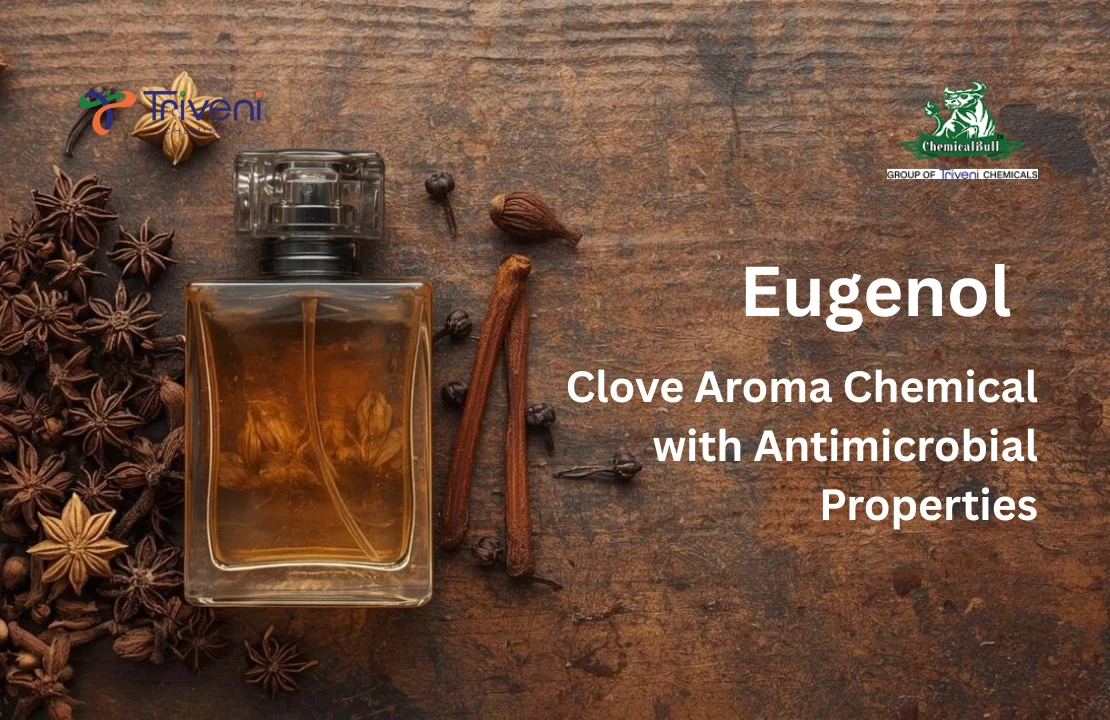
Eugenol is one of the most important clove-based aroma chemicals used across fragrance, flavour, oral-care, pharma, and home-care industries. Known for its warm spicy note, functional antimicrobial properties, and consistent performance in formulations, it plays a major role in both natural and synthetic perfumery.
As a leading chemical manufacturing and trading partner for B2B clients, Chemicalbull Pvt. Ltd. supplies high-quality Eugenol for applications where aroma quality, functional benefits, and purity matter.
This blog explains everything about Eugenol—its structure, solubility, uses, benefits, fragrance behaviour, industrial applications, and commonly searched differences.
What Is Eugenol?
Eugenol is a phenolic compound recognised for its strong clove-like smell and antimicrobial activity.
It is naturally found in many spices and aromatic plants.
Eugenol is present in:
Clove buds (primary source), cinnamon leaves, nutmeg, basil, bay leaf, and allspice.
These natural sources contribute to the global demand for Eugenol as a fragrance and functional ingredient.
Eugenol Structure and Functional Groups
Eugenol Structure
Eugenol contains:
-
A benzene ring
-
Phenolic hydroxyl group
-
Methoxy group
-
Allyl chain
Eugenol Functional Groups
Functional Group Function
Phenol (–OH): Provides antimicrobial activity
Methoxy (–OCH₃): Enhances aroma and reactivity
Allyl chain improves volatility for perfumery
These chemical features make Eugenol suitable for complex fragrance blends, oral-care formulations, and pharma use.
Eugenol Solubility
Eugenol solubility plays a major role in formulation development.
-
Soluble in: alcohol, oils, organic solvents
-
Partially soluble in: water
This allows easy blending into perfume oils, creams, gels, flavours, mouthwash bases, and topical products.
Fragrance Profile of Eugenol
Aroma Characteristics
-
Warm
-
Spicy
-
Sweet-clove like
-
Slightly woody
Used in Fragrance Families
-
Oriental fragrances, spicy accords, floral-spicy blends, tobacco accords, and leather compositions.
Eugenol helps add depth, warmth, and richness to fragrance formulations.
To discover more perfumery materials that pair well with Eugenol, visit the Fragrance & Perfumery Ingredient Section.
Eugenol Oil vs Clove Oil
These two materials are often confused, but they are not the same.
Below is a clear industrial comparison:
|
Feature |
Eugenol Oil |
|
|
Composition |
Highly concentrated Eugenol |
Natural essential oil containing Eugenol + other compounds |
|
Odour Profile |
Strong pure clove-like |
Sweet, spicy, and more complex |
|
Industrial Use |
Perfumery, pharma, dental materials |
Aromatherapy, herbal blends |
Cinnamaldehyde is another key component in cinnamon-based aroma profiles. To learn more about how it works in fragrances, you can explore our detailed blog on Cinnamaldehyde here: Cinnamaldehyde: Warm Cinnamon Aroma for Candles & Personal Care.
Eugenol in Cinnamon vs Clove
Eugenol is found in both plants, but in different strengths.
|
Source |
Eugenol Content |
Aroma Quality |
|
Cinnamon Leaf |
Moderate to high |
Warm, slightly sweet |
|
Clove Bud |
Highest natural content |
Strong spicy clove character |
What Is Eugenol Used For? (Industrial Applications)
A. Perfumery & Flavours
-
Used in spicy accords, floral-spicy compositions, oriental perfumes, tobacco flavours, and bakery blends.
-
For more aroma materials, visit ChemicalBull’s Aroma chemicals page.
Why formulators prefer Eugenol
-
Strong spicy impact
-
Enhances depth and warmth
-
Widely compatible with perfume bases.
Many perfumers use Eugenol and Isoeugenol together to build depth in spicy and floral notes.
B. Oral Care & Dentistry
Eugenol is popular in dental applications because of its natural functional behaviour.
What is Eugenol used for in dentistry?
-
Temporary dental fillings
-
Root canal sealers
-
Cavity sedative materials
-
Dry socket dressings
Eugenol dental side effects
In high concentration, it may cause:
-
Mild irritation
-
Temporary sensitivity
-
Rare allergic reaction
C. Pharmaceuticals & Topicals
-
Antiseptic creams
-
Pain relief blends
-
Throat care formulations
Its antimicrobial and anti-inflammatory behaviour supports therapeutic applications.
D. Home Care & Hygiene
-
Disinfectant blends
-
Air fresheners
-
Fabric sprays
-
Cleaning formulations
Eugenol Antimicrobial Mechanism
Eugenol works by:
-
Disrupting microbial cell membranes
-
Reducing enzyme activity
-
Slowing bacterial and fungal growth
This makes it valuable in:
-
Oral care
-
Home hygiene products
Food and Spice Sources of Eugenol
What foods are high in Eugenol?
-
Spiced bakery items
-
Masala tea blends
-
Cinnamon-based desserts
-
Clove-flavoured foods
Which spices contain Eugenol?
Clove, cinnamon, nutmeg, basil, bay leaf, and allspice.
The primary Eugenol plant source is clove (Syzygium aromaticum).
Why B2B Clients Choose Eugenol from Chemicalbull
-
Reliable supply for bulk manufacturing
-
Controlled aroma profile for consistent production
-
Suitable for fragrance, flavour, oral-care, pharma, and hygiene industries
-
High purity and stable quality
-
Technical data support for formulation teams
FAQs About Eugenol
1. What is the medical use of Eugenol?
Eugenol is used in dental treatments, pain-relief creams, and antiseptic products because it reduces pain and controls bacteria.
2. Is Eugenol oil the same as clove oil?
No, Eugenol oil is more purified and contains more Eugenol, while clove oil is a natural essential oil with several other compounds.
3. Is Eugenol good for toothache?
Yes, Eugenol provides quick temporary relief from toothache due to its natural numbing and antibacterial properties.
4. What are the negative effects of Eugenol?
In high amounts, Eugenol may cause irritation or sensitivity, but these effects are rare in properly formulated products.
5. Is synthetic Eugenol better than natural Eugenol?
Synthetic Eugenol is more consistent and stable for industrial use, while natural Eugenol can vary depending on the plant source.
Eugenol’s Role in Modern B2B Formulations and Manufacturing
Eugenol is a versatile clove aroma chemical with strong antimicrobial behaviour, a warm spicy fragrance profile, and wide applications in perfumery, oral care, flavours, pharmaceuticals, and hygiene industries. With its unique structure, functional groups, and solubility, Eugenol remains a preferred ingredient for industrial manufacturers.
As a trusted B2B supplier and chemical manufacturing company, Chemicalbull Pvt. Ltd. offers high-quality Eugenol for consistent performance in all formulations.



Comment Section