Chemical Bull
4812
15-Nov-2025
What is Ethyl Acetate?
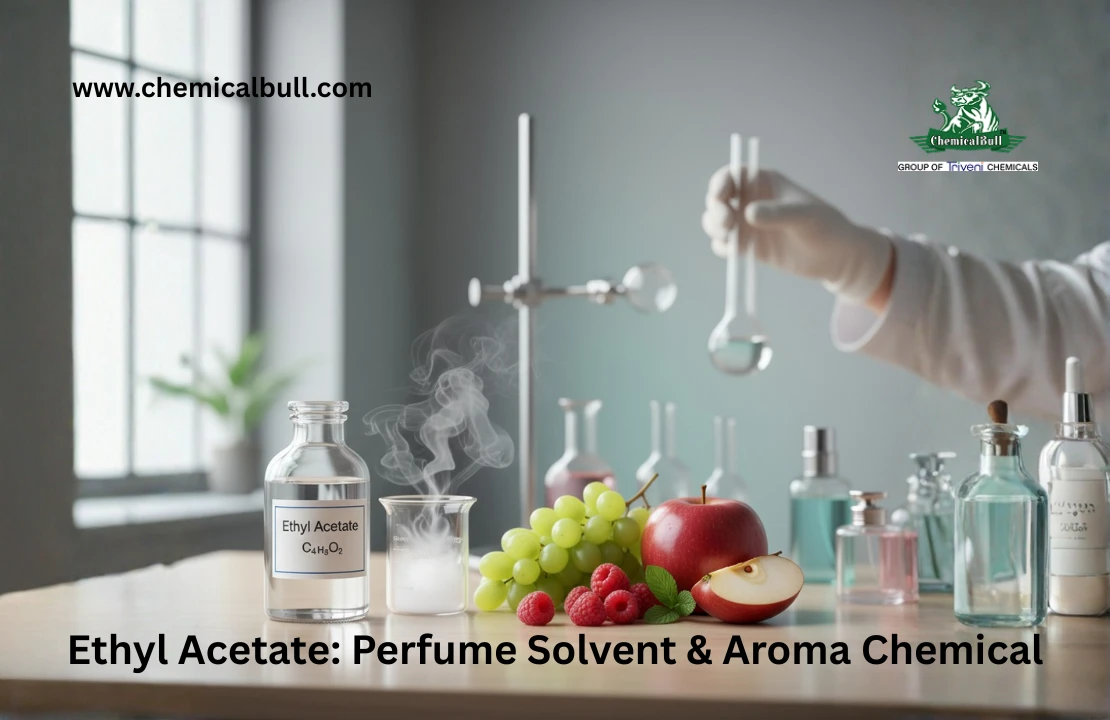
Ethyl acetate, with the molecular formula C4H8O2, is a colourless volatile organic compound with the molecular formula C4H8O2, that has become one of the most versatile solvents and aroma chemicals used today in industry. Created through the reaction between ethanol and acetic acid, its sweet, fruity aroma, recalling pear drops, nail polish remover and wine, makes it an invaluable component in perfume ingredients lists as well as industrial applications worldwide.
Chemical Properties:
- C.A.S Number: 141-78-6
- Molecular Weight: 88.11 g/mol
- Boiling Point: 77°C (171°F)
- Density: 0.902 g/cm³
As a volatile solvent with excellent solvency properties, low toxicity, and a pleasant odour profile, ethyl acetate has carved out a significant position across multiple industries—from cosmetics and perfumery to pharmaceuticals, food processing, and industrial manufacturing.
Ethyl Acetate Smell: Understanding Its Aromatic Profile
Ethyl acetate's distinctive scent can be described as having sweet, fruity and slightly ethereal characteristics, according to fragrance chemists and perfumers. Perfumers and scent chemists describe its qualities as having:
- Top Notes: Sharp, fresh, and penetrating
- Heart: Sweet fruit (pear, apple, banana undertones)
- Base: Clean, solvent-like finish
- Overall Character: Bright, effervescent, and uplifting
Ethyl acetate's distinctive fruity aroma makes it a common component in fragrance formulations, acting both as a solvent carrier and active fragrance component. Modern perfumers especially appreciate ethyl acetate for adding brightness and lift to complex scent compositions.
What is Ethyl Acetate Used For? Comprehensive Application Overview
1. Paints and Coatings Industry (Largest Market Share: 52% in 2024)
Paints and coatings represent the largest market for ethyl acetate consumption due to its fast flash-off properties and strong solvency power that enable high gloss finishes.
Applications include:
- Automotive refinishing and OEM coatings
- Architectural paints and varnishes
- Wood finishes and lacquers
- Industrial protective coatings
- Powder coating formulations
Ethyl acetate as a solvent is particularly valuable because formulators are reformulating to meet low-VOC targets without losing performance, and ethyl acetate's relatively low toxicity encourages further substitution from ketones.
2. Printing Inks and Adhesives
The second and third most significant application segments leverage ethyl acetate's:
- Rapid evaporation rate for fast-drying inks
- Excellent dissolution of polymers and resins
- Low residual odour in finished products
- Compatibility with flexographic and gravure printing systems
3. Pharmaceutical and Nutraceutical Production
Pharmaceutical-grade ethyl acetate production is expanding faster than industrial grades, driven by stringent impurity limits and rising API capacity across North America and Europe, driving an impressive compound annual growth rate of 5.30%. Uses include:
- Active pharmaceutical ingredient (API) extraction
- Tablet coating applications
- Purification processes
- Process solvent in drug synthesis
- Analytical chemistry and chromatography
Similar to other pharmaceutical-grade chemicals like preservatives, quality and purity standards are paramount.
4. Ethyl Acetate for Extraction in Food & Beverage
Ethyl acetate for extraction plays a critical role in food processing:
- Decaffeination: Coffee and tea decaffeination solvent
- Flavour Extraction: Natural flavour compounds from fruits and spices
- Essential Oils: Co-solvent in essential oil production
- Food Additives: GRAS (Generally Recognised As Safe) status for direct food contact
Decaffeinating tea and coffee using product solvents is on the rise as consumption of decaffeinated drinks is increasing at healthy rates, creating new opportunities for food-grade ethyl acetate suppliers.
Ethyl Acetate in Perfumery Applications: A Fragrance Essential
Ethyl acetate in perfumery applications serves multiple critical functions that make it indispensable to modern fragrance creation.
The Role of Ethyl Acetate Use in Perfumery
Ethyl acetate use in perfumery encompasses both functional and aromatic purposes:
Functional Applications:
- Solvent Carrier: Dissolves fragrance oils, fixatives, and other perfume ingredients
- Alcohol Extender: Reduces production costs when combined with ethanol
- Top Note Enhancer: Adds brightness and lift to opening accords
- Viscosity Modifier: Adjusts flow properties of concentrated perfume oils
Aromatic Applications:
- Fruity Ester Accord: Contributes sweet, pear-like notes as an ethyl acetate aroma compound
- Effervescent Quality: Creates sparkling, champagne-like effects
- Green Apple Notes: Supports fresh, crisp fruit profiles
- Solvent Modifier: Alters perception of other ingredients through co-mingling
Ethyl Acetate Fragrance Ingredient: Formulation Insights
As an ethyl acetate fragrance ingredient, this ester is classified as an ester in perfumery that belongs to the fruity-green olfactive family. When used as an active fragrance component (rather than just a solvent), typical concentrations range from:
- Delicate Fragrance: 0.5-3% in finished perfume
- Eau de Toilette: 1-5% for added freshness
- Body Sprays: 2-8% for pronounced fruitiness
- Functional Fragrances: 5-15% in cleaning products
For those learning how to make perfume, understanding ethyl acetate's dual role as both solvent and fragrance note is essential. Much like the principles outlined in our guide on creating unique scents with aroma chemicals, mastering ethyl acetate fragrance applications requires balancing technical and artistic considerations.
Ethyl Acetate in Cosmetics: Beauty and Personal Care
Ethyl acetate in cosmetics extends beyond perfumery into various personal care applications:
- Nail Polish Removers: Primary active ingredient (50-70%)
- Nail Lacquers: Fast-drying solvent in polish formulations
- Hair Sprays: Propellant and solvent carrier
- Temporary Hair Colours: Quick-evaporating delivery system
- Makeup Setting Sprays: Light, non-greasy finish
Emerging Bio-Based Ethyl Acetate: The Sustainability Revolution
Bio-based volumes are forecast to expand at a 6.30% CAGR because renewable feedstocks help users meet carbon reduction targets and justify premium pricing. This represents one of the most significant trends reshaping the ethyl acetate market.
Benefits of Bio-Based Ethyl Acetate
|
Benefit |
Conventional Ethyl Acetate |
Bio-Based Ethyl Acetate |
|
Feedstock Source |
Petroleum-derived ethanol/acetic acid |
Corn, sugarcane, biomass ethanol |
|
Carbon Footprint |
Higher (fossil fuel dependent) |
60-80% reduction in CO₂ emissions |
|
Renewability |
Non-renewable petroleum |
100% renewable plant sources |
|
Performance |
Baseline standard |
Equivalent performance |
|
Price Premium |
Standard pricing |
10-25% premium |
|
Consumer Appeal |
Conventional chemical |
Clean-label, sustainable choice |
|
Regulatory Status |
FDA/EPA approved |
Enhanced green credentials |
Classic Perfume Structure and Ethyl Acetate's Role
Traditional perfume ingredients are organised into a pyramid structure:
Top Notes (5-15% of formula):
- Ethyl acetate contributes a bright, fruity sparkle
- Enhances citrus and green notes
- Provides immediate olfactive impact
Heart Notes (40-60% of formula):
- Ethyl acetate serves as a carrier for florals
- Facilitates even distribution of middle notes
- Supports longer-lasting aroma development
Base Notes (20-30% of formula):
- Acts as a fixative solvent
- Helps anchor volatile ingredients
- Ensures smooth dry-down
2024-2025 Perfume Trends and Ethyl Acetate Applications
Fragrance was a standout category in 2024 amid slowdowns in the greater beauty and luxury fashion industries, with niche labels scoring investments and mass perfumes driving global trends. The global fragrance market is projected to reach $43.2 billion by 2028, creating unprecedented opportunities for innovative fragrance chemicals.
1. Gourmand and "Edible" Fragrances
Mass fragrance benefited from the boom, with premium brands diving further into accessible formats like body spray. At the same time, Gourmand notes that the tastes of Gen Z and Gen Alpha were remixed into more expensive formulations.
Ethyl acetate enhances gourmand profiles by:
- Adding fresh fruit top notes to balance the sweetness
- Creating pear and apple accords in dessert fragrances
- Lightening heavy vanilla and caramel compositions
- Providing effervescent quality to "champagne" gourmands
2. Genderless and Minimalist Scents
The fragrance industry is shifting away from traditional gender norms, with more brands offering unisex options that appeal to everyone, especially Gen Z who prefer scents that align with their identities.
Ethyl acetate supports this trend through:
- Clean, neutral solvent character that doesn't skew masculine or feminine
- Universal fruit notes that transcend gender stereotypes
- Transparent quality that allows other notes to shine
- Versatility in both fresh and complex formulations
3. Sustainable and Clean-Label Fragrances
Sustainability will play a crucial role, with ethical sourcing and transparency aligning with the values of contemporary luxury consumers.
Bio-based ethyl acetate answers this demand:
- Renewable plant-derived ingredient
- Reduced environmental impact
- Transparent supply chain from field to fragrance
- Supports the clean beauty movement
4. Long-Lasting Citrus and Fresh Scents
Luxury fragrance houses are investing in higher percentages of citrus oils and using clever blending tricks with biotech synthetics to elongate brightness and freshness for hours.
Ethyl acetate helps achieve this through:
- Serving as a carrier for encapsulated citrus notes
- Supporting sustained-release fragrance technology
- Complementing long-lasting citrus molecules
- Providing an initial burst that transitions smoothly
Market Challenges
Acetic acid accounts for as much as 65% of variable cost, with force majeure events, natural-gas swings, and shifting global trade routes creating price volatility since 2024.
Additional challenges include:
- Fluctuating raw material (ethanol and acetic acid) prices
- Competition from water-based alternatives in some applications
- Regulatory pressure on VOC emissions
- Supply chain disruptions are affecting production costs
Ethyl Acetate Applications: Innovative Uses Across Industries
Advanced Material Science
Ethyl acetate is finding new applications in cutting-edge materials:
- 3D Printing Resins: Solvent in photopolymer formulations
- Biodegradable Plastics: Processing aid for PLA and PHA polymers
- Conductive Inks: Carrier for electronic printing applications
- Innovative Coatings: Self-healing and responsive coating systems
Pharmaceutical Innovation
Beyond traditional API synthesis, ethyl acetate applications in pharma include:
- Nanoparticle Production: Solvent in drug nanoparticle formulation
- Controlled Release Systems: Matrix dissolution in extended-release tablets
- Transdermal Patches: Penetration enhancer and carrier
- Vaccine Adjuvants: Processing solvent in adjuvant production
Green Chemistry Applications
Bio-based ethyl acetate is biodegradable, non-carcinogenic, non-ozone depleting, easily recyclable, and non-corrosive, making it ideal for:
- Replacement of chlorinated solvents
- Green extraction methodologies
- Sustainable coating formulations
- Eco-friendly cleaning products
Similar to developments in natural aroma chemicals, bio-based ethyl acetate represents the future of sustainable chemistry.
Comparative Analysis: Ethyl Acetate vs. Alternative Solvents
Solvent Performance Comparison
|
Solvent |
Evaporation Rate |
Solvency Power |
Toxicity |
Environmental Impact |
Cost |
Best Applications |
|
Ethyl Acetate |
Very Fast |
Excellent |
Low |
Moderate-Low |
Medium |
Coatings, perfumes, and food extraction |
|
Acetone |
Very Fast |
Excellent |
Moderate |
Moderate |
Low |
Industrial cleaning, nail polish remover |
|
Fast |
Excellent |
Moderate-High |
Moderate-High |
Medium |
Industrial coatings, adhesives |
|
|
Isopropanol |
Moderate |
Good |
Low |
Low |
Low |
Cleaning, disinfection |
|
Toluene |
Slow |
Excellent |
High |
High |
Medium |
Heavy-duty industrial (being phased out) |
|
Slow |
Moderate |
Very Low |
Very Low |
High |
Green cleaning, natural fragrances |
|
|
Ethanol |
Moderate |
Moderate |
Low |
Low |
Medium |
Perfumes, pharmaceuticals, food |
Why Ethyl Acetate Excels:
- Optimal balance of performance and safety
- Regulatory acceptance across most jurisdictions
- Pleasant odor vs. harsh solvent smell
- Rapid evaporation without excessive volatility
- Versatility across multiple industries
Sourcing Quality Supplier Selection Criteria
1. Purity and Grade Specifications
- Technical Grade: 99.0-99.5% purity (industrial coatings, inks)
- Pharmaceutical Grade: 99.5-99.9% purity (pharma, cosmetics)
- Food Grade: 99.5%+ purity, low residual impurities (food extraction)
- HPLC/Analytical Grade: 99.9%+ purity (laboratory use)
2. Quality Documentation
- Certificate of Analysis (CoA) for each batch
- Material Safety Data Sheet (MSDS/SDS)
- Compliance certificates (FDA, REACH, GMP)
- Stability data and shelf-life information
3. Supply Chain Reliability
- Consistent availability and lead times
- Multiple sourcing options (conventional and bio-based)
- Geographic proximity to reduce shipping costs
- Inventory management support
4. Technical Support
- Formulation assistance and application guidance
- Regulatory compliance consultation
- Custom blending capabilities
- Waste disposal and recycling programs
5. Sustainability Credentials
- Bio-based sourcing options
- Carbon footprint transparency
- Sustainable packaging alternatives
- Corporate social responsibility programs
Chemical Bull Pvt. Ltd. is a High-Quality Supplier of Chemicals across all grade specifications to B2B clients in India and internationally, with technical support for fragrance, food, pharmaceutical, and industrial applications.
Conclusion: The Enduring Value of Ethyl Acetate
Ethyl acetate stands as a testament to versatile chemistry—a single compound that serves as an industrial workhorse, delicate perfume ingredient, food-safe processing aid, and pharmaceutical essential. Its unique combination of performance, safety, and sustainability positions it for continued growth across all application sectors.
As the global market expands from USD 6.21 billion in 2024 to a projected USD 11.79 billion by 2034, opportunities abound for manufacturers, formulators, and suppliers who prioritise quality, innovation, and environmental responsibility.
Whether you're formulating the next breakthrough fragrance, developing sustainable coatings, extracting natural flavours, or synthesising life-saving pharmaceuticals, ethyl acetate remains an indispensable tool. Its evolution from petroleum-derived commodity to renewable bio-based speciality chemical mirrors the broader transformation toward sustainable industrial chemistry.
Related Articles
Explore our comprehensive collection of articles on aroma chemicals and fragrance formulation:
- How Fragrance Companies Choose the Best Aroma Chemicals
- Create Unique Scents with Aroma Chemicals
- Alpha-Ionone: The Science of Scent
- Isoamyl Acetate: Creating Rich Banana Fragrances
- Alpha-Pinene and Beta-Pinene: Pine Fresh Aroma Chemicals
About Chemical Bull Pvt. Ltd.
Chemical Bull Pvt. Ltd. is a Leading Supplier of High-Quality Solvents, Aroma Chemicals, Essential Oils, and speciality ingredients for the fragrance, cosmetic, pharmaceutical, food, and industrial sectors. We provide technical expertise, regulatory guidance, and reliable supply chain management to help our clients create exceptional products.
Contact us for samples, technical data sheets, CoAs, and formulation support for ethyl acetate and our complete range of volatile solvents and fragrance formulation ingredients.
Visit our Blogs for the latest insights on perfume creation, aroma chemicals, industrial applications, and sustainable chemistry innovations.
Comment Section