Chemical Bull
22
15-Sep-2026
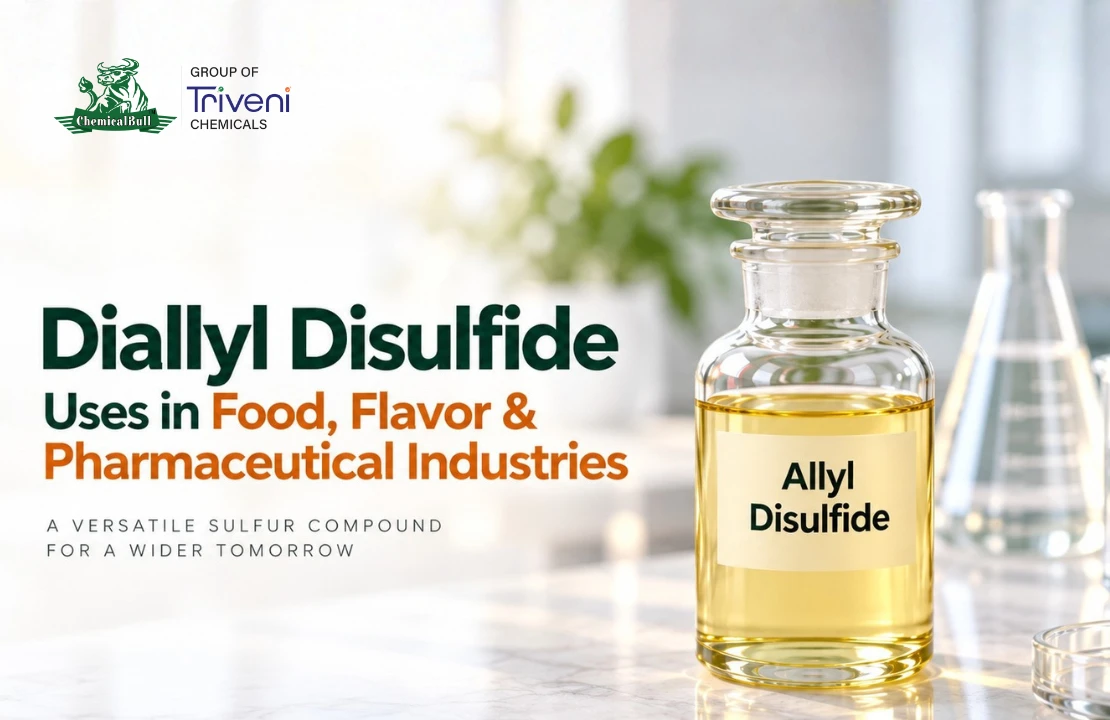
Diallyl Disulfide Uses in Food, Flavor & Pharmaceutical Industries
Diallyl Disulfide, often abbreviated as DADS, is a naturally occurring organosulfur compound responsible for much of garlic's characteristic aroma and flavor. Beyond its role in food and flavoring, this versatile compound has found applications across fragrance formulation, nutraceutical products, and agricultural biopesticide development.
Because consistent purity affects flavor profile and formulation performance, working with an established diallyl disulfide supplier helps manufacturers maintain reliable results across food, flavor, and specialty chemical applications.
Chemical Identity & Properties
|
Property |
Detail |
|
CAS Number |
2179-57-9 |
|
Chemical Formula |
C₆H₁₀S₂ |
|
Molar Mass |
146.27 g/mol |
|
Natural Source |
Garlic (Allium sativum) and related Allium species |
|
Appearance |
Pale yellow to yellow liquid |
|
Odor |
Strong, characteristic garlic odor |
What Is Diallyl Disulfide?
Diallyl Disulfide is one of several organosulfur compounds naturally present in garlic, formed when garlic is crushed or processed, triggering an enzymatic reaction that converts precursor compounds into a range of sulfur-containing molecules, including DADS. It can be extracted from garlic oil or produced synthetically for commercial applications requiring consistent purity and supply.
Uses of Diallyl Disulfide in the Food and Flavor Industry
-
Garlic Flavoring Agent:
Used to impart authentic garlic flavor and aroma in sauces, seasonings, snack foods, and processed meat products. -
Beverage Flavoring:
Applied in select savory beverage formulations where a garlic or allium flavor note is desired. -
Seasoning Blends:
Incorporated into spice and seasoning blends to provide consistent garlic character without relying on fresh or dehydrated garlic. -
Processed Food Applications:
Used in ready-to-eat meals, dressings, and condiments where standardized flavor intensity is important for product consistency.
Uses of Diallyl Disulfide in Fragrance Formulation
Diallyl Disulfide is used in select fragrance compositions to contribute savory, sulfurous, or allium-type notes. While not used broadly across mainstream perfumery, it plays a niche role in specialty fragrance profiles designed to evoke culinary scent categories, often used in extremely low concentrations due to its potent odor.
Uses of Diallyl Disulfide in Nutraceutical and Dietary Supplement Products
Diallyl Disulfide is one of several organosulfur compounds found in garlic extract, which has a long history of use in dietary supplement products. It is often included as a marker or functional component in garlic-derived nutraceutical formulations, reflecting the compound naturally present in garlic oil extracts. Formulators and buyers should refer to current regulatory guidance for supplement labeling and permitted claims in their target market.
Uses of Diallyl Disulfide in Agricultural Applications
-
Biopesticide Formulations:
Used as an active component in certain garlic-derived biopesticide and nematicide products, valued for being derived from a natural source. -
Soil Treatment:
Applied in some soil fumigation formulations as part of integrated pest management approaches. -
Post-Harvest Protection:
Explored in some formulations for its potential role in protecting stored agricultural products from certain pests.
Why Diallyl Disulfide Is Valued Across These Industries
|
Factor |
Why It Matters |
|
Natural Origin |
Appeals to formulations seeking naturally derived flavor and functional ingredients |
|
Potent, Consistent Flavor |
Provides standardized garlic character without variability from fresh produce |
|
Multi-Industry Versatility |
Functional across food, fragrance, supplement, and agricultural applications |
|
Established Extraction and Synthesis Routes |
Available through both natural extraction and synthetic production for supply flexibility |
How Diallyl Disulfide Is Extracted and Produced
Commercial Diallyl Disulfide is obtained through two primary routes, each suited to different formulation needs:
- Natural Extraction: Garlic cloves or garlic oil are processed to isolate DADS along with related organosulfur compounds, typically through steam distillation or solvent extraction.
- Synthetic Production: DADS can also be produced synthetically, offering a more consistent, scalable supply that doesn't depend on agricultural garlic yields or seasonal variation.
- Blended Approaches: Some suppliers offer naturally extracted material standardized to a specific purity, combining natural sourcing with controlled quality specifications.
The choice between naturally extracted and synthetically produced DADS often depends on labeling requirements, formulation positioning, and the specific purity and consistency needs of the finished product.
Typical Concentration Levels Across Applications
Since Diallyl Disulfide has an intensely potent odor and flavor profile, usage levels vary significantly depending on the application:
|
Application |
Typical Usage Level |
Consideration |
|
Food Flavoring |
Very low (parts per million range) |
Even small amounts provide noticeable garlic character |
|
Fragrance Formulation |
Extremely low (trace to low ppm) |
Used sparingly due to its potent, dominant odor profile |
|
Nutraceutical/Supplement |
Formulated per product specification |
Reflects naturally occurring levels in garlic extract used |
|
Agricultural/Biopesticide |
Varies by formulation and target pest |
Determined by product-specific efficacy testing |
Formulators new to working with DADS typically run small-scale sensory or efficacy trials to identify the right inclusion level before scaling to full production.
What to Look for in a Diallyl Disulfide Supplier
-
Purity and Consistency:
Confirm the supplier can consistently deliver the purity grade required for your specific application, whether food-grade, fragrance-grade, or technical grade. -
Source Transparency:
Clarify whether the material is naturally extracted or synthetically produced, since this may matter for labeling or formulation positioning. -
Batch Documentation:
Request a Certificate of Analysis (CoA) and Safety Data Sheet (SDS) for each batch. -
Regulatory Compliance:
For food and supplement applications, confirm the material meets relevant food safety and additive regulations for your target market. -
Odor and Flavor Consistency:
Since DADS is valued specifically for its aroma profile, request sample batches to confirm consistent olfactory characteristics before committing to bulk volumes.
Handling and Storage Considerations
Diallyl Disulfide should be stored in tightly sealed containers away from heat and direct light, since exposure to these conditions can affect its stability and odor profile over time. Its strong odor also means storage areas should have adequate ventilation to manage strong smells during handling. As with any specialty flavor or fragrance ingredient, referring to the current Safety Data Sheet before use is recommended.
Frequently Asked Questions
-
What is Diallyl Disulfide used for?
It is used as a garlic flavoring agent in food and beverages, a component in select fragrance formulations, an ingredient in garlic-derived nutraceutical products, and in certain agricultural biopesticide applications. -
Is Diallyl Disulfide naturally occurring?
Yes, it forms naturally in garlic and related Allium species when the plant tissue is crushed or processed, though it can also be produced synthetically for commercial use. -
Why does Diallyl Disulfide smell like garlic?
It's one of the primary organosulfur compounds responsible for garlic's characteristic aroma, formed through an enzymatic reaction when garlic is crushed or cut. -
Is Diallyl Disulfide used in dietary supplements?
It is present in garlic extract used in some dietary supplement formulations, often reflecting the compound naturally found in garlic oil. -
What grade of Diallyl Disulfide is needed for food applications?
Food and flavor applications typically require food-grade material meeting relevant purity and safety standards for the target market. -
What documentation should I request from a Diallyl Disulfide supplier?
At minimum, request a Certificate of Analysis and Safety Data Sheet for each batch to confirm purity, source, and appropriate handling information.
Conclusion
Diallyl Disulfide's natural garlic-derived origin and versatile functionality make it a valuable ingredient across food flavoring, fragrance, nutraceutical, and agricultural applications. Selecting a supplier who can provide consistent purity, clear source documentation, and reliable supply helps manufacturers maintain quality across these varied uses.

Comment Section