Chemical Bull
1577
30-Jun-2026
Introduction
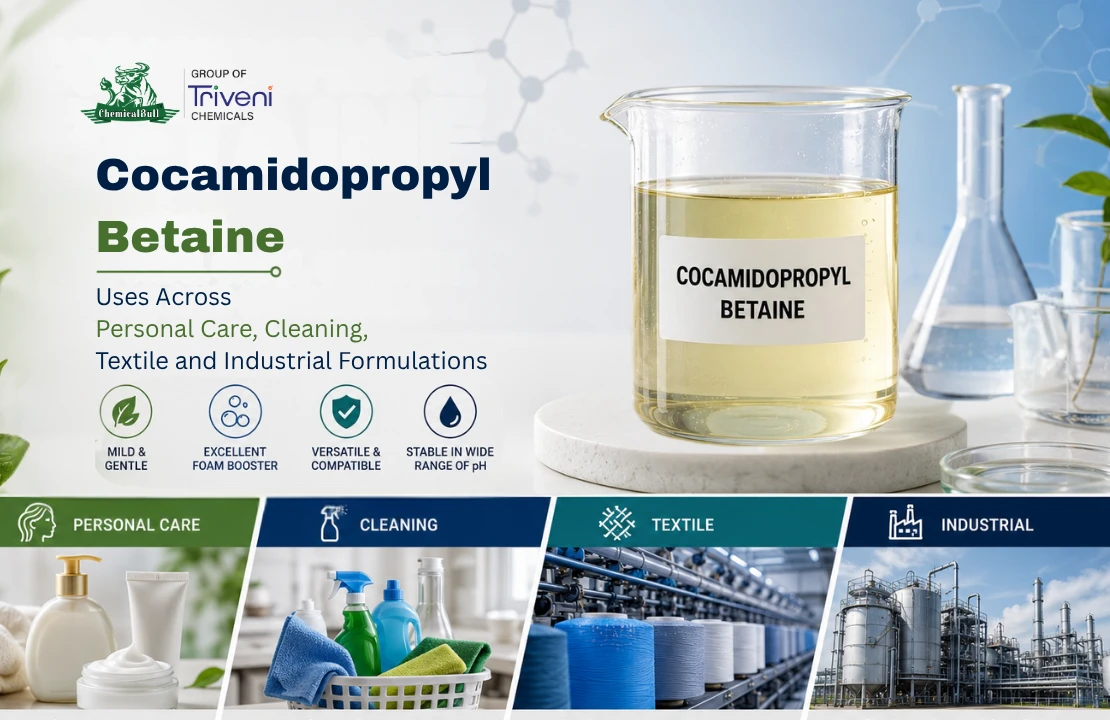
Cocamidopropyl Betaine, commonly called CAPB, is a mild amphoteric surfactant used across personal care, home care, pharmaceutical cleansers, textile processing, agrochemical products, and industrial applications. While it is best known for shampoos, face washes, body washes, and sulfate-free cleansers, its foam-boosting, wetting, compatibility, and mildness benefits make it useful in many other product systems.
For manufacturers, CAPB is valuable because it improves product performance without making the cleansing base too harsh. It works well with anionic, non-ionic, and cationic ingredients, making it suitable for different surfactant blends used in cosmetics, detergents, fabric care, sprays, and industrial cleaners.
Quick Answer: What Is Cocamidopropyl Betaine Used For?
Cocamidopropyl Betaine is used as a mild amphoteric surfactant, foam booster, cleansing agent, wetting agent, viscosity support ingredient, and co-surfactant. It is commonly used in shampoos, face washes, body washes, dishwash liquids, surface cleaners, textile auxiliaries, agrochemical products, pharmaceutical cleansers, and industrial cleaning systems.
What Makes CAPB Versatile Across Industries?
CAPB is useful because it combines mildness, foam support, wetting action, and broad surfactant compatibility. The cocamidopropyl betaine INCI name is Cocamidopropyl Betaine, and its common name in the formulation industry is CAPB.
CAPB Usage Comparison Across Industries
Typical usage depends on active matter, product type, pH, surfactant system, and performance target. Manufacturers should test the final level before bulk production.
|
Industry |
Function |
Key Benefit |
|
Personal care |
Mild cleanser, foam booster |
Better foam and gentler cleansing |
|
Household cleaning |
Co-surfactant, foam support |
Improved foam and cleaning feel |
|
Industrial cleaning |
Wetting and compatibility aid |
Better surface wetting |
|
Pharmaceutical cleansers |
Mild cleansing base support |
Comfortable repeated washing |
|
Textile processing |
Conditioning and antistatic support |
Softer feel and lower static |
|
Agrochemical formulations |
Wetting agent, foam stabilizer |
Better spreading and spray support |
Industry-Wise Applications of CAPB
Personal Care and Cosmetics
Cocamidopropyl betaine uses in cosmetics include shampoos, face washes, body washes, shower gels, liquid hand washes, baby cleansers, and sulfate-free cleansing systems. It helps create stable foam, improves mildness, and reduces the harsh feel of stronger surfactants. Cocamidopropyl betaine uses for skin are mainly linked to gentle cleansing, foam improvement, and better product feel.
For a detailed personal care-focused explanation, read our guide on Cocamidopropyl Betaine in sulfate-free formulations.
Hair Care Products
In hair care, CAPB is used in shampoos, anti-dandruff shampoos, mild hair cleansers, and scalp care products. It supports foam quality, improves rinse feel, and helps reduce the dryness that can happen when strong cleansing agents are used alone.
Cocamidopropyl betaine for hair side effects are usually linked to sensitive scalp, unsuitable formulation, or impurities rather than CAPB itself. Some users may experience itching, dryness, redness, or irritation if the product does not suit their scalp.
Household and Industrial Cleaning Products
CAPB is used in dishwash liquids, floor cleaners, multi-surface cleaners, car wash liquids, and non-cosmetic detergent systems. It helps improve foam stability, wetting, cleaning feel, and compatibility with other surfactants.
In cleaning products, it is often used as a co-surfactant rather than the main cleaning ingredient. This helps balance foam, mildness, and formulation stability.
Pharmaceutical and Antiseptic Cleansers
CAPB can be used in selected pharmaceutical and antiseptic cleansing bases such as surgical scrubs, medical hand washes, antiseptic skin cleansers, and hand sanitizing washes. It supports foam, mildness, and better user comfort during repeated washing.
It does not replace the active antiseptic ingredient. Its role is to support the cleansing system and improve the feel of the finished product.
Textile Processing
In textile applications, CAPB may be used in fabric softeners, textile auxiliaries, antistatic treatments, fiber conditioning systems, and finishing products. It can help improve wetting, softness, and surface feel in compatible textile formulations.
Its amphoteric nature allows it to work with different textile chemical systems. This makes it useful where conditioning and compatibility are important.
Agrochemical and Industrial Formulations
In agrochemical and industrial formulations, CAPB may work as a wetting agent, emulsifier, foam stabilizer, or surfactant support ingredient. It can help improve spreading and surface contact in selected spray formulations.
Its use should be tested with the final active ingredient, pH, water quality, and application method. This is important because performance can change depending on the complete formulation system.
Functional Benefits in Formulations
CAPB is preferred because it improves formulation performance without making the product overly harsh. Its value changes by industry, but the core benefits remain foam support, mildness, compatibility, wetting, and stability.
|
Functional Benefit |
How CAPB Helps |
|
Foam boosting |
Improves foam volume and stability |
|
Mildness support |
Reduces harsh feel of stronger surfactants |
|
Wetting action |
Helps liquid spread better on surfaces |
|
Compatibility |
Works with many surfactant systems |
|
Viscosity support |
Helps build thickness in selected formulations |
|
Conditioning feel |
Supports softer skin, hair, or fabric feel |
|
Stability support |
Helps improve uniformity and product consistency |
Why Industries Prefer CAPB Over Alternatives
CAPB is often selected when manufacturers need a balance of foam, mildness, compatibility, and formulation flexibility. Compared with strong anionic surfactants such as SLES, it can improve mildness and reduce harshness. Compared with Cocamide DEA, it fits better in modern DEA-free formulation approaches.
|
Comparison Point |
CAPB |
SLES |
Cocamide DEA |
|
Surfactant Type |
Amphoteric |
Anionic |
Non-ionic foam booster |
|
Mildness |
High |
Moderate |
Moderate |
|
Foam Support |
Good |
Very high |
Good |
|
Compatibility |
Broad |
Strong in detergent systems |
Formulation-dependent |
|
Modern Use Fit |
Mild and sulfate-free systems |
Strong cleansing systems |
Less preferred in DEA-free systems |
|
Main Advantage |
Foam + mildness balance |
Strong cleaning and foam |
Foam and viscosity support |
CAPB is not always a complete substitute for SLES or other primary surfactants. It is usually used as a co-surfactant to improve mildness, foam quality, and overall formulation balance.
Cocamidopropyl Betaine Price and Bulk Buying Factors
Cocamidopropyl Betaine price depends on active matter, grade quality, purity, packing size, order quantity, documentation, and supplier reliability. Buyers comparing cocamidopropyl betaine price in India should also check COA, TDS, SDS, batch consistency, and application suitability.
For bulk sourcing, manufacturers should choose suppliers that can support different industries such as personal care, home care, textiles, agrochemicals, pharmaceutical cleansers, and industrial cleaning products. Reliable cocamidopropyl betaine manufacturers in India should provide sample support, stable quality, and clear technical documents.
Where to Source Cocamidopropyl Betaine (CAPB) in Bulk?
Manufacturers should review COA, TDS, SDS, active matter, pH, salt content, viscosity, colour, odour, packing type, and batch consistency before approving Cocamidopropyl Betaine for production. The selected grade should match the final application, whether it is skin, hair, face, detergent, textile, agrochemical, or industrial use.
For consistent Cocamidopropyl Betaine supply, documentation, and bulk packing support, connect with Chemical Bull as a reliable Cocamidopropyl Betaine Manufacturer for personal care, home care, textile, agrochemical, pharmaceutical cleanser, and industrial applications.
Frequently Asked Questions
-
Why should buyers source Cocamidopropyl Betaine from a reliable supplier?
A reliable supplier helps maintain consistent active matter, batch quality, documentation, packing, and delivery support. This is important for manufacturers producing shampoos, face washes, detergents, textile auxiliaries, agrochemical products, and industrial cleaners.
-
Is Cocamidopropyl Betaine safe for skin?
Cocamidopropyl Betaine is widely used in skin cleansing products when formulated at suitable levels. People with very sensitive skin should check the final product suitability because irritation can occur in some cases. -
What are Cocamidopropyl Betaine side effects?
Cocamidopropyl Betaine side effects may include dryness, redness, itching, burning, or irritation in sensitive users. These effects are usually linked to personal sensitivity, impurities, or unsuitable product formulation. -
What products contain Cocamidopropyl Betaine?
Products that contain Cocamidopropyl Betaine include shampoos, face washes, body washes, hand washes, shower gels, dishwash liquids, surface cleaners, car wash liquids, and selected textile or industrial formulations. -
What is the common name for Cocamidopropyl Betaine?
The common name for Cocamidopropyl Betaine in the chemical and formulation industry is CAPB. It is also referred to as cocamidopropyl betaine surfactant in many product discussions. -
What is a substitute for Cocamidopropyl Betaine?
Possible substitutes for Cocamidopropyl Betaine include Coco Betaine, Lauryl Betaine, Sodium Cocoamphoacetate, and Decyl Glucoside, depending on the formulation need. The substitute should be tested for foam, mildness, viscosity, pH, and compatibility.
Conclusion
Cocamidopropyl Betaine is a versatile amphoteric surfactant used across personal care, home care, pharmaceutical cleanser, textile, agrochemical, and industrial applications. Its value comes from foam support, mildness improvement, wetting action, compatibility, viscosity support, and formulation stability.
For manufacturers, CAPB is useful because it can improve performance across different product systems without making the formulation too harsh. The right grade should be selected based on active matter, pH, salt level, viscosity, documentation, application suitability, and bulk supply consistency.
Connect with ChemicalBull for Cocamidopropyl Betaine sourcing support across cleansing products, detergent systems, textile , spray formulations, and industrial blends.
Comment Section