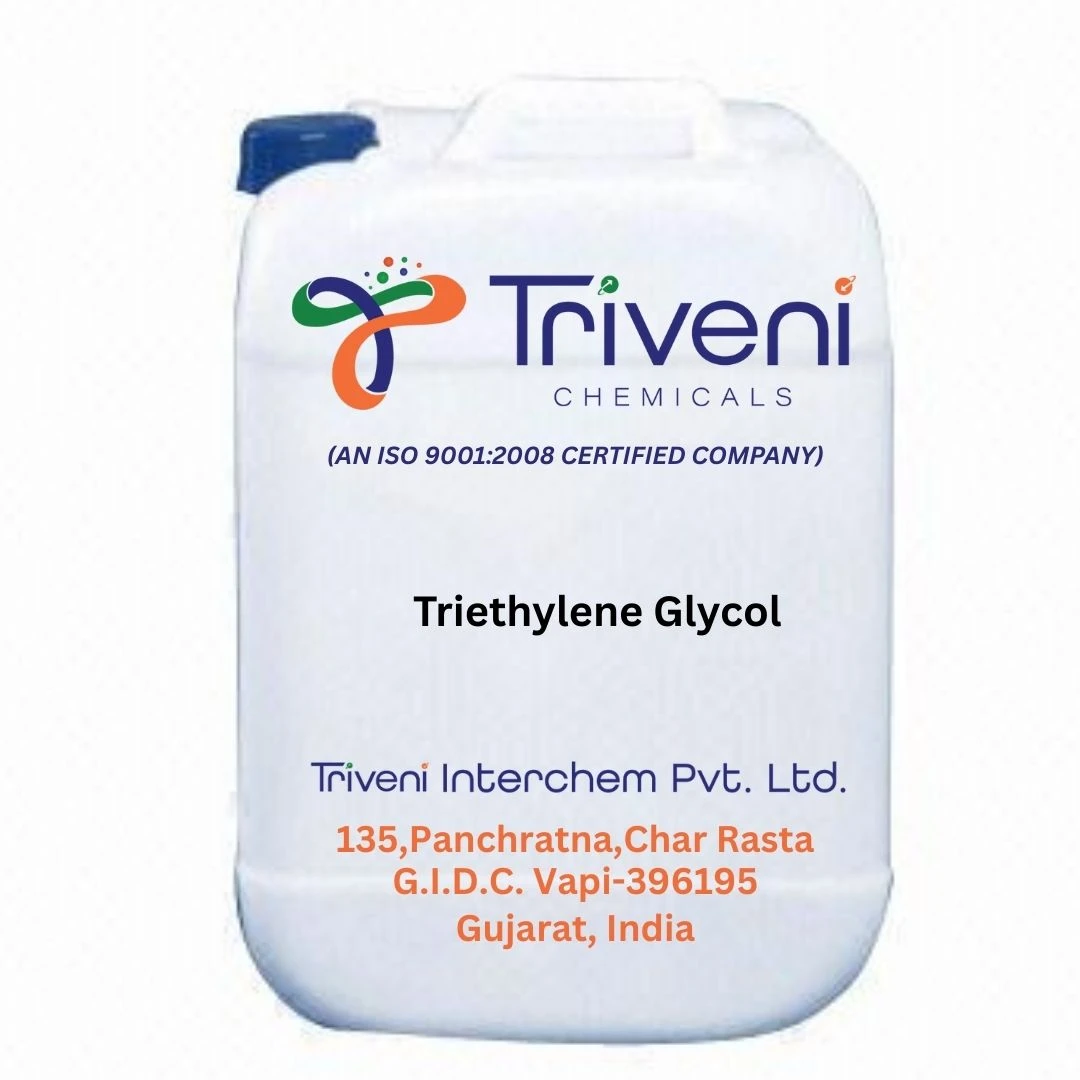
Triethylene Glycol | 112-27-6
Cas No :
112-27-6
Form :
Liquid
Molecular Weight :
150.17 G/mol
Molecular Formula :
C6H14O4
Boiling Point :
285 °c
Melting Point :
-7 °c
Flash Point :
170 °c
Solubility :
Miscible With Water
Description :
Overview of Triethylene Glycol
Triethylene Glycol (TEG) is an industrial-grade glycol widely used in manufacturing processes where hygroscopicity, moisture absorption, thermal stability, and consistent solvent performance are required. It is a clear, colourless, odourless liquid known for its strong affinity for water and reliable performance in industrial environments.
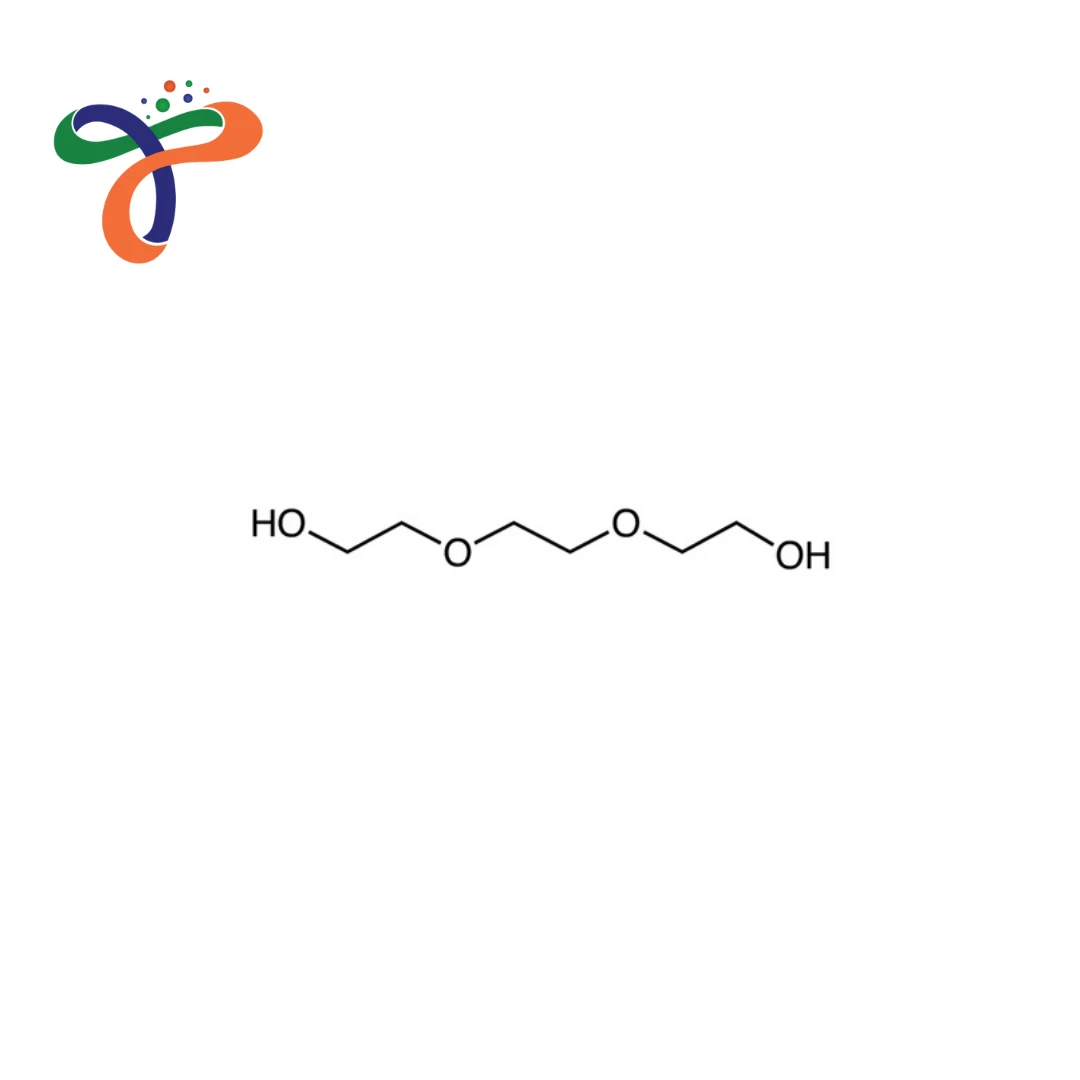
Triethylene glycol formula is C₆H₁₄O₄, and its molecular structure allows it to function efficiently as a dehydrating agent, solvent, and plasticiser in a range of industrial applications that require controlled moisture management.
Applications of Triethylene Glycol
Gas Dehydration & Moisture Control
Triethylene Glycol is widely used in gas dehydration systems to remove water vapor from natural gas and industrial gas streams. Its hygroscopic nature ensures efficient moisture absorption and stable operation. It is commonly used alongside Monoethylene Glycol and Diethylene Glycol, depending on dehydration efficiency requirements.
Chemical Manufacturing & Industrial Solvent Applications
Triethylene Glycol is used as a solvent and processing aid in chemical manufacturing where stable solvency and low volatility are required. It supports consistent processing behaviour and formulation stability in industrial systems.
Specialty Industrial Applications
Triethylene Glycol is also used in specialty industrial applications such as heat transfer fluids, controlled lubrication systems, and air sanitisation formulations where stability and low vapour pressure are important.
Safety & Handling Guidelines
- Store in a cool, dry, and well-ventilated area
- Keep containers tightly sealed to prevent contamination
- Avoid prolonged skin contact during handling
- Avoid inhalation of vapours in confined spaces
- Use protective gloves, goggles, and suitable industrial clothing
- Maintain proper ventilation during bulk handling
- Dispose of material and packaging according to local regulations
Where to Buy Triethylene Glycol?
Triethylene Glycol Manufacturer
Triethylene Glycol is manufactured for industrial applications where consistent purity, controlled moisture absorption, and reliable performance are required for gas processing, chemical manufacturing, and specialty industrial uses.
Triethylene Glycol Supplier & Distributor
Triethylene Glycol is supplied in bulk and industrial-grade packaging for manufacturers requiring dependable quality and a steady supply. As an industrial raw material distributor, Chemicalbull Pvt. Ltd. supports customers with reliable sourcing and standard documentation for industrial requirements.
MSDS for Triethylene Glycol
The MSDS for Triethylene Glycol provides detailed information on safe handling procedures, storage conditions, exposure controls, first-aid measures, and emergency response guidelines. Always review the MSDS before industrial use.
Frequently Asked Questions (FAQs)
-
Is Triethylene Glycol the same as Ethylene Glycol?
No, Triethylene Glycol is not the same as Ethylene Glycol. While both are glycols, Triethylene Glycol has a higher molecular weight, lower volatility, and greater moisture absorption capacity. -
What is the chemical formula of Triethylene Glycol?
Triethylene glycol formula is C₆H₁₄O₄. -
What is the structure of Triethylene Glycol?
Triethylene glycol structure consists of three ethylene glycol units linked together, forming a flexible, water-attracting molecular chain. -
What are the side effects of Triethylene Glycol?
Triethylene Glycol has low toxicity when handled properly, but prolonged exposure may cause mild skin or eye irritation. Standard industrial PPE and handling practices are recommended. -
What is Triethylene Glycol used for?
Triethylene Glycol is used for gas dehydration, moisture control, solvent applications, plasticiser formulations, and other specialty industrial uses.
ChemicalBull supplies Triethylene Glycol across India, serving customers in Andhra Pradesh, Arunachal Pradesh, Assam, Bihar, Chhattisgarh, Goa, Gujarat, Haryana, Himachal Pradesh, Jharkhand, Karnataka, Kerala, Madhya Pradesh, Maharashtra, Manipur, Meghalaya, Mizoram, Nagaland, Odisha, Punjab, Rajasthan, Sikkim, Tamil Nadu, Telangana, Tripura, Uttar Pradesh, Uttarakhand, and West Bengal, as well as the Union Territories of Andaman & Nicobar Islands, Chandigarh, Dadra & Nagar Haveli and Daman & Diu, Delhi, Jammu & Kashmir, Ladakh, Lakshadweep, and Puducherry. We serve pharmaceutical, chemical, research, academic, laboratory, manufacturing, and industrial customers with reliable nationwide delivery.