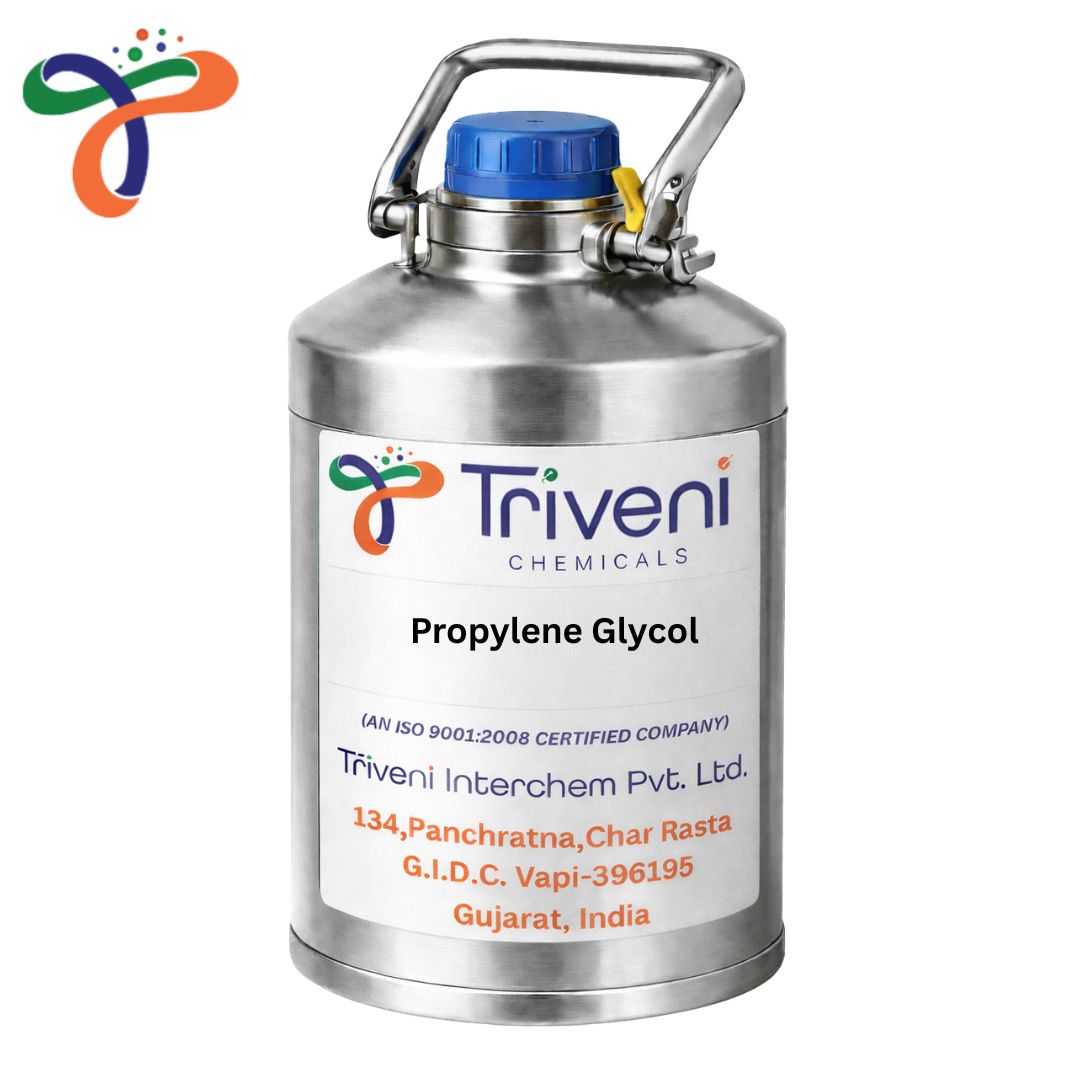
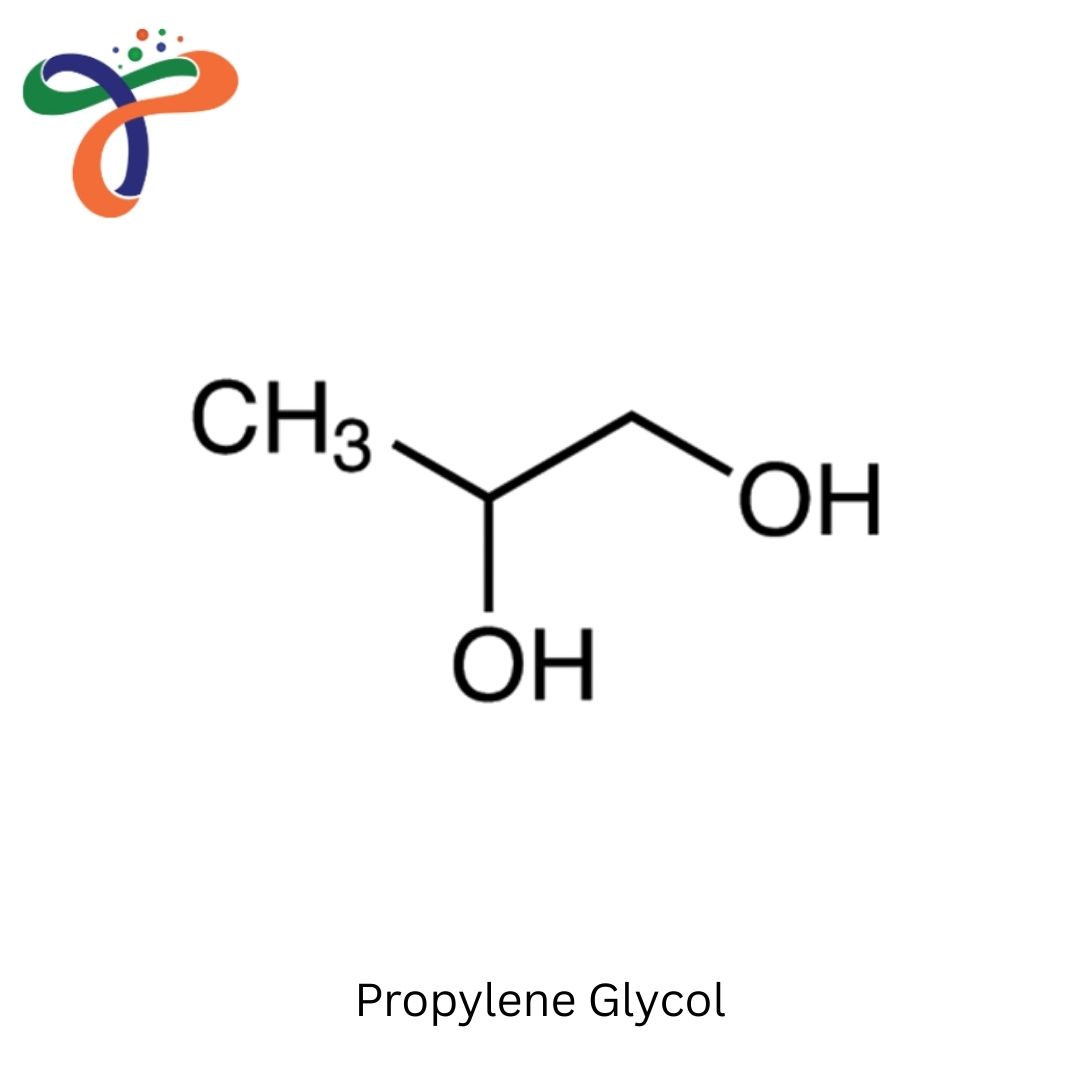
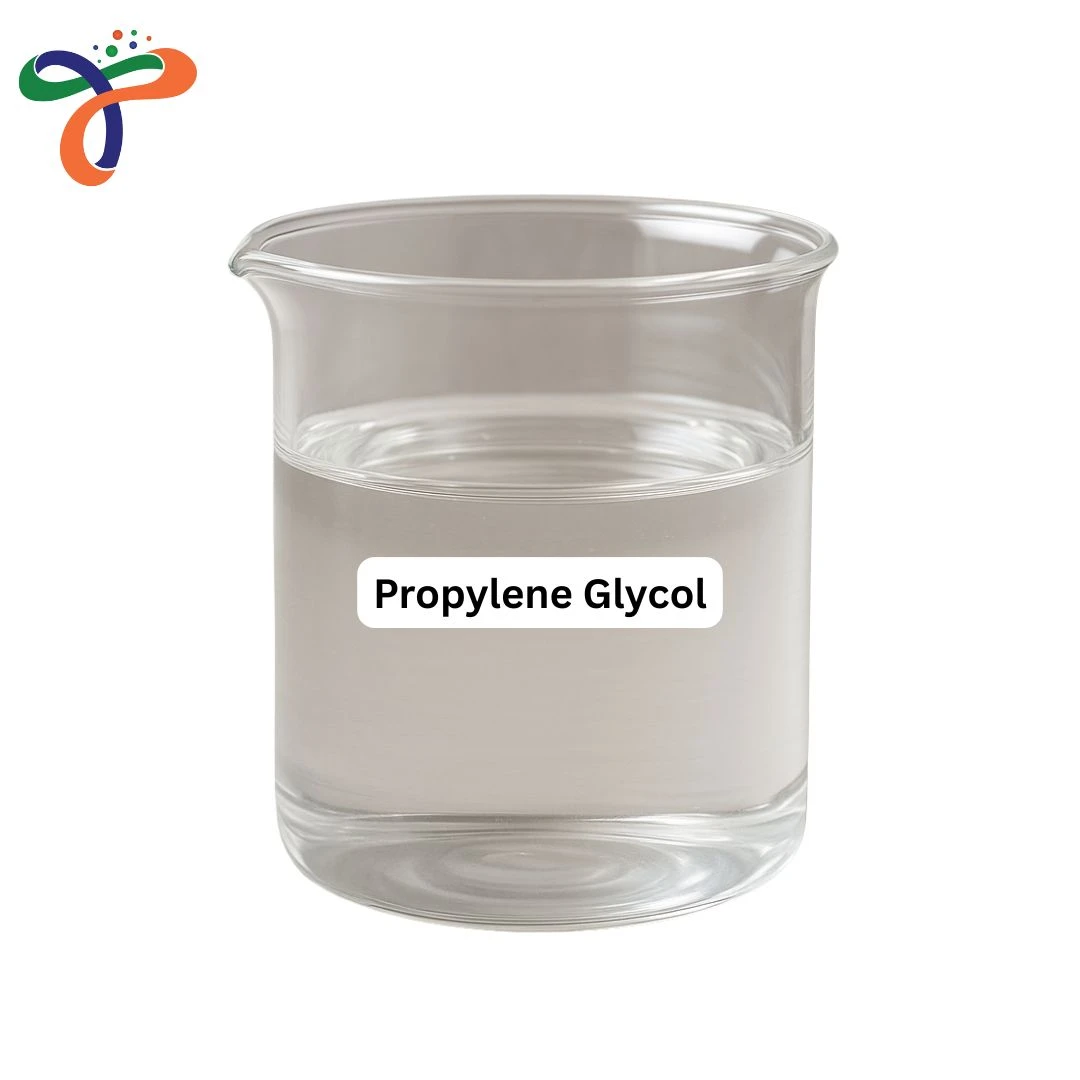
Propylene Glycol (Monopropylene Glycol) | 57-55-6
Cas No :
57-55-6
Synonyms :
Form :
Liquid
Molecular Weight :
76.095 g/mol
Molecular Formula :
CH3CHOHCH2OH
Boiling Point :
188.2 °C
Melting Point :
-59 °C
Flash Point :
97 °C
Solubility :
Miscible with water
Description :
Propylene Glycol Manufacturers, Suppliers & Distributors in India
Overview
Chemical Bull is one of the leading Propylene Glycol manufacturers, suppliers, and exporters in India, supplying high-quality Propylene Glycol (CAS No. 57-55-6) to pharmaceutical, personal care, food, textile, resin, and chemical industries worldwide.
Available in USP, industrial, and food grades, our Propylene Glycol is manufactured and supplied to meet strict quality standards and industrial requirements. We support bulk procurement with competitive pricing, export-ready packaging, and comprehensive technical documentation.
As trusted Propylene Glycol manufacturers in India, we serve pharmaceutical companies, contract manufacturers, chemical distributors, and industrial formulators with reliable supply and consistent product quality.
Explore our Pharmaceutical Chemicals category to discover other high-quality ingredients for your advanced pharmaceutical and healthcare formulations.
Why Choose Chemical Bull as Propylene Glycol manufacturers in India?
● Bulk Manufacturing & Supply Capabilities
Chemical Bull supplies Propylene Glycol for large-scale industrial and pharmaceutical applications. Our supply chain is designed to support continuous manufacturing requirements and long-term procurement contracts.
● Multiple Grades Available
- USP/NF Grade
- EP Grade
- Industrial Grade
- Food Grade
● Packaging Options
- 25 kg drums
- 50 kg drums
- 200 kg barrels
- IBC tanks
- Bulk tanker supply
● Documentation & Compliance
Every shipment is accompanied by:
- Certificate of Analysis (COA)
- Material Safety Data Sheet (MSDS)
- Technical Data Sheet (TDS)
● Global Distribution Network
As a trusted Propylene Glycol exporter and distributor, Chemical Bull serves customers across Asia, Europe, the Middle East, and Africa.
Applications of Propylene Glycol in Pharmaceuticals
Propylene Glycol serves as a versatile and safe excipient, critical to the efficacy and stability of various pharmaceutical products.
1. Drug Delivery & Formulation
It is extensively used as a solvent and vehicle to improve the solubility and bioavailability of active pharmaceutical ingredients (APIs).
-
Applications: Oral solutions, injectable medications, and ophthalmic formulations.
-
Benefits: Excellent solvent properties, low toxicity profile, and compatibility with a wide range of drugs, ensuring precise dosage and stability.
2. Topical & Dermatological Preparations
Used for its humectant and skin-penetration-enhancing properties in creams and ointments.
-
Applications: Medicated creams, ointments, lotions, and transdermal patches.
-
Benefits: Aids in the penetration of active ingredients into the skin, provides moisture-retention, and improves the texture and consistency of topical bases.
3. Excipient for Specialized Forms
Acts as a stabilizer and preservative aid in various liquid and semi-solid dose forms.
-
Applications: Suppositories, pediatric syrups, and specialty drug suspensions.
-
Benefits: Maintains the physical and chemical stability of the final product, extending shelf life and ensuring uniform dispersion of ingredients.
B2B Buyers We Serve
Chemical Bull is a preferred sourcing partner for:
-
Pharmaceutical API and formulation companies
-
Contract Manufacturing Organizations (CMOs)
-
Topical and dermatological medication producers
-
Specialty chemical distributors, Propylene Glycol suppliers, and traders
-
Global healthcare and drug manufacturing firms
Industries Using Propylene Glycol
Propylene Glycol is widely used across multiple industries:
- Pharmaceutical manufacturing
- Personal care and cosmetics
- Food and beverage processing
- Resin and coating production
- Textile processing
- Industrial cleaning products
- Paints and adhesives
- Fragrance and flavor manufacturing
Chemical Bull supplies bulk Propylene Glycol to manufacturers, distributors, wholesalers, and exporters across these industries.
Frequently Asked Questions (FAQ)
-
What grades of Propylene Glycol does Chemical Bull supply?
We primarily supply high-purity, pharma-grade Propylene Glycol (USP/NF, EP) specifically for pharmaceutical and sensitive industrial applications. -
Are you certified Propylene Glycol manufacturers?
Yes, Chemical Bull is a leading manufacturer and supplier, maintaining strict quality control and regulatory compliance for all our pharmaceutical-grade chemical outputs. -
Can I get technical documents like the MSDS?
Yes, we provide the Propylene Glycol msds, along with CoA and TDS, to support your regulatory, safety, and quality assurance needs. -
Do you offer bulk supply for export?
Yes, as a leading Propylene Glycol distributor, we support both domestic clients and international importers with professional export-ready packaging and logistics. -
How can I request a quote?
Contact our sales team today to discuss your technical specifications and volume requirements, and we will provide competitive wholesale pricing.
Need a reliable, high-purity Propylene Glycol supplier for your pharma production lines?
Contact Chemical Bull today to request a quote, confirm grade availability, or download technical documentation. Our team ensures consistent quality, competitive pricing, and on-time delivery for every bulk order.
Related Products from Pharmaceutical Chemicals
-
Glycerin (Pharma Grade)
ChemicalBull supplies Propylene Glycol (Monopropylene Glycol) across India, serving customers in Andhra Pradesh, Arunachal Pradesh, Assam, Bihar, Chhattisgarh, Goa, Gujarat, Haryana, Himachal Pradesh, Jharkhand, Karnataka, Kerala, Madhya Pradesh, Maharashtra, Manipur, Meghalaya, Mizoram, Nagaland, Odisha, Punjab, Rajasthan, Sikkim, Tamil Nadu, Telangana, Tripura, Uttar Pradesh, Uttarakhand, and West Bengal, as well as the Union Territories of Andaman & Nicobar Islands, Chandigarh, Dadra & Nagar Haveli and Daman & Diu, Delhi, Jammu & Kashmir, Ladakh, Lakshadweep, and Puducherry. We serve pharmaceutical, chemical, research, academic, laboratory, manufacturing, and industrial customers with reliable nationwide delivery.