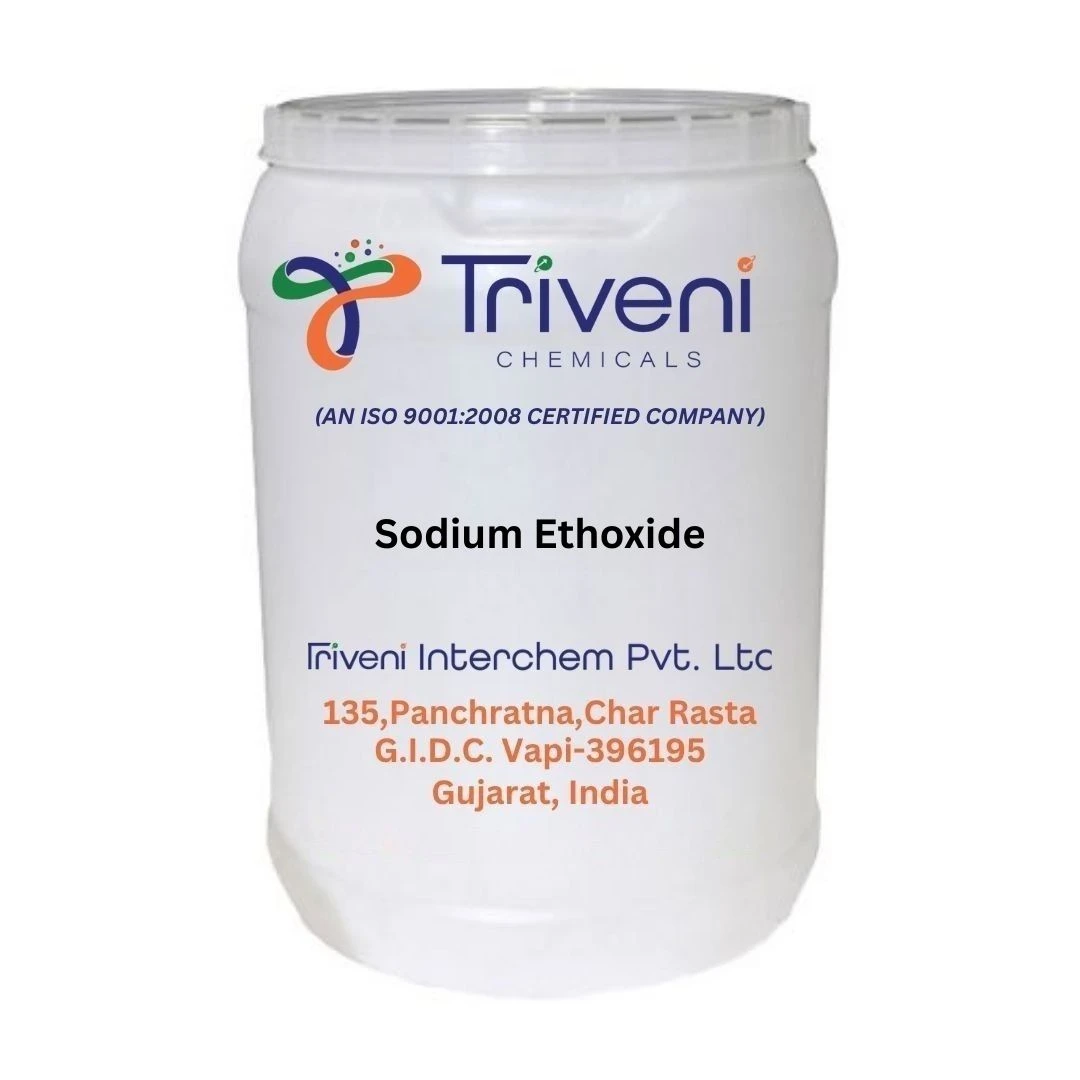
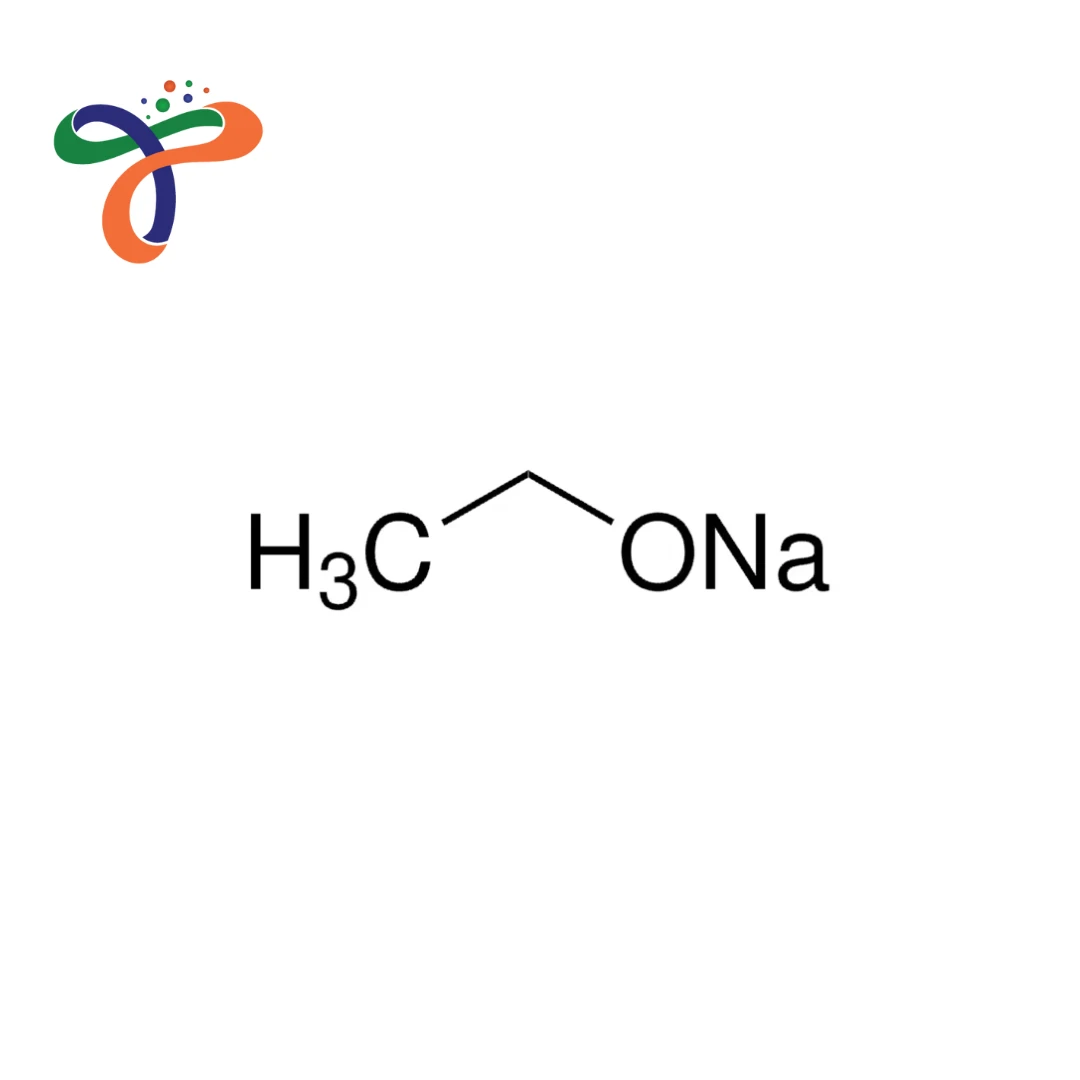
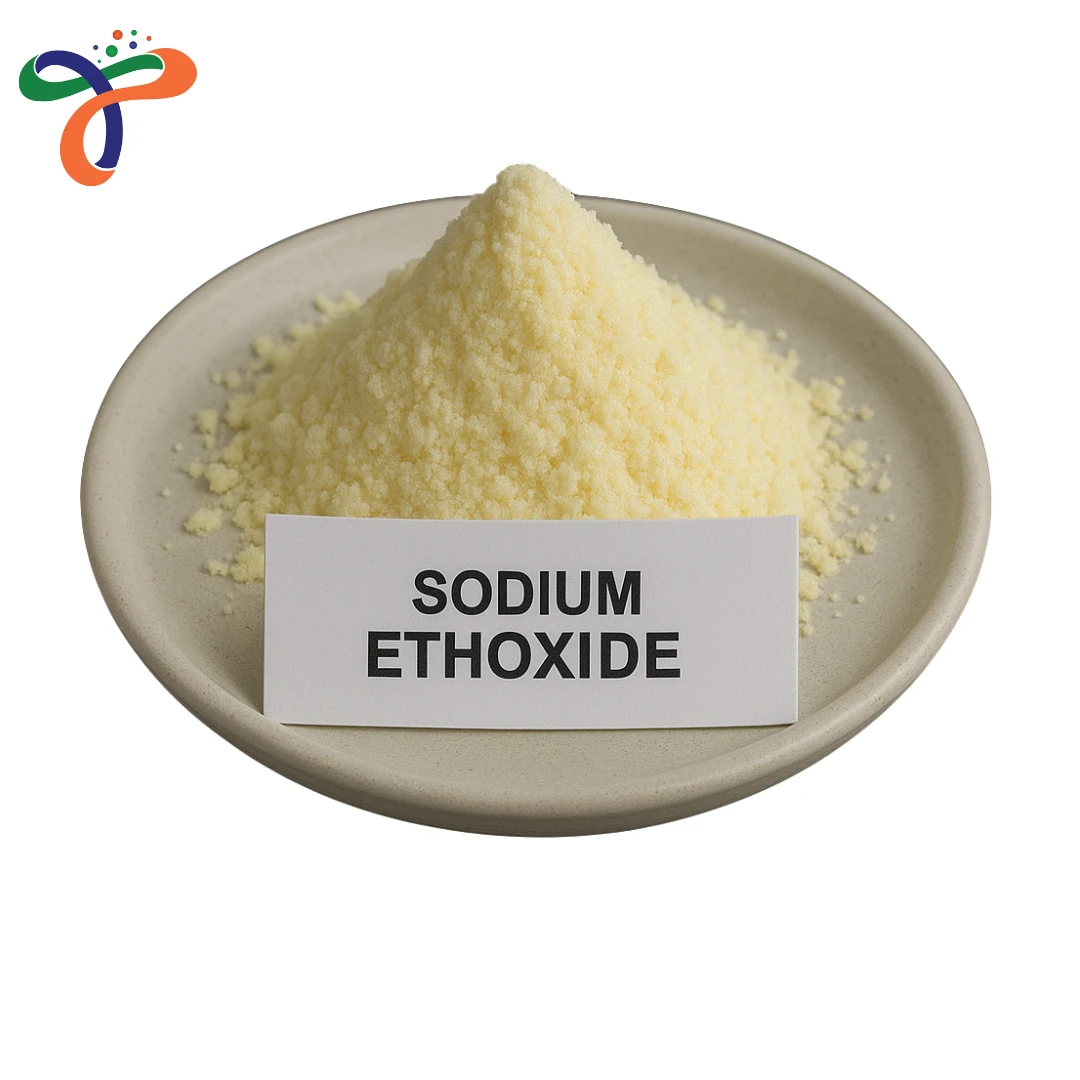
Sodium Ethoxide | 141-52-6
Cas No :
141-52-6
Synonyms :
Form :
Solid
Molecular Weight :
68.05 G/mol
Molecular Formula :
C2H5NAO
Boiling Point :
200 °c
Melting Point :
157 °c
Flash Point :
12 °c
Solubility :
Soluble In Ethanol; Reacts With Water To Form Ethanol And Sodium Hydroxide
Description :
Sodium Ethoxide Manufacturers & Suppliers In India
ChemicalBull is one of the leading Sodium Ethoxide manufacturers, suppliers, distributors, wholesalers, and exporters in India. ChemicalBull supplies Sodium Ethoxide CAS 141-52-6 in bulk for manufacturers, formulators, distributors, wholesalers, and industrial buyers across India and global export markets. Sodium Ethoxide is mainly used in organic synthesis, pharmaceutical intermediate manufacturing, and chemical processing applications.
Overview of Sodium Ethoxide
Sodium Ethoxide, also known as Sodium Ethylate or Sodium Ethanolate, is a strong alkoxide base used as an industrial chemical in moisture-sensitive organic synthesis and chemical manufacturing processes.
It has the molecular formula C2H5NaO, molecular weight 68.05 g/mol, and CAS Number 141-52-6. Sodium Ethoxide is widely used in industries where strong basicity, controlled reactivity, and anhydrous reaction conditions are required.
ChemicalBull supplies Sodium Ethoxide for bulk industrial requirements, helping buyers with product availability, documentation, packaging support, and export-focused procurement.
Application of Sodium Ethoxide
ChemicalBull supplies Sodium Ethoxide for bulk industrial sourcing with documentation, packaging, and export support.
Pharmaceutical Synthesis
-
Condensation Reactions: It is the primary catalyst for Claisen Condensations, used to synthesize esters, vitamins (such as Vitamin B1), and various barbiturates.
-
Ring Closure: Facilitates the formation of heterocyclic rings essential for many Active Pharmaceutical Ingredients (APIs).
-
Synergistic Synthesis: It is frequently used alongside reagents like triphosgene in advanced organic synthesis to build complex molecular frameworks for modern medicine.
Biodiesel Manufacture
Sodium Ethoxide is the preferred industrial use catalyst in high-efficiency energy plants:
-
Transesterification: It converts triglycerides into biodiesel more effectively than traditional hydroxides. Because it does not produce water as a byproduct, it prevents "soaping" and maximizes fuel yield. During final processing, organic acids like Lactic Acid may be used for precise pH neutralization.
Fine Chemical & Organic Synthesis
-
Ether Synthesis: A key nucleophile in Williamson Ether Synthesis for the production of high-end fragrances and dyes.
-
Solvent Compatibility: Often formulated with anhydrous solvents like Ethyl Lactate to ensure reaction stability in moisture-sensitive environments
Related Chemicals
Why Choose ChemicalBull As Your Sodium Ethoxide Supplier?
ChemicalBull helps B2B buyers source Sodium Ethoxide with a procurement-focused approach. The goal is to support buyers with product availability, documentation, packaging, bulk pricing, and export support.
Advantages:
- Trusted Sodium Ethoxide supplier in India
- Bulk Sodium Ethoxide supply support
- Manufacturer, distributor, wholesaler, and exporter positioning
- Suitable for manufacturers and formulators
- Supports industrial and commercial buyers
- MSDS, TDS, COA, and specification support
- Export-focused chemical sourcing
- Wholesale and distributor-level enquiry support
- Buyer-friendly quotation process
- Support for repeat procurement
ChemicalBull helps procurement teams reduce sourcing delays by supporting Sodium Ethoxide price enquiries, technical documentation, packaging details, and bulk supply coordination.
Safety & Handling Guidelines
Sodium Ethoxide should be handled with proper safety precautions because it is reactive and moisture-sensitive.
General handling points:
- Store in tightly closed containers
- Avoid moisture exposure
- Use suitable PPE
- Handle in a controlled industrial environment
- Keep away from incompatible materials
- Follow plant-level safety procedures
- Review MSDS before use
- Follow applicable storage and transport regulations
Safety information should always be confirmed from the latest Sodium Ethoxide MSDS before procurement, storage, handling, transportation, or manufacturing use.
Sodium Ethoxide Bulk Supplier
Sodium Ethoxide Manufacturers in India
-
ChemicalBull supports high-purity Sodium Ethoxide supply based on buyer requirements
-
Bulk Versatility: We support manufacturing requirements ranging from small-scale R&D to metric-ton industrial production.
-
Technical Support: Our team can support buyers with available specification, COA, and technical documents.
Sodium Ethoxide Supplier & Distributor
we cater to both small-scale R&D labs and large-scale industrial plants. We provide flexible packaging options, ranging from vacuum-sealed moisture-barrier bags for 98% powder to specialized steel drums for 21% liquid solutions, supporting safe and suitable packaging for industrial supply.
Request A Quote For Sodium Ethoxide
Looking to buy Sodium Ethoxide in bulk?
ChemicalBull supplies Sodium Ethoxide for manufacturers, formulators, distributors, wholesalers, exporters, procurement teams, and industrial buyers across India and global export markets.
Send your enquiry today for:
- Bulk Sodium Ethoxide price
- Sodium Ethoxide MSDS
- Sodium Ethoxide Technical Data Sheet
- COA
- Product specification
- Packaging details
- Export support
- Distributor and wholesale supply
- Industrial chemical sourcing
Request Bulk Sodium Ethoxide Price From ChemicalBull Today.
MSDS Sodium Ethoxide
Due to its corrosive and moisture-sensitive nature, safe handling is our priority. Every batch is supplied with an updated MSDS (Material Safety Data Sheet) and a COA (Certificate of Analysis). These documents provide critical data on flammability, pH, and emergency neutralisation procedures to ensure your facility meets international safety standards.
Frequently Asked Questions (FAQs)
-
Who is a reliable Sodium Ethoxide supplier in India?
ChemicalBull is a B2B Sodium Ethoxide supplier in India, serving manufacturers, formulators, distributors, wholesalers, exporters, procurement teams, and industrial chemical buyers.
-
Can I buy Sodium Ethoxide in bulk from ChemicalBull?
Yes. ChemicalBull supports bulk Sodium Ethoxide enquiries for manufacturing, formulation, wholesale, distribution, and export requirements.
-
What are the main uses of Sodium Ethoxide?
Sodium Ethoxide is mainly used in industrial organic synthesis, pharmaceutical intermediate manufacturing, agrochemical intermediate synthesis, condensation reactions, alkylation reactions, and fine chemical production. -
How can I get Sodium Ethoxide price?
To get Sodium Ethoxide price, share your required quantity, grade, packaging size, delivery location, and documentation needs with ChemicalBull for a bulk quotation.
-
What documents should buyers request before buying Sodium Ethoxide?
Buyers should request Sodium Ethoxide MSDS, Technical Data Sheet, COA, product specification, packing details, and handling information before bulk procurement.
ChemicalBull supplies Sodium Ethoxide across India, serving customers in Andhra Pradesh, Arunachal Pradesh, Assam, Bihar, Chhattisgarh, Goa, Gujarat, Haryana, Himachal Pradesh, Jharkhand, Karnataka, Kerala, Madhya Pradesh, Maharashtra, Manipur, Meghalaya, Mizoram, Nagaland, Odisha, Punjab, Rajasthan, Sikkim, Tamil Nadu, Telangana, Tripura, Uttar Pradesh, Uttarakhand, and West Bengal, as well as the Union Territories of Andaman & Nicobar Islands, Chandigarh, Dadra & Nagar Haveli and Daman & Diu, Delhi, Jammu & Kashmir, Ladakh, Lakshadweep, and Puducherry. We serve pharmaceutical, chemical, research, academic, laboratory, manufacturing, and industrial customers with reliable nationwide delivery.