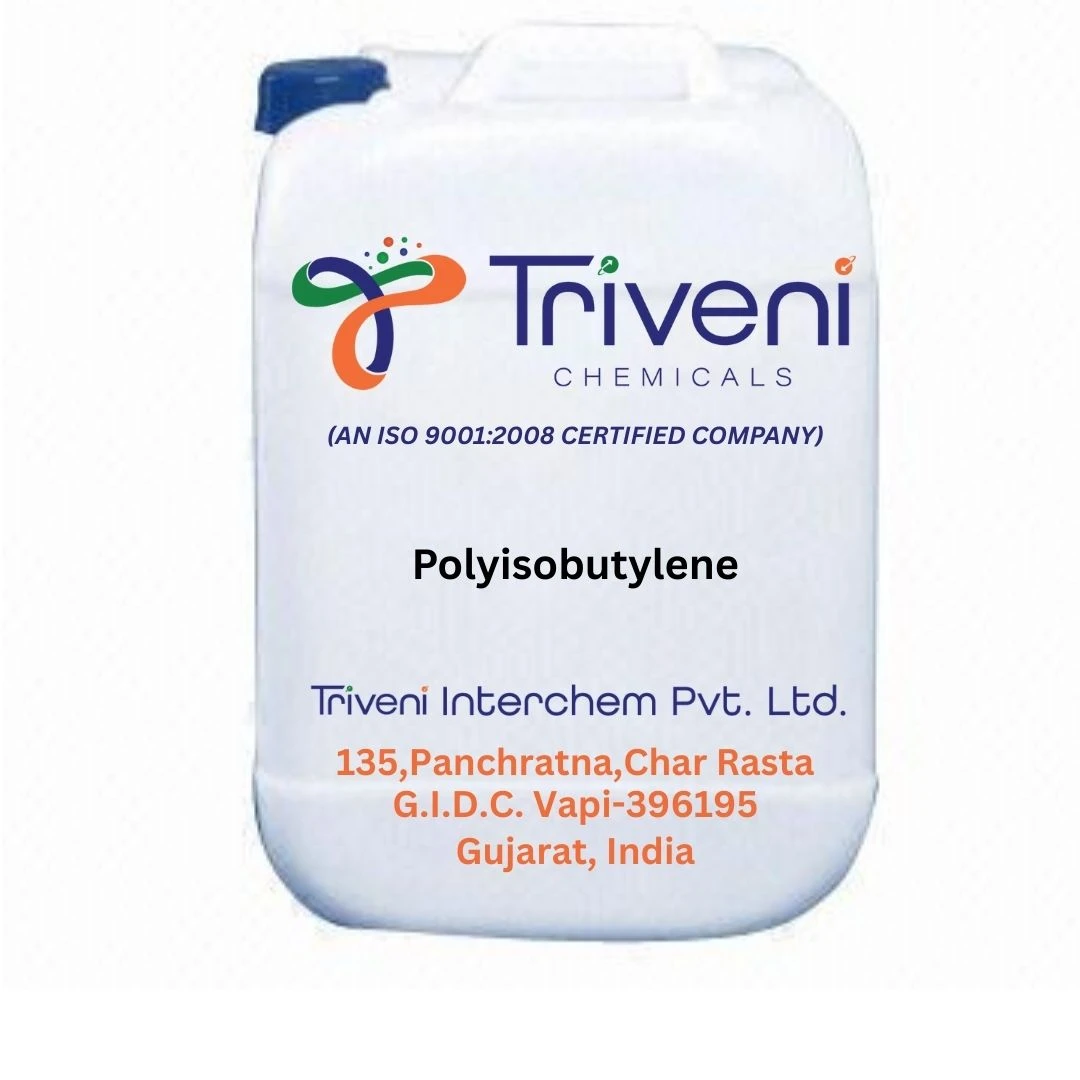
Polyisobutylene | 9003-27-4
Cas No :
9003-27-4
Form :
Liquid
Molecular Weight :
70000 G/mol
Molecular Formula :
[CH2C(CH3)2]N
Boiling Point :
350 °c
Flash Point :
320 °c
Solubility :
Insoluble In Water; Soluble In Nonpolar Organic Solvents (e.g., Hexane, Toluene, Xylene)
Description :
Polyisobutylene Manufacturers & Suppliers in India
Chemical Bull is one of the leading Polyisobutylene manufacturers and suppliers in India, offering CAS 9003-27-4 in bulk with reliable quality, competitive pricing, and delivery.
Polyisobutylene (PIB) is a synthetic elastomer and thermoplastic polymer known for its excellent impermeability, flexibility, and chemical resistance. It is produced through the polymerization of isobutylene monomer, resulting in a polymer with a saturated hydrocarbon backbone.
Polyisobutylene is widely valued for its airtightness, tackiness, low gas permeability, and resistance to aging. These properties make it highly suitable for applications requiring long-term durability and sealing performance.
Because of its unique balance of elasticity and stability, Polyisobutylene is extensively used in adhesives, sealants, lubricants, rubber modification, and specialty polymer formulations.
Application of Polyisobutylene
Adhesives & Sealant Formulations
Polyisobutylene is widely used in pressure-sensitive adhesives and sealants due to its inherent tack, flexibility, and resistance to moisture and chemicals.
In such systems, it is often evaluated alongside materials like Petroleum Resin to enhance adhesion and cohesive strength.
These applications are closely associated with coatings and plastics, where bonding performance and durability are critical.
Rubber Modification & Compounding
In rubber formulations, Polyisobutylene improves elasticity, damping properties, and impermeability. It helps enhance air retention and resistance to environmental aging.
These uses align closely with requirements in the rubber industry, where long-term performance is essential.
Lubricants & Specialty Industrial Uses
Polyisobutylene is used as a viscosity modifier and performance additive in lubricants and greases. Its stability helps improve film strength and resistance to breakdown under stress.
Polymer Blends & Performance Systems
In polymer blends, Polyisobutylene acts as a flexibility enhancer and processing aid. It may be used alongside polymers such as Polypropylene or evaluated with elastomeric materials like Ethylene Vinyl Acetate to achieve the desired softness and compatibility.
Safety and Handling Guidelines
- Store in a cool, dry, and well-ventilated area
- Keep containers sealed to prevent contamination
- Avoid prolonged contact with molten material
- Use protective gloves and suitable workwear during processing
- Follow standard polymer handling and storage practices
- Dispose of packaging according to local regulations
Why Choose ChemicalBull as your Polyisobutylene Manufacturer & Supplier?
Polyisobutylene Manufacturers in India
Polyisobutylene is manufactured under controlled industrial conditions to meet quality standards required for adhesives, sealants, rubber modification, and specialty industrial applications.
Polyisobutylene Suppliers & Distributors
Polyisobutylene is supplied and distributed in industrial-grade quantities for adhesive manufacturers, rubber processors, lubricant producers, and polymer compounders. It is available for domestic and international markets with reliable logistics and supply support.
MSDS for Polyisobutylene
The Material Safety Data Sheet (MSDS) for Polyisobutylene provides detailed information on safe handling, storage conditions, exposure controls, and emergency response procedures. Users should always review the MSDS before processing or using it.
Frequently Asked Questions (FAQs)
-
What is Polyisobutylene?
Polyisobutylene is a synthetic polymer known for its flexibility, airtightness, and resistance to chemicals and aging. -
What is the structure of Polyisobutylene?
Polyisobutylene has a saturated hydrocarbon backbone formed from isobutylene monomer units. -
What is Polyisobutylene used for?
It is used in adhesives, sealants, rubber compounds, lubricants, polymer blends, and specialty industrial applications.
ChemicalBull supplies Polyisobutylene across India, serving customers in Andhra Pradesh, Arunachal Pradesh, Assam, Bihar, Chhattisgarh, Goa, Gujarat, Haryana, Himachal Pradesh, Jharkhand, Karnataka, Kerala, Madhya Pradesh, Maharashtra, Manipur, Meghalaya, Mizoram, Nagaland, Odisha, Punjab, Rajasthan, Sikkim, Tamil Nadu, Telangana, Tripura, Uttar Pradesh, Uttarakhand, and West Bengal, as well as the Union Territories of Andaman & Nicobar Islands, Chandigarh, Dadra & Nagar Haveli and Daman & Diu, Delhi, Jammu & Kashmir, Ladakh, Lakshadweep, and Puducherry. We serve pharmaceutical, chemical, research, academic, laboratory, manufacturing, and industrial customers with reliable nationwide delivery.