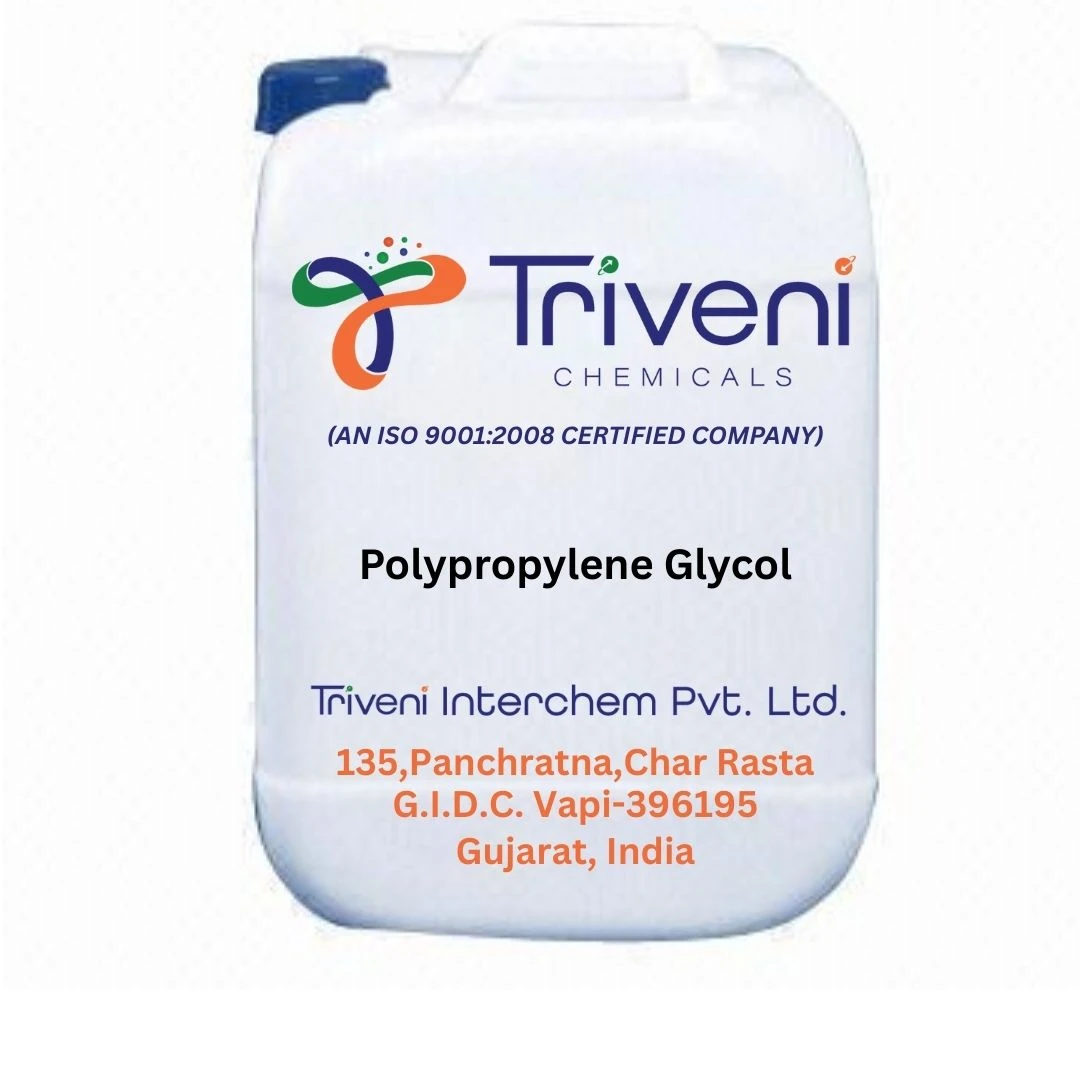
Polypropylene Glycol | 25322-69-4
Cas No :
25322-69-4
Form :
Liquid
Molecular Weight :
134.17 G/mol
Molecular Formula :
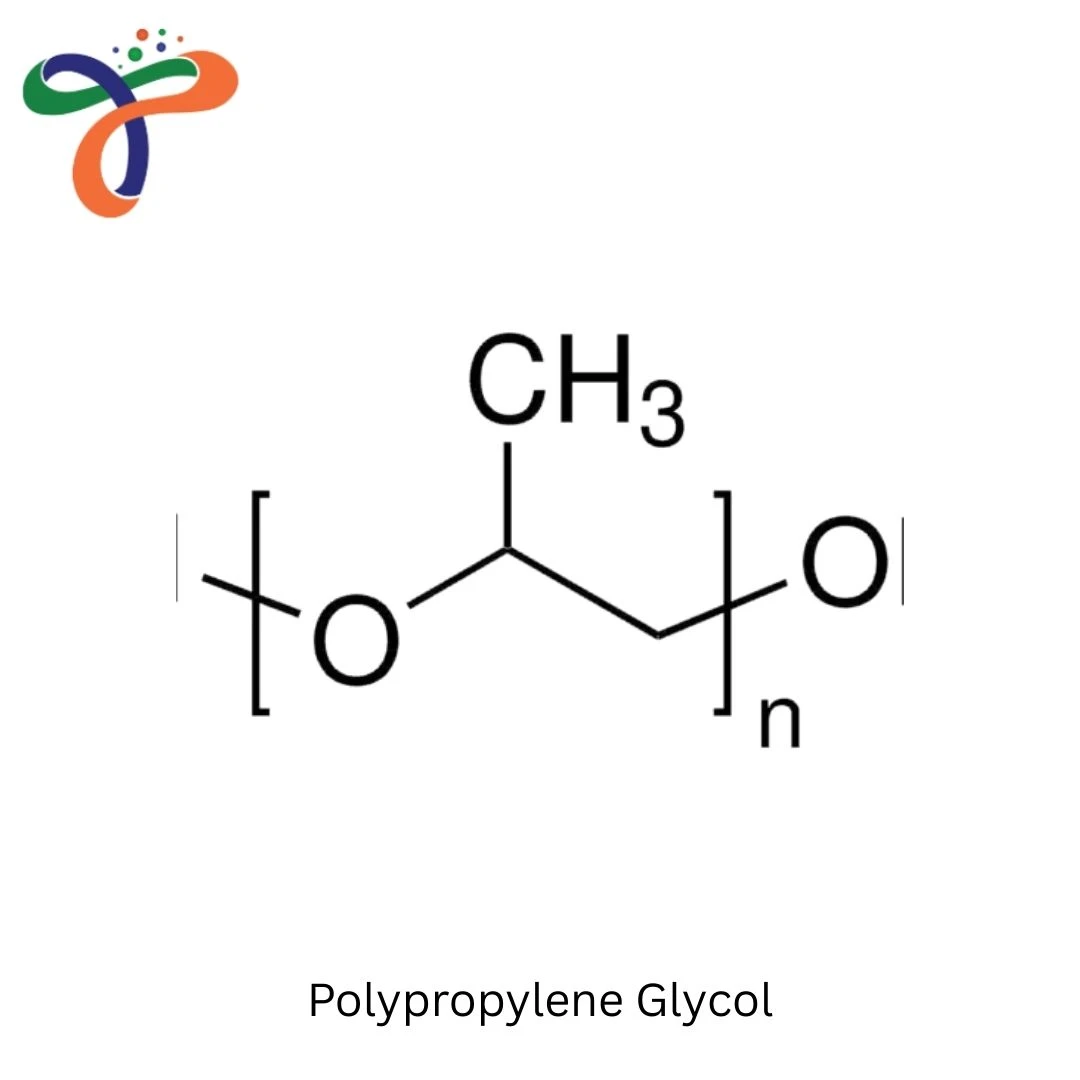
C3H8O2
Boiling Point :
287.6 °c
Melting Point :
150 °c
Flash Point :
229.44 °c
Description :
Overview of Polypropylene Glycol
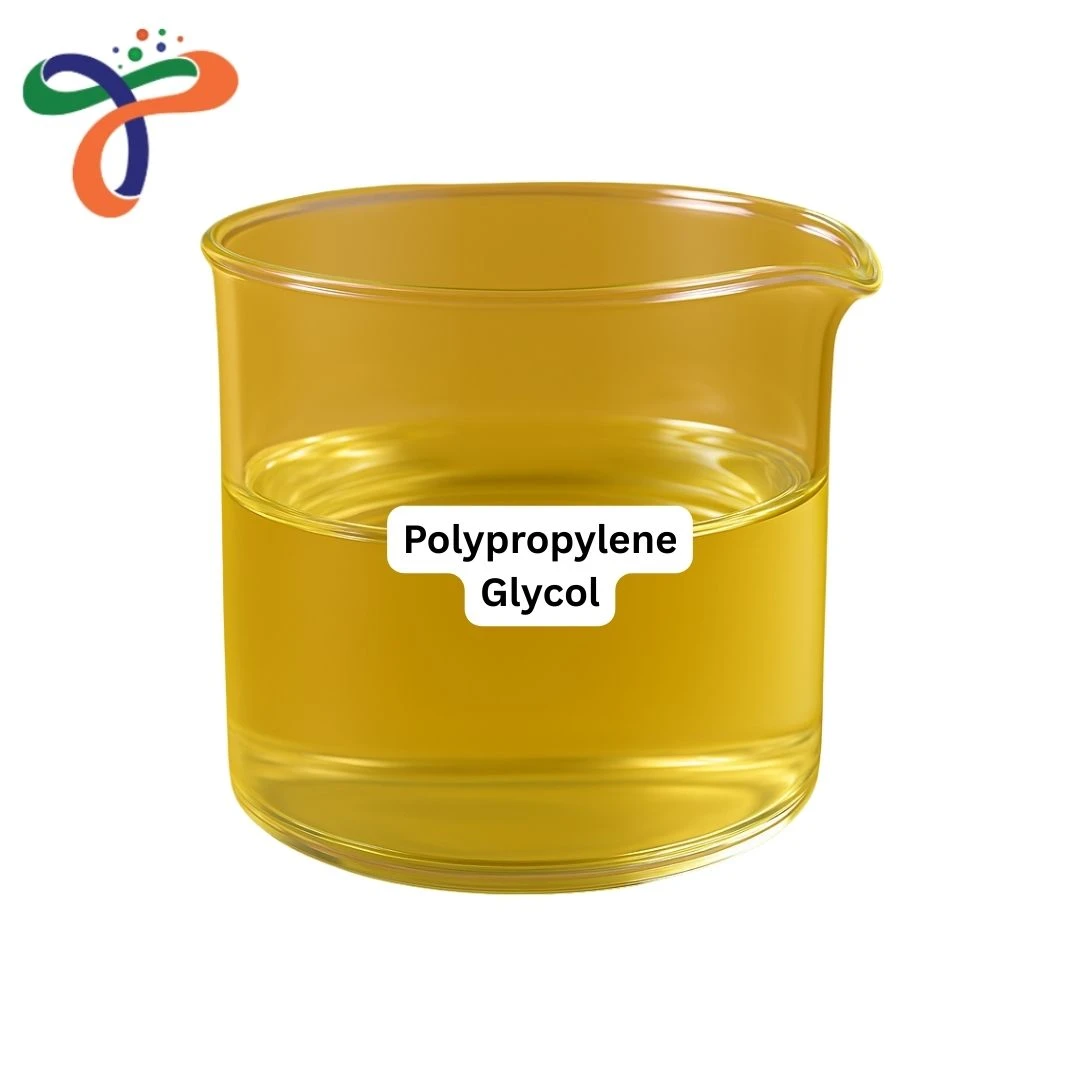
Polypropylene Glycol (PPG) can be described as flexible polymer utilized in the manufacture of rubber and plastics for its role as a viscosity, plasticizer moderator, and an ingredient in resins, polyurethane, and the lubricants. It's a clear and non-odorous liquid that absorbs moisture. It is popular for its stability, flexibility and the capability to mix with a variety of other substances.
If you don't have a technical background for those who don't have a technical background, Polypropylene Glycol is a substance which helps rubber and plastics move more easily, remain flexible, and is simpler to work with. It's also utilized in the industry when more slippiness and moisture retention or controlling chemical reactions required.
For industrial formulations, Polypropylene Glycol is commonly employed in combination with chemical compounds such as Acrylamide, 3-Mercaptopropyl Trimethoxysilane as well as Azodicarbonamide for the purpose of improving polymerization, curing and performance of products in polymers, rubbers, as well as special chemicals.
You can explore related product categories on our Categories Page, check industrial applications on our Application Page, or visit our Home Page to see our complete chemical portfolio.
Applications of Polypropylene Glycol
Plastic & Rubber Processing
PPG is added to plastics and rubber to make them more flexible, improve their surface finish, and boost their overall performance.
Polyurethane & Resin Formulations
Polypropylene Glycol is an important ingredient in making polyurethane, epoxy resins, and elastomers. It helps control how these materials form and makes them more durable and elastic.
Industrial Lubricants & Additives
PPG is used as a base for making lubricants, anti-foam agents, and other chemicals. It is stable at high temperatures, does not evaporate easily, and works well in many industrial mixtures.
Specialty Chemical Applications
It is also used in adhesives, sealants, coatings, and other chemical products where better flow, stability, and consistent processing are needed.
Safety & Handling Guidelines
-
Place in a cool dry and well ventilated area
-
Make sure containers are tightly sealed even when not when not in use.
-
Beware of eye and skin contact
-
Beware of inhalation exposure to vapors and mist
-
Make sure you wear protective gloves, goggles, and appropriate clothing
-
Avoid the strong oxidizers and substances that are incompatible with them.
Where to Buy Polypropylene Glycol?
Manufacturer
Polypropylene Glycol is made for use in plastics, rubber, polyurethane, and specialty chemicals where flexibility, stability, and efficient processing are important.
Supplier & Distributor
As a trusted supplier and distributor, we provide Polypropylene Glycol in bulk and industrial-grade quantities, supporting manufacturers and chemical formulators with consistent quality, reliable supply, and scalable volumes.
Polypropylene Glycol MSDS
The Material Safety Data Sheet (MSDS) for Polypropylene Glycol gives key details about safe handling, storage, exposure limits, first aid, and emergency steps. Always review the MSDS before using this product.
Frequently Asked Questions (FAQs)
1. What is polypropylene glycol used for?
Polypropylene Glycol is used to make plastics and rubber more flexible, as a viscosity modifier, and as an ingredient in making polyurethane, resins, and specialty chemicals.
2. Is polypropylene glycol a microplastic?
No, Polypropylene Glycol is a liquid polymer and not classified as a microplastic.
3. What is another name for polypropylene glycol?
It is also called PPG or poly(propylene oxide).
4. Is glycerin the same as polyethylene glycol?
No, glycerin is a simple polyol, whereas polyethylene glycol (PEG) is a polymer. Polypropylene Glycol (PPG) is chemically distinct from both.
5. What does propylene glycol smell like?
Polypropylene Glycol usually has no smell, but if it does, it may be very faint and slightly sweet, depending on how pure it is.
ChemicalBull supplies Polypropylene Glycol across India, serving customers in Andhra Pradesh, Arunachal Pradesh, Assam, Bihar, Chhattisgarh, Goa, Gujarat, Haryana, Himachal Pradesh, Jharkhand, Karnataka, Kerala, Madhya Pradesh, Maharashtra, Manipur, Meghalaya, Mizoram, Nagaland, Odisha, Punjab, Rajasthan, Sikkim, Tamil Nadu, Telangana, Tripura, Uttar Pradesh, Uttarakhand, and West Bengal, as well as the Union Territories of Andaman & Nicobar Islands, Chandigarh, Dadra & Nagar Haveli and Daman & Diu, Delhi, Jammu & Kashmir, Ladakh, Lakshadweep, and Puducherry. We serve pharmaceutical, chemical, research, academic, laboratory, manufacturing, and industrial customers with reliable nationwide delivery.