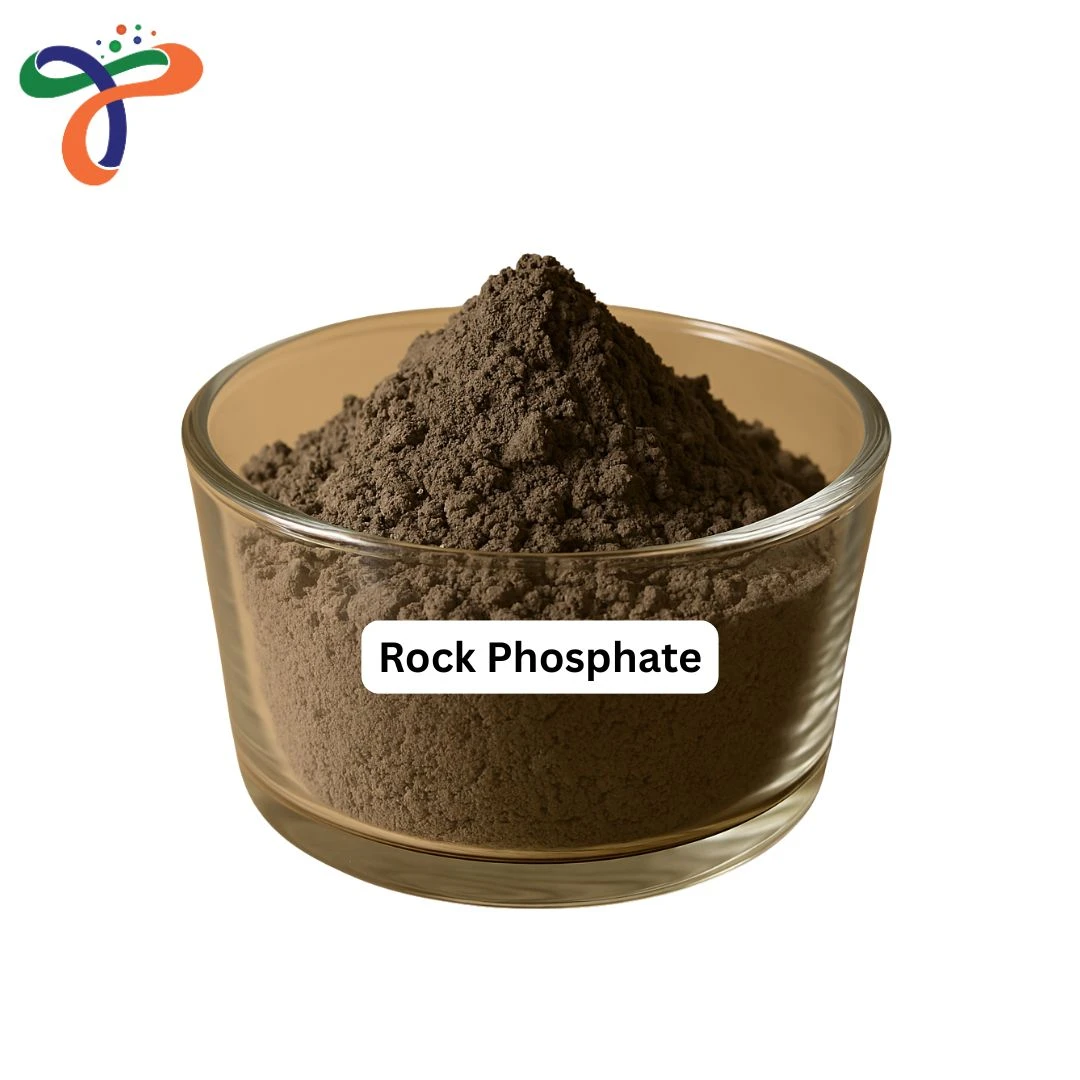
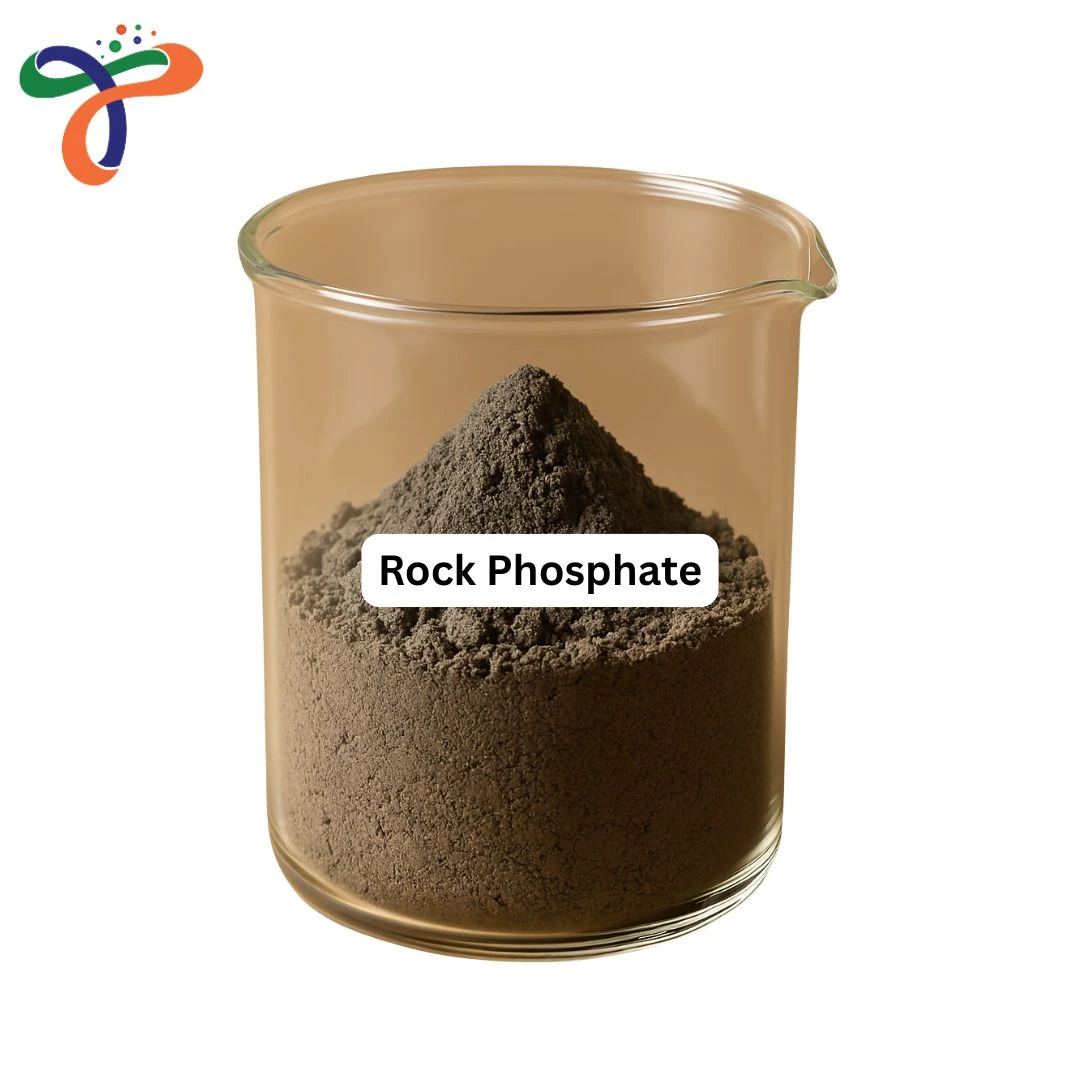
Rock Phosphate
Form :
Powder
Molecular Weight :
504.30 G/mol
Boiling Point :
3000 °c
Flash Point :
3500 °c
Solubility :
Insoluble In Water; Soluble In Acids
Description :
Overview of Rock Phosphate
The rock phosphate mineral is an agrochemical mineral that supplies phosphorus that plants require to thrive. It resembles grayish-white to brown powders, granules, or granules. It is extracted from phosphate deposits. Since that it slowly releases phosphorus while it is broken into smaller pieces, it's an organic fertilizer that can help to keep soils fertile for a long time.
In simple terms, rock phosphate fertilizer gives plants phosphorus naturally over several seasons. It helps plants grow strong roots, flowers, and fruit, and does not wash away quickly like synthetic fertilizers. People use it in organic farming, to improve soil, and to fix low-phosphorus soils for many types of crops.
Applications of Rock Phosphate
Organic Farming & Soil Amendment
Farmers mix rock phosphate fertilizer into the soil to increase phosphorus reserves for growing organic crops.
-
It works well for vegetables, fruits, grains, and pasture crops.
-
You get the best results in slightly acidic soils with a pH between 6.0 and 6.5.
-
Essential for Agriculture Industry organic systems.
Orchards & Perennial Crops
-
Applied around fruit, farmers apply it around fruit trees, berries, and nut crops to provide steady phosphorus over time. and maintains productivity over the years.
-
Complements growth regulators like 1-Naphthaleneacetic Acid.
Pastures & Forage Crops
Rock phosphate fertilizer is used to improve grasslands and provide better nutrition for livestock forage.
-
Builds soil phosphorus for better grass quality and yield.
-
It can lower the cost of extra feed for grazing animals.
-
Pairs with micronutrients like Zinc Sulphate Anhydrous.
Soil Remediation Programs
-
It helps fix low phosphorus levels in soils that are worn out or have been mined.
-
It can be used along with soil amendments such as Diatomaceous Earth.
-
It helps improve overall soil fertility when used with Zinc Sulphate Heptahydrate.
Safety & Handling Guidelines
Handle rock phosphate using the usual safety steps for fertilizers, since it is a natural mineral product.
-
Store it in a dry, covered place to keep it from absorbing moisture and clumping together.
-
Wear dust masks, gloves, and eye protection when handling and spreading rock phosphate.
-
Try not to breathe in the dust and wash your hands after touching it.
-
Non-toxic to humans and animals when usCheck the Material Safety Data Sheet (MSDS) for more detailed instructions on handling and storage.age instructions.
Rock Phosphate MSDS
The MSDS for rock phosphate gives detailed information about its makeup, physical properties, safety steps, exposure limits, and environmental impact. This information is important for organic certifiers, farm managers, and meeting regulations.
ChemicalBull supplies Rock Phosphate MSDS and organic certification documentation with all shipments.
Where to buy Rock Phosphate?
Rock Phosphate Manufacturer
Rock phosphate is sourced and prepared for the fertilizer industry and organic farming, where natural phosphorus with verified mineral content is needed.
Rock Phosphate Supplier & Distributor
ChemicalBull is a trusted supplier and distributor of rock phosphate fertilizer, available at ChemicalBull in granular, powder, and bulk formats.
-
There are several grades available (18-32% P₂O₅) to match different soil and crop needs.
-
Organic-certified options are available for farms that need to meet organic standards.
-
Reliable bulk delivery for large farms, cooperatives, and fertilizer blenders.
-
Complements pest management with 1,2-Dibromoethane.
Frequently Asked Questions (FAQs)
-
What are the uses of rock phosphate fertilizer?
Rock phosphate fertilizer uses include organic soil amendment, root development, flowering enhancement, and long-term phosphorus supply for crops, orchards, and pastures. -
How to apply rock phosphate to plants?
Apply rock phosphate by broadcasting 100-200 lbs/acre into soil before planting, or mix into top 6 inches. Best results when soil pH is 6.0-6.5. Water well after application. -
Is rock phosphate good for all plants?
Rock phosphate benefits most plants but works best for phosphorus-loving crops like tomatoes, corn, fruits, and legumes. Less effective in highly alkaline soils (pH >7.5). -
How long does rock phosphate last in soil?
Provides phosphorus for 2-5 years depending on soil type, rainfall, and crop removal rates. -
Is rock phosphate water-soluble?
Slowly water-soluble through natural weathering. Not instantly available like synthetic phosphates.
ChemicalBull supplies Rock Phosphate across India, serving customers in Andhra Pradesh, Arunachal Pradesh, Assam, Bihar, Chhattisgarh, Goa, Gujarat, Haryana, Himachal Pradesh, Jharkhand, Karnataka, Kerala, Madhya Pradesh, Maharashtra, Manipur, Meghalaya, Mizoram, Nagaland, Odisha, Punjab, Rajasthan, Sikkim, Tamil Nadu, Telangana, Tripura, Uttar Pradesh, Uttarakhand, and West Bengal, as well as the Union Territories of Andaman & Nicobar Islands, Chandigarh, Dadra & Nagar Haveli and Daman & Diu, Delhi, Jammu & Kashmir, Ladakh, Lakshadweep, and Puducherry. We serve pharmaceutical, chemical, research, academic, laboratory, manufacturing, and industrial customers with reliable nationwide delivery.