Overview of 2,4,6-Tribromophenol
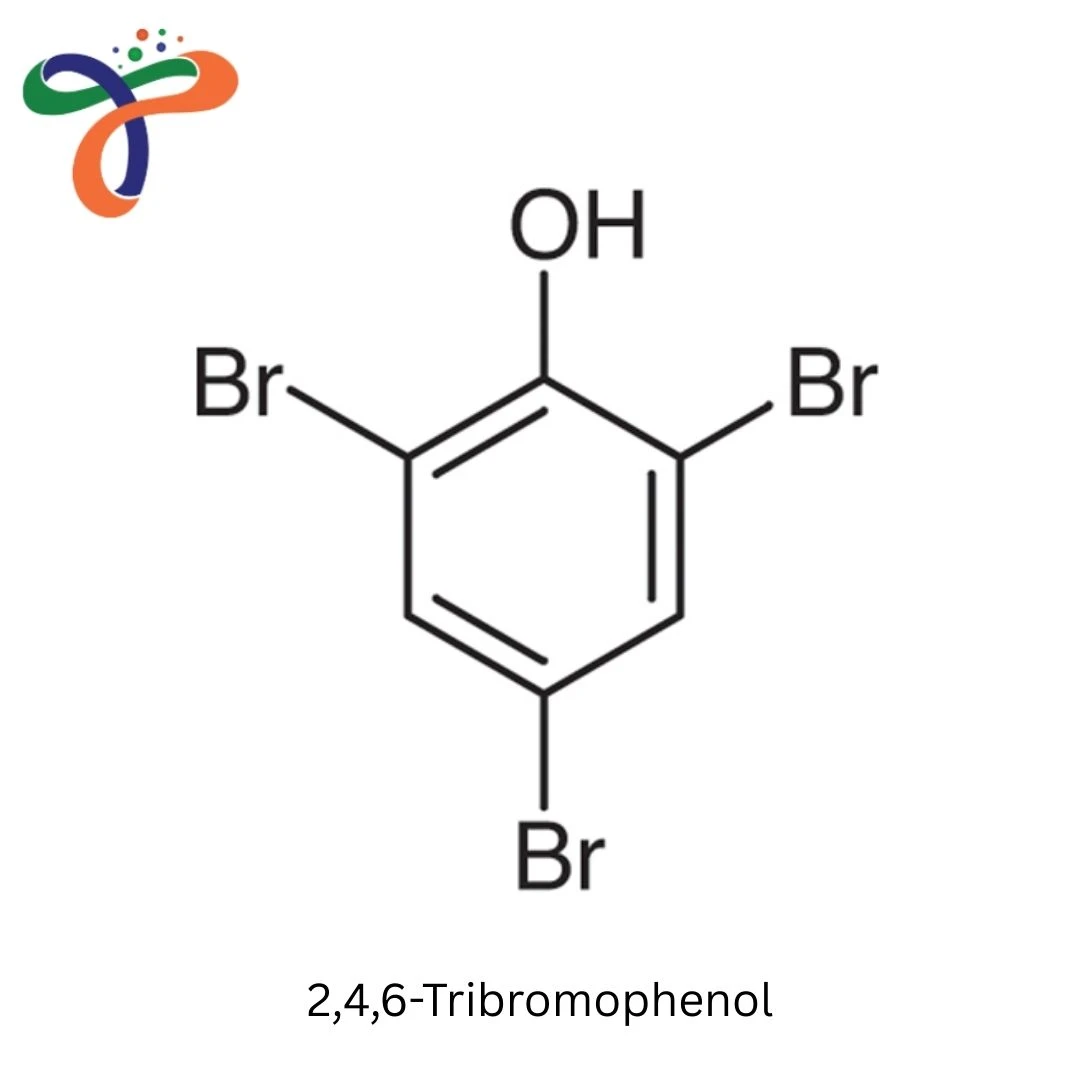
2,4,6-Tribromophenol is an industrial halogenated aromatic compound widely used in flame retardant systems, wood preservatives, chemical intermediates, and specialty resin formulations. It is a brominated derivative of phenol where three bromine atoms are substituted at the 2, 4, and 6 positions of the benzene ring.
As an industrial chemical, 2,4,6-Tribromophenol is valued for its high bromine content, thermal stability, and reactivity in further chemical modification. It plays a key role in polymer additives, epoxy systems, and specialty chemical manufacturing.
Applications of 2,4,6-Tribromophenol
Flame Retardant Manufacturing
2,4,6-Tribromophenol is widely used in flame retardant formulations due to its high bromine content, which enhances fire resistance in plastics, resins, and electronic materials.
It may be processed alongside Antimony Trioxide, Epoxy Resin, and Polypropylene in structured industrial flame-retardant systems.
Wood Treatment & Industrial Preservation
The compound is applied in industrial wood treatment formulations where antimicrobial and preservative properties are required.
It may be handled with Copper Sulfate, Zinc Borate, and Sodium Hydroxide depending on the treatment formulation.
Chemical Intermediate & Derivative Production
2,4,6-Tribromophenol serves as an intermediate for the synthesis of brominated derivatives and specialty aromatic compounds used in industrial applications.
Epoxy & Resin Modification
Due to its reactive phenolic group, 2,4,6-Tribromophenol is used in epoxy resin systems to enhance flame retardancy and chemical resistance.
Safety & Handling Guidelines
-
Store in a cool, dry, and well-ventilated area
-
Keep containers tightly sealed and properly labelled
-
Avoid inhalation of dust
-
Prevent contact with skin and eyes
-
Use protective gloves, goggles, and suitable industrial clothing
-
Handle under controlled industrial conditions
-
Dispose of waste according to environmental and regulatory compliance
Always consult the MSDS before industrial handling.
Where to Buy 2,4,6-Tribromophenol?
2,4,6-Tribromophenol Manufacturer
2,4,6-Tribromophenol is manufactured under controlled industrial standards to ensure consistent bromine content, purity, and performance in flame-retardant and resin applications.
2,4,6-Tribromophenol Supplier & Distributor
2,4,6-Tribromophenol is available in bulk industrial packaging formats. Buy 2,4,6-Tribromophenol from Chemicalbull Pvt. Ltd., a trusted industrial chemicals supplier and distributor in India, ensuring reliable sourcing and compliant logistics support.
MSDS for 2,4,6-Tribromophenol
The MSDS for 2,4,6-Tribromophenol provides detailed information regarding hazard identification, safe handling procedures, storage conditions, exposure controls, and emergency response measures. It must be reviewed prior to use.
Frequently Asked Questions (FAQs)
-
What is 2,4,6-Tribromophenol?
2,4,6-Tribromophenol is a brominated phenolic compound used as a flame retardant intermediate, wood preservative component, and specialty chemical building block.
-
What is the color of 2,4,6-Tribromophenol?
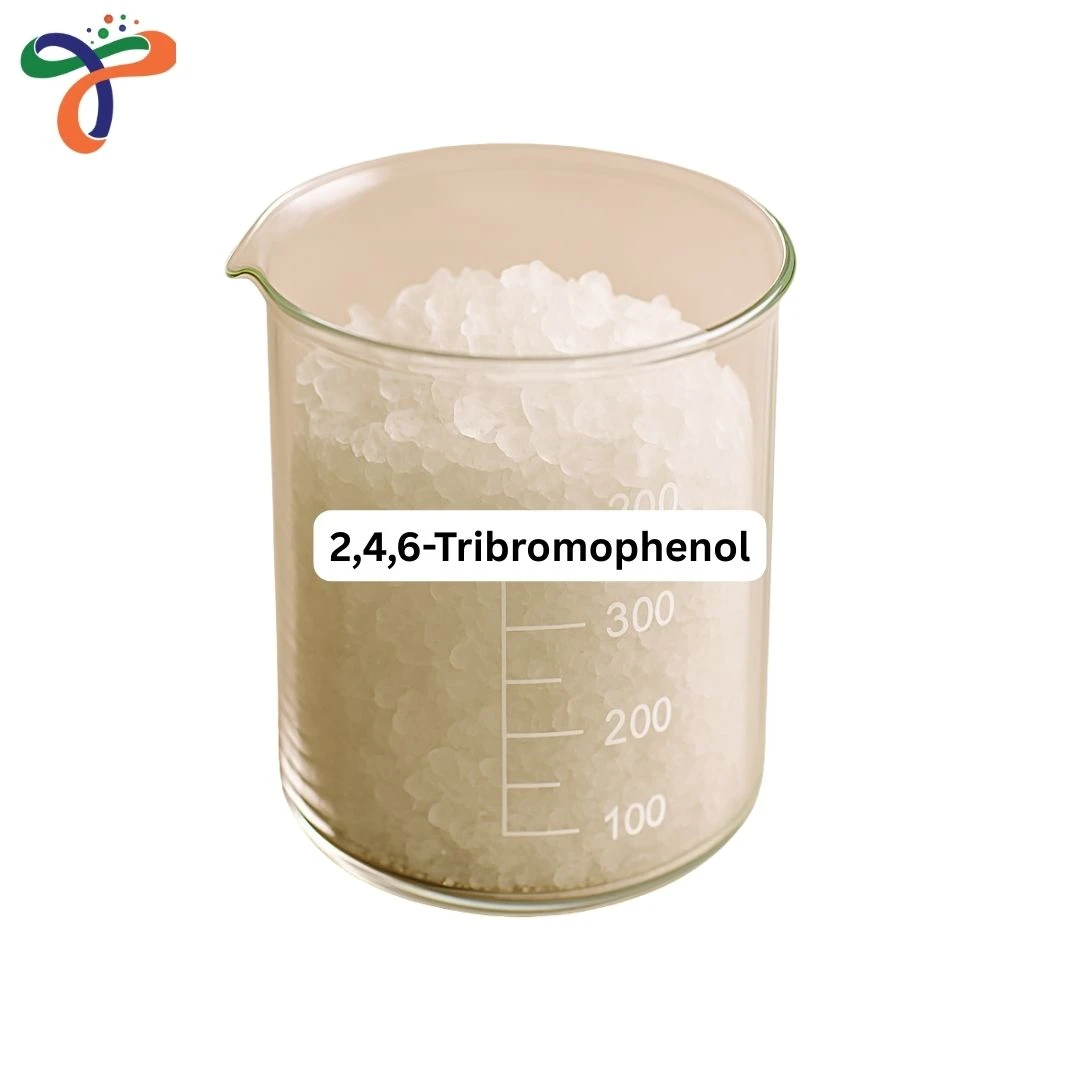
2,4,6-Tribromophenol typically appears as a white to off-white crystalline solid.
-
What is the formula of 2,4,6-Tribromophenol?
The chemical formula of 2,4,6-Tribromophenol is C₆H₃Br₃O.
-
What is the structure of 2,4,6-Tribromophenol?
It consists of a phenol ring substituted with three bromine atoms at the 2, 4, and 6 positions relative to the hydroxyl (-OH) group.
-
What are the uses of 2,4,6-Tribromophenol?
It is used in flame-retardant manufacturing, resin modification, wood preservation systems, and as an intermediate in brominated chemical production.