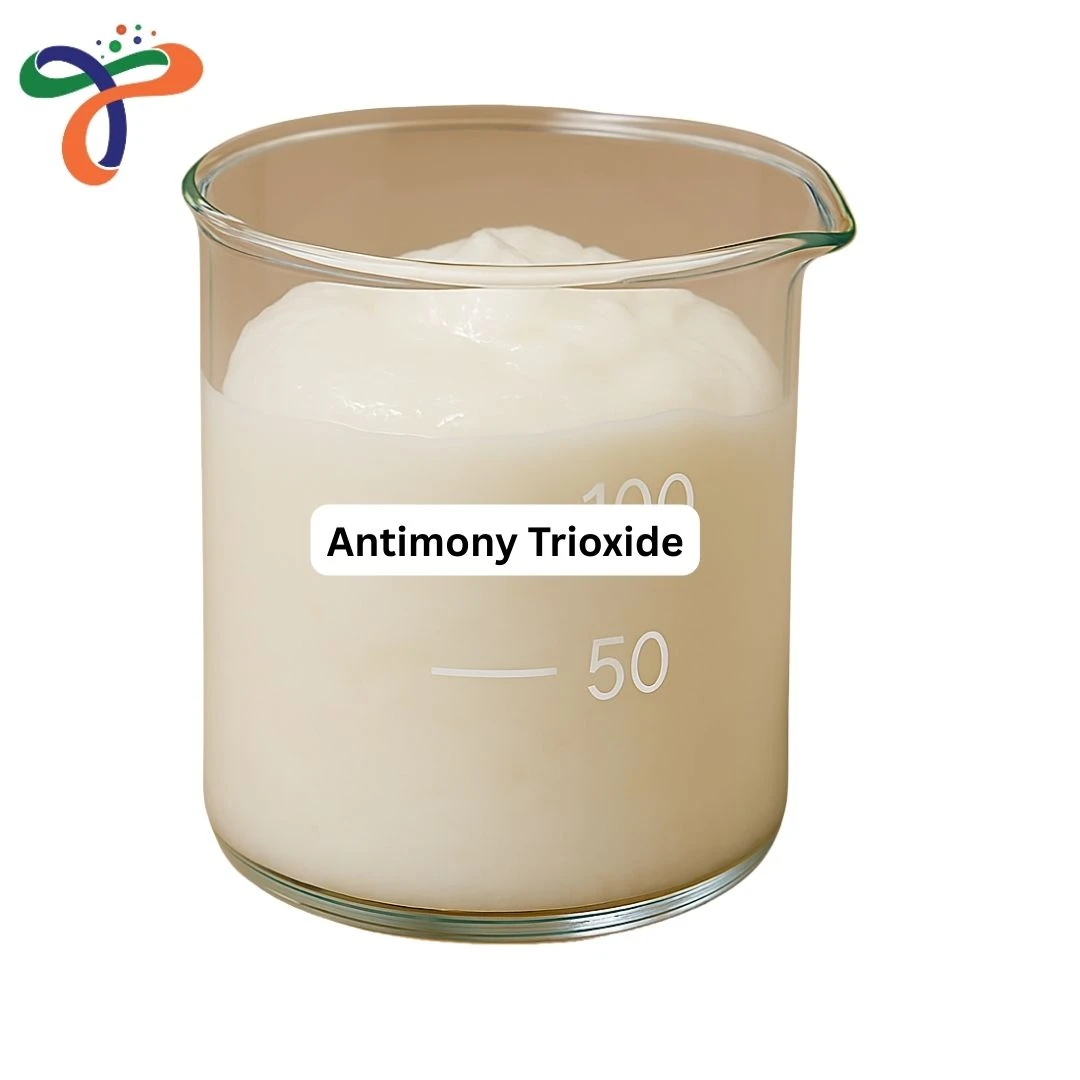
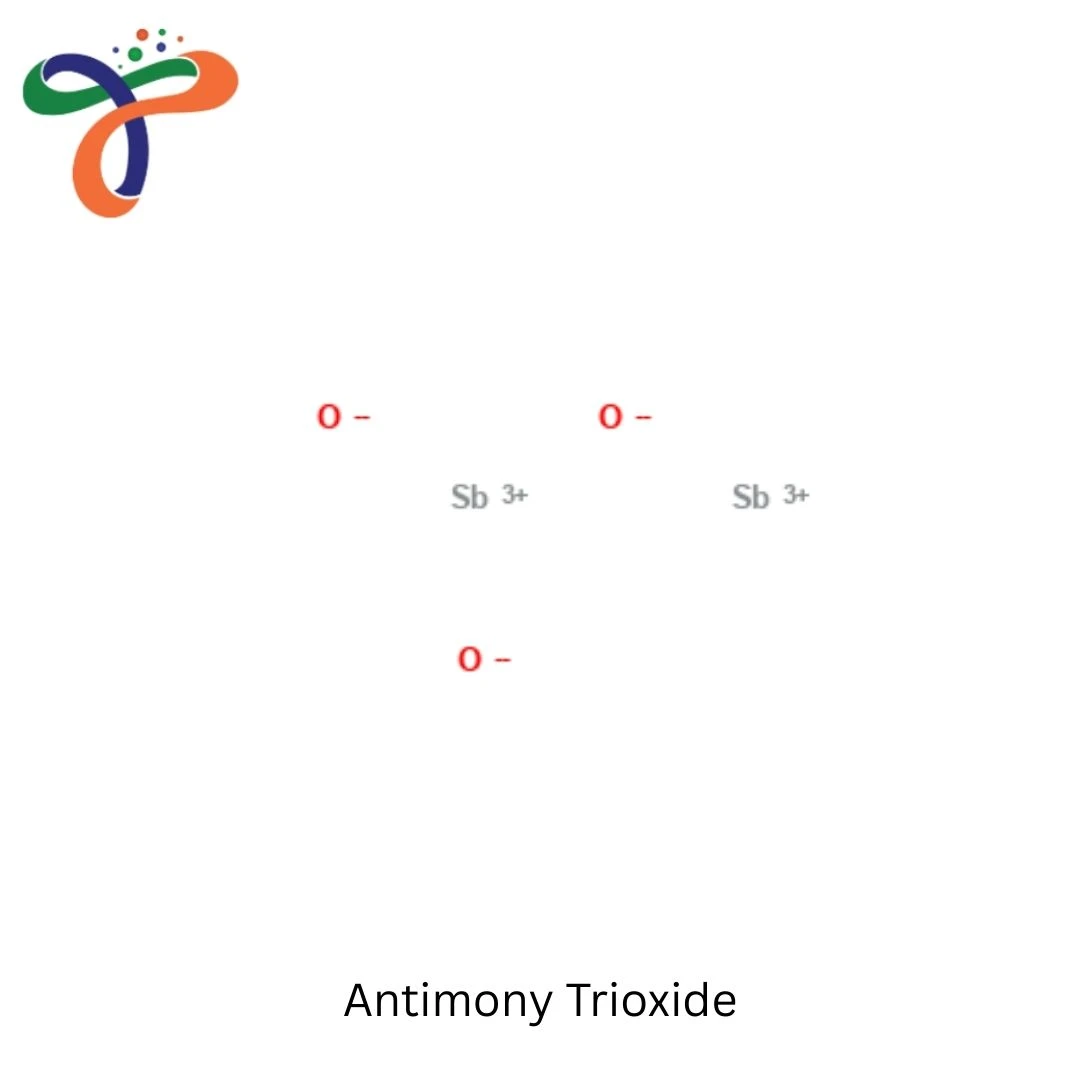
Antimony Trioxide
Form :
Solid
Molecular Weight :
291.52 G/mol
Molecular Formula :
SB2O3
Boiling Point :
1510 °c
Flash Point :
500 °c
Solubility :
Insoluble In Water; Soluble In Acids
Description :
Antimony Trioxide Suppliers, Manufacturers & Distributors in India | Industrial Grade
Overview
Chemical Bull is one of the trusted Antimony Trioxide manufacturers, suppliers and distributors in India, providing high-purity Antimony Trioxide in bulk to the plastics, rubber, textile, and glass manufacturing industries globally.
Antimony Trioxide is the industry’s most widely used flame retardant synergist. When combined with halogenated compounds, it dramatically enhances the fire-retardant properties of a wide variety of polymer and resin systems. Beyond its role in fire safety, it also serves as a catalyst for polyethylene terephthalate (PET) production and an opacifier in glass and ceramic industries. As leading Antimony Trioxide manufacturers, we provide premium-grade material designed to ensure consistent thermal performance and quality in your industrial applications.
Explore our Industrial Chemicals category to discover other essential additives and raw materials for your manufacturing requirements.
Why Choose ChemicalBull as your Antimony Trioxide supplier?
-
Trusted B2B Partner: An established supply chain serving premium plastic compounders, textile manufacturers, and chemical producers globally.
-
Bulk Supply for Industrial Needs: Robust supply capabilities tailored to large-scale production, ensuring consistent availability for your manufacturing pipeline.
-
Verified Quality: High-purity white powder with excellent particle size distribution, ensuring uniform dispersion and optimal synergy in fire-retardant formulations.
-
Global Reach: As a recognized Antimony Trioxide global exporter, we provide reliable international logistics and export-ready documentation for specialty chemicals.
-
Competitive Pricing: Transparent, volume-based pricing structures for manufacturers, Antimony Trioxide wholesalers, and distributors.
-
Complete Documentation: We provide comprehensive technical support, including Antimony Trioxide msds, Certificates of Analysis (CoA), and TDS upon request.
Applications of Antimony Trioxide
Antimony Trioxide is indispensable in industries where flame resistance and high-performance material properties are required.
1. Flame Retardant Synergist
The gold standard for boosting the efficiency of halogenated flame retardants.
-
Applications: Engineering plastics (e.g., PP, PE, PVC, ABS), rubber products, and synthetic fibers.
-
Benefits: Significantly reduces flammability, lowers smoke density, and enhances the overall fire-safety profile of consumer and industrial goods.
2. Catalyst for PET Production
Acts as a high-efficiency catalyst in the condensation polymerization process.
-
Applications: Manufacturing of PET resin for bottles, films, and textile fibers.
-
Benefits: Promotes faster reaction rates, improves the clarity and brightness of the final PET polymer, and ensures excellent thermal stability.
3. Glass & Ceramics
Functions as a fining agent and opacifier.
-
Applications: Specialty glass manufacturing, pigments, and ceramic glazes.
-
Benefits: Assists in the removal of gas bubbles during glass melting and provides desired opacity and color uniformity in glazes.
B2B Buyers We Serve as Antimony Trioxide Manufacturers & Suppliers in India
Chemical Bull is a preferred sourcing partner for:
-
Plastic and polymer compounders
-
Rubber and elastomer manufacturers
-
PET resin and fiber producers
-
Textile and fabric finishing plants
-
Specialty chemical distributors, Antimony Trioxide suppliers, and traders
-
Contract Manufacturing Organizations (CMOs)
Frequently Asked Questions (FAQ)
-
What is the primary industrial function of Antimony Trioxide?
It is primarily used as a synergist in flame retardant systems to increase the efficacy of halogenated fire retardants in plastics and textiles.
-
Are you certified Antimony Trioxide manufacturers?
Yes, Chemical Bull is one of the leading Antimony Trioxide manufacturers and suppliers, maintaining strict quality control for all our chemical outputs. -
Can I get technical documents like the MSDS?
Yes, we provide the Antimony Trioxide msds, along with CoA and TDS, to support your regulatory, safety, and quality assurance needs. -
Do you offer bulk supply for export?
Yes, as a leading Antimony Trioxide distributor, we support both domestic clients and international importers with professional export-ready packaging and logistics. -
How can I request a quote?
Contact our sales team today to discuss your technical specifications (e.g., particle size) and volume requirements, and we will provide competitive wholesale pricing.
Need a reliable, high-purity Antimony Trioxide supplier for your production lines?
Contact Chemical Bull today to request a quote, confirm grade availability, or download technical documentation. Our team ensures consistent quality, competitive pricing, and on-time delivery for every bulk order.
Related Products from Industrial Chemicals
-
Decabromodiphenyl Ethane (Flame Retardant)
-
Aluminum Trihydrate (ATH)
ChemicalBull supplies Antimony Trioxide across India, serving customers in Andhra Pradesh, Arunachal Pradesh, Assam, Bihar, Chhattisgarh, Goa, Gujarat, Haryana, Himachal Pradesh, Jharkhand, Karnataka, Kerala, Madhya Pradesh, Maharashtra, Manipur, Meghalaya, Mizoram, Nagaland, Odisha, Punjab, Rajasthan, Sikkim, Tamil Nadu, Telangana, Tripura, Uttar Pradesh, Uttarakhand, and West Bengal, as well as the Union Territories of Andaman & Nicobar Islands, Chandigarh, Dadra & Nagar Haveli and Daman & Diu, Delhi, Jammu & Kashmir, Ladakh, Lakshadweep, and Puducherry. We serve pharmaceutical, chemical, research, academic, laboratory, manufacturing, and industrial customers with reliable nationwide delivery.