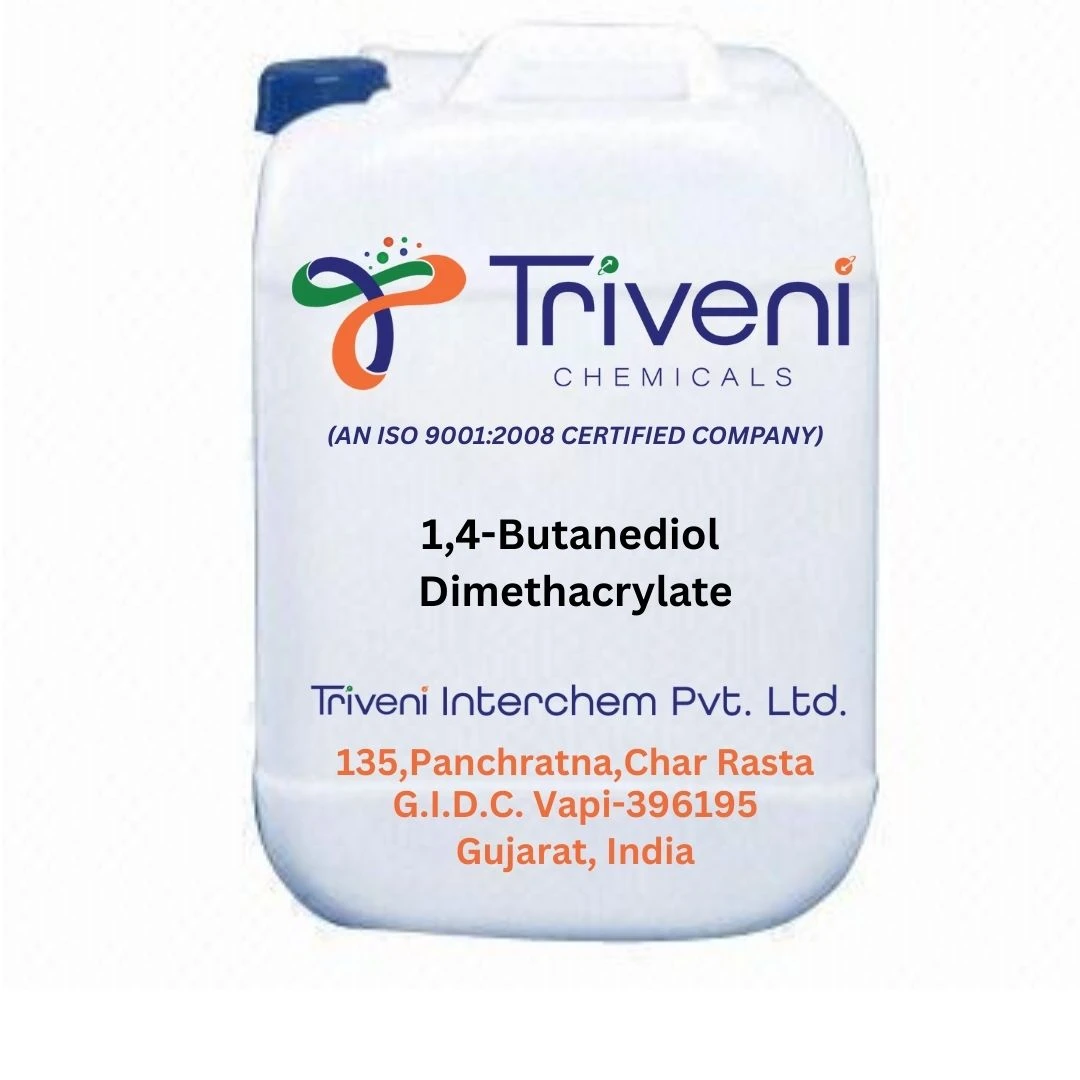
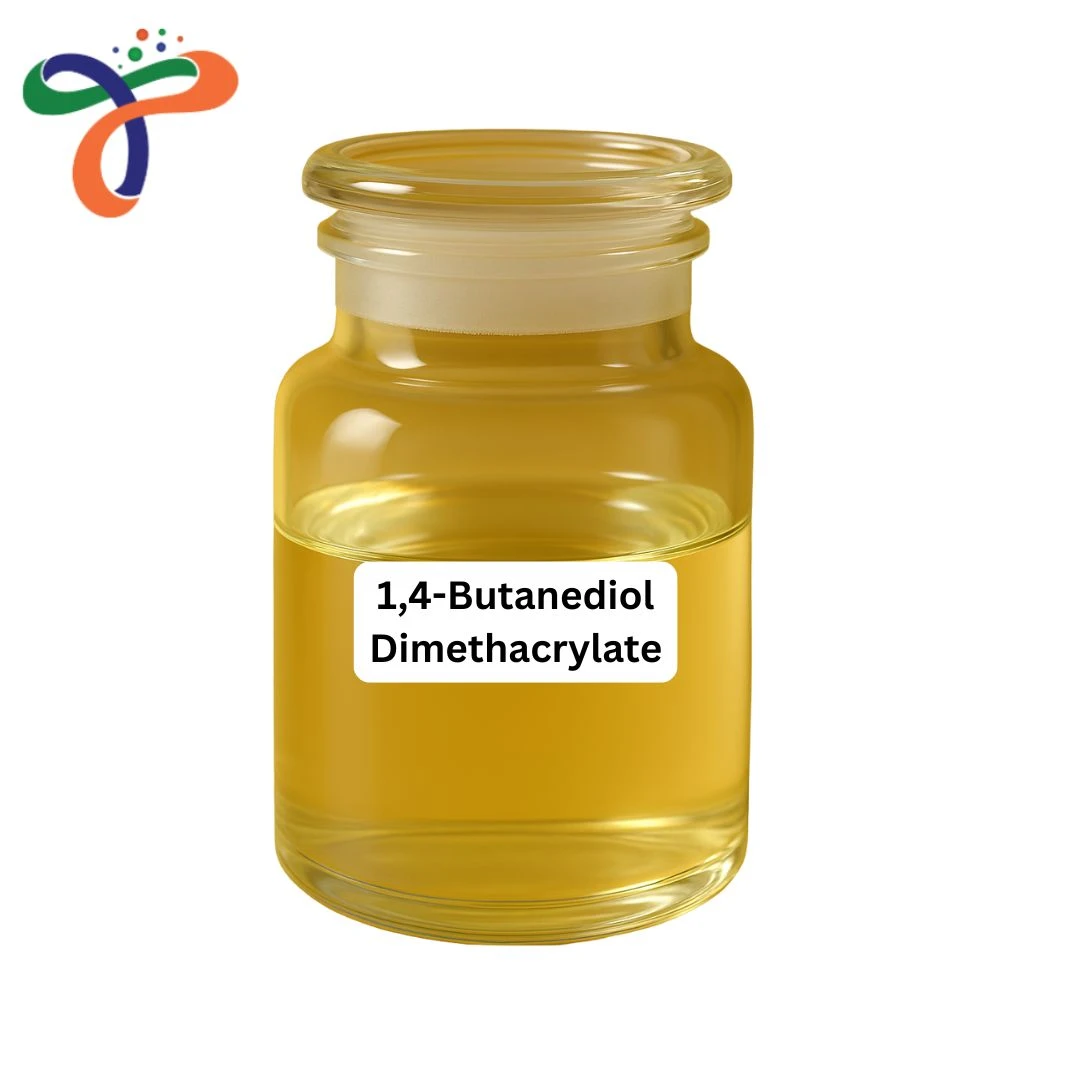
1,4-butanediol Dimethacrylate | 2082-81-7
Cas No :
2082-81-7
Synonyms :
Form :
Liquid
Molecular Weight :
226.27
Molecular Formula :
C12H18O4
Boiling Point :
132 - 134 °c
Flash Point :
113 °c
Solubility :
Chloroform (sparingly), Methanol (slightly)
Description :
Overview of 1,4-Butanediol Dimethacrylate
1,4-Butanediol Dimethacrylate (BDDMA) is a crosslinking monomer that is flexible and can be used for the production of polymers, resins or adhesives. It also makes coatings, as well as coatings. The high reactivity of the compound and its ability to enhance mechanical properties makes it a crucial component in a variety of industrial chemicals. The formula for 1,4-butanediol dimethacrylate aids in ensuring the safety of curing and polymerization.
For those without a technical background, 1,4-Butanediol Dimethacrylate works as an additive that makes polymer networks stronger, more durable, and easier to process in plastic and rubber chemical applications.
Applications of 1,4-Butanediol Dimethacrylate
Polymer & Resin Systems
BDDMA is often used for polymerization, allowing cross-linked networks that improve strength, hardness, thermal stability and toughness. The BDDMA compound is usually combined with Cobalt Octoate in order for speedier curing, and to ensure consistent result.
Adhesives & Coatings
In coatings and adhesives 1,4-Butanediol Dimethacrylate enhances adhesiveness, chemical resistance and the durability. When combined in conjunction with Zinc Stearate, it enhances the flow, leveling and surface quality for industrial formulas.
Specialty Industrial Applications
The 1,4-Butanediol compound can be used in high-performance plastic system, UV-curable coated coatings as well as specialty resins that are able to produce the most precise chemical and mechanical characteristics.
Safety & Handling Guidelines
-
Keep it in a cool, dry, well-ventilated and shady area.
-
Make sure containers are tightly sealed
-
Do not make contact with your the eyes and skin
-
Avoid inhalation from vapors or mists
-
Make sure you wear protective gloves, goggles, and appropriate clothing
-
Use normal industrial chemical handling practices
Where to Buy 1,4-Butanediol Dimethacrylate?
BDDMA Manufacturer
1,4-Butanediol Dimethacrylate is used for high-performance polymers, adhesives coatings, special resins in which reliable curing and chemical properties are essential.
BDDMA Supplier & Distributor
Chemical Bull offers industrial-grade quantities to both the international and domestic markets. We provide reliable sources as well as consistent quality. an easy order process for manufacturing companies.
Find related products at the Homepage:
Explore the product categories in detail via the Category Page, and for industrial use on the Application Page.
1,4-Butanediol Dimethacrylate MSDS
The MSDS contains detailed information regarding safety precautions, storage, the limits of exposure, first-aid procedures as well as emergency procedures. It is essential to study the MSDS before making use of this product in industrial environments.
Frequently Asked Questions (FAQs)
-
What is 1,4-Butanediol Dimethacrylate used for?
1,4-Butanediol Dimethacrylate (BDDMA) is used to make crosslinked polymers, resins, adhesives, coatings, and special industrial materials that are stronger, more durable, and more stable at high temperatures. -
Is 1,4-Butanediol Dimethacrylate compatible with other additives?
Yes, it can be mixed with metal catalysts, stabilizers, and other monomers to improve polymerization and curing. -
Can BDDMA enhance mechanical properties of polymers?
Yes, it strengthens polymer networks, improves hardness, and provides enhanced chemical resistance. -
Does 1,4-Butanediol Dimethacrylate provide thermal stability?
Yes, the chemical formula of 1,4-Butanediol Dimethacrylate helps it stay stable during high-temperature industrial processes. -
Is BDDMA suitable for UV-curable applications?
Yes, it is often used in UV-curable coatings and adhesives because it allows for fast crosslinking and better surface performance.
ChemicalBull supplies 1,4-butanediol Dimethacrylate across India, serving customers in Andhra Pradesh, Arunachal Pradesh, Assam, Bihar, Chhattisgarh, Goa, Gujarat, Haryana, Himachal Pradesh, Jharkhand, Karnataka, Kerala, Madhya Pradesh, Maharashtra, Manipur, Meghalaya, Mizoram, Nagaland, Odisha, Punjab, Rajasthan, Sikkim, Tamil Nadu, Telangana, Tripura, Uttar Pradesh, Uttarakhand, and West Bengal, as well as the Union Territories of Andaman & Nicobar Islands, Chandigarh, Dadra & Nagar Haveli and Daman & Diu, Delhi, Jammu & Kashmir, Ladakh, Lakshadweep, and Puducherry. We serve pharmaceutical, chemical, research, academic, laboratory, manufacturing, and industrial customers with reliable nationwide delivery.