Diisodecyl Adipate | 27178-16-1
Cas No :
27178-16-1
Synonyms :
Form :
Liquid
Molecular Weight :
426.67 G/mol
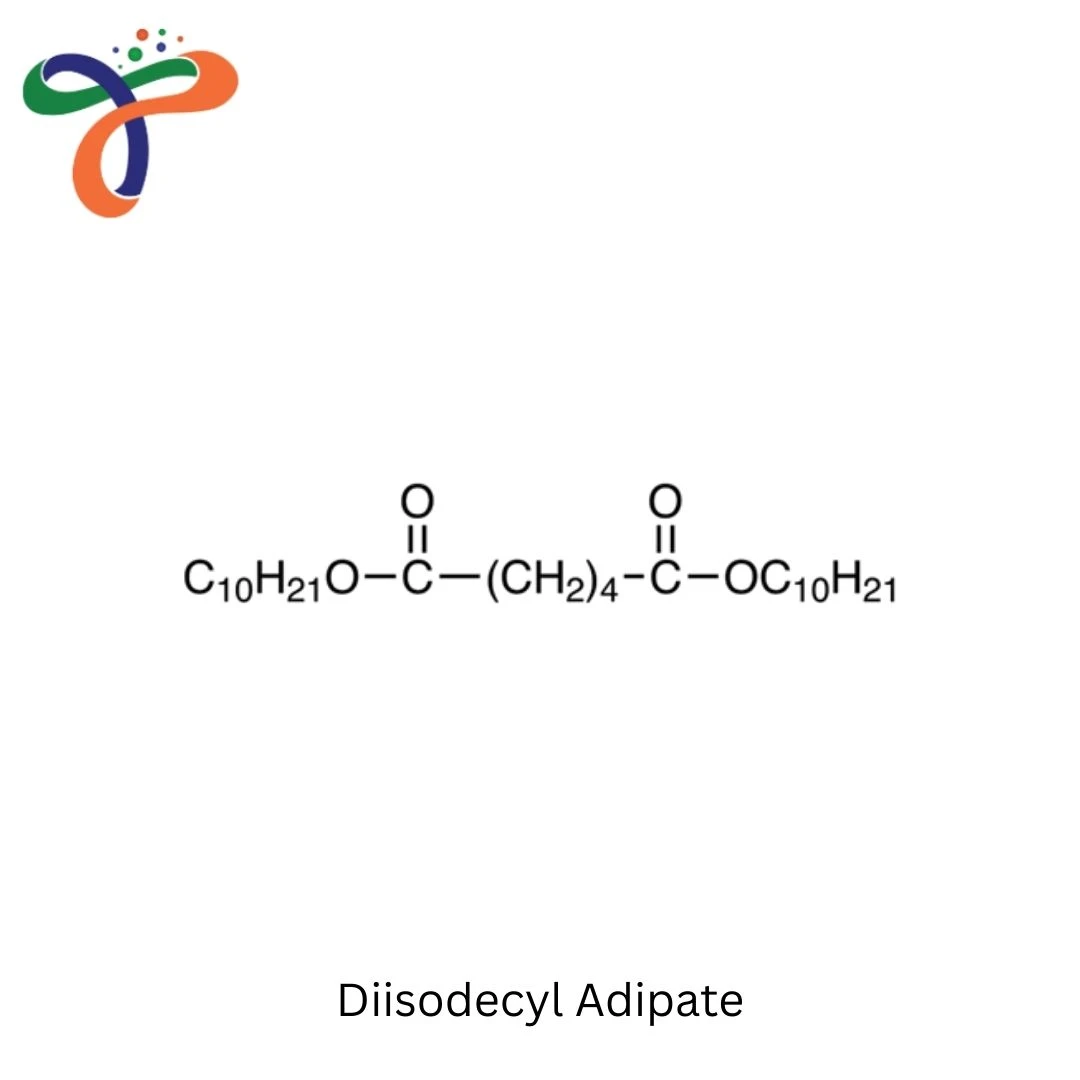
Molecular Formula :
C26H50O4
Boiling Point :
385 °c
Melting Point :
27.4 °c
Flash Point :
221 °c
Solubility :
Dmso (sparingly, Heated), Methanol (slightly, Heated, Sonicated)
Description :
Overview of Diisodecyl Adipate
Diisodecyl Adipate (DIDA) is a multi-faceted plasticizer used extensively for Plastic & Rubber Chemicals to enhance the durability, flexibility as well as the processability in polymer system. It's a transparent and colorless liquid that is renowned for its outstanding low-temperature performance along with its chemical stability as well as compatibility with various rubbers and elastomers.
For those without a technical background, Diisodecyl Adipate makes plastics and rubber softer, more flexible, and easier to work with. It is commonly found in flexible PVC, elastomers, adhesives, and specialty polymers.
In industrial formulations, Diisodecyl Adipate is commonly combined with chemicals such as Acrylamide, 3-Mercaptopropyl Trimethoxysilane, and Azodicarbonamide to enhance flexibility, processing efficiency, and performance of polymer products.
Explore related products on our Categories Page, learn real-world applications on our Application Page, or visit our Home Page to see our complete chemical range.
Applications of Diisodecyl Adipate
Flexible PVC & Rubber Processing
Diisodecyl Adipate is widely used as a plasticizer in flexible PVC and rubber formulations to improve softness, elasticity, and low-temperature performance.
Adhesives & Sealants
It makes adhesives and sealants more flexible and sticky, improves how they are processed, and helps them last longer and go on more easily.
Specialty Polymer Formulations
DIDA is added to specialty elastomers and polymer blends to make them more flexible, stable at different temperatures, and resistant to chemicals.
IIndustrial Chemical Applications
It's used in plastic films, coatings and in elastomer-based compounds where it is necessary to have flexibility, softness and constant performance are required.
Key Properties
-
It's clear and non-colored liquid.
-
It remains flexible even in lower temperatures.
-
Chemically stable, it can be used with various types of polymers.
-
It makes processing more efficient and enhances the way that the product performs.
-
It's often combined along with PVC or rubber for adhesives and polymer systems for specialty applications.
Safety & Handling Guidelines
-
Keep it in a cool, dry and well ventilated location.
-
Close containers securely even when not being used.
-
Avoid contact with eyes and skin
-
Avoid inhalation from the vapors
-
Make sure you wear protective gloves, goggles as well as wear appropriate clothing
-
Beware of the heat, sparks and other incompatible substances
-
Utilize the standard chemical handling protocols for industrial use.
-
The disposal of waste should be in accordance with local regulations on environmental management.
Where to Buy Diisodecyl Adipate?
Manufacturer
Diisodecyl Adipate is made for use in flexible PVC, rubber, adhesives, sealants, and specialty polymers when extra flexibility and easier processing are needed.
Supplier & Distributor
We offer Diisodecyl Adipate in large as well as industrial grade quantities. We guarantee high-quality, reliable availability, and the ability to scale volumes for chemical formulators as well as manufacturers.
Diisodecyl Adipate MSDS
The Material Safety Data Sheet (MSDS) contains information about safety precautions for handling, storage limit of exposure, first aid and the emergency procedures. It is highly recommended to study the MSDS before utilizing this product in industrial settings.
Frequently Asked Questions (FAQs)
1. What is Diisodecyl Adipate used for?
It is mainly used as a plasticizer in flexible PVC, rubber, adhesives, sealants, and specialty polymers to make them more flexible and easier to process.
2. Is Diisodecyl Adipate safe to handle?
Yes, it is safe to handle when you use the right protective gear and follow standard industrial safety steps.
3. Can DIDA improve low-temperature flexibility in PVC?
Yes, it greatly improves flexibility and performance when used at low temperatures.
4. Is Diisodecyl Adipate compatible with other plasticizers?
Yes, it can be blended with other plasticizers to adjust flexibility and performance properties.
5. Can Diisodecyl Adipate be used in adhesives?
Yes, it improves flexibility, tack, and workability in adhesive and sealant formulations.
ChemicalBull supplies Diisodecyl Adipate across India, serving customers in Andhra Pradesh, Arunachal Pradesh, Assam, Bihar, Chhattisgarh, Goa, Gujarat, Haryana, Himachal Pradesh, Jharkhand, Karnataka, Kerala, Madhya Pradesh, Maharashtra, Manipur, Meghalaya, Mizoram, Nagaland, Odisha, Punjab, Rajasthan, Sikkim, Tamil Nadu, Telangana, Tripura, Uttar Pradesh, Uttarakhand, and West Bengal, as well as the Union Territories of Andaman & Nicobar Islands, Chandigarh, Dadra & Nagar Haveli and Daman & Diu, Delhi, Jammu & Kashmir, Ladakh, Lakshadweep, and Puducherry. We serve pharmaceutical, chemical, research, academic, laboratory, manufacturing, and industrial customers with reliable nationwide delivery.