Chemical Bull
920
07-Jan-2026
Introduction
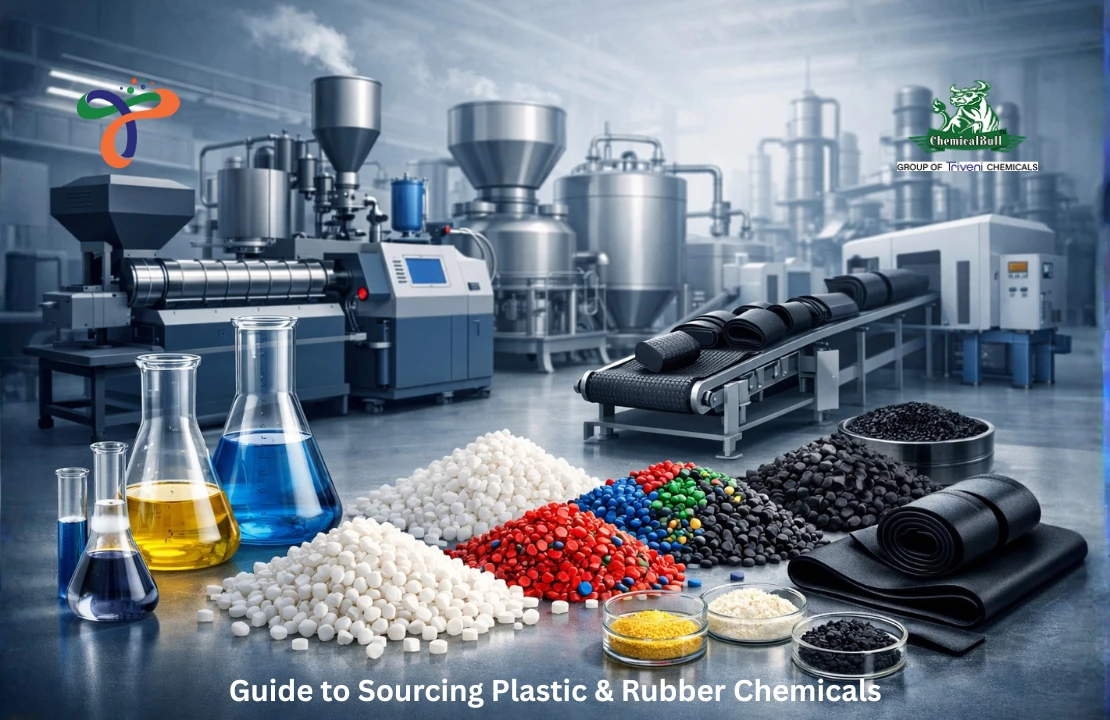
The global plastics and rubber industry depends on a complex ecosystem of speciality chemicals to transform raw polymers into high-performance materials. From automotive components and industrial equipment to packaging, electronics, and medical devices, plastic and rubber chemicals play a critical role in determining product quality, processing efficiency, durability, and cost control.
For manufacturers and procurement teams, sourcing the right polymer chemicals, plastic additives, and rubber chemicals is no longer just a technical decision—it directly impacts long-term performance, regulatory compliance, and supply chain reliability. This guide provides a complete, unbiased overview of plastic and rubber chemicals, helping readers understand materials, processing, and selection criteria in modern manufacturing.
At Chemical Bull Pvt. Ltd., a trusted chemical supplier, we provide a wide range of high-quality polymer chemicals, additives, and rubber processing chemicals.
👉 Explore our full range of Plastic & Rubber Chemicals designed for industrial applications.
What Are Plastic and Rubber Chemicals?
Plastic and rubber chemicals are specialised substances used to modify, enhance, or enable the processing of polymer materials. These chemicals influence how plastics and rubber behave during manufacturing and throughout their service life.
They broadly include:
- Polymer chemicals
- Plastic chemicals
- Rubber chemicals
- Plastic additives
- Rubber additives
- Plastic compounds
- Rubber compounds
- Polymer compounds
- Rubber processing chemicals
These materials are widely used across various industrial applications such as Plastic Processing, Rubber & Tyre, etc...
Understanding Polymer Chemicals and Their Role
Polymer chemicals influence:
- Processing efficiency
- Mechanical strength
- Chemical resistance
- Long-term durability
Key raw materials include:
- Polyvinyl Chloride and Ethylene Vinyl Acetate as base polymers
- Polyvinyl Acetate and Polyacrylonitrile for specialised applications
These materials are essential for manufacturers sourcing bulk solutions from a reliable chemical distributor.
Plastic Chemicals: Enhancing Performance and Processability
Plastic chemicals help modify base polymers for specific performance needs.
Common Plastic Additives & Chemicals:
- Plasticisers like Dioctyl Phthalate and Dioctyl Adipate for flexibility
- Stabilisers such as Calcium Stearate and Zinc Stearate
- Flame retardants like Antimony Trioxide and Aluminium Trihydrate
- Reactive monomers such as Glycidyl Methacrylate and Methyl Methacrylate
- Processing aids like Acrylic Resin and Epoxy Resin
These additives improve durability, safety, and processability.
Browse our complete Plastic Processing Category.
Rubber Chemicals in Elastomer Manufacturing
Rubber chemicals enable the transformation of raw elastomers into functional rubber products. They control curing behaviour, elasticity, wear resistance, and ageing performance.
Rubber chemicals are critical for:
- Tires and automotive components
- Industrial hoses and belts
- Seals, gaskets, and vibration-control parts
- Technical rubber goods
Proper selection ensures consistent performance under mechanical stress, temperature extremes, and chemical exposure.
Plastic Compounds, Rubber Compounds, and Polymer Compounds
Plastic Compounds
Plastic compounds are pre-formulated blends of polymers, additives, and fillers designed to deliver consistent, ready-to-process performance. They simplify production and reduce formulation complexity.
Common applications include:
- Injection molding
- Extrusion
- Blow molding
- Sheet and film manufacturing
Rubber Compounds
Rubber compounds combine elastomers with curing systems, fillers, and rubber additives to achieve targeted mechanical and chemical properties.
They are widely used in:
- Automotive rubber parts
- Industrial sealing systems
- Conveyor belts and hoses
- Moulded technical products
Polymer Compounds
Polymer compounds bridge the gap between raw polymers and finished goods, offering optimised performance, improved processing consistency, and predictable end-use behaviour.
Thermoplastic Compounds and Elastomer Compounds
Thermoplastic Compounds
Thermoplastic compounds can be melted and reshaped repeatedly, making them ideal for high-volume manufacturing and recycling-friendly processes.
They are commonly used in:
- Automotive interiors
- Electrical and electronic components
- Packaging materials
- Consumer products
Elastomer Compounds
Elastomer compounds provide elasticity, resilience, and long-term durability, making them essential where repeated deformation and recovery are required.
Applications include:
- Seals and gaskets
- Medical tubing
- Flexible connectors
- Industrial vibration components
Plastic Additives and Their Functions
Plastic additives are essential for achieving desired polymer performance and processing stability.
Plasticisers for Plastics
Plasticisers for plastics improve flexibility, softness, and workability, especially in PVC and flexible polymer systems.
Typical applications include cables, flooring, films, medical tubing, and automotive interiors.
Stabilisers for Plastics
Stabilisers for plastics protect polymers from degradation caused by heat, UV radiation, and oxidation, ensuring long service life and consistent appearance.
They are critical for outdoor products, pipes, automotive parts, and packaging.
Other Important Plastic Additives
In addition to plasticisers and stabilisers, manufacturers use:
- Impact modifiers
- Flame retardants
- Processing aids
- Colourants and pigments
Each additive category plays a specific role in performance and compliance.
Rubber Additives and Rubber Processing Chemicals
Rubber additives and rubber processing chemicals control curing, processing behaviour, and long-term durability of rubber products.
These include:
- Vulcanizing agents
- Accelerators and activators
- Antioxidants and antiozonants
- Processing oils and softeners
Proper selection ensures uniform curing, improved wear resistance, and reduced manufacturing defects.
Polymer Processing and Manufacturing Efficiency
Polymer processing involves converting raw polymers and compounds into finished products using techniques such as extrusion, injection moulding, compression moulding, and calendering.
Processing chemicals help to:
- Improve melt flow
- Reduce cycle times
- Enhance surface finish
- Maintain thermal stability
Optimised polymer processing improves productivity, quality consistency, and overall cost efficiency.
Chemical Compatibility: A Critical Selection Factor
Chemical compatibility determines how plastics and rubber materials perform when exposed to fuels, oils, solvents, acids, or harsh environments.
Poor compatibility can lead to:
- Swelling or shrinkage
- Loss of mechanical strength
- Premature material failure
Evaluating chemical compatibility is essential for ensuring long-term reliability, safety, and performance in demanding industrial applications.
Primary vs Secondary Plastic & Rubber Chemicals
Understanding the distinction between primary and secondary chemicals is essential for sourcing decisions and internal material classification.
|
Category |
Primary Plastic & Rubber Chemicals |
Secondary Plastic & Rubber Chemicals |
|
Definition |
Base materials are produced in large volumes, forming the foundation of polymer manufacturing |
Functional, performance-enhancing chemicals derived from primary materials |
|
Role in Supply Chain |
Upstream / base level |
Downstream / application-specific |
|
Typical Use |
Raw material production and bulk processing |
Performance modification and processing optimization |
|
Examples |
Base polymer resins (PE, PP, PVC), bulk plastic chemicals, bulk rubber chemicals |
Plastic additives, rubber additives, plastic compounds, rubber compounds, polymer compounds |
|
Function |
Provide basic structure and material formation |
Enhance flexibility, durability, heat resistance, and processing efficiency |
|
Customization Level |
Low (standardised grades) |
High (application- and industry-specific) |
Bulk Plastic Chemicals and Bulk Rubber Chemicals
Large-scale manufacturers rely on bulk plastic chemicals and bulk rubber chemicals to maintain:
- Cost efficiency
- Supply consistency
- Stable production planning
Bulk sourcing from trusted plastic & rubber chemical suppliers is essential for high-volume industrial operations where quality and reliability are critical.
How to Choose the Right Plastic & Rubber Chemicals
Selecting the right materials requires balancing performance, processing, and commercial considerations. Key factors include:
- Application requirements and operating conditions
- Polymer processing methods and equipment
- Chemical compatibility and environmental exposure
- Regulatory and compliance needs
- Cost versus long-term performance
A structured evaluation approach helps manufacturers avoid formulation issues and ensure consistent product quality.
Industry Applications
Plastic and rubber chemicals are widely used across:
- Automotive and mobility
- Construction and infrastructure
- Electrical and electronics
- Packaging and consumer goods
- Medical and healthcare products
Each industry requires precise control over material properties, making chemical selection a strategic decision rather than a commodity purchase.
Sourcing Strategy and Supplier Selection
Successful sourcing depends on:
- Technical expertise and material knowledge
- Consistent quality and testing standards
- Regulatory compliance
- Reliable supply chains
Partner with a trusted chemical supplier for long-term success.
Why Work with Chemical Bull Pvt. Ltd.?
Chemical Bull Pvt. Ltd. supports manufacturers by providing access to a wide range of Plastic And Rubber Chemicals, including additives, compounds, and performance materials.
With a strong focus on technical understanding, quality assurance, and supply reliability, the platform enables manufacturers to explore materials, understand applications, and make informed sourcing decisions based on their specific needs.
Conclusion
Plastic and rubber chemicals are essential to modern manufacturing.
From base polymers like Polyvinyl Chloride to additives like Zinc Stearate, these materials define product quality and performance.
By choosing the right chemicals and supplier, manufacturers can ensure efficiency, durability, and long-term success.

Comment Section