Chemical Bull
10
31-Oct-2026
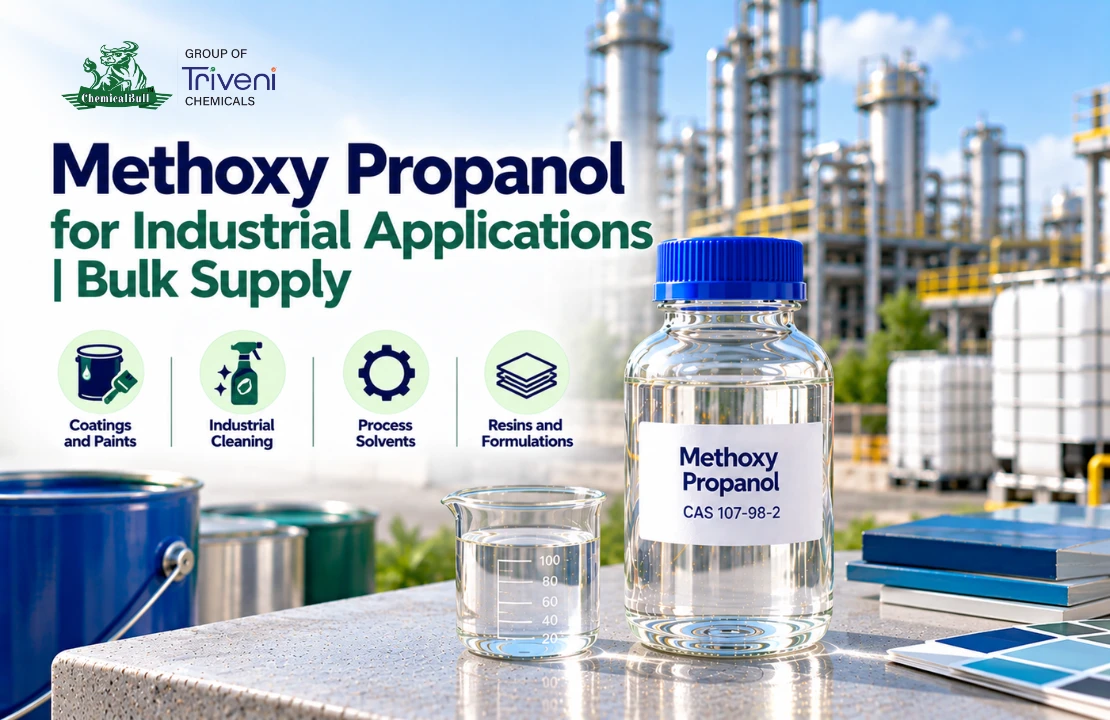
Methoxy Propanol for Industrial Applications: Bulk Supply Support
Methoxy Propanol, also known as Propylene Glycol Methyl Ether (PGME), is a fast-to-medium evaporating, water-miscible solvent used across coatings, inks, cleaners, adhesives, and resin systems. It dissolves a wide range of resins while mixing freely with water and many organic solvents, which makes it a flexible choice for both solvent-based and water-based formulations.
Because purity and isomer content affect solvent performance and odor, sourcing methoxy propanol from a dependable supplier helps manufacturers keep formulations consistent from batch to batch. Chemical Bull supplies Methoxy Propanol in bulk quantities with competitive pricing for industrial buyers.
Chemical Identity & Properties
|
Property |
Detail |
|
CAS Number |
107-98-2 (1-methoxy-2-propanol, the main commercial isomer) |
|
Chemical Formula |
C₄H₁₀O₂ |
|
Molar Mass |
90.12 g/mol |
|
Appearance |
Clear, colorless liquid with a mild ether-like odor |
|
Boiling Point |
About 120°C (248°F) |
|
Flash Point |
About 32°C (90°F), a flammable liquid |
|
Solubility |
Fully miscible with water and many organic solvents |
What Is Methoxy Propanol?
Methoxy Propanol is a propylene-based glycol ether, made by reacting propylene oxide with methanol. Commercial grades are mostly the 1-methoxy-2-propanol (alpha) isomer, with only a small amount of the beta isomer. It belongs to the "P-series" of glycol ethers, which are generally regarded as having a more favorable toxicity profile than some ethylene-based "E-series" glycol ethers such as 2-ethoxyethanol, one reason many formulators prefer it.
Industrial Applications of Methoxy Propanol
- Paints and Coatings: Used as a solvent and coupling agent in water-based and solvent-based paints, helping resins stay dissolved and films form evenly.
- Printing Inks: Controls drying speed and keeps pigments and resins well dispersed in flexographic and gravure inks.
- Industrial and Household Cleaners: Acts as a coupling solvent that helps dissolve grease and keeps surfactants and water mixed in cleaning products.
- Resins and Adhesives: Dissolves acrylic, epoxy, and polyurethane resins and helps adjust viscosity and open time.
- Textile and Dye Formulations: Used as a solvent carrier in dye and finishing formulations.
- Agrochemical Formulations: Serves as a co-solvent that helps keep active ingredients dissolved in liquid concentrates.
- Electronics Cleaning: Used in some cleaning and processing steps where a clean-evaporating, water-miscible solvent is needed.
- Chemical Intermediate: A starting material for making Propylene Glycol Methyl Ether Acetate (PGMEA), widely used in coatings and electronics.
Why Formulators Choose Methoxy Propanol
|
Factor |
Why It Matters |
|
Water Miscibility |
Works in both water-based and solvent-based systems |
|
Strong Solvency |
Dissolves many resins, oils, and organic materials |
|
Balanced Evaporation |
Dries faster than heavier glycol ethers but not as fast as light alcohols |
|
Favorable Profile |
Propylene-based glycol ethers are often preferred over some ethylene-based types |
|
Good Coupling Ability |
Keeps water, oils, and surfactants mixed in cleaners and coatings |
Methoxy Propanol vs. Other Glycol Ether Solvents
|
Solvent |
Key Characteristic |
Typical Role |
|
Methoxy Propanol |
Faster evaporation, water miscible, P-series |
Coatings, inks, cleaners, intermediate for PGMEA |
|
Ethylene Glycol Monobutyl Ether |
Slower evaporation, strong grease cutting |
Cleaners, paints, and coating formulations |
|
Diethylene Glycol Monobutyl Ether |
Slower still, good coalescing effect |
Water-based coatings and heavy-duty cleaners |
|
Triethylene Glycol Monobutyl Ether |
Very high boiling and slow evaporating |
Specialty coatings and extended-open-time systems |
The right choice depends on the drying speed, solvency, and regulatory profile your product needs.
How Methoxy Propanol Works as a Coupling Solvent
Many cleaners and water-based coatings contain both water and oily or resin-based ingredients that do not mix well alone. Methoxy Propanol bridges the gap:
- Dissolves the Oily Phase: Its ether group helps dissolve resins, oils, and grease.
- Mixes with Water: Its alcohol group makes it fully water-miscible, so it blends into the water phase.
- Stabilizes the Formula: The mixture stays clear and uniform instead of separating during storage.
- Controls Drying: Its moderate evaporation rate helps films level out before they dry.
Manufacturing Process Overview
Methoxy Propanol is produced by reacting propylene oxide with methanol in the presence of a catalyst. The reaction mainly gives 1-methoxy-2-propanol, along with a small amount of the 2-methoxy-1-propanol isomer, and the product is then purified by distillation to reach the required assay. Part of the output is further reacted with acetic acid to make PGMEA, which is why Methoxy Propanol and PGMEA markets are closely linked.
Grade Selection Guidance
|
Application |
What to Prioritize |
|
Paints and coatings |
High purity and low water content for predictable film formation |
|
Printing inks |
Low odor and consistent evaporation rate |
|
Cleaners |
Good coupling performance and cost efficiency |
|
Electronics and intermediate use |
High assay and tight control of isomer ratio and impurities |
What to Check When Sourcing Methoxy Propanol in Bulk
- Assay and Isomer Content: Confirm the alpha isomer content, since it affects performance and odor.
- Water Content: Request moisture specifications, especially for coatings and resin applications.
- Batch Documentation: Request a Certificate of Analysis (CoA) and Safety Data Sheet (SDS) for every shipment.
- Packaging Options: Confirm drums, IBC totes, or bulk tanker delivery that match your storage setup.
- Reliable Lead Times: Continuous production needs predictable delivery, so confirm the supplier's track record.
Storage and Handling Considerations
Methoxy Propanol is a flammable liquid, so there should be stored in tightly closed containers in a cool, well-ventilated area away from heat, sparks, and open flames. Use grounded equipment during transfer and keep it away from strong oxidizers. Gloves, eye protection, and good ventilation are recommended, since vapors at high concentrations can cause drowsiness and eye or throat irritation. Always review the current Safety Data Sheet and follow applicable local regulations for flammable liquids and solvent emissions.
Supply Chain and Sourcing Considerations
- Raw Material Linkage: Methoxy Propanol is made from propylene oxide and methanol, so pricing often follows those feedstock markets.
- Lead Time Planning: Plan reorders ahead of production schedules, especially for bulk tanker deliveries.
- Volume-Based Pricing: Ask about tiered pricing for larger recurring orders to stabilize costs.
- Consistent Grades: Staying with the same grade and supplier helps keep solvent performance predictable.
Common Buyer Mistakes to Avoid
- Ignoring Isomer and Purity Data: Off-spec material can change odor and evaporation behavior.
- Overlooking Water Content: Excess moisture can cause cloudiness or poor film formation in coatings.
- Skipping Batch Documentation: A generic data sheet does not confirm that the delivered batch meets your specification.
- Underestimating Flammability Controls: Storage and transfer must be set up for a flammable liquid.
Frequently Asked Questions
-
What is Methoxy Propanol used for?
It is used as a solvent and coupling agent in paints, coatings, inks, cleaners, adhesives, and resin systems. -
Is Methoxy Propanol the same as PGME?
Yes, Methoxy Propanol is also known as Propylene Glycol Methyl Ether, or PGME. -
Is Methoxy Propanol soluble in water?
Yes, it is fully miscible with water and many organic solvents. -
Is Methoxy Propanol flammable?
Yes, it is a flammable liquid and must be stored and handled away from heat and ignition sources. -
Does Chemical Bull supply Methoxy Propanol in bulk?
Yes, Chemical Bull supplies Methoxy Propanol in bulk quantities with competitive pricing.
Conclusion
Methoxy Propanol gives formulators a water-miscible, strong-solvency option for coatings, inks, cleaners, and resin systems. Sourcing it from a supplier with consistent purity, clear documentation, and reliable bulk supply helps industrial buyers keep their formulations stable and their production running smoothly.
Comment Section