Chemical Bull
35
30-Oct-2026
Lauryl Glucoside for Industrial Applications: Uses and Benefits
Introduction
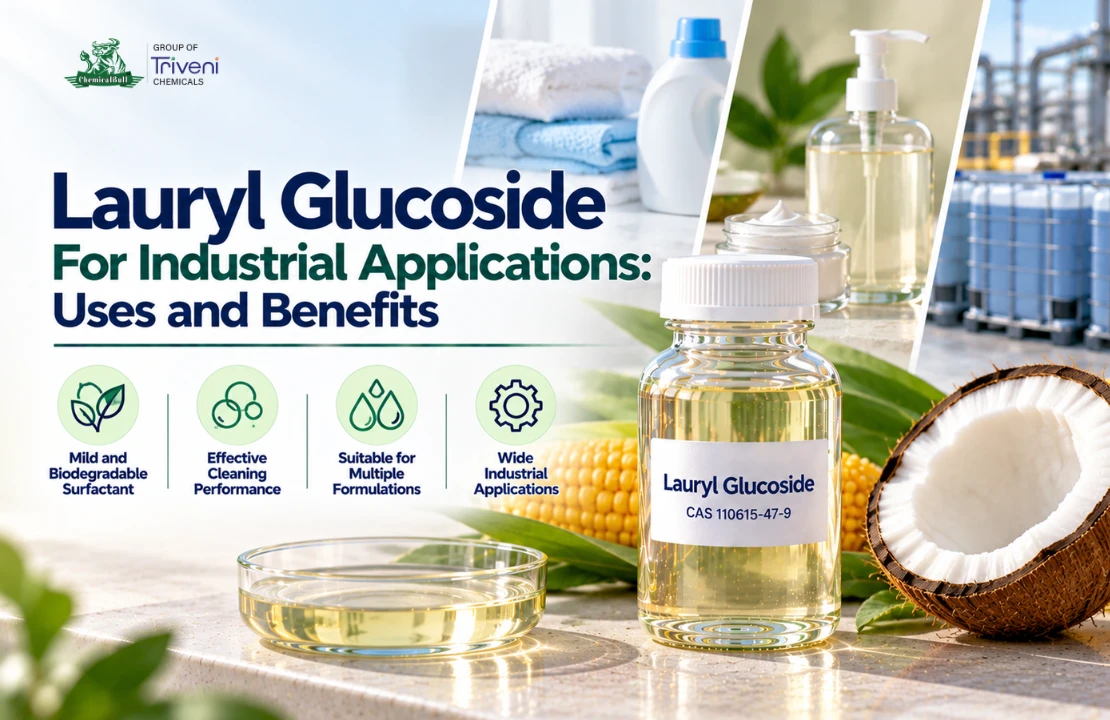
Lauryl Glucoside is a non-ionic surfactant widely used in personal care, home care and industrial cleaning formulations. It belongs to the alkyl polyglucoside (APG) family and is generally produced using glucose and fatty alcohols derived from vegetable-based raw materials such as coconut or palm kernel oil.
It is valued for its cleansing, foaming, wetting and emulsifying properties. Lauryl Glucoside is particularly useful in formulations where effective cleansing, foam performance and compatibility with other surfactants are important.
ChemicalBull supports industrial chemical sourcing requirements by connecting buyers with suitable raw material supply options for personal care, home care and industrial applications.
Quick Answer: What Is Lauryl Glucoside Used For?
Lauryl Glucoside is primarily used as a non-ionic surfactant in shampoos, face washes, body washes, liquid hand soaps, dishwashing liquids, laundry detergents and hard-surface cleaners. It helps remove dirt and oily residues, supports foam formation and improves the cleansing performance of surfactant blends.
What Is Lauryl Glucoside?
Lauryl Glucoside is an alkyl polyglucoside surfactant identified by CAS number 110615-47-9. It is produced through a process involving glucose and lauryl alcohol, which is generally derived from vegetable-based fatty alcohol sources.
It is commonly supplied as a concentrated aqueous liquid or paste. Commercial products may contain approximately 50–55% active matter, although the exact concentration and specifications vary by supplier and grade.
As a non-ionic surfactant, Lauryl Glucoside does not carry an electrical charge in water. This characteristic contributes to its compatibility with various other surfactant types and makes it useful in different cleansing formulations.
Properties of Lauryl Glucoside
Lauryl Glucoside offers several properties that make it useful in industrial and commercial formulations.
|
Property |
Description |
|
Chemical name |
Lauryl Glucoside |
|
CAS number |
110615-47-9 |
|
Surfactant type |
Non-ionic |
|
Chemical family |
Alkyl Polyglucosides (APGs) |
|
Physical appearance |
Typically cloudy, viscous liquid or paste |
|
Solubility |
Water-soluble, depending on grade and conditions |
|
Main functions |
Cleansing, foaming, wetting and emulsifying |
|
Raw material origin |
Generally glucose and vegetable-derived fatty alcohols |
|
Biodegradability |
Readily biodegradable grades are commercially available |
Actual appearance, active matter, pH, viscosity and other specifications depend on the supplied grade. Buyers should check the supplier's Technical Data Sheet (TDS) and Certificate of Analysis (COA).
Industrial Applications of Lauryl Glucoside
Personal Care Products
Lauryl Glucoside is used in personal care formulations because of its cleansing and foaming properties. It can function as a primary or secondary surfactant depending on the formulation.
Common applications include:
-
Shampoos and sulfate-free cleansing formulations
-
Face washes and facial cleansers
-
Body washes and shower gels
-
Liquid hand soaps
-
Baby cleansing products
-
Gentle skin and hair cleansing products
It is often combined with other surfactants to achieve the required cleansing performance, foam profile and formulation viscosity.
Home Care and Household Cleaning
Lauryl Glucoside is used in household cleaning products where effective cleaning and foam performance are required.
Common applications include:
-
Dishwashing liquids
-
Laundry detergents
-
All-purpose household cleaners
-
Floor cleaning formulations
-
Glass and hard-surface cleaners
-
Liquid handwashing products
Its wetting and cleansing properties help surfactant formulations spread across surfaces and remove certain oily and particulate residues.
Industrial Cleaning Formulations
In industrial cleaning, Lauryl Glucoside can be incorporated into selected formulations as a wetting, cleansing or emulsifying surfactant.
Potential applications include:
-
General-purpose industrial cleaners
-
Equipment and surface cleaning products
-
Institutional cleaning formulations
-
Water-based cleaning concentrates
-
Selected automotive cleaning products
Its suitability depends on the type of soil, cleaning conditions, compatibility requirements and the performance of the complete surfactant system.
Institutional and Commercial Cleaning
Lauryl Glucoside can also be used in cleaning products developed for commercial facilities, kitchens, offices and other institutional environments.
It supports formulations such as floor cleaners, multipurpose surface cleaners and dishwashing products where foam, wetting and cleaning performance are important.
Benefits of Lauryl Glucoside in Personal Care and Cleaning Formulations
Supports Effective Cleansing
Lauryl Glucoside helps remove dirt, excess oil and surface impurities from skin, hair and hard surfaces. Its surfactant properties make it useful in shampoos, face washes, body washes and household cleaning products.
Improves Foam Formation
It contributes to foam generation in cleansing formulations. When combined with suitable co-surfactants, it can help develop the desired foam volume and texture in shampoos, liquid soaps and dishwashing liquids.
Helps Develop Mild Cleansing Formulations
Lauryl Glucoside is commonly used in mild cleansing systems, particularly when blended with suitable amphoteric and other non-ionic surfactants. It can help formulators develop cleansing products designed for regular use. Actual skin mildness depends on the complete formulation and requires appropriate testing.
Enhances Wetting and Surface Cleaning
Its surface-active properties help water spread across surfaces, supporting the removal of dirt and oily residues. This makes it useful in dishwashing liquids, multipurpose cleaners and selected industrial cleaning formulations.
Supports Surfactant Blending
Lauryl Glucoside is compatible with many suitable anionic, amphoteric and non-ionic surfactants. It can be blended with ingredients such as Cocamidopropyl Betaine and other glucoside surfactants to achieve the required cleansing and foaming characteristics.
Offers Renewable Raw Material Options
Commercial Lauryl Glucoside is commonly manufactured using glucose and vegetable-derived fatty alcohols. This makes it relevant to formulations designed around renewable raw material inputs. The actual raw material origin should be confirmed through supplier documentation.
Biodegradability
Readily biodegradable commercial grades are available. This characteristic makes Lauryl Glucoside relevant to certain cleaning formulations developed with environmental considerations. Buyers should verify biodegradability claims using the specific grade's supporting documentation and applicable test standards.
How Lauryl Glucoside Improves Different Formulations
|
Formulation |
Contribution of Lauryl Glucoside |
|
Shampoo |
Supports cleansing and foam formation |
|
Face wash |
Helps remove surface oil and impurities |
|
Body wash |
Contributes to cleansing and foam properties |
|
Liquid hand wash |
Supports dirt removal and lather formation |
|
Dishwashing liquid |
Helps remove grease and food residues |
|
Household cleaner |
Supports wetting and surface cleaning |
|
Industrial cleaner |
Functions as a surfactant in selected water-based cleaning systems |
The performance of Lauryl Glucoside depends on its concentration, the other ingredients used and the intended application.
Lauryl Glucoside Compatibility with Other Surfactants
Lauryl Glucoside is frequently used in surfactant blends to obtain the desired cleansing, foaming and formulation properties.
|
Surfactant |
Formulation role |
Potential application |
|
Amphoteric co-surfactant |
Shampoos, body washes and liquid cleansers |
|
|
Non-ionic surfactant |
Face washes and household cleaners |
|
|
Non-ionic surfactant |
Personal care and cleansing products |
|
|
Sodium Laureth Sulfate (SLES) |
Anionic surfactant |
Shampoos and household cleaning formulations |
The final performance depends on surfactant concentration, active matter, pH, electrolyte content and the overall formulation. Compatibility should always be confirmed through laboratory testing.
Difference Between Lauryl Glucoside, Decyl Glucoside and Coco Glucoside
Lauryl Glucoside, Decyl Glucoside and Coco Glucoside belong to the alkyl polyglucoside family. However, their fatty alcohol chain-length distributions and commercial specifications can differ, influencing their formulation characteristics.
|
Parameter |
Lauryl Glucoside |
Decyl Glucoside |
Coco Glucoside |
|
Surfactant type |
Non-ionic |
Non-ionic |
Non-ionic |
|
Raw material basis |
Lauryl fatty alcohol |
Decyl fatty alcohol |
Mixed fatty alcohols |
|
Typical role |
Cleansing and foam support |
Cleansing and wetting |
Cleansing and foam support |
|
Common applications |
Shampoos, body washes and cleaners |
Face washes and liquid cleansers |
Personal care and household cleaners |
|
Formulation suitability |
Depends on grade and formulation |
Depends on grade and formulation |
Depends on grade and formulation |
These surfactants are not direct substitutes in every formulation. Manufacturers should compare active matter, viscosity, pH, foam characteristics and compatibility before selecting a suitable grade.
Factors Affecting Lauryl Glucoside Performance in Formulations
Surfactant Concentration
The concentration of Lauryl Glucoside influences cleansing performance, foam generation and the overall surfactant balance. The required quantity depends on the product type, desired active matter and other ingredients in the formulation.
pH of the Formulation
The final formulation pH can affect product stability, compatibility and performance. Manufacturers should check the recommended pH range of the selected commercial grade and adjust the finished product according to its intended application.
Water Hardness
Water containing calcium and magnesium ions can influence the performance of cleaning formulations. Lauryl Glucoside can be used in different water-based systems, but finished-product performance should be evaluated under the expected water conditions.
Temperature During Processing
Temperature can influence the viscosity, handling and incorporation of Lauryl Glucoside during manufacturing. Following the supplier's recommended processing conditions helps maintain consistent product quality.
Compatibility with Other Ingredients
Preservatives, fragrances, salts, surfactants and other formulation ingredients can influence the stability and physical properties of the final product. Compatibility testing is recommended before commercial production.
Quality Testing and Specifications of Lauryl Glucoside
Quality testing is important when selecting Lauryl Glucoside for industrial manufacturing. Different suppliers may offer products with different active matter concentrations and physical properties.
Important quality parameters include:
-
Active Matter: Indicates the concentration of active surfactant in the supplied material.
-
pH Value: Helps determine whether the grade is suitable for the intended formulation.
-
Appearance: Checks the product's colour, clarity and physical consistency.
-
Viscosity: Provides information about the material's flow and handling characteristics.
-
Moisture Content: Helps evaluate the water content of the supplied grade.
-
Microbiological Quality: Particularly relevant for grades intended for personal care applications.
Buyers should review the supplier's Certificate of Analysis (COA) and Technical Data Sheet (TDS) to confirm that the product meets their manufacturing requirements.
Factors to Consider When Selecting Lauryl Glucoside
Active Matter
Check the active surfactant concentration before purchasing. Different commercial grades may contain different amounts of active material and water.
pH
Lauryl Glucoside grades may have an alkaline pH in concentrated form. Formulators should check the supplier's specifications and adjust the finished formulation to meet its intended application requirements.
Viscosity and Appearance
The material may be supplied as a cloudy, viscous liquid or paste. Temperature and storage conditions can influence its viscosity and physical appearance.
Formulation Compatibility
Test compatibility with other surfactants, preservatives, fragrances, salts and other formulation ingredients before commercial production.
Quality Documentation
Before placing an industrial order, request relevant documentation, including:
-
Technical Data Sheet (TDS)
-
Safety Data Sheet (SDS)
-
Certificate of Analysis (COA)
-
Active matter specification
-
Applicable quality and regulatory documentation
Storage and Handling of Lauryl Glucoside
Proper storage and handling help maintain the quality of Lauryl Glucoside during transportation and industrial use.
-
Store the product in its original, tightly closed container.
-
Protect it from excessive heat, direct sunlight and contamination.
-
Follow the supplier's recommended storage temperature.
-
Avoid unnecessary exposure to moisture and incompatible materials.
-
Use appropriate personal protective equipment according to the SDS.
-
Prevent direct contact with eyes and prolonged skin exposure.
Storage conditions should be based on the specific commercial grade and supplier recommendations.
Industrial Buying Guide for Lauryl Glucoside
Industrial buyers should evaluate several factors before selecting a Lauryl Glucoside supplier.
Application requirements: Identify whether the material is intended for personal care, household cleaning or industrial cleaning formulations.
Grade and specifications: Confirm the required active matter, pH, appearance, viscosity and other technical parameters.
Packaging: Check available packaging options according to the required quantity and storage arrangements.
Documentation: Request the COA, TDS and SDS to verify product quality and handling requirements.
Supply consistency: Evaluate product availability, delivery schedules and the supplier's ability to meet recurring requirements.
Why Choose ChemicalBull for Lauryl Glucoside?
ChemicalBull is a chemical trader and reseller supporting personal care, home care and industrial raw material sourcing requirements. We assist buyers with Lauryl Glucoside sourcing, bulk supply enquiries, product specifications and available technical documentation.
Lauryl Glucoside Bulk Supply
ChemicalBull supports Lauryl Glucoside requirements for shampoo, face wash, body wash, dishwashing liquid and industrial cleaning formulations. Buyers can share their required grade, quantity and application to check product availability and supply options.
Frequently Asked Questions
1. What is the main use of Lauryl Glucoside?
Lauryl Glucoside is mainly used as a non-ionic surfactant in personal care products, household cleaning formulations and industrial cleaning products.
2. Is Lauryl Glucoside an anionic or non-ionic surfactant?
Lauryl Glucoside is a non-ionic surfactant belonging to the alkyl polyglucoside family.
3. Is Lauryl Glucoside used in shampoo manufacturing?
Yes. It is used as a primary or secondary cleansing surfactant in selected shampoo formulations, including sulfate-free products.
4. Can Lauryl Glucoside be used in dishwashing liquid?
Yes. It can be incorporated into dishwashing formulations to support cleansing, wetting and foam performance.
5. Is Lauryl Glucoside biodegradable?
Readily biodegradable commercial grades are available. Buyers should verify the specific grade's biodegradability data and supporting documentation.
6. What is the CAS number of Lauryl Glucoside?
The commonly referenced CAS number for Lauryl Glucoside is 110615-47-9.
7. Can Lauryl Glucoside be combined with Cocamidopropyl Betaine?
Yes. Lauryl Glucoside can be combined with suitable Cocamidopropyl Betaine grades in cleansing formulations. The final blend should be tested for viscosity, foam, pH and stability.
8. What is the difference between Lauryl Glucoside and Decyl Glucoside?
Both are non-ionic alkyl polyglucoside surfactants. They differ mainly in their fatty alcohol chain length, which can influence their formulation characteristics and suitability for different cleansing applications.
9. Is Lauryl Glucoside suitable for industrial cleaning?
Yes. It can be used in selected water-based industrial cleaning formulations as a cleansing, wetting or emulsifying surfactant. Its suitability depends on the cleaning application and complete formulation.
Comment Section