Chemical Bull
3717
10-Aug-2023
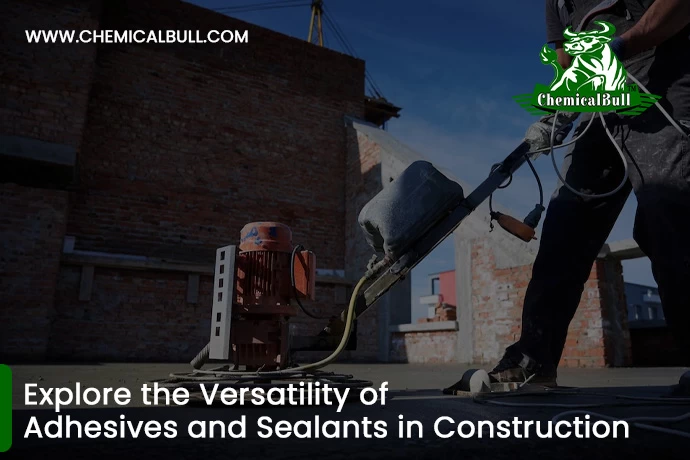
Construction today relies heavily on the latest chemical construction products to ensure strong, durable, and long-term reliability. Among the most important of these materials are adhesives and sealants. They are used extensively across residential, commercial, and industrial infrastructure to bond materials, seal joints, prevent leakage, and protect structures from environmental damage.
As construction standards rise, the demand for industrial-grade, high-performance sealing and bonding solutions has increased substantially. It's whether structural glass in high-rise structures and bridges, expansion joints for bridges, plumbing installation, and industrial flooring are essential to providing safety, efficiency, and longer service lives.
Understanding Adhesives and Sealants in Construction
Although they are commonly employed in conjunction, both sealants and adhesives serve distinct purposes in the construction industry.
Adhesives are specially engineered materials designed to permanently bond two surfaces together. They create strong structural connections and distribute stress evenly across bonded areas, often replacing traditional mechanical fasteners.
Sealants, on the other hand, are formulated to fill gaps and joints. Their primary role is to prevent the entry of water, air, dust, and chemicals while allowing flexibility and controlled movement between building components.
In simple terms:
- Adhesives provide structural bonding strength.
- Sealants provide joint protection and flexibility.
Both are essential components of modern construction chemical solutions.
Key Performance Characteristics – Adhesives and Sealants in Construction
In industrial construction projects, performance is not optional — it is critical. The materials selected must meet strict technical and environmental standards.
Adhesive Performance Requirements
Construction adhesives are expected to deliver:
- High shear and tensile strengths
- A strong bond to surfaces like steel, concrete, glass, and composites
- Resistance to moisture and chemicals
- Stability of thermal stability in changing temperatures
- Long-term durability under load
Sealant Performance Requirements
Sealants must balance adhesion with flexibility. They should provide:
- Excellent movement capability
- UV and weather resistance
- Reliable waterproofing
- Strong bonding to various substrates
- Resistance to aging, cracking, and shrinkage
To attain these properties, advanced formulations usually include Silane coupling agents as well as colloidal silica special resins. The quality of the raw material directly influences the overall performance and longevity of the product.
Types of Adhesives Used in Construction
Different construction settings require different adhesive technologies that are based on the requirements of structural construction and the environmental conditions.
Epoxy Adhesives
Epoxy systems are used extensively in heavy construction and civil engineering. They are renowned for their superior mechanical strength, as well as chemical resistance. They are often used in:
- Reinforcement anchoring
- Crack injection and structural repair
- Heavy-duty structural bonding
- Industrial flooring systems
Epoxy adhesives are typically selected when load-bearing capacity and long-term durability are key priorities.
Polyurethane Adhesives
Polyurethane adhesives are a distinctive combination of flexibility and strength. They are often used to:
- Wood-to-concrete bonding
- Installation of insulation panels
- Prefabricated construction components
- Flexible joint bonding
When comparing epoxy vs polyurethane adhesive for construction, epoxy provides superior strength in static structural applications, while polyurethane performs better in environments where movement and vibration are present.
Acrylic and Hybrid Adhesives
These systems are used in applications that require faster curing times or specific handling characteristics. They are commonly selected for specialty bonding and fast-track construction projects.
Types of Sealants Used in Construction
Sealants are equally important in maintaining structural integrity and protecting buildings from environmental exposure.
Silicone Sealants
Sealants are equally important for keeping structural integrity intact and securing structures from exposure to environmental elements.
- Façade glazing systems
- Roofing joints
- Sanitary installations
- Exterior expansion joints
Their ability to withstand weathering makes them ideal for exterior applications.
Polyurethane Sealants
Polyurethane sealants are commonly applied in:
- Expansion joints
- Concrete joints
- Plumbing construction works
- Industrial flooring sealing
They provide strong adhesion and good movement accommodation.
Acrylic and Polysulfide Sealants
These are generally used in interior applications and specialized infrastructure environments where chemical resistance and cost efficiency are important considerations.
Adhesives and Sealants in Construction Applications
Industrial-grade adhesives and sealants are used across a wide range of infrastructure and building projects, including:
- Bridge expansion joints
- Linings for tunnels
- Structural glazing systems
- Commercial facades
- HVAC duct sealing
- Plumbing installations
- Precast component bonding
In civil engineering, epoxy adhesives are typically used to strengthen structural integrity, anchor heavy equipment, and repair concrete cracks. Sealants play a crucial role in plumbing systems, preventing leaks and protecting joints from moisture-related damage.
The range of applications available highlights the importance and versatility of adhesives and sealants in today's construction chemicals.
Adhesive vs Sealant – Functional Comparison
Feature | Adhesive | Sealant |
Primary Purpose | Bonding materials | Filling and sealing joints |
Strength | High structural strength | Moderate strength |
Flexibility | Limited (varies by type) | High flexibility |
Movement Accommodation | Minimal | Excellent |
Waterproofing | Secondary function | Primary function |
Understanding these functional differences enables construction professionals to make informed material selections for each specific project requirement.
Why Sealants Are Essential in Construction
The construction industry is constantly exposed to environmental stresses, such as temperature fluctuations, moisture, and structural movement. Without reliable sealing systems, the infrastructure is vulnerable to
- Water ingress
- Corrosion
- Surface cracking
- Premature structural deterioration
Sealants protect joints while allowing controlled expansion and contraction. This balance between flexibility and protection significantly extends the lifespan of buildings and reduces long-term maintenance costs.
Role of Raw Materials in Adhesive and Sealant Formulation
High-performance bonding and sealing systems depend on carefully selected raw materials that directly influence strength, curing behavior, and durability. In advanced construction formulations, Epoxy Resin is widely used as the base component for structural adhesives due to its excellent mechanical strength and chemical resistance. To enhance viscosity control and reinforcement properties, materials such as Colloidal Silica are incorporated into both adhesive and sealant systems.
For improved surface bonding and substrate compatibility, Vinyltrimethoxysilane plays a critical role as a coupling agent in modern sealant technologies. Additionally, flow modifiers like Fumed Silica (Aerosil 200) help maintain consistency, prevent sagging, and improve application performance in industrial construction environments.
Consistent raw material quality ensures predictable curing performance, strong adhesion, and long-term durability in demanding infrastructure projects.
Selecting the Right System
Choosing the appropriate adhesive or sealant requires a clear understanding of project requirements. Key factors include:
- Substrate compatibility
- Load-bearing expectations
- Environmental exposure conditions
- Movement requirements
- Desired service life
Utilizing reliable INDUSTRIAL CHEMICALS - sealants and construction adhesives supplier, Chemicalbull(Group of Triveni Chemicals), provides access to technically sound and quality-controlled products that are designed to the specific requirements of your project.
Frequently Asked Questions
What is the difference between adhesive and sealant in construction?
Adhesives are used to bond structurally, and sealants are used to fill joints, block air or water from entering, allowing for flexibility.Which adhesive is best for heavy construction applications?
Epoxy adhesives are widely used due to their excellent quality and strength of compression as well as their chemical resistance.Why are sealants used in buildings?
Sealants protect structures from water ingress and environmental exposure while allowing movement between components.Where are polyurethane adhesives commonly used?
They are used extensively as flooring materials, for insulation installations, and in flexible bonding applications.What are the main types of construction sealants?
Silicone, polyurethane, acrylic, and polysulfide sealants are commonly used depending on project requirements.
Conclusion
Sealants and adhesives have been integral to modern construction techniques. Beyond just sealing and bonding, they also improve structural integrity, guard against environmental harm, and increase the durability of infrastructure projects over time.
From high-strength epoxy systems that are used in civil engineering, to flexible polyurethane solutions and the latest silicon sealants. These substances provide a variety of industrial construction requirements. As building standards continue improve, high-performance bonding as well as sealing technologies will be necessary to create stronger, safer, and more sustainable structures.

Comment Section