Chemical Bull
35
19-Sep-2026
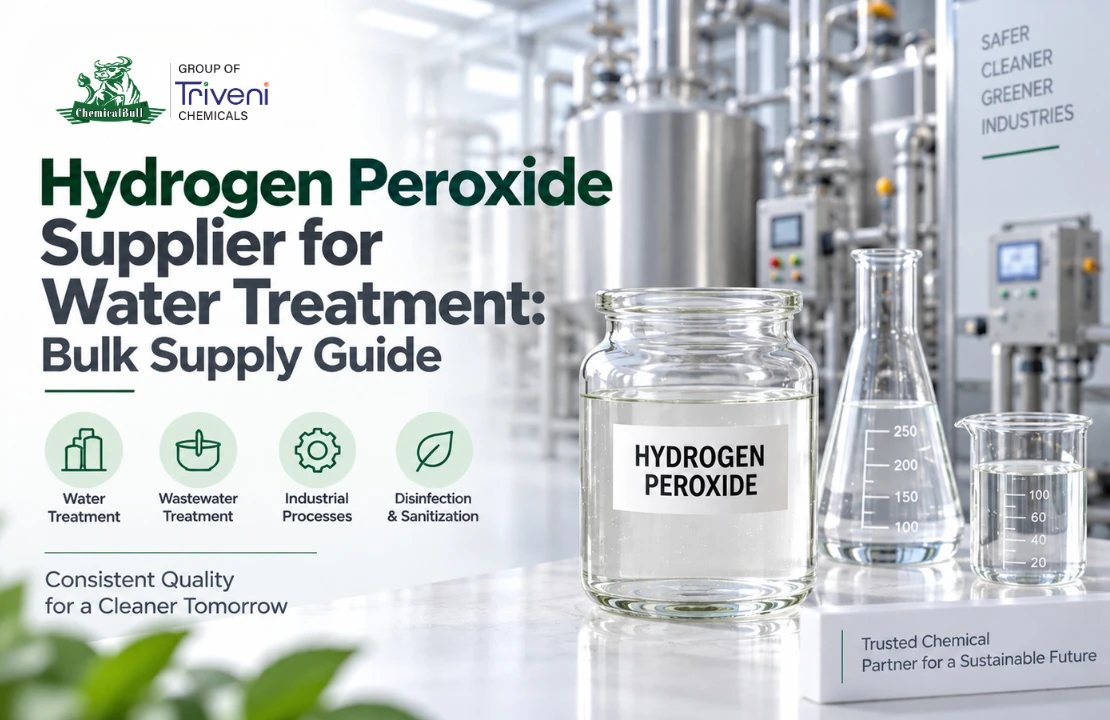
Hydrogen Peroxide is widely used in industrial water and wastewater treatment as an oxidizing agent for sulfide and odor control, iron and manganese oxidation, wastewater polishing, industrial effluent treatment and advanced oxidation processes. Water-treatment plants, industrial ETP operators and manufacturing facilities may require Hydrogen Peroxide regularly in bulk quantities.
For commercial requirements, buyers should select the appropriate concentration, grade and packaging based on their treatment process, storage system and consumption.
Quick Answer
Hydrogen Peroxide (H₂O₂) is used in water and wastewater treatment to oxidize sulfides, reduce odors, support iron and manganese removal, treat selected contaminants and improve difficult industrial effluent. Industrial buyers commonly evaluate 35% and 50% Hydrogen Peroxide depending on their process and dosing system. For bulk sourcing, important details include concentration, quantity, packing, delivery destination, COA and SDS requirements.
Buyers looking for a reliable hydrogen peroxide distributor can share their required grade, quantity and delivery location with ChemicalBull for bulk supply support and quotation assistance.
What Is Hydrogen Peroxide Used for in Water Treatment?
Hydrogen Peroxide, with the chemical formula H₂O₂, is used where controlled oxidation is required during water or wastewater treatment.
Its exact function depends on the contamination and treatment system.
Common applications include:
-
sulfide oxidation
-
odor control
-
iron and manganese oxidation
-
oxidation of selected organic contaminants
-
wastewater polishing
-
advanced oxidation processes
-
industrial effluent treatment
-
process-water treatment
Because industrial treatment systems often operate continuously, Hydrogen Peroxide can become a regular raw-material requirement for plants using oxidation as part of their treatment process.
Hydrogen Peroxide for Wastewater Treatment
Industrial wastewater can contain dissolved contaminants, sulfides, residual organic compounds, color and odor-causing substances.
Hydrogen Peroxide may be introduced during an oxidation stage to help treat these contaminants before discharge, reuse or further downstream treatment.
Industries that may use Hydrogen Peroxide in wastewater-treatment systems include:
-
chemical manufacturing
-
textile processing
-
pharmaceuticals
-
pulp and paper
-
food processing
-
metal processing
-
specialty chemical manufacturing
Manufacturing companies operating captive Effluent Treatment Plants (ETPs) can be significant commercial users because treatment demand generally continues alongside plant production.
Hydrogen Peroxide for Sulfide and Odor Control
Hydrogen sulfide can create strong odor, corrosion and operational problems in wastewater systems.
Hydrogen Peroxide can oxidize sulfides under suitable treatment conditions, making it useful for selected:
-
industrial wastewater tanks
-
ETP systems
-
wastewater collection systems
-
process-water streams
-
municipal wastewater applications
Plants with continuous sulfide loading or recurring odor problems may require regular Hydrogen Peroxide dosing.
Hydrogen Peroxide for Iron and Manganese Treatment
Hydrogen Peroxide can support oxidation of dissolved iron and manganese.
Once oxidized, these metals may be removed more effectively by suitable downstream filtration or separation processes.
Performance depends on factors such as:
-
pH
-
iron or manganese concentration
-
water composition
-
contact time
-
filtration system
-
competing contaminants
The Hydrogen Peroxide requirement should therefore be determined according to the actual water chemistry and treatment design.
Hydrogen Peroxide in Advanced Oxidation Processes
Hydrogen Peroxide is also used in selected Advanced Oxidation Processes (AOPs).
In these treatment systems, H₂O₂ can be combined with other technologies to generate highly reactive oxidizing species capable of breaking down difficult organic contaminants.
AOP applications can include:
-
difficult industrial wastewater
-
color reduction
-
selected organic pollutants
-
wastewater polishing
-
chemical-process effluent
-
persistent contaminant treatment
Advanced oxidation is highly process-specific, so the required Hydrogen Peroxide concentration and dosage should be determined according to treatment objectives and system design.
Why Water-Treatment Plants Use Hydrogen Peroxide
Hydrogen Peroxide offers several useful properties for industrial treatment systems.
Strong Oxidizing Action
It can oxidize selected organic and inorganic contaminants under suitable treatment conditions.
Multiple Water-Treatment Applications
The same oxidizing chemical can be considered for sulfide treatment, odor control, metal oxidation and advanced oxidation depending on the plant requirement.
Suitable for Controlled Dosing
Industrial plants can incorporate Hydrogen Peroxide into continuous or controlled chemical dosing systems.
Simple Decomposition Products
Under suitable conditions, Hydrogen Peroxide ultimately decomposes mainly into water and oxygen, which can be useful where treatment operators want to limit the introduction of additional salts.
Hydrogen Peroxide for Industrial ETP Plants
Industrial ETPs are an important application area for bulk Hydrogen Peroxide.
Manufacturing facilities may use it for:
-
wastewater oxidation
-
sulfide treatment
-
odor control
-
wastewater polishing
-
treatment of difficult industrial effluent
-
selected process-correction requirements
Typical decision-makers can include ETP managers, utility teams, environmental departments, plant procurement teams, water-treatment contractors and chemical dosing companies.
Plants with continuous wastewater generation may require repeat deliveries based on weekly, monthly or annual consumption.
Hydrogen Peroxide 35% vs 50% for Water Treatment
Hydrogen Peroxide is commercially available in different concentrations. 35% and 50% Hydrogen Peroxide solutions are commonly evaluated for industrial applications depending on plant requirements and supplier availability.
35% Hydrogen Peroxide
A 35% solution may be suitable where the plant's treatment, storage and dosing infrastructure is designed around a lower active concentration.
50% Hydrogen Peroxide
A 50% solution contains more active H₂O₂ per unit of product.
For high-consumption industrial operations, this can reduce the total liquid volume that must be transported and stored compared with a more dilute solution.
However, concentration should be selected according to:
-
treatment application
-
storage infrastructure
-
dosing equipment
-
plant consumption
-
safety procedures
-
handling capability
A higher concentration is not automatically the better option for every treatment plant.
Hydrogen Peroxide Water Treatment Dosage
There is no universal Hydrogen Peroxide dosage for water or wastewater treatment.
The required dose can depend on:
-
contaminant type
-
contaminant concentration
-
water flow
-
pH
-
temperature
-
reaction or contact time
-
presence of other chemicals
-
required treatment result
Industrial facilities should determine dosage using appropriate water analysis, process calculations, treatment trials or engineering guidance.
Using a fixed general dosage without considering actual water conditions may result in inadequate treatment or unnecessary chemical consumption.
Is Hydrogen Peroxide Safe for Water Treatment?
Hydrogen Peroxide can be used in industrial water-treatment systems when appropriate storage, handling and dosing controls are followed.
Commercial Hydrogen Peroxide is a strong oxidizer. Plants should review the current SDS and establish suitable procedures for:
-
storage
-
transfer
-
dosing
-
compatible materials of construction
-
PPE
-
ventilation
-
spill response
-
prevention of contamination
Higher-concentration solutions require particularly careful handling and suitable plant infrastructure.
How to Buy Hydrogen Peroxide for Water Treatment in Bulk
For bulk purchasing, water-treatment companies should evaluate the technical requirement and supply arrangement together.
|
Buying Factor |
Why It Matters |
|
Concentration |
Determines the active H₂O₂ content |
|
Grade / Specification |
Confirms suitability for the application |
|
COA |
Supports quality verification |
|
SDS |
Provides handling and safety information |
|
Quantity / MOQ |
Affects commercial planning |
|
Packaging |
Must suit storage and consumption |
|
Lead Time |
Helps maintain uninterrupted treatment |
|
Delivery Capability |
Important for regular plant supply |
|
Consumption Frequency |
Helps plan repeat deliveries |
Bulk Packaging
Depending on concentration, quantity and supplier capability, commercial Hydrogen Peroxide may be supplied in suitable:
-
drums
-
IBCs
-
larger bulk quantities
-
tanker supply where applicable
Plants should choose packaging according to storage capacity, unloading facilities and consumption rate.
Hydrogen Peroxide Bulk Price
Hydrogen Peroxide bulk price can vary according to:
-
concentration
-
order quantity
-
packaging
-
destination
-
freight
-
current availability
-
repeat supply volume
For a useful quotation, buyers should provide:
required concentration + quantity + packing + delivery destination + monthly or annual consumption
Where Can I Buy Hydrogen Peroxide for Water Treatment?
Industrial users should source Hydrogen Peroxide from a supplier that can support the required product specification, documentation, approved packaging and delivery schedule.
Buyers can review Hydrogen Peroxide for product and bulk sourcing requirements.
ChemicalBull supports Hydrogen Peroxide enquiries for:
-
industrial ETP plants
-
wastewater-treatment operators
-
water-treatment companies
-
chemical manufacturing units
-
textile plants
-
pharmaceutical facilities
-
pulp and paper plants
-
environmental-treatment companies
-
plant utility and procurement departments
For regular requirements, buyers can share the application, required concentration, quantity, packaging, destination and expected consumption.
Need Hydrogen Peroxide for water or wastewater treatment? Share your concentration, bulk quantity and delivery destination for supply and quotation support.
Frequently Asked Questions
1. What is Hydrogen Peroxide used for in water treatment?
Hydrogen Peroxide is used as an oxidizing agent for applications including sulfide treatment, odor control, iron and manganese oxidation, wastewater polishing and advanced oxidation processes.
2. Is Hydrogen Peroxide used in wastewater treatment?
Yes. It can be used in industrial wastewater-treatment systems to oxidize selected contaminants, sulfides and odor-causing compounds and to support difficult effluent treatment.
3. What concentration of Hydrogen Peroxide is used for water treatment?
Industrial users may evaluate concentrations such as 35% and 50% depending on their treatment process, storage system, dosing equipment and safety requirements.
4. What is the correct Hydrogen Peroxide dosage for water treatment?
There is no single dosage for every application. The requirement depends on contaminant concentration, water chemistry, pH, flow rate, contact time and treatment objective.
5. Is Hydrogen Peroxide safe for water treatment?
It can be used safely when proper industrial storage, handling, dosing and safety procedures are followed.
6. Where can I buy Hydrogen Peroxide for water treatment?
Industrial buyers can source Hydrogen Peroxide from bulk chemical suppliers capable of supporting the required concentration, COA, SDS, packaging and delivery requirements.
7. Can Hydrogen Peroxide be purchased in bulk?
Yes. Commercial requirements may be supplied in drums, IBCs or larger quantities depending on the concentration, buyer requirement and supplier capability.
8. What affects Hydrogen Peroxide bulk price?
Price can vary according to concentration, quantity, packing, freight, destination, supply frequency and current market availability.
Conclusion
Hydrogen Peroxide is an important oxidizing chemical for industrial water and wastewater treatment, with applications in sulfide and odor control, iron and manganese oxidation, wastewater polishing and advanced oxidation processes.
Treatment plants should select the appropriate concentration and supply format according to their water chemistry, dosing system, storage infrastructure and consumption.
For bulk sourcing, industrial ETP operators, water-treatment companies and manufacturing plants can share their application, concentration, quantity and destination to receive suitable supply and commercial support.

Comment Section