Chemical Bull
62
26-Aug-2026
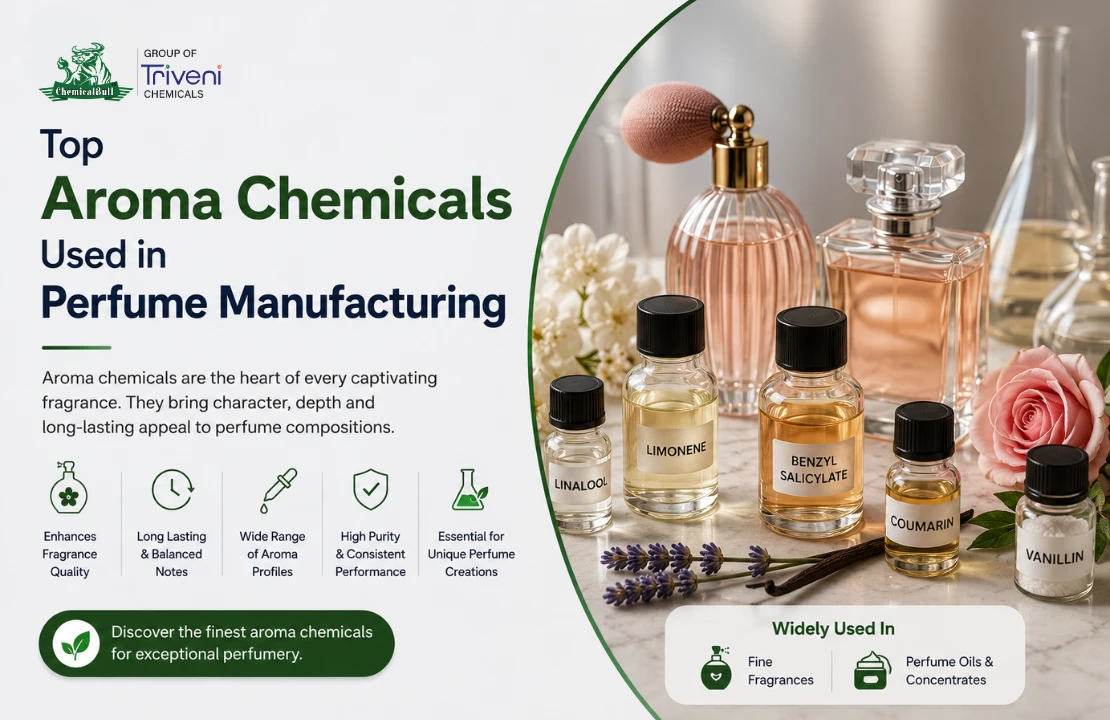
Top Aroma Chemicals Used in Perfume Manufacturing
Perfume manufacturing in the USA continues to grow across fine fragrance, personal care, body sprays and lifestyle scent products. Modern perfumers use a combination of natural extracts, essential oils and aroma chemicals to create floral, woody, musky, amber, fruity, fresh and gourmand fragrance profiles with consistent quality and performance.
Selecting the right perfumery ingredients, perfume chemicals, perfume raw materials and fragrance raw materials helps perfume manufacturers and fragrance houses build stable, repeatable and commercially successful formulations.
This guide covers popular aroma chemicals used in perfume manufacturing, their fragrance profiles, their role in top, heart and base notes, and the importance of fixatives in modern perfumery.
Understanding Aroma Chemicals in Perfume Manufacturing
Aroma chemicals are individual fragrance materials used to create, enhance or modify a perfume composition. They help perfumers build recognizable notes such as rose, jasmine, vanilla, musk, amber, citrus, woods and spices.
Modern perfumery relies on aroma chemicals because they provide batch consistency, controlled odor profiles and greater formulation flexibility. They are commonly blended with natural oils and extracts to create balanced perfumes for fine fragrance, personal care and other scented products.
Popular Perfumery Ingredients and Their Fragrance Profiles
Perfumers work with a broad palette of aroma chemicals to develop different fragrance families. Each ingredient contributes a particular odor profile, note position and formulation effect, allowing the perfumer to control freshness, character, diffusion and depth.
Top 15 Aroma Chemicals Used in Perfume Manufacturing
|
Aroma Chemical |
Odor Profile |
Note Type |
Common Perfume Use |
|
Linalool |
Floral, lavender, slightly citrus |
Top–Heart |
Floral and aromatic perfumes |
|
Linalyl Acetate |
Fresh, lavender, bergamot-like |
Top–Heart |
Citrus and fougère fragrances |
|
Smooth woody, amber, cedar-like |
Base |
Woody and modern perfumes |
|
|
Hedione |
Airy, jasmine-like floral |
Heart |
Floral and fresh fragrances |
|
Phenethyl Alcohol |
Soft rose |
Heart |
Rose and floral accords |
|
Benzyl Salicylate |
Floral, sweet, balsamic |
Heart–Base |
Floral compositions and depth |
|
Vanillin |
Sweet, creamy vanilla |
Base |
Gourmand and amber perfumes |
|
Coumarin |
Tonka, sweet hay, almond-like |
Base |
Fougère and gourmand fragrances |
|
Benzyl Acetate |
Jasmine, fruity-floral |
Heart |
White floral and fruity accords |
|
Geraniol |
Rose, fresh floral |
Heart |
Rose and geranium perfumes |
|
Citronellol |
Rosy, citrus-floral |
Heart |
Fresh floral compositions |
|
Eugenol |
Warm, spicy, clove-like |
Heart–Base |
Spicy and amber fragrances |
|
Alpha-Isomethyl Ionone |
Violet, powdery, woody-floral |
Heart–Base |
Powdery and floral perfumes |
|
Galaxolide |
Clean, soft musk |
Base |
Musk and long-lasting fragrances |
|
Hydroxycitronellal |
Fresh, lily-of-the-valley floral |
Heart |
Soft floral compositions |
Grapefruit Fragrance
Grapefruit fragrance gives a fresh, citrusy and slightly bitter character. It is commonly used in citrus accords, colognes and modern unisex fragrances where a bright opening effect is required.
Rose Fragrance
Rose fragrance is one of the most recognized floral profiles in perfumery. It can be created using natural rose materials together with aroma chemicals such as geraniol, citronellol and phenethyl alcohol. Rose notes are widely used in floral, powdery, amber and luxury perfume compositions.
Strawberry Flavor & Fragrance
Strawberry profiles use fruity aroma materials that create sweet, juicy and fresh berry effects. In perfumery, strawberry fragrance is commonly used in fruity and gourmand compositions, while flavor formulations require appropriate food-grade ingredients.
Ambroxan Fragrances
Ambroxan fragrances are popular in modern perfumery for their warm, amber, woody and slightly musky character. Ambroxan is generally used as a base-note material to add depth, diffusion and lasting performance to contemporary fragrances.
Musk Aroma Chemicals
Musk aroma chemicals are fragrance ingredients that create soft, clean, warm and persistent musk effects. They are widely used in fine fragrances and personal care formulations and help smooth the composition while strengthening the base.
Other Aroma Chemicals Used in Perfume Manufacturing
Other materials can be combined with floral, fruity, woody, amber and musk ingredients to create more detailed fragrance profiles.
Explore more products on ChemicalBull Aroma Chemicals for perfume manufacturing and fragrance development.
Building Top, Heart and Base Notes with Aroma Chemicals
A well-structured perfume develops in stages as different ingredients evaporate at different rates:
-
Top Notes: Create the first impression with fresh, citrus, green and fruity characters. Linalool and linalyl acetate can support this stage.
-
Heart Notes: Define the main fragrance identity through floral, spicy and aromatic materials such as Hedione, geraniol and phenethyl alcohol.
-
Base Notes: Add warmth, depth and lasting character using Iso E Super, vanillin, coumarin and musk aroma chemicals.
Balancing these three levels allows perfumers to create a fragrance that develops smoothly from application through dry-down.
Aroma Chemicals in EDP and EDT Formulations
Aroma chemicals are used in both Eau de Parfum (EDP) and Eau de Toilette (EDT) formulations. EDP generally contains a higher fragrance concentration than EDT, giving it a richer and longer-lasting scent profile. EDT is typically lighter and emphasizes fresher, more volatile notes. The choice of floral, woody, musk, amber and fixative materials depends on the desired fragrance strength and character.
Role of Fragrance Fixatives in Perfume Manufacturing
A fragrance fixative supports fragrance longevity by reducing the rapid loss of lighter notes and strengthening the slower-evaporating part of the composition.
Common materials used for fixation include:
-
Musks for soft, persistent base character
-
Woody aroma chemicals for depth and dry-down
-
Vanillin for warm gourmand and amber structures
-
Benzyl salicylate for floral body and persistence
-
Balsamic materials for richness and lasting warmth
The best fixative for perfume making depends on the fragrance family and desired dry-down. Gourmand compositions commonly use vanilla and balsamic notes, while woody fragrances use musk and woody-amber materials.
A perfume fixative should strengthen longevity without disturbing the intended fragrance character.
Choosing Perfume Raw Materials for Commercial Production
For commercial perfume manufacturing, fragrance quality depends on more than odor alone. Buyers should evaluate purity, consistency, documentation, compatibility and suitability for the intended application.
A reliable perfume raw materials supplier provides dependable product specifications and supporting documents such as COA and SDS where required.
This becomes especially important when formulations move from laboratory development to repeated commercial production.
For B2B buyers, established fragrance raw material suppliers help maintain consistent sourcing across floral, woody, musk, amber, sweet and fresh fragrance categories.
Aroma Chemicals vs Natural Perfume Ingredients
Natural and synthetic fragrance materials both play an important role in modern perfumery.
Natural oils and extracts provide complex and rich fragrance profiles, while aroma chemicals provide better consistency, controlled odor performance and greater formulation flexibility.
Many modern perfume formulas combine both to achieve a balanced and commercially practical fragrance.
Sourcing Perfumery Ingredients for the USA Market
Perfume manufacturers and fragrance houses require dependable access to suitable perfume ingredients for formulation trials, sampling and bulk production.
When evaluating where to buy perfume ingredients, B2B buyers should consider product consistency, documentation, application suitability and supply reliability along with commercial pricing.
A dependable fragrance raw material supplier helps simplify sourcing across multiple perfume categories and supports continuity in production.
Explore a wide range of aroma chemicals suitable for fragrance and perfume applications.
Conclusion: Building Better Perfumes with the Right Aroma Chemicals
Aroma chemicals are essential building blocks of modern perfume manufacturing. They allow formulators to develop floral, woody, musky, amber, fresh and gourmand fragrance profiles while maintaining consistency across commercial production.
Selecting suitable perfumery ingredients, dependable fragrance raw materials and the right balance of top, heart and base notes helps manufacturers achieve the desired fragrance identity, diffusion and longevity.
ChemicalBull is a perfumery ingredients supplier and exporter for the USA, supporting perfume manufacturers, fragrance houses and B2B formulators with aroma chemicals for diverse fragrance applications. Explore our aroma chemical range or contact us for bulk sourcing requirements.
Frequently Asked Questions
-
What are the main chemicals used in perfumes?
The main chemicals used in perfumes include linalool, linalyl acetate, Iso E Super, Hedione, phenethyl alcohol, vanillin, coumarin, benzyl salicylate, geraniol, citronellol and musk aroma chemicals. Perfumers combine these ingredients to create floral, woody, fruity, amber, musk and gourmand fragrance profiles. -
What are the main ingredients in perfume?
Perfume generally contains fragrance ingredients, aroma chemicals, natural extracts or essential oils, alcohol and other functional ingredients. The fragrance concentrate contains the aromatic materials responsible for the perfume's odor and character.
-
Which chemicals make perfume last longer?
Musks, woody aroma chemicals, amber materials, vanillin, coumarin and selected salicylates are commonly used to strengthen the slower-evaporating base of a perfume. A balanced base helps maintain fragrance character throughout the dry-down.
-
What is the best fixative for perfume making?
The best fixative depends on the fragrance family. Musks and woody-amber materials suit woody compositions, while vanillin and balsamic materials work well in gourmand and warm fragrance styles. -
What compound is used to stabilize perfume?
Perfume stabilization uses functional ingredients such as antioxidants, solvents or preservatives according to the formulation. The correct stabilizing system depends on the perfume composition, concentration and final application. -
Where to buy perfume ingredients for commercial manufacturing?
B2B manufacturers can source perfume ingredients from established aroma chemical and fragrance raw material suppliers that provide consistent specifications, required documentation and commercial quantities. -
Which perfume raw materials are used for long-lasting fragrances?
Long-lasting fragrances use slower-evaporating base materials such as musks, woody aroma chemicals, amber notes, vanillin, coumarin and selected salicylates to strengthen the dry-down and overall persistence. -
What is the difference between EDP and EDT in perfume formulation?
Eau de Parfum (EDP) generally has a higher fragrance concentration and longer-lasting character, while Eau de Toilette (EDT) has a lower concentration and a lighter, fresher profile. Exact concentration ranges vary by brand and formulation.
Comment Section