Chemical Bull
156
10-Sep-2026
Industrial Rubber Chemicals for Rubber Compounding Applications
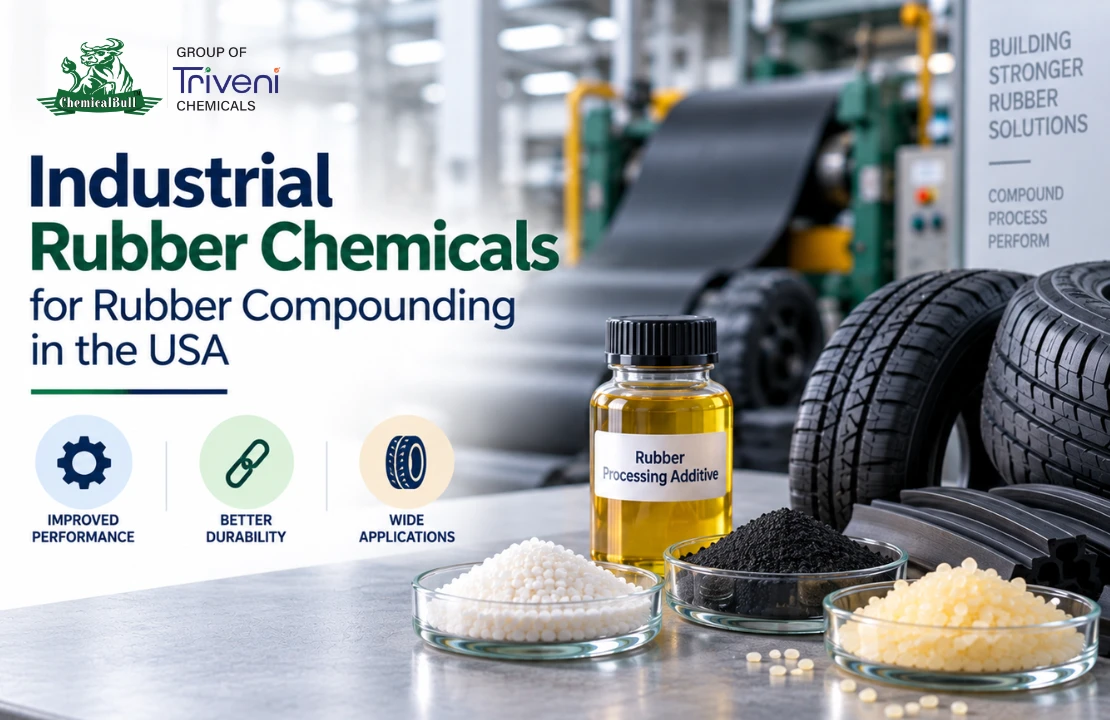
The process of compounding rubber is based on the precise mix of activators, accelerators, blowing agents, and processing aids in order to attain the correct cure speed as well as flexibility and strength of the final product. If it's producing hoses, tires, seals, or other products made of rubber, US manufacturers rely on reliable, documented raw materials for compounding batches to perform consistently.
Chemical Bull supplies rubber chemicals in bulk quantities with competitive pricing, and working with an established rubber chemical supplier helps US compounders and processors source the accelerators, activators, and specialty additives their formulations depend on.
Understanding the Vulcanization Process
Vulcanization is the chemical process that transforms raw, soft rubber into a durable, elastic material capable of withstanding real-world stress, heat, and repeated flexing. During this process, sulfur cross-links form between rubber polymer chains, and the compounding chemicals discussed above each play a specific role in making this reaction happen efficiently and predictably:
- Mixing stage: Raw rubber, fillers, and processing aids are combined in an internal mixer or on a mill, with accelerators and activators added at controlled points to avoid premature curing.
- Shaping stage: The uncured compound is extruded, calendared, or molded into its intended shape before the curing reaction is triggered.
- Curing stage: Heat and pressure activate the accelerator system, driving the sulfur cross-linking reaction that locks the rubber into its final elastic structure.
- Post-cure handling: Finished parts are cooled and inspected, with physical properties like tensile strength, elongation, and hardness tested against target specifications.
Getting the compounding chemistry right at each stage directly affects whether the finished rubber part meets its intended performance and service life.
Common Rubber Types That Rely on These Chemicals
Different rubber polymer systems respond differently to the same compounding chemicals, which is why formulators often need to adjust accelerator type and dosage based on the base polymer:
|
Rubber Type |
Common Applications |
Compounding Consideration |
|
Natural Rubber (NR) |
Tires, engine mounts, shock absorbers |
Responds well to sulfur-based accelerator systems like TMTD and MBTS |
|
Styrene-Butadiene Rubber (SBR) |
Tire treads, footwear, belting |
Often requires accelerator blends to balance cure speed and aging resistance |
|
Nitrile Rubber (NBR) |
Seals, gaskets, oil-resistant parts |
Compounding must account for oil and fuel resistance alongside cure chemistry |
|
EPDM |
Weatherstripping, automotive seals, roofing membranes |
Typically uses peroxide or sulfur-donor cure systems depending on the application |
Understanding which base polymer a formulation is built on helps determine the most effective accelerator, activator, and processing aid combination for that specific compound.
Top-Demand Rubber Chemicals for Compounding
- Tetramethylthiuram Disulfide (TMTD): A widely used rubber accelerator that speeds up vulcanization and improves cure efficiency in sulfur-cured rubber compounds.
- 2,2-Dithiobisbenzothiazole (MBTS): A common accelerator known for delayed-action cure characteristics, offering better processing safety in rubber compounding.
- Dibenzamido Diphenyl Disulfide: Used as a specialty accelerator component in select rubber vulcanization systems.
- Dinitrosopentamethylenetetramine (DNPT): A chemical blowing agent used to produce cellular or foamed rubber and polymer structures.
- Zinc Hydroxide: Used in the production of zinc oxide, a key activator in rubber vulcanization systems, and applied directly in select rubber and polymer formulations.
- Chlorinated Paraffin 52%: Functions as a flame-retardant plasticizer in certain rubber and polymer compounding applications.
What Are Rubber Compounding Chemicals?
Rubber compounding chemicals are the functional additives combined with raw rubber (natural or synthetic) to create a finished compound with specific performance characteristics. These additives fall into several functional categories:
|
Category |
Function |
Example Chemicals |
|
Accelerators |
Speed up and control the vulcanization (curing) reaction |
TMTD, MBTS, Dibenzamido Diphenyl Disulfide |
|
Activators |
Improve accelerator efficiency during vulcanization |
Zinc oxide, Zinc Hydroxide (as a ZnO precursor) |
|
Blowing Agents |
Create cellular or foamed rubber structures |
DNPT |
|
Plasticizers/Processing Aids |
Improve flexibility and processing behavior |
Chlorinated Paraffin |
|
Antidegradants |
Protect rubber from oxidation, ozone, and heat aging |
Various antioxidant and antiozonant chemistries |
Applications of Industrial Rubber Chemicals
-
Tire manufacturing:
Accelerators as well as activators are vital for achieving uniform cure rates and performance of tires and sidewall compound. -
Belts, Hoses and Seals:
Rubber industrial products rely on exact chemical compounding to attain the desired durability, flexibility, as well as heat resistance. -
Auto Parts Made of Rubber:
Gaskets or bushings, as well as components that dampen vibrations, depend on consistent Vulcanization Chemistry to ensure long-term longevity. -
Production of footwear:
The rubber components and soles make use of compounding chemicals to ensure flexibility, wear resistance, and efficiency of processing. -
Adhesives made of rubber:
Certain chemical compounds in rubber can help improve tack, adhesive strength, and the ability to stretch in adhesive formulations. -
Extruded and molded rubber Goods:
Industrial rubbers of general use rely on the exact compounding chemistry that is adjusted to the particular application's requirements for performance.
Why Accelerators Matter in Rubber Compounding
Vulcanization, the process that transforms raw rubber into a durable, elastic material, would take an impractically long time without accelerators. These chemicals speed up the sulfur cross-linking reaction, allowing manufacturers to achieve production-ready cure times while also giving compounders control over scorch safety (resistance to premature curing during processing) and final physical properties like tensile strength and elongation.
- Cure Speed Control: Different accelerators offer fast, medium, or delayed-action cure profiles depending on the production process.
- Scorch Safety: Delayed-action accelerators like MBTS help prevent premature curing during mixing and shaping, reducing scrap rates.
- Physical Property Optimization: The right accelerator combination affects tensile strength, elongation, and aging resistance in the finished rubber product.
What to Look for in a Rubber Chemical Supplier
-
Consistent Purity and Activity:
Confirm the supplier can maintain consistent purity and active content across repeat batches, since even small variations can affect cure behavior. -
Documentation Support:
Request a Certificate of Analysis (CoA), Safety Data Sheet (SDS), and Technical Data Sheet (TDS) for each raw material. -
Bulk Packaging Options:
Confirm the supplier can support drum or bag packaging suited to your production volume and handling systems. -
Regulatory Compliance:
For US manufacturers, confirm materials meet applicable OSHA workplace safety standards and any relevant EPA reporting requirements for your facility. -
Reliable Lead Times:
Since rubber compounding often runs on continuous production schedules, confirm the supplier's track record for on-time bulk delivery.
Frequently Asked Questions
-
What are the main types of rubber compounding chemicals?
The main categories include accelerators, activators, blowing agents, plasticizers/processing aids, and antidegradants, each serving a distinct function in the finished rubber compound. -
What do accelerators do in rubber compounding?
Accelerators speed up the vulcanization (curing) reaction, allowing manufacturers to achieve production-ready cure times while controlling scorch safety and final physical properties. -
What is a blowing agent used for in rubber manufacturing?
Blowing agents like DNPT are used to create cellular or foamed rubber structures, commonly used in gaskets, seals, and cushioning applications. -
Does Chemical Bull supply rubber chemicals in bulk for US manufacturers?
Yes, Chemical Bull supplies rubber chemicals in bulk quantities with competitive pricing, supporting US rubber compounders and processors with documentation and reliable supply. -
What documentation should I request when sourcing rubber compounding chemicals?
At minimum, request a Certificate of Analysis, Safety Data Sheet, and Technical Data Sheet for each raw material before use in your compound formulation.
Conclusion
Rubber compounding performance depends on sourcing the right combination of accelerators, activators, and processing aids from a supplier who can deliver consistent quality and documentation. Chemical Bull supplies rubber chemicals in bulk quantities with competitive pricing, helping US manufacturers source the raw materials their compounding processes depend on.
Comment Section



