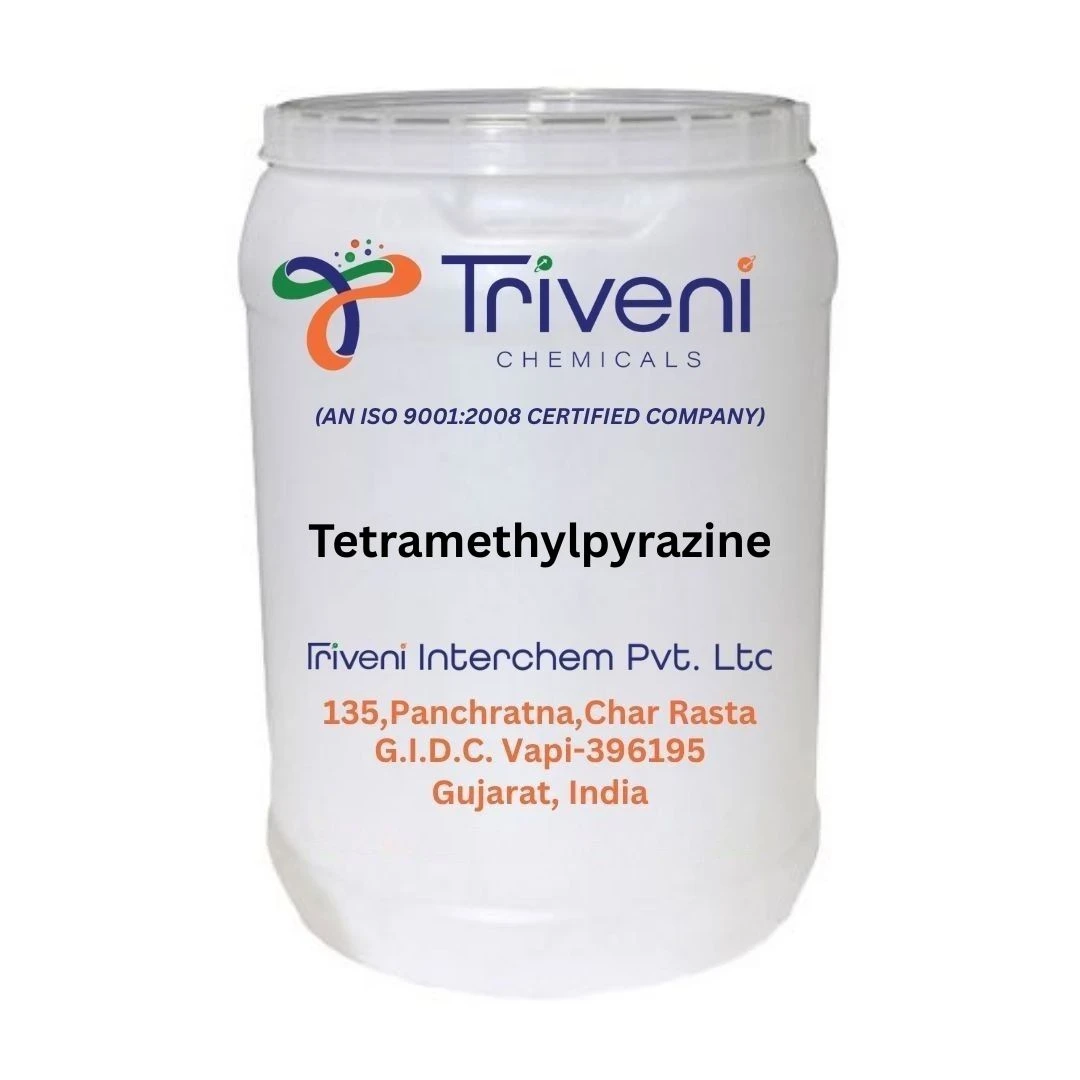
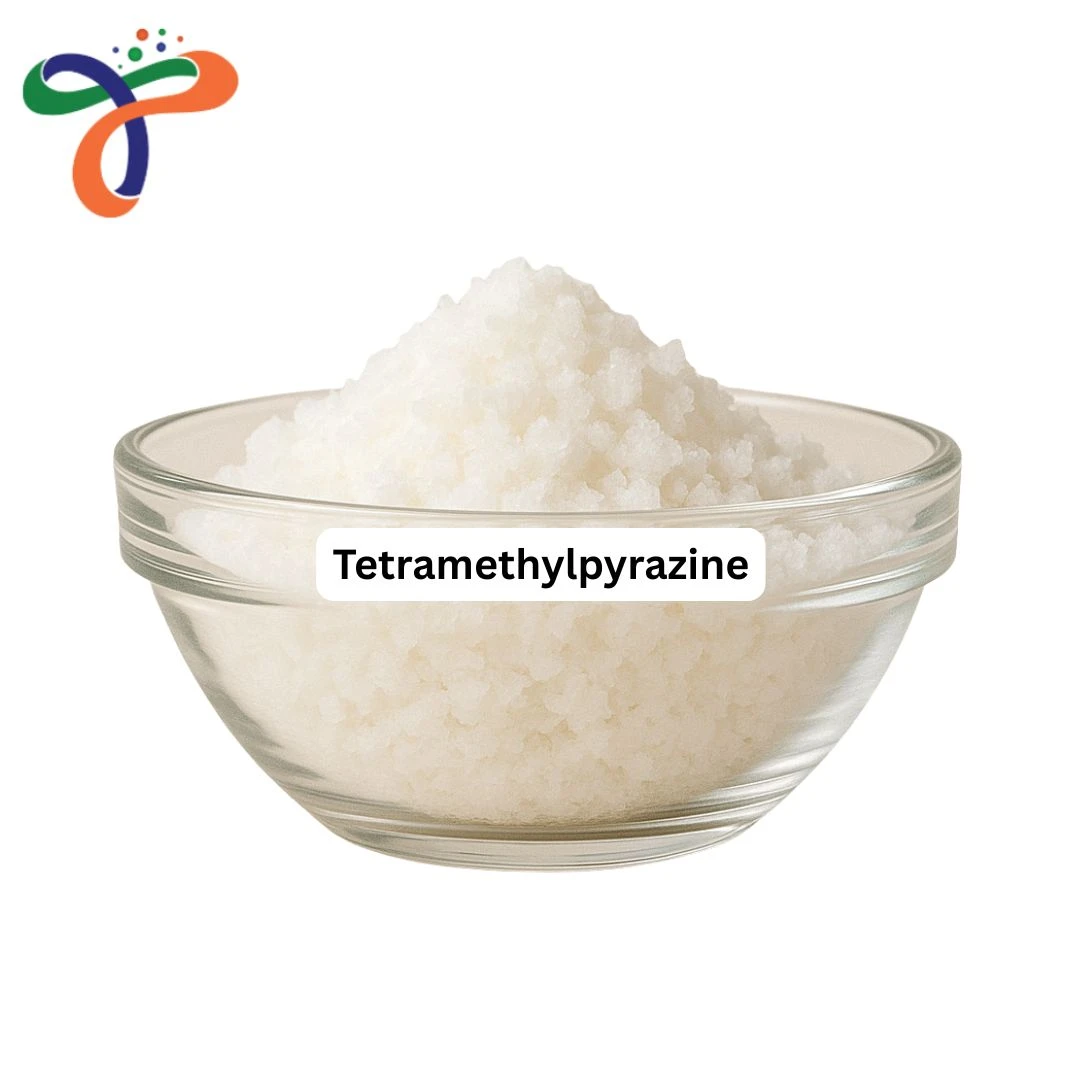
Tetramethylpyrazine | 1124-11-4
Cas No :
1124-11-4
Synonyms :
Form :
Solid
Molecular Weight :
136.20 G/mol
Molecular Formula :
C8H12N2
Boiling Point :
198–200 °c
Melting Point :
88–90 °c
Flash Point :
65–70 °c
Solubility :
Slightly Soluble In Water; Soluble In Ethanol, Chloroform, Ether
Description :
Overview of Tetramethylpyrazine
Tetramethylpyrazine, also known as Ligustrazine, is a well-known pyrazine aroma chemical with a warm, nutty, roasted, and chocolate-like note. It appears naturally in foods such as roasted nuts, cocoa, coffee, and baked products.
Along with its aroma use, it is also studied in supplements and traditional medicine due to its functional properties.
Applications of Tetramethylpyrazine
1. Flavor Creation
-
Used to create nutty roasted aromas in chocolate, coffee, baked goods, and cocoa-type flavors.
-
Helps develop strong roasted effects in savory snacks and spice blends.
-
Blends well with sweet aroma chemicals like Vanillin and caramel-like notes from Ethyl Maltol.
-
Adds body and warmth to chocolate-style flavor systems.
2. Perfumery & Aroma Design
-
Adds a subtle chocolate note in gourmand perfumes.
-
Useful in warm, edible, and cozy fragrance profiles.
-
Works well with woody aromatics such as Myrcene to create modern warm blends.
-
Gives depth to natural-smelling roasted accords in fine fragrances.
3. Nutraceutical & Supplement Use
-
Sometimes used in Tetramethylpyrazine supplement formulations, especially in traditional herbal products.
-
Studied for various functions due to its presence in Ligusticum plant extracts.
-
Known for biological interest, but should be used under proper guidance.
Safety & Handling Guidelines
-
Handle with care and avoid inhaling fine powder or vapors.
-
Store in a cool, dry place away from light.
-
Use gloves and standard safety measures when handling large quantities.
-
Follow recommended levels when used in flavor or fragrance mixes.
Where to Buy Tetramethylpyrazine
Tetramethylpyrazine Manufacturer in India
Available from manufacturers producing pyrazine aroma chemicals, roasted-note ingredients, and specialty food-flavor components.
Distributor & Supplier
ChemicalBull Pvt. Ltd. supplies Tetramethylpyrazine for flavor, fragrance, research, and industrial applications.
Tetramethylpyrazine MSDS
Material Safety Data Sheet (MSDS) is available on request.
Frequently Asked Questions (FAQs)
1. Is Tetramethylpyrazine natural?
It can occur naturally in roasted foods, but commercial material may also be produced synthetically.
2. What is Tetramethylpyrazine used for?
It is used in flavor creation (nutty, roasted, chocolate notes), perfumery, and nutraceutical formulations.
3. What are the side effects of Tetramethylpyrazine?
High amounts may cause mild discomfort; always use within recommended limits.
4. What is Tetramethylpyrazine toxicity like?
It is generally safe at flavor-use levels, but large supplemental doses should only be taken under expert supervision.
5. What is the review of its mechanisms and functions?
Research mainly discusses its biological activities, antioxidant effects, and traditional medicinal applications.
ChemicalBull supplies Tetramethylpyrazine across India, serving customers in Andhra Pradesh, Arunachal Pradesh, Assam, Bihar, Chhattisgarh, Goa, Gujarat, Haryana, Himachal Pradesh, Jharkhand, Karnataka, Kerala, Madhya Pradesh, Maharashtra, Manipur, Meghalaya, Mizoram, Nagaland, Odisha, Punjab, Rajasthan, Sikkim, Tamil Nadu, Telangana, Tripura, Uttar Pradesh, Uttarakhand, and West Bengal, as well as the Union Territories of Andaman & Nicobar Islands, Chandigarh, Dadra & Nagar Haveli and Daman & Diu, Delhi, Jammu & Kashmir, Ladakh, Lakshadweep, and Puducherry. We serve pharmaceutical, chemical, research, academic, laboratory, manufacturing, and industrial customers with reliable nationwide delivery.