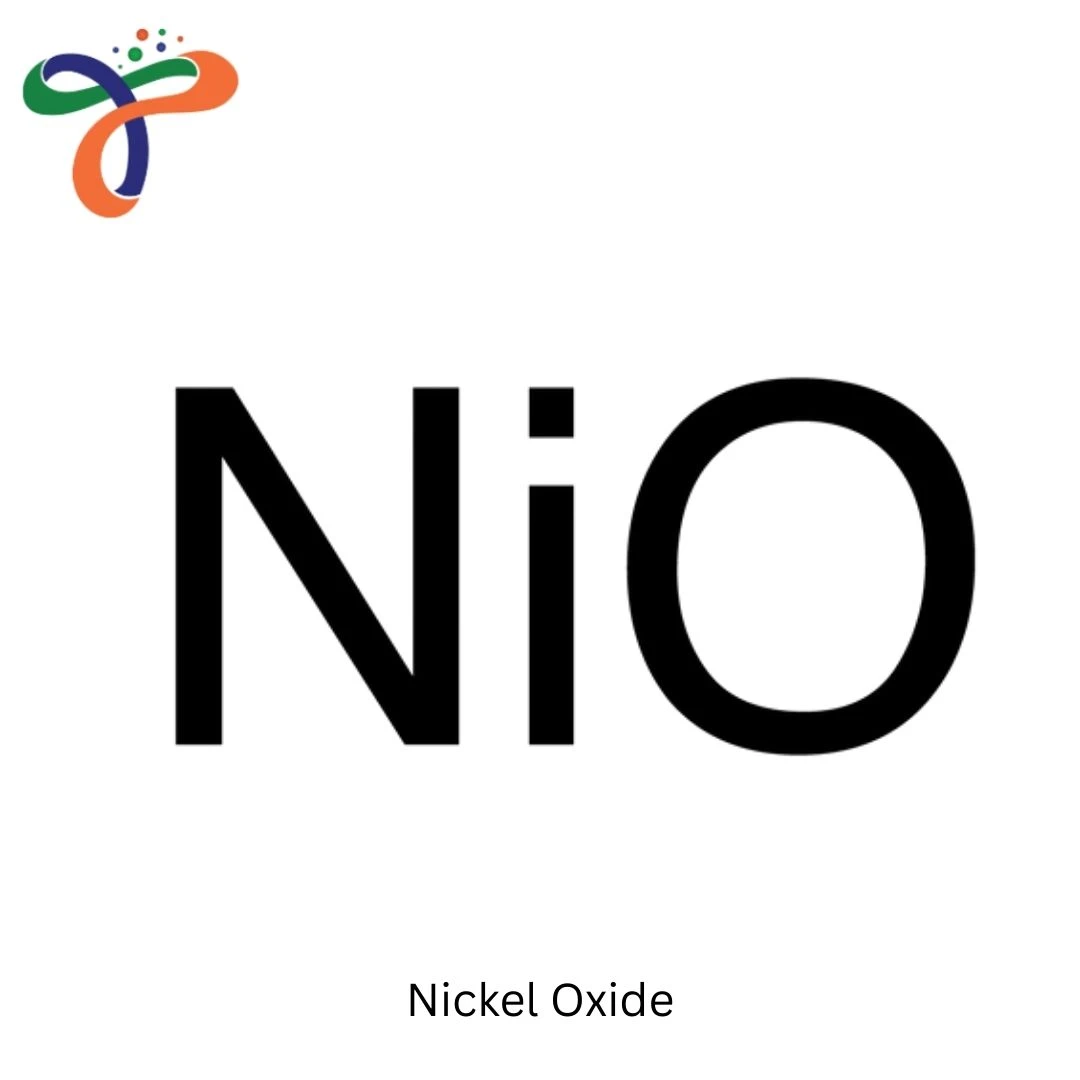
Overview of Nickel Oxide
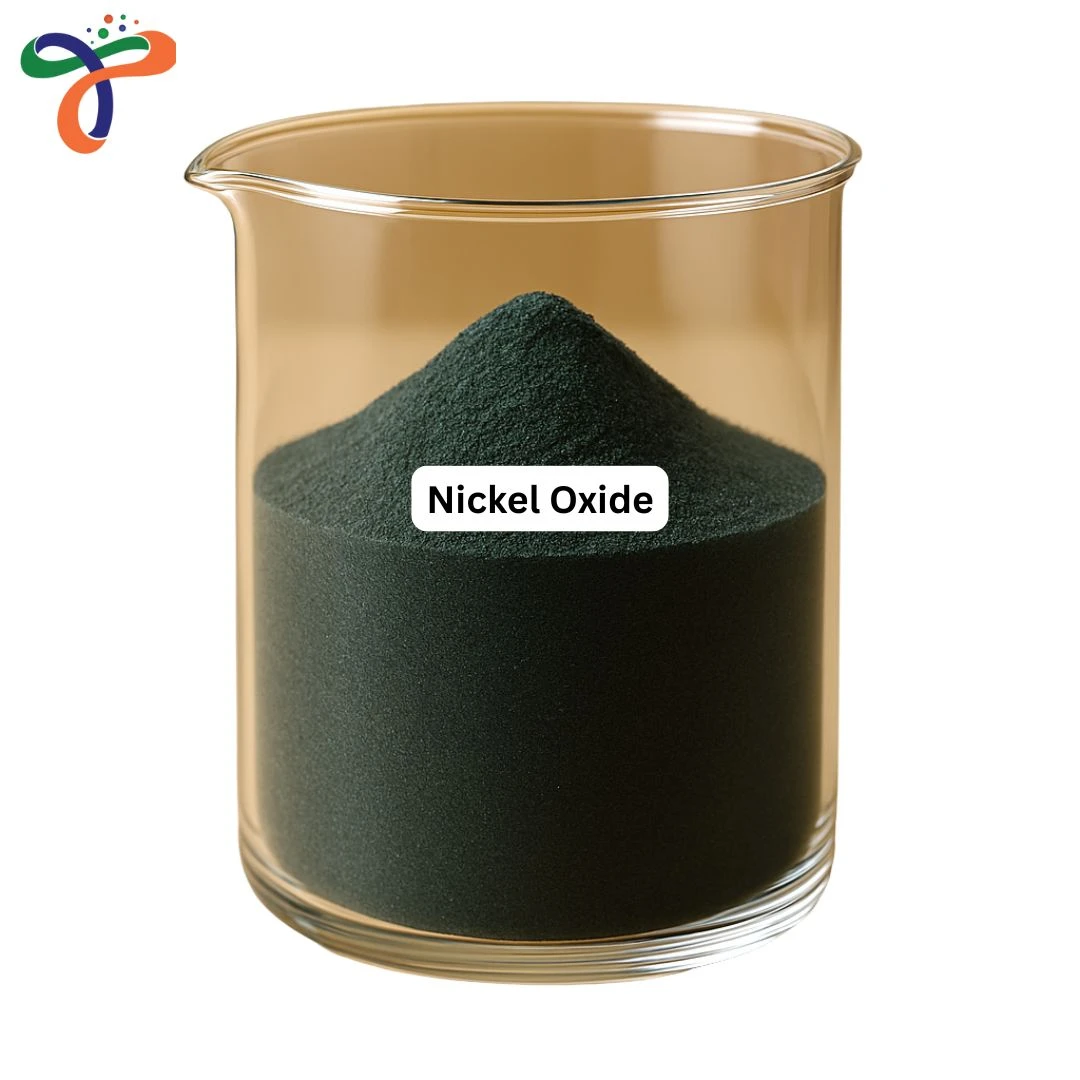
Nickel Oxide is an inorganic compound widely used in ceramics, electronics, catalysts, and battery materials. It typically appears as a green to black powder, depending on purity and preparation methods. This compound is known for its excellent thermal stability, electrical properties, and catalytic activity, making it useful in several industrial and research applications.
The nickel oxide formula is NiO, which consists of nickel and oxygen atoms arranged in a cubic crystal lattice structure. The nickel oxide structure belongs to the rock-salt type crystal structure where nickel ions and oxygen ions are arranged in a repeating cubic pattern. Due to these characteristics, nickel oxide is commonly used in advanced materials and electrochemical technologies.
Applications of Nickel Oxide
Battery & Energy Storage Materials
Nickel Oxide plays an important role in rechargeable battery technologies, particularly in nickel-based batteries and energy storage devices. It contributes to electrode materials used in electrochemical systems.
It may be used alongside compounds such as Nickel Sulfate, Lithium Hydroxide, and Cobalt Oxide in advanced battery manufacturing processes.
Ceramic & Glass Manufacturing
In ceramic and glass industries, nickel oxide is used as a coloring agent. It produces green, gray, or black shades in ceramic glazes and specialty glass materials.
Catalysts & Chemical Processing
Nickel Oxide functions as a catalyst or catalyst precursor in various chemical reactions, including hydrogenation and reforming processes used in industrial chemical production.
Electronics & Magnetic Materials
Because of its electrical and magnetic properties, nickel oxide is used in electronic components, sensors, and thin-film materials used in semiconductor and electronic device applications.
Safety & Handling Guidelines
-
Store in tightly sealed containers in a dry environment
-
Avoid inhalation of dust particles
-
Use protective gloves, safety goggles, and appropriate protective clothing
-
Handle in well-ventilated areas or inside a chemical fume hood
-
Follow proper disposal procedures according to chemical safety regulations
Exposure to nickel compounds may cause irritation or allergic reactions, so appropriate safety precautions should always be followed.
Where to Buy Nickel Oxide?
Nickel Oxide Manufacturer
Nickel Oxide is produced through controlled oxidation processes of nickel compounds or thermal decomposition of nickel salts to ensure consistent purity and industrial-grade quality.
Nickel Oxide Supplier & Distributor
Chemicalbull Pvt. Ltd. is a reliable nickel oxide supplier, providing high-quality material for ceramics, electronics, battery manufacturing, and chemical industries. The company offers bulk supply and dependable distribution services.
For the latest nickel oxide price, product specifications, and bulk purchasing inquiries, contact Chemicalbull Pvt. Ltd. directly.
MSDS for Nickel Oxide
The MSDS contains detailed safety information including hazard identification, safe handling procedures, storage recommendations, exposure precautions, and emergency response guidelines. Users should review the safety data sheet before industrial or laboratory use.
Frequently Asked Questions (FAQs)
-
What is nickel oxide used for?
Nickel oxide is used in batteries, ceramics, catalysts, electronic materials, and glass manufacturing. -
What is the formula of nickel oxide?
The chemical formula is NiO. -
What is the color of nickel oxide?
Nickel oxide generally appears green to black depending on its preparation and purity. -
What is the name of NiO₂?
NiO₂ is referred to as Nickel dioxide, a different compound from nickel oxide (NiO). -
What are the side effects of nickel oxide?
Exposure to nickel oxide dust may cause respiratory irritation, skin sensitivity, or allergic reactions in some individuals. Proper protective equipment should be used when handling the material.