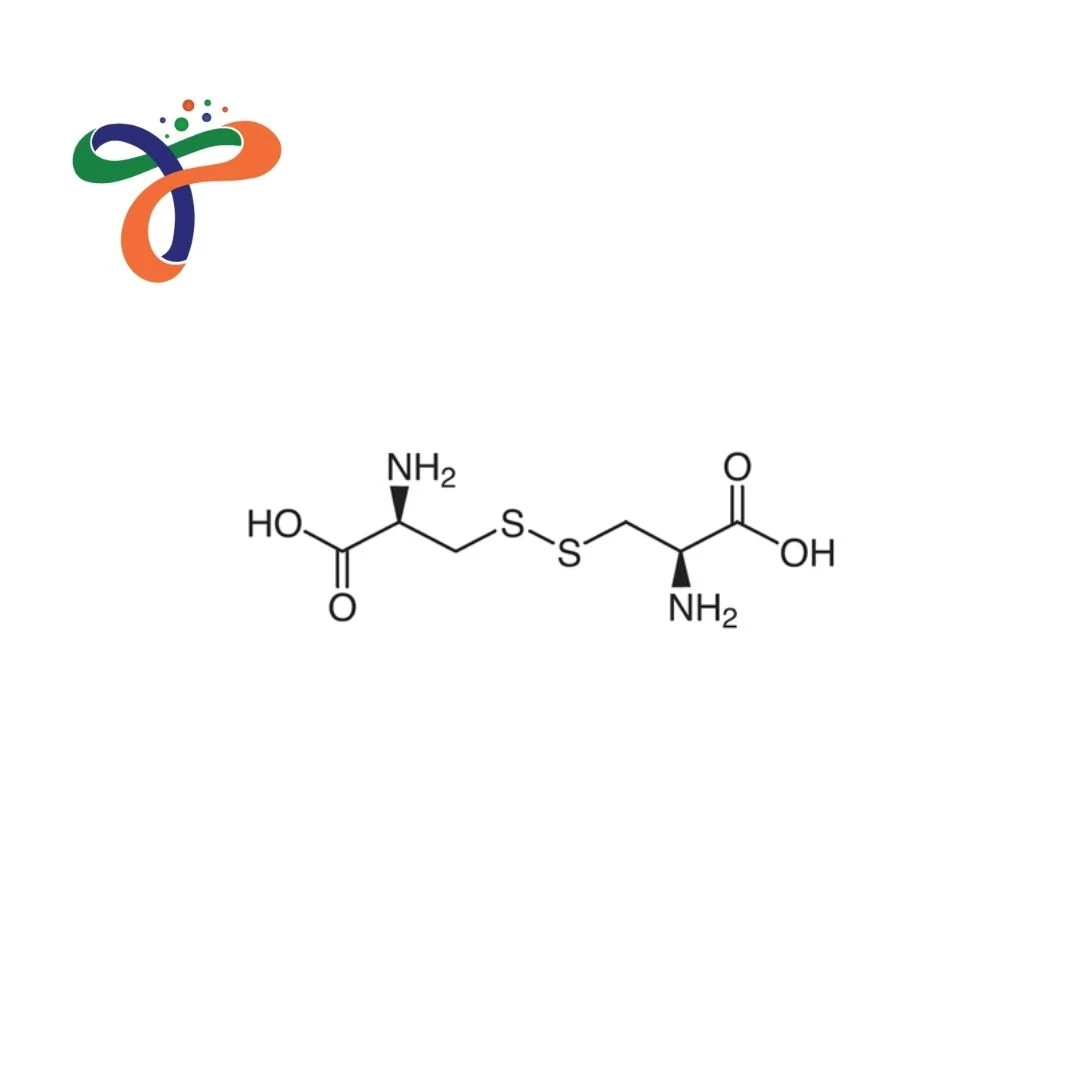
L-cystine | 56-89-3
Cas No :
56-89-3
Synonyms :
Form :
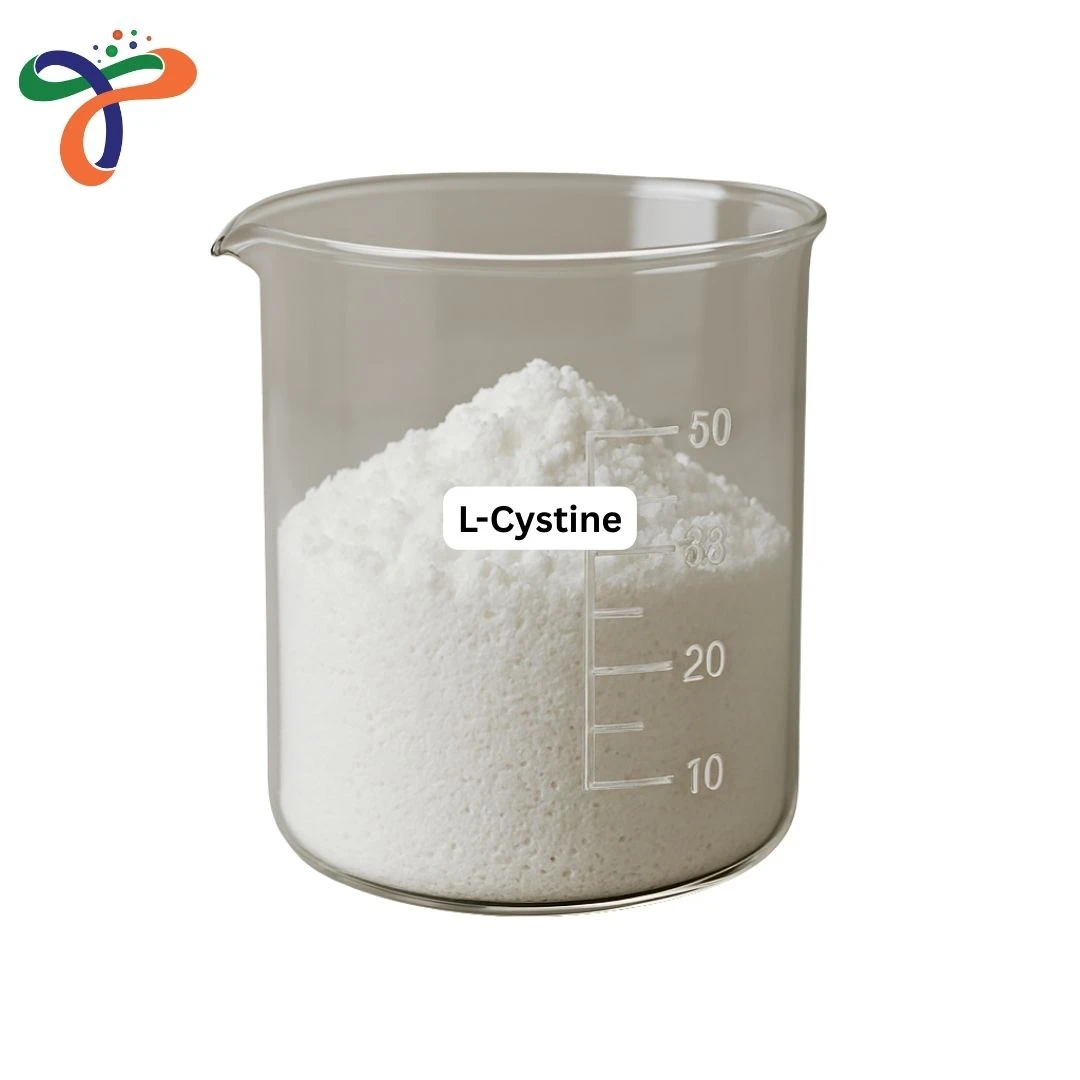
Powder
Molecular Weight :
240.31 G/mol
Molecular Formula :
C6H12N2O4S2
Boiling Point :
500 °c
Melting Point :
294 °c
Flash Point :
260 °c
Solubility :
Sparingly Soluble In Water; Soluble In Dilute Acids
Description :
Overview of L-Cystine
L-Cystine is a sulfur-containing, pharmaceutical-grade amino acid that is formed through the oxidation of two L-cysteine molecules joined by disulfide bonds. It is a crucial biochemical substance that is involved in the structure of proteins, redox balance, and stability of metabolic processes.
Within the industry of pharmaceuticals, L-Cystine has been highly valued due to its specific chemical structure as well as its stability and function in antioxidant and amino acid-related formulations. It is manufactured under controlled conditions to meet pharmacopeial requirements for purity, consistency, and regulated pharmaceutical use.
As a pharma chemical, L-Cystine is used in clinical nutrition, metabolic support, and specialty pharmaceutical formulations.
Applications of L-Cystine
Pharmaceutical & Clinical Nutrition Use
L-Cystine is used in pharmaceutical and clinical nutrition formulations to support amino acid balance, protein synthesis, and metabolic stability. It is commonly included in nutritional therapies where sulfur-containing amino acids are required.
In amino-acid-based formulations, it is often evaluated alongside L-Cysteine for sulfur metabolism and formulation selection.
Pharmaceutical Chemistry & Structural Characteristics
From a pharmaceutical chemistry perspective, the L-cystine structure consists of two cysteine units connected by a disulfide bond, which contributes to protein folding and structural integrity. This disulfide linkage differentiates L-Cystine from its reduced form.
L-cystine solubility in water is low, which is taken into consideration during formulation development and dosage form design.
Therapeutic & Specialty Formulations
L-Cystine is used in specialised pharmaceutical and nutritional formulations aimed at supporting metabolic pathways and antioxidant systems. It may be formulated in combination with sulfur-containing amino acids such as L-Methionine and antioxidant-related compounds like L-Glutathione in advanced clinical nutrition products.
Safety & Handling Guidelines
- Place in a dry, cool, and well-ventilated space
- Make sure containers are tightly sealed and clearly labeled
- Protect against oxygen and moisture
- Beware of inhaling dust while handling
- Avoid direct contact with the eyes and prolonged skin exposure
- Use appropriate PPE, including gloves and eye protection
- Handle under controlled pharmaceutical manufacturing conditions
- Dispose of waste according to regulatory guidelines
Where to Buy L-Cystine?
L-Cystine Manufacturer
L-Cystine is manufactured for pharmaceutical and clinical nutrition applications where high purity, controlled disulfide content, and regulatory compliance are essential.
L-Cystine Supplier & Distributor
L-Cystine is supplied in pharmaceutical-grade packaging suitable for formulation manufacturers and healthcare producers. As a pharmaceutical chemicals supplier and distributor, Chemicalbull Pvt. Ltd. supports customers with reliable sourcing and standard regulatory documentation.
MSDS for L-Cystine
The MSDS for L-Cystine contains detailed information about chemicals, safety handling procedures, specifications for storage and exposure control, along with emergency procedures. Always read the MSDS before using the pharmaceutical in any manufacturing process.
Frequently Asked Questions (FAQs)
-
What is the use of L-Cystine?
L-Cystine is used in pharmaceutical and clinical nutrition formulations to support amino acid balance, protein structure, and metabolic stability. -
What is the structure of L-Cystine?
L-Cystine structure consists of two L-cysteine molecules linked by a disulfide bond, forming a stable sulfur-containing amino acid. -
What is the solubility of L-Cystine in water?
L-cystine solubility in water is low, which influences its formulation and dosage form selection in pharmaceutical applications. -
What is the difference between L-Cystine and L-Cysteine?
L-Cystine is the oxidised disulfide form, while L-cysteine is the reduced monomeric form with a free thiol group. -
Is L-Cystine suitable for pharmaceutical manufacturing?
Yes, pharmaceutical-grade L-Cystine is widely used in regulated healthcare, nutritional, and specialty formulation products.
ChemicalBull supplies L-cystine across India, serving customers in Andhra Pradesh, Arunachal Pradesh, Assam, Bihar, Chhattisgarh, Goa, Gujarat, Haryana, Himachal Pradesh, Jharkhand, Karnataka, Kerala, Madhya Pradesh, Maharashtra, Manipur, Meghalaya, Mizoram, Nagaland, Odisha, Punjab, Rajasthan, Sikkim, Tamil Nadu, Telangana, Tripura, Uttar Pradesh, Uttarakhand, and West Bengal, as well as the Union Territories of Andaman & Nicobar Islands, Chandigarh, Dadra & Nagar Haveli and Daman & Diu, Delhi, Jammu & Kashmir, Ladakh, Lakshadweep, and Puducherry. We serve pharmaceutical, chemical, research, academic, laboratory, manufacturing, and industrial customers with reliable nationwide delivery.