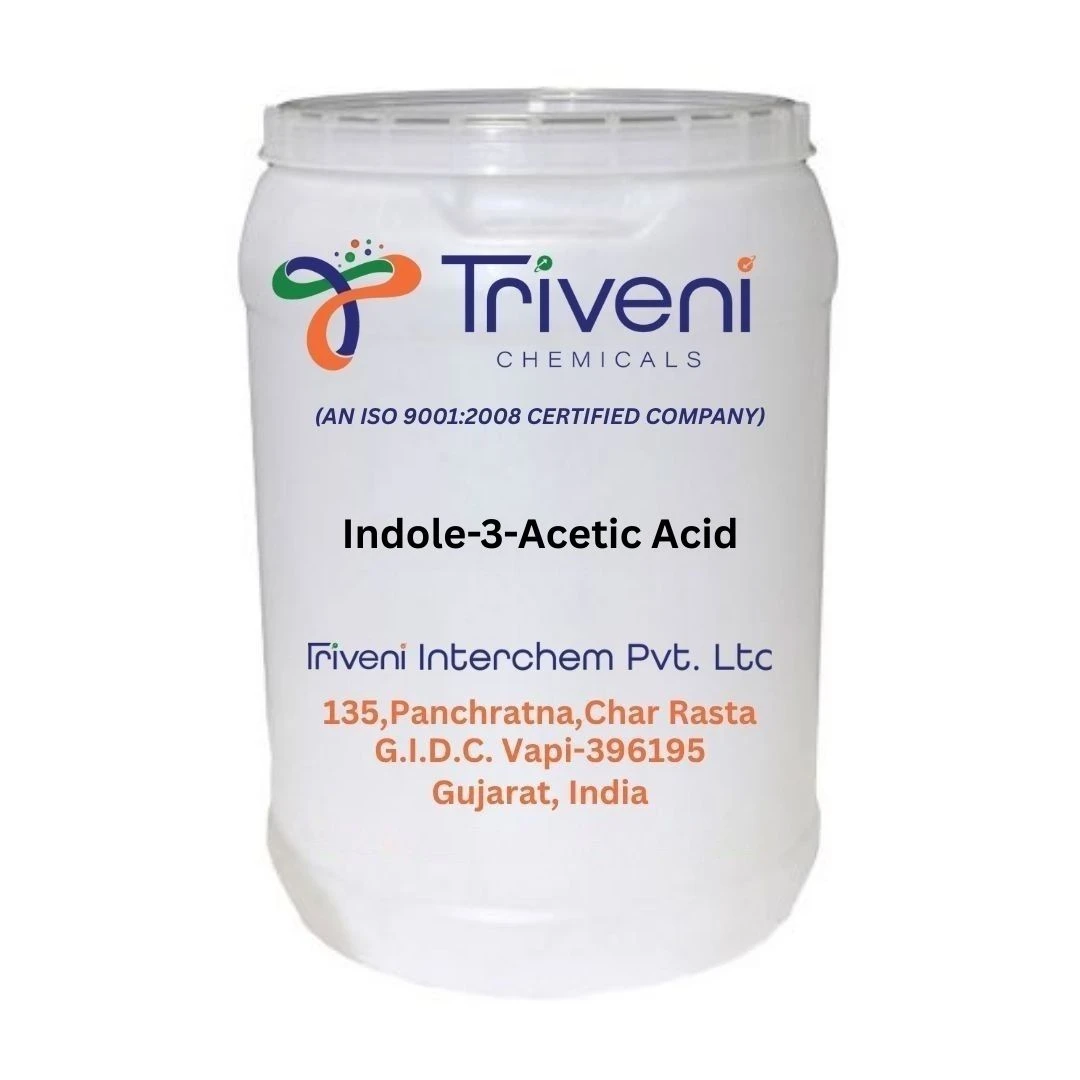
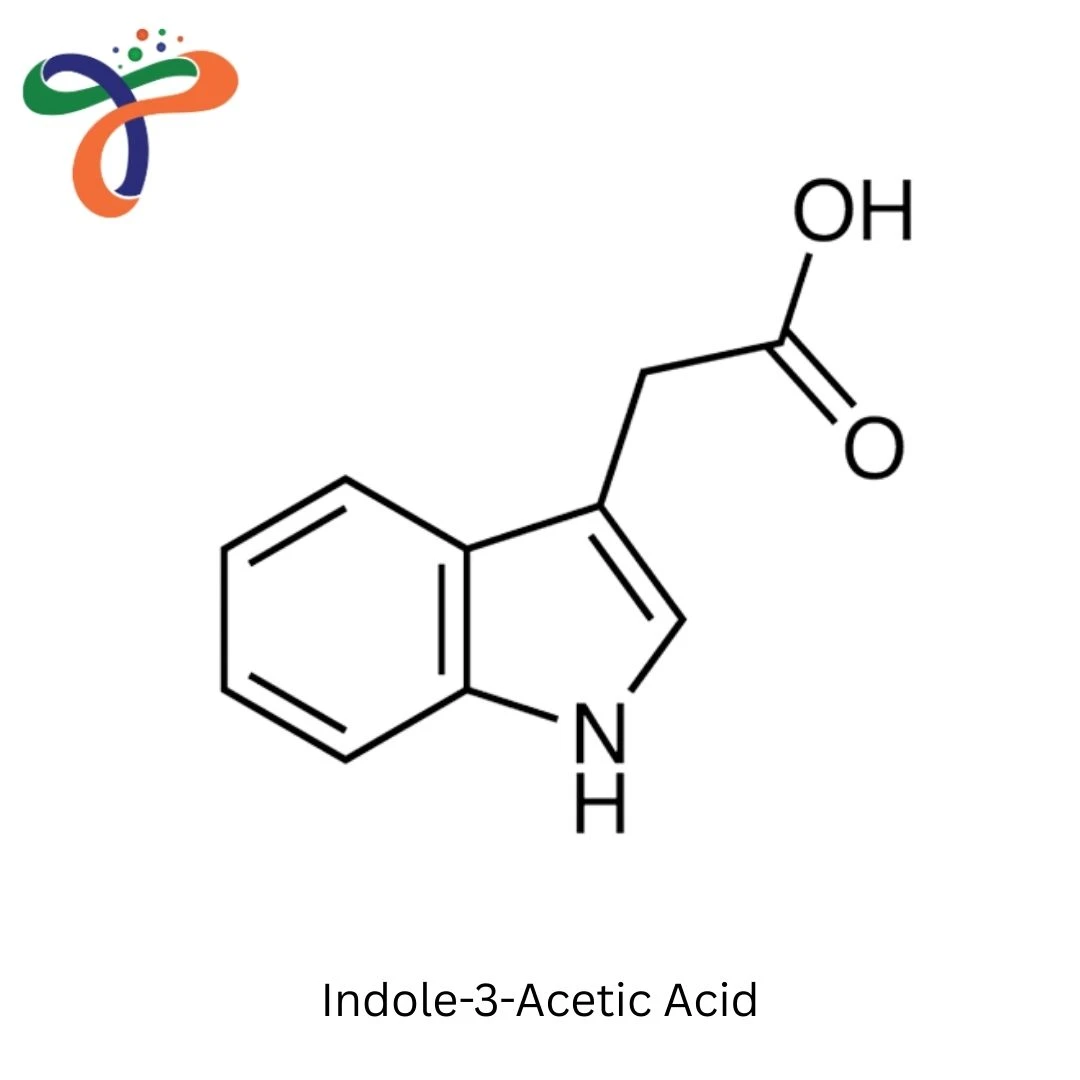
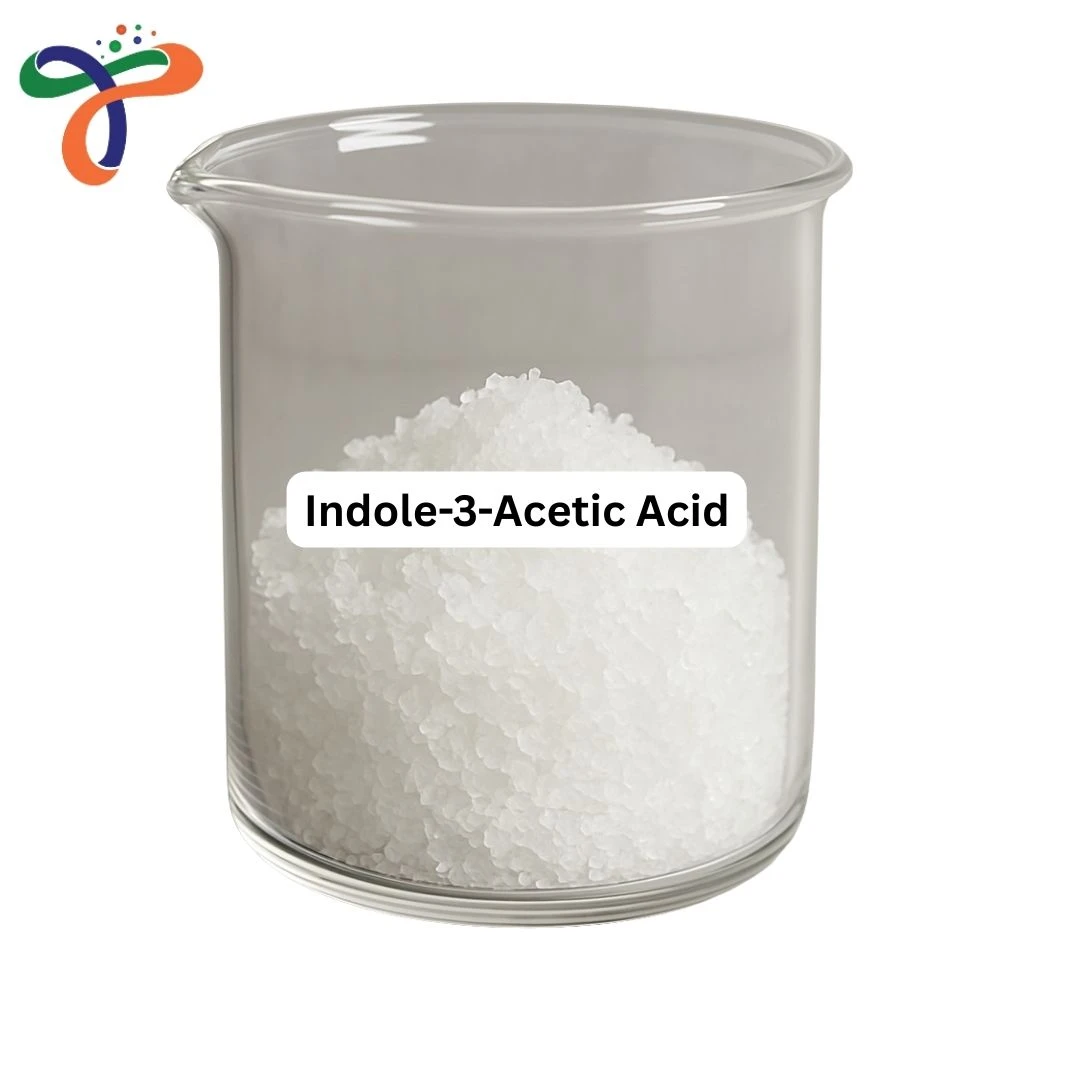
Indole-3-acetic Acid | 87-51-4
Cas No :
87-51-4
Form :
Solid
Molecular Weight :
176.20 G/mol
Molecular Formula :
C10H9NO2
Boiling Point :
365 °c
Flash Point :
190 °c
Solubility :
Soluble In Ethanol And Acetone; Sparingly Soluble In Water
Description :
Overview of Indole 3 Acetic Acid
Indole 3 Acetic Acid (IAA) is an essential natural substance that controls the growth of plants, which includes cell expansion, apical dominance and the development of fruit. It's available as a pale to white crystallized powder. It is the principal plant hormone that regulates roots, tropisms, and the differentiation of vascular structures.
Simply put, indole 3 acetic acid shapes plants, helps them grow longer, starts root formation, and coordinates growth responses. You can find more information at chemicalbull
Applications of Indole 3 Acetic Acid
Cell Elongation & Apical Dominance
Indole 3 acetic acid regulates plant growth based on the acid growth theory.
- It promotes stem elongation and helps plants respond to light.
- Essential for Agriculture Industry hormone research.
- Complements Rock Phosphate nutrition studies.
Root Initiation & Development
Indole 3 acetic acid helps cuttings form new roots.
- Works with Cyanamide dormancy breaking.
- Supports Tributyltin Oxide propagation systems.
- Essential for Fertilizer Industry hormone formulations.
Fruit Development & Parthenocarpy
It can cause seedless fruit to form and slows down aging in plants.
- It regulates the development of plant vascular tissues and xylem.
- It helps prevent fruit from dropping and improves how well fruit sets.
- It coordinates how plants respond to gravity and light.
Tissue Culture & Biotechnology
It is the most commonly used analogue used to start the growth of callus and for forming new organs during tissue cultivation.
- It regulates the expression of genes that are associated with plant growth.
- Crucial for micropropagation and embryogenesis.
Safety & Handling Guidelines
Take the safety measures of a standard lab while handling indole-3 acetic acid as you do when handling other growth inhibitors for plants.
- Keep indole 3 acetic acids in a dry, cool and dark area and away from light temperatures, and oxygenizers.
- Put on gloves, safety goggles as well as a lab coat while handling the powder.
- Be sure to keep indole3 acetic acid far from powerful bases, strong acids as well as direct sunlight.
- Make use of alkaline solutions or ethanol for helping dissolve indole 3 Acetic acid in your application.
- Review your Material Safety Data Sheet (MSDS) to find detailed safety information.
Indole 3 Acetic Acid MSDS
The MSDS for indole 3 acetic acid provides detailed information on how it regulates plant growth, its chemical stability, how well it dissolves, safe handling, and uses in biotechnology. This information is important for plant physiologists, tissue culture specialists, and hormone researchers.
ChemicalBull provides the MSDS, instructions for improving solubility, and concentration guidelines with every order.
Where to buy Indole 3 Acetic Acid?
Indole 3 Acetic Acid Manufacturer
Indole 3 acetic acid is manufactured for plant physiology research, biotechnology, and agricultural applications regulating indole 3 acetic acid plant growth in the Agriculture Industry.
Indole 3 Acetic Acid Supplier & Distributor
ChemicalBull is a trusted manufacturer, supplier, and distributor of indole 3 acetic acid. You can find it at chemicalbull in 98%+ technical powder grade.
- The product has high purity (over 98%) and consistent biological activity.
- It is available in laboratory packaging (1g, 5g, 25g) and in bulk for research facilities.
- Each order includes full documentation, such as a Certificate of Analysis (COA).
Frequently Asked Questions (FAQs)
-
What is indole 3 acetic acid?
Indole 3 acetic acid (IAA) is the principal natural auxin regulating cell elongation, apical dominance, root initiation, vascular development, and tropic responses in plants. -
What's the indole-3 the role of acetic acid in plant growth?
Indole 3 Acetic acid's plant growth benefits are a result of acid-induced cell wall loosening and gene expression control, embryogenesis and coordination of the development of patterns. -
What is the process by which indole 3 Acetic acid work in plant tissues?
Indole 3 acetic acids move basipetally through polar autin transport (PIN proteins) and symplastic channels, providing concentration gradients that are essential to the patterning. -
What is the indole 3 acetic acid biosynthesis pathway?
Indole 3 acetic acid is synthesized primarily via tryptophan-dependent pathways (IPA, IAM, IAN routes) in shoot tips, young leaves, and developing seeds. -
Is synthetic IAA identical to natural IAA?
Yes, synthetic indole 3 acetic acid has identical structure and biological activity to endogenous plant IAA, widely used in research and applications.
ChemicalBull supplies Indole-3-acetic Acid across India, serving customers in Andhra Pradesh, Arunachal Pradesh, Assam, Bihar, Chhattisgarh, Goa, Gujarat, Haryana, Himachal Pradesh, Jharkhand, Karnataka, Kerala, Madhya Pradesh, Maharashtra, Manipur, Meghalaya, Mizoram, Nagaland, Odisha, Punjab, Rajasthan, Sikkim, Tamil Nadu, Telangana, Tripura, Uttar Pradesh, Uttarakhand, and West Bengal, as well as the Union Territories of Andaman & Nicobar Islands, Chandigarh, Dadra & Nagar Haveli and Daman & Diu, Delhi, Jammu & Kashmir, Ladakh, Lakshadweep, and Puducherry. We serve pharmaceutical, chemical, research, academic, laboratory, manufacturing, and industrial customers with reliable nationwide delivery.