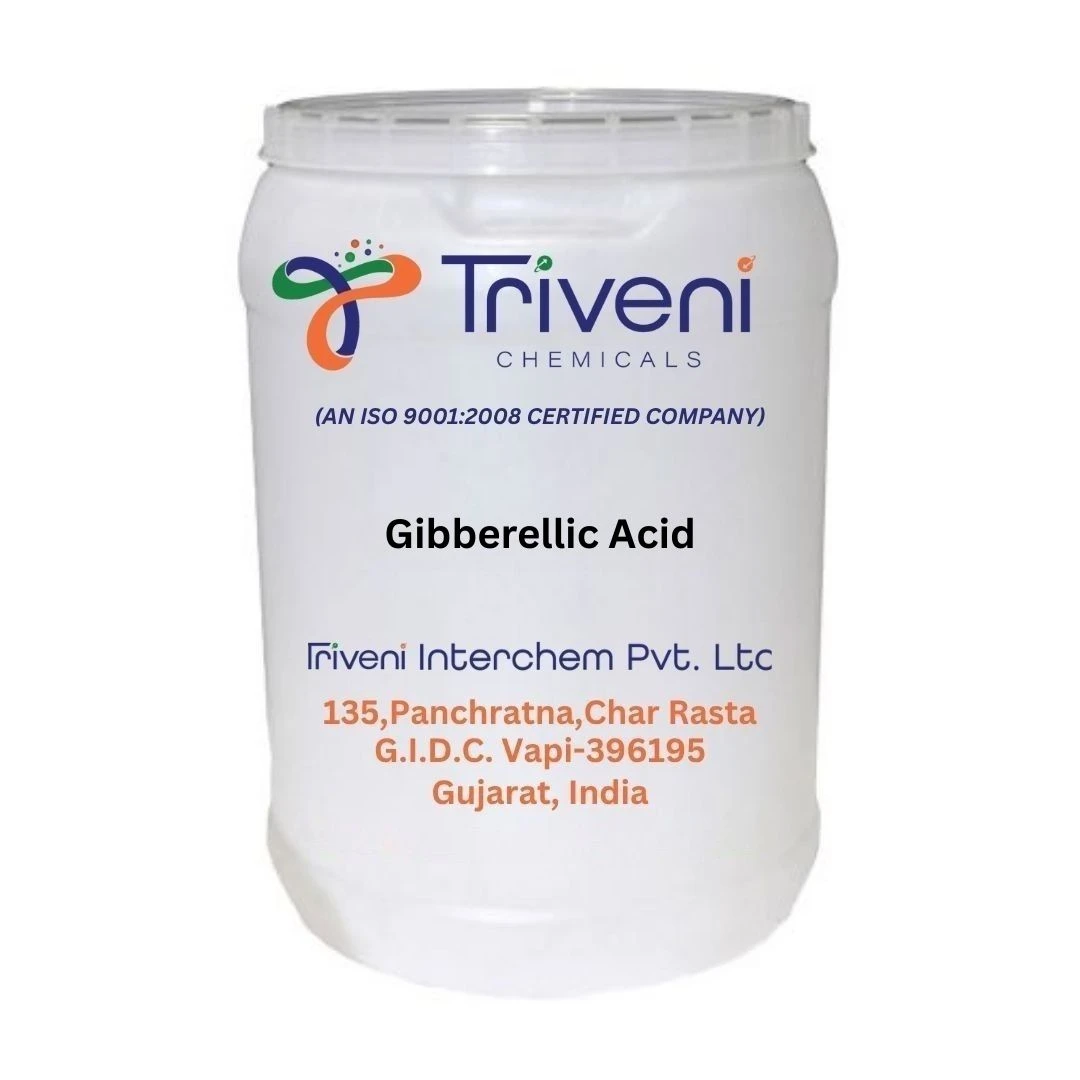
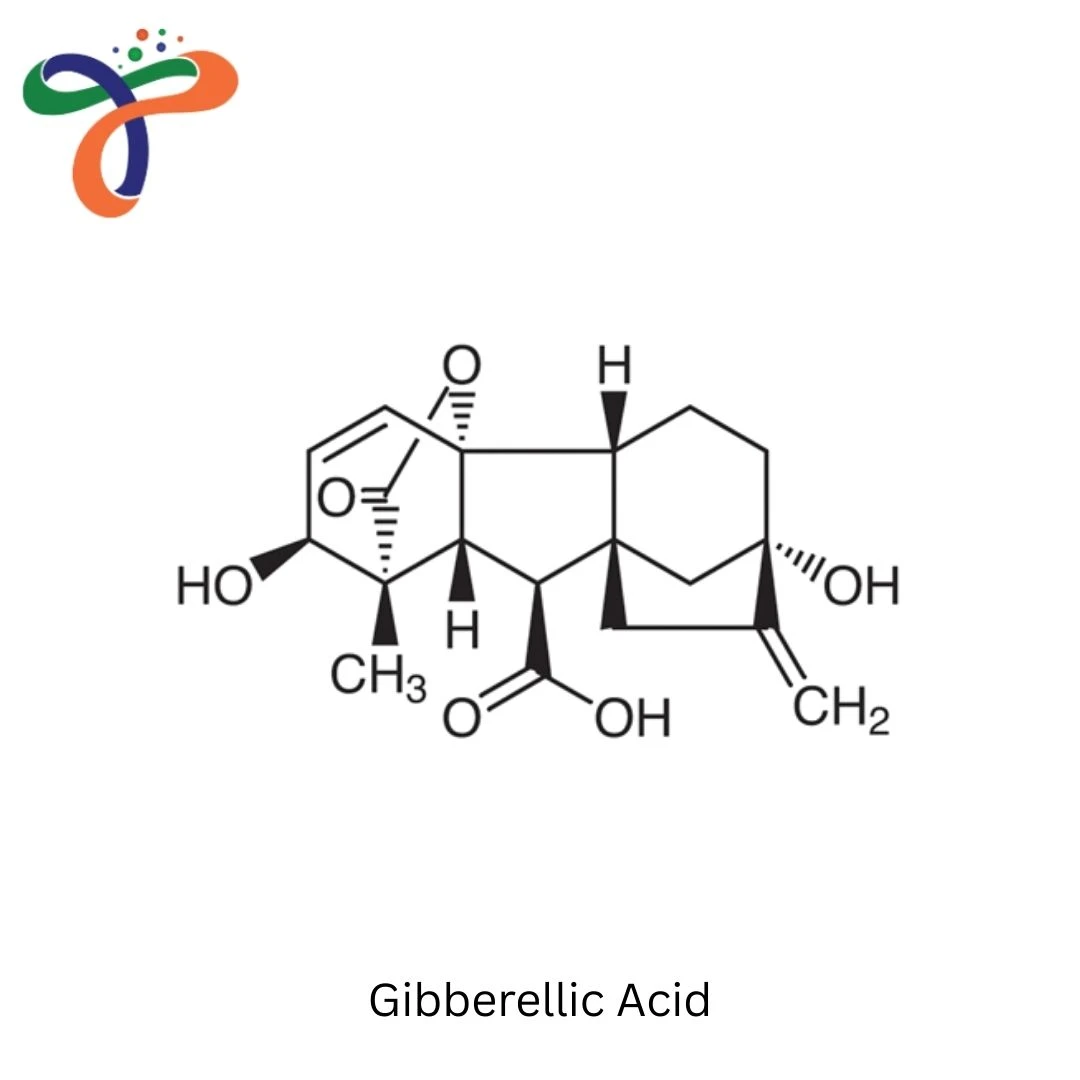
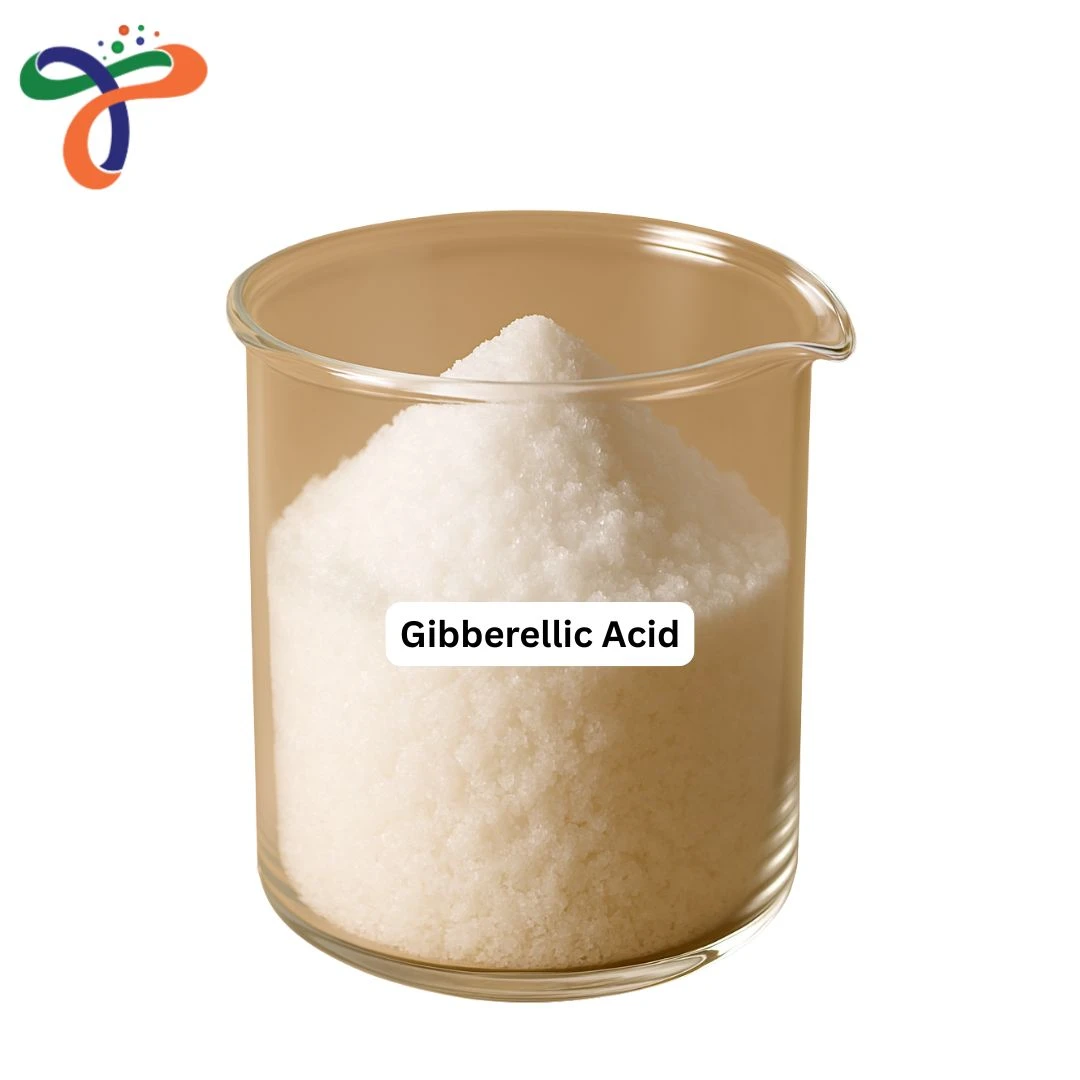
Gibberellic Acid | 77-06-5
Cas No :
77-06-5
Form :
Powder
Molecular Weight :
346.37 G/mol
Molecular Formula :
C19H22O6
Boiling Point :
260 °c
Flash Point :
160 °c
Solubility :
Soluble In Ethanol And Acetone; Sparingly Soluble In Water
Description :
Overview of Gibberellic Acid
Gibberellic Acid (GA3) is a natural plant growth regulator used to help crops become taller, germinate faster, and produce more flowers. The product comes in the form of white or off-white powder which dissolves easily in both water and alcohol solutions - and has long been relied upon by growers seeking to maximize crop yield and quality.
In simple terms, gibberellic acid helps plants by breaking seed dormancy, making fruits bigger, and speeding up growth. It works by encouraging cells to divide and grow longer, which leads to higher yields in fruits, vegetables, and grains.
Applications of Gibberellic Acid
Fruit Sizing & Seedless Production
Gibberellic acid is used in plants to thin grapes and make berries larger, which is important for producing high-quality table grapes.
- Creates larger, more marketable fruit with improved skin color.
- Induces seedlessness in grapes, citrus, and mangoes.
- Essential for Agriculture Industry premium fruit production.
Seed Germination & Dormancy Breaking
The effect of gibberellic acid on plant growth overcomes seed dormancy in cereals, vegetables, and ornamentals.
- Accelerates uniform germination in barley malting and rice.
- It also helps potatoes, sugarcane cuttings, and flower bulbs break dormancy and start growing.
- Complements 1-Naphthaleneacetic Acid for rooting.
Flowering & Stem Elongation
Gibberellic acid helps long-day plants flower and encourages stems to grow longer.
- Increases flower stalk length in chrysanthemums and lilies.
- Enhances sugarcane internode length for higher yields.
- Works with Zinc Sulphate Anhydrous nutrition programs.
Crop Management Systems
- Supports integrated programs with Diatomaceous Earth pest control.
- Complements Zinc Sulphate Heptahydrate micronutrients.
- Enhances fumigation results from 1,2-Dibromoethane.
Safety & Handling Guidelines
Use standard safety precautions when handling Gibberellic Acid, as you would with other agricultural chemicals.
- Store it in a cool, dry, and dark place, away from strong acids and bases.
- Wear gloves and goggles, and avoid breathing in dust or spray mist.
- Keep Gibberellic Acid away from food, animal feed, and water sources when mixing or applying it.
- Wash all equipment and protective clothing after using Gibberellic Acid.
- Check the Material Safety Data Sheet (MSDS) for detailed safety and first aid instructions.
Gibberellic Acid MSDS
The MSDS for Gibberellic Acid gives detailed information about its solubility, stability, toxicity, safe handling, application rates, and environmental impact. This information is important for growers, agronomists, and meeting regulations.
ChemicalBull includes the MSDS, formulation guidelines, and application tips for Gibberellic Acid with every order.
Where to buy Gibberellic Acid?
Gibberellic Acid Manufacturer
Gibberellic Acid is manufactured for professional agricultural applications requiring reliable plant growth regulation in the Agriculture Industry.
Gibberellic Acid Supplier & Distributor
ChemicalBull is a trusted manufacturer, supplier, and distributor of Gibberellic Acid. You can find it at chemicalbull in technical powder (90%, 98%) and soluble forms.
- It is available in different concentrations for use as a foliar spray, seed treatment, or through fertigation.
- You can order in bulk or small packs, suitable for both commercial farms and research purposes.
- Each order comes with full documentation, including a Certificate of Analysis (COA) and stability data.
Frequently Asked Questions (FAQs)
-
How to use gibberellic acid on plant?
Gibberellic acid is usually used as a foliar spray (10-100 ppm), seed soak (50-500 ppm), or fruit dip, depending on the crop and its growth stage. -
How does gibberellic acid affect plant growth?
Gibberellic acid helps plants by making cells grow and divide, breaking seed dormancy, encouraging flowering, and increasing fruit size through its hormonal effects. -
How to apply gibberellic acid to plants?
To use gibberellic acid, dissolve it in water and spray it on leaves, soak seeds or bulbs, or inject it into fruit stems, following the recommended concentrations and timing. -
What crops benefit most from gibberellic acid uses in plants?
Crops like table grapes, citrus, sugarcane, rice seeds, flower bulbs, and leafy vegetables respond very well to gibberellic acid. -
Is Gibberellic Acid safe for organic farming?
Yes, plant-based GA3 is allowed in organic farming in many countries, as long as it meets purity standards.
ChemicalBull supplies Gibberellic Acid across India, serving customers in Andhra Pradesh, Arunachal Pradesh, Assam, Bihar, Chhattisgarh, Goa, Gujarat, Haryana, Himachal Pradesh, Jharkhand, Karnataka, Kerala, Madhya Pradesh, Maharashtra, Manipur, Meghalaya, Mizoram, Nagaland, Odisha, Punjab, Rajasthan, Sikkim, Tamil Nadu, Telangana, Tripura, Uttar Pradesh, Uttarakhand, and West Bengal, as well as the Union Territories of Andaman & Nicobar Islands, Chandigarh, Dadra & Nagar Haveli and Daman & Diu, Delhi, Jammu & Kashmir, Ladakh, Lakshadweep, and Puducherry. We serve pharmaceutical, chemical, research, academic, laboratory, manufacturing, and industrial customers with reliable nationwide delivery.