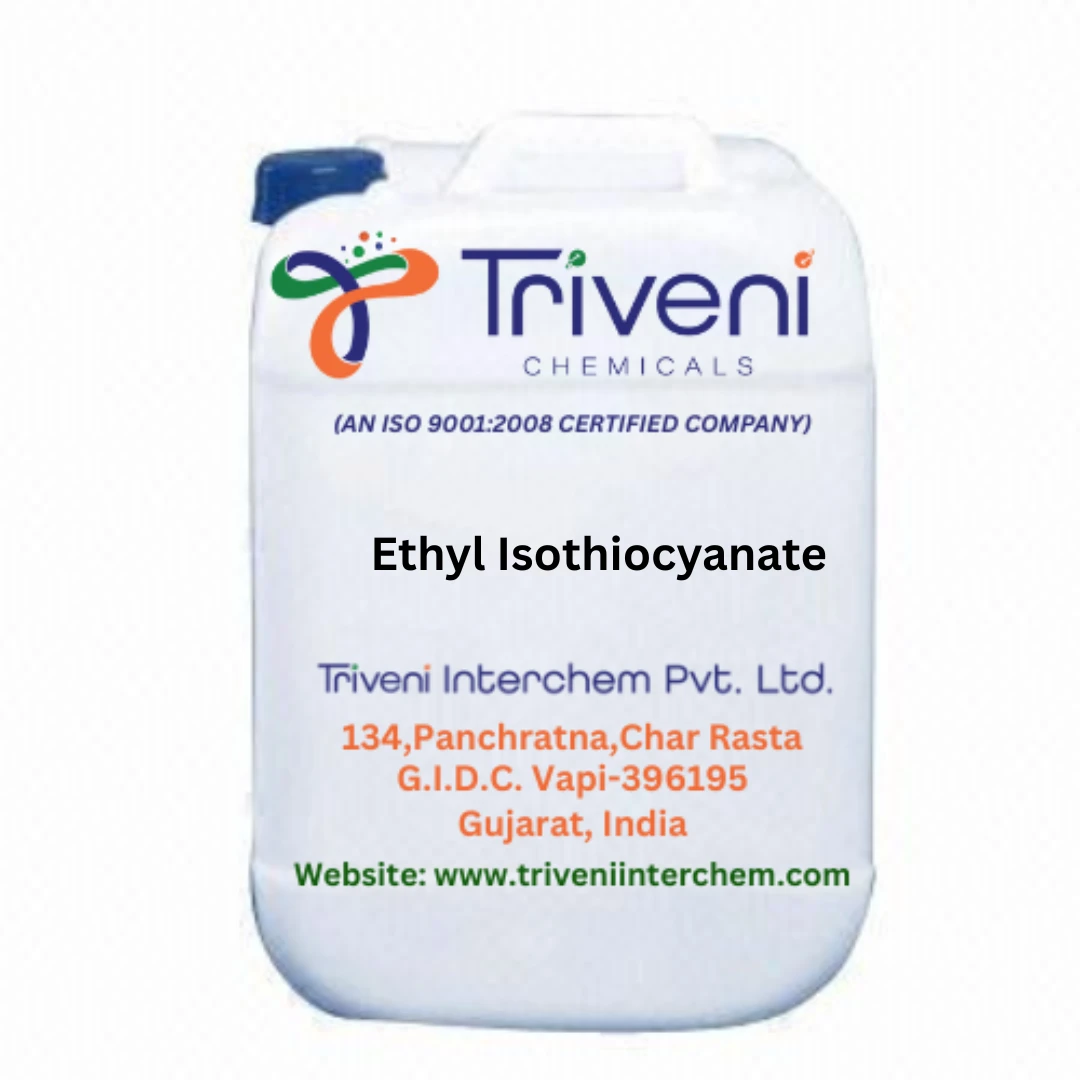
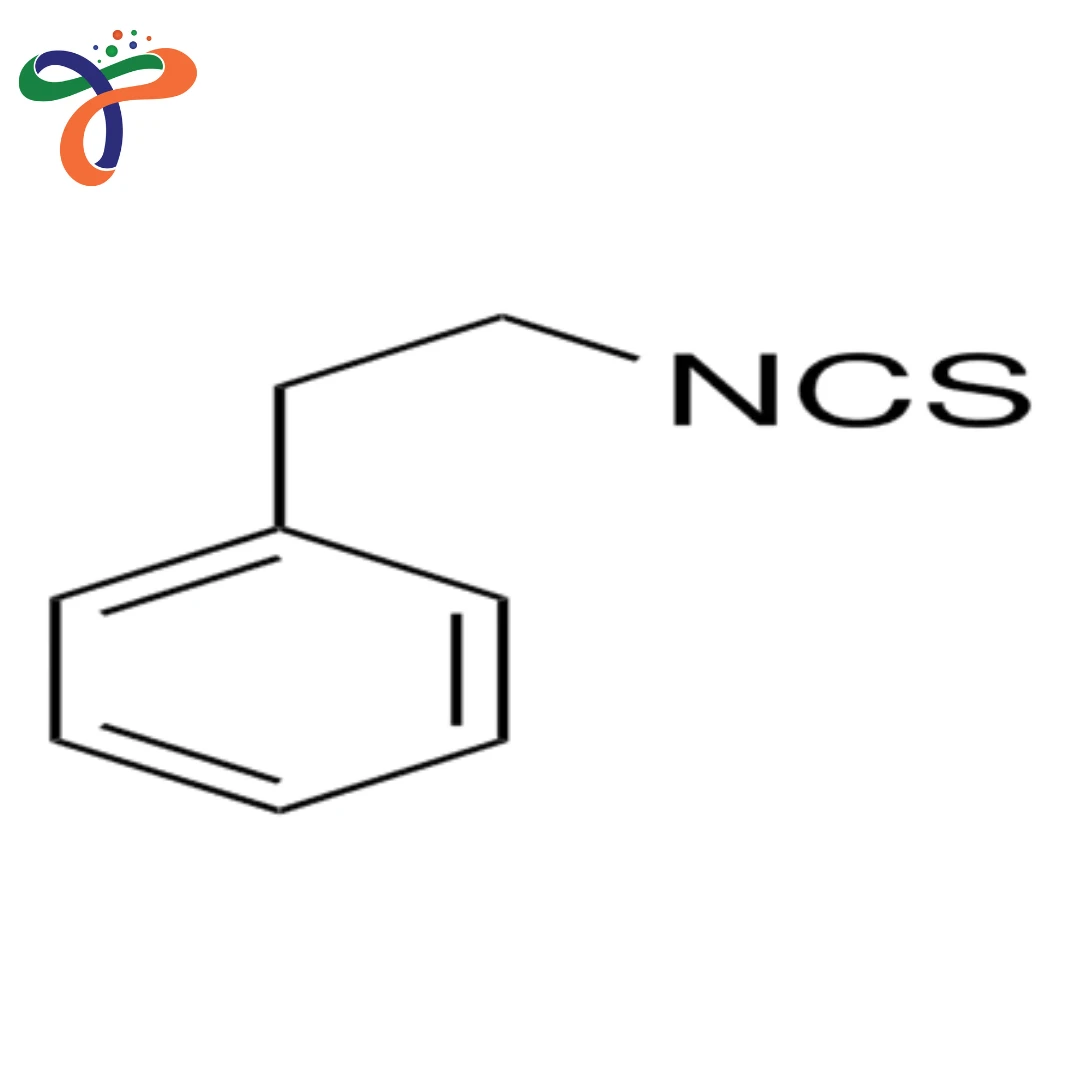
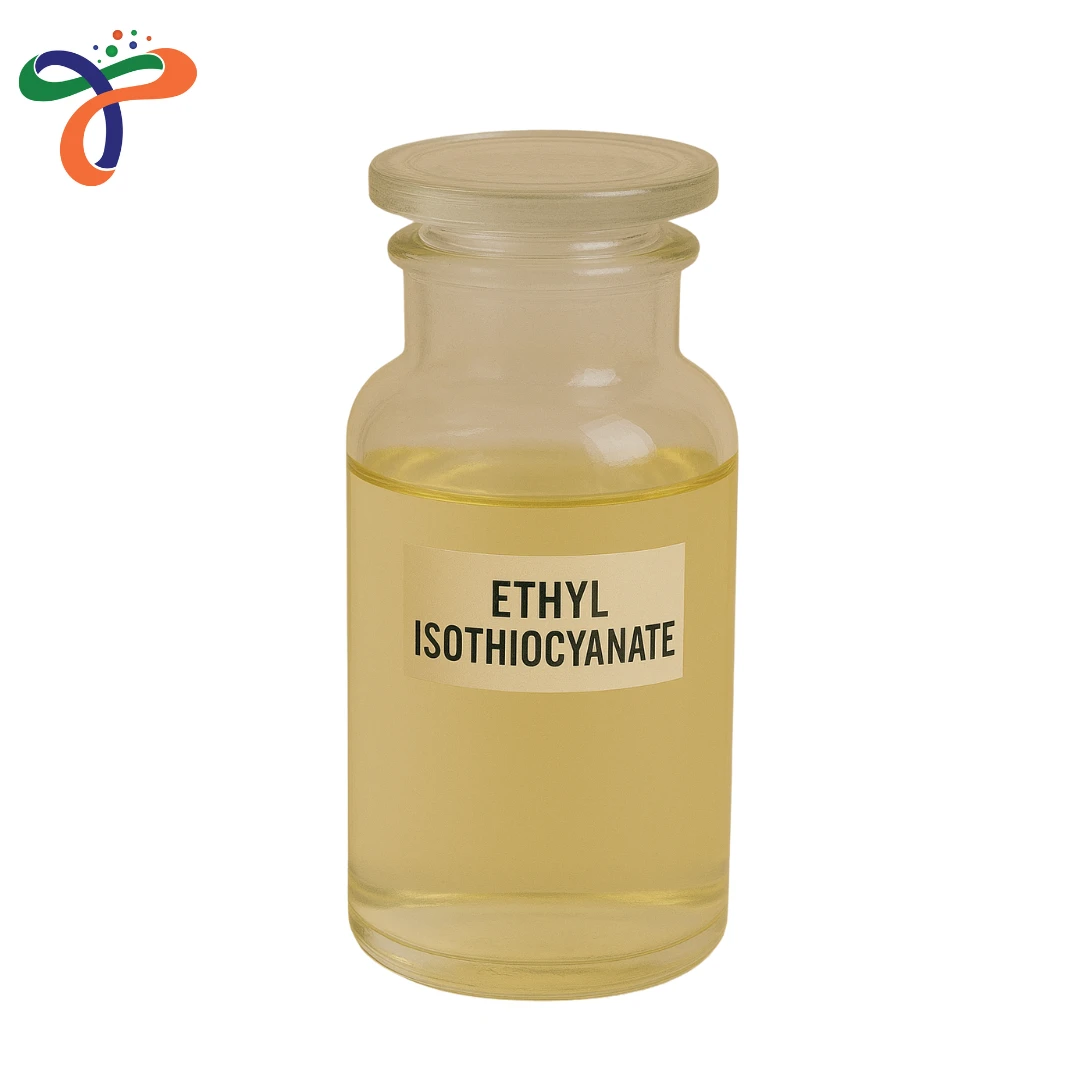
Ethyl Isothiocyanate | 542-85-8
Cas No :
542-85-8
Synonyms :
Form :
Liquid
Molecular Weight :
87.14 G/mol
Molecular Formula :
C₃H₅NS
Boiling Point :
130–132 °c
Melting Point :
–6 To –4 °c
Flash Point :
24–32 °c
Solubility :
Soluble In Ethanol, Ether, Chlorinated And Aromatic Hydrocarbons
Description :
Overview of Ethyl Isothiocyanate
Ethyl Isothiocyanate can be described as a colourless or pale yellow liquid. It has an intense, pungent smell typically associated with horseradish or mustard. It is part of the category of isothiocyanates. They comprise organosulfur compounds with the -N=C=S category. This compound is used primarily in organic synthesis, agrochemical development, and flavor/aroma research, as well as in the study of natural defense chemicals in plants. Its reactivity with nucleophiles makes it valuable in various chemical modifications and pharmaceutical intermediates.
Applications of Ethyl Isothiocyanate
Chemical & Pharmaceutical Synthesis
It is used as a construction component in the creation of heterocycles, thioureas, and bioactive substances.
The term is used in the field of medicinal chemistry to aid in making enzyme inhibitors as well as anticancer agents.
Agrochemical Industry
Intermediate in the synthesis of pesticides, herbicides, and fungicides
Mimics natural plant defense compounds, aiding in biochemical research
Flavor & Aroma Research
It is a component of spicy and sharp flavors found in Wasabi Extract, Mustard Seed Oil, and other cruciferous vegetables.
Sometimes, trace amounts are used in Allyl Isothiocyanate flavor formulations or sensory tests to simulate flavors and study aroma profiles for research and product development.
Material Science & Polymer Modification
Reacts with thiols and amines, making it a good choice for enhancing the surface of polymers and for synthesizers.
Production & Manufacturing
Ethyl Isothiocyanate is usually produced through the reaction between Ethylamine and Carbon Disulfide. It is then followed by oxidation and rearrangement processes. A careful control of the reaction conditions and purification steps is crucial due to the compound's volatile nature and its pungent odor. Industrial production assures high-purity materials ideal for laboratory-scale as well as bulk syntheses.
Safety & Handling Guidelines
- Very irritating - can cause extreme irritation to the eyes, skin, and the respiratory tract.
- Utilize complete protection equipment, including goggles, gloves, a lab coat, and face protection in fume Hoods.
- Do not inhale - make sure to use a mechanical airflow or local vent system.
- Keep in cool and well-ventilated locations and away from direct heat and other incompatible chemicals.
- Handle within closed systems to stop the release of vapors.
Where to Buy Ethyl Isothiocyanate?
Ethyl Isothiocyanate Manufacturer in India:
Chemical Bull provides high-purity Ethyl Isothiocyanate for research, pharmaceutical, and industrial uses. Made under controlled conditions to ensure odor control and purity.
Ethyl Isothiocyanate Suppliers & Distributors in Rajkot:
We guarantee safe and compliant delivery of Ethyl Isothiocyanate through our Rajkot facility. This is achieved through the use of appropriate hazard labels, sealed packaging, and support for technical issues.
Ethyl Isothiocyanate MSDS
All shipments include essential documentation such as Material Safety Data Sheets, Certificates of Analysis, and Technical Data Sheets.
Frequently Asked Questions
-
What is Ethyl Isothiocyanate used for?
Primarily used in organic synthesis, pharmaceutical intermediates, and flavor research for its reactive and pungent profile. -
Is it naturally occurring?
Isothiocyanates occur in nature (e.g., in mustard plants), but ethyl isothiocyanate is typically synthesized for industrial use. -
Is it safe to handle?
No, it is toxic and irritating. Proper PPE and ventilation are mandatory for safe handling. -
Does it have a strong smell?
Yes, it has a powerful, pungent odor resembling mustard or garlic. It is detectable even in minimal quantities. -
Can it be used in food products?
Not approved for direct food use – its role is limited to flavor chemistry research and trace sensory evaluation in controlled environments.
ChemicalBull supplies Ethyl Isothiocyanate across India, serving customers in Andhra Pradesh, Arunachal Pradesh, Assam, Bihar, Chhattisgarh, Goa, Gujarat, Haryana, Himachal Pradesh, Jharkhand, Karnataka, Kerala, Madhya Pradesh, Maharashtra, Manipur, Meghalaya, Mizoram, Nagaland, Odisha, Punjab, Rajasthan, Sikkim, Tamil Nadu, Telangana, Tripura, Uttar Pradesh, Uttarakhand, and West Bengal, as well as the Union Territories of Andaman & Nicobar Islands, Chandigarh, Dadra & Nagar Haveli and Daman & Diu, Delhi, Jammu & Kashmir, Ladakh, Lakshadweep, and Puducherry. We serve pharmaceutical, chemical, research, academic, laboratory, manufacturing, and industrial customers with reliable nationwide delivery.