Diallyldimethylammonium Chloride | 7398-69-8
Cas No :
7398-69-8
Form :
Liquid
Molecular Weight :
161.68 G/mol
Molecular Formula :
C8H16CLN
Boiling Point :
200 °c
Melting Point :
-20 °c
Flash Point :
120 °c
Solubility :
Soluble In Water; Soluble In Some Polar Solvents
Description :
Overview of Diallyldimethylammonium Chloride
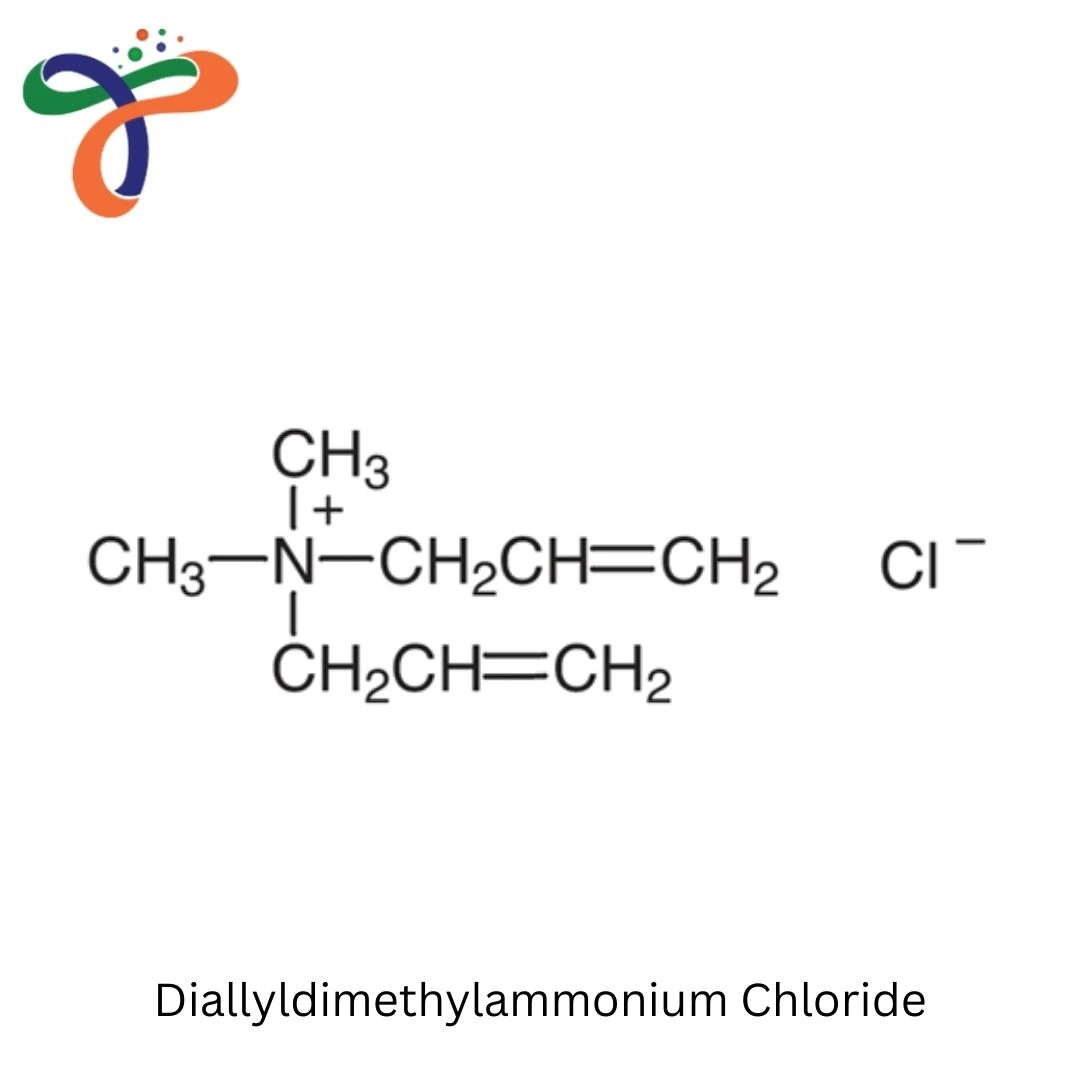
Diallyldimethylammonium Chloride (commonly known as DADMAC) is a highly versatile industrial quaternary ammonium compound, typically supplied as a clear to pale yellow aqueous solution with controlled concentration for polymer and water treatment applications. It has two allyl groups that are attached to a dimethylammonium central, making it a cationic reactive monomer.
As an industrial chemical, Diallyldimethylammonium Chloride is widely used in water treatment chemicals, cationic polymer manufacturing, paper processing, textile auxiliaries, oilfield chemicals, and specialty industrial formulations, where strong cationic charge density and polymerisation capability are essential.
Applications of Diallyldimethylammonium Chloride
Water Treatment & Flocculant Systems
Diallyldimethylammonium Chloride is widely used in the production of cationic polyelectrolytes and flocculants for water and wastewater treatment. It is commonly processed alongside Poly(Diallyldimethylammonium Chloride), Polyelectrolyte, and Ferric Chloride Liquid in structured industrial treatment systems.
Paper & Textile Processing
In paper manufacturing, DADMAC-based polymers improve retention, drainage, and paper strength properties. In textile processing, it enhances dye fixation and fabric performance.
Oilfield & Specialty Chemical Applications
Diallyldimethylammonium Chloride is applied in oilfield chemicals, antistatic agents, and specialty polymer systems, where strong cationic functionality supports performance under demanding industrial conditions.
Safety & Handling Guidelines
- Store in a cool, dry, well-ventilated area
- Make sure containers are tightly sealed and clearly labeled
- Avoid inhaling vapours and mist
- Avoid contact with the eyes and skin
- Handle under controlled industrial conditions
- Dispose of waste and packaging according to regulatory guidelines
Where to Buy Diallyldimethylammonium Chloride?
Diallyldimethylammonium Chloride Manufacturer
Diallyldimethylammonium Chloride is manufactured for industrial-grade applications requiring controlled monomer purity, stable aqueous concentration, and reliable performance in polymer industries.
Diallyldimethylammonium Chloride Supplier & Distributor
Diallyldimethylammonium Chloride is supplied in bulk and industrial packaging formats for manufacturers requiring dependable quality and regulated handling. Buy Diallyldimethylammonium Chloride from Chemicalbull Pvt. Ltd., a reputable industrial chemicals distributor and supplier in India, which provides customers with dependable sources and efficient logistics.
MSDS for Diallyldimethylammonium Chloride
The MSDS for Diallyldimethylammonium Chloride provides detailed information on hazards, safe handling practices, storage conditions, exposure controls, and emergency response procedures. Always review the MSDS before industrial use.
Frequently Asked Questions (FAQs)
-
What is the chemical formula of Diallyldimethylammonium Chloride?
The chemical formula of Diallyldimethylammonium Chloride is C₈H₁₆ClN. -
What is the structure of Diallyldimethylammonium Chloride?
Diallyldimethylammonium Chloride consists of a quaternary ammonium centre bonded to two allyl groups and two methyl groups, paired with a chloride ion, forming a cationic monomer structure. -
What is Diallyldimethylammonium Chloride used for?
Diallyldimethylammonium Chloride is used in water treatment polymers, flocculants, paper processing chemicals, textile auxiliaries, and specialty cationic formulations. -
Is Diallyldimethylammonium Chloride water-soluble?
Yes, it is highly soluble in water, typically supplied as an aqueous solution for industrial use. -
Is Diallyldimethylammonium Chloride hazardous?
It should be handled according to industrial safety guidelines, as concentrated solutions may cause irritation. Always follow MSDS recommendations.
ChemicalBull supplies Diallyldimethylammonium Chloride across India, serving customers in Andhra Pradesh, Arunachal Pradesh, Assam, Bihar, Chhattisgarh, Goa, Gujarat, Haryana, Himachal Pradesh, Jharkhand, Karnataka, Kerala, Madhya Pradesh, Maharashtra, Manipur, Meghalaya, Mizoram, Nagaland, Odisha, Punjab, Rajasthan, Sikkim, Tamil Nadu, Telangana, Tripura, Uttar Pradesh, Uttarakhand, and West Bengal, as well as the Union Territories of Andaman & Nicobar Islands, Chandigarh, Dadra & Nagar Haveli and Daman & Diu, Delhi, Jammu & Kashmir, Ladakh, Lakshadweep, and Puducherry. We serve pharmaceutical, chemical, research, academic, laboratory, manufacturing, and industrial customers with reliable nationwide delivery.