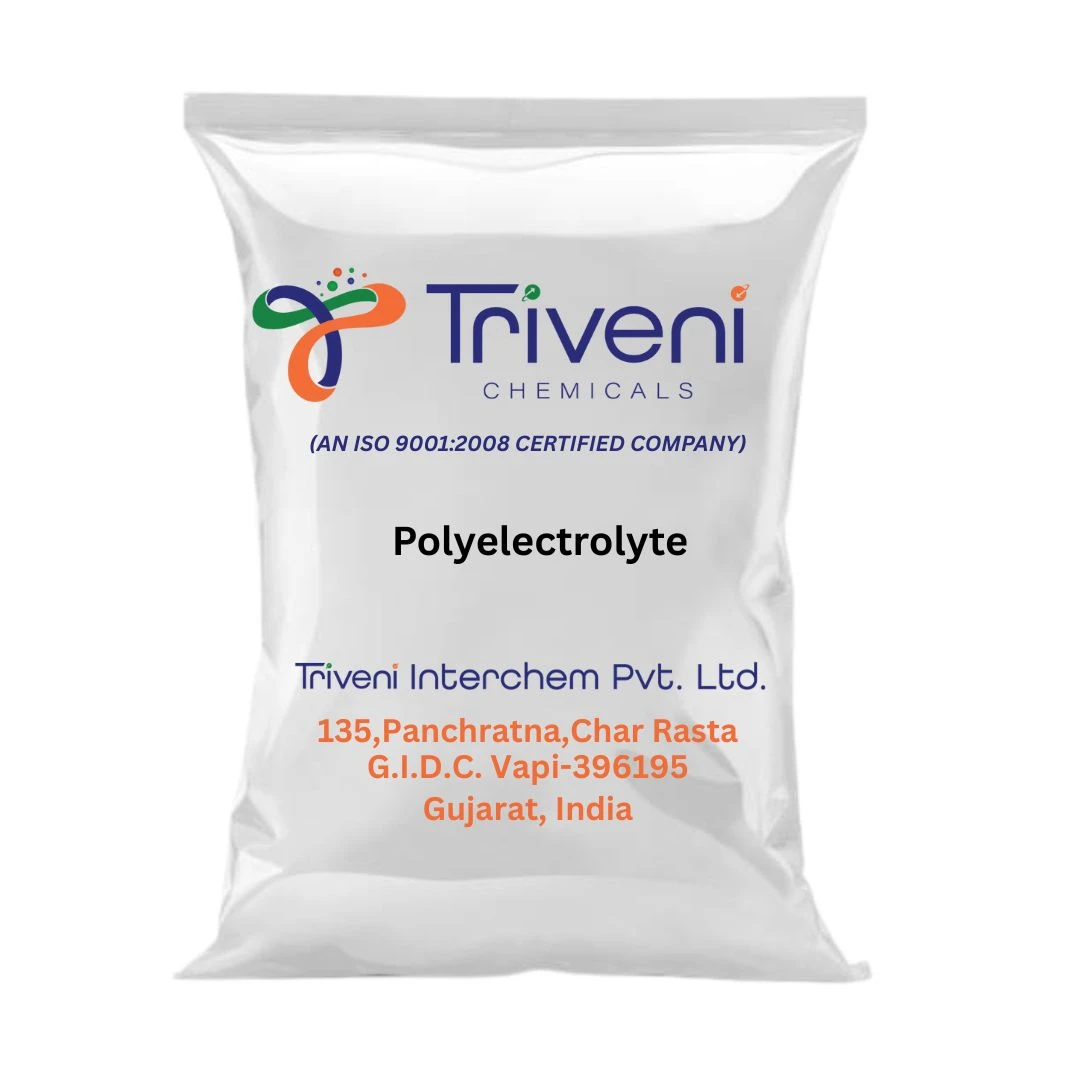
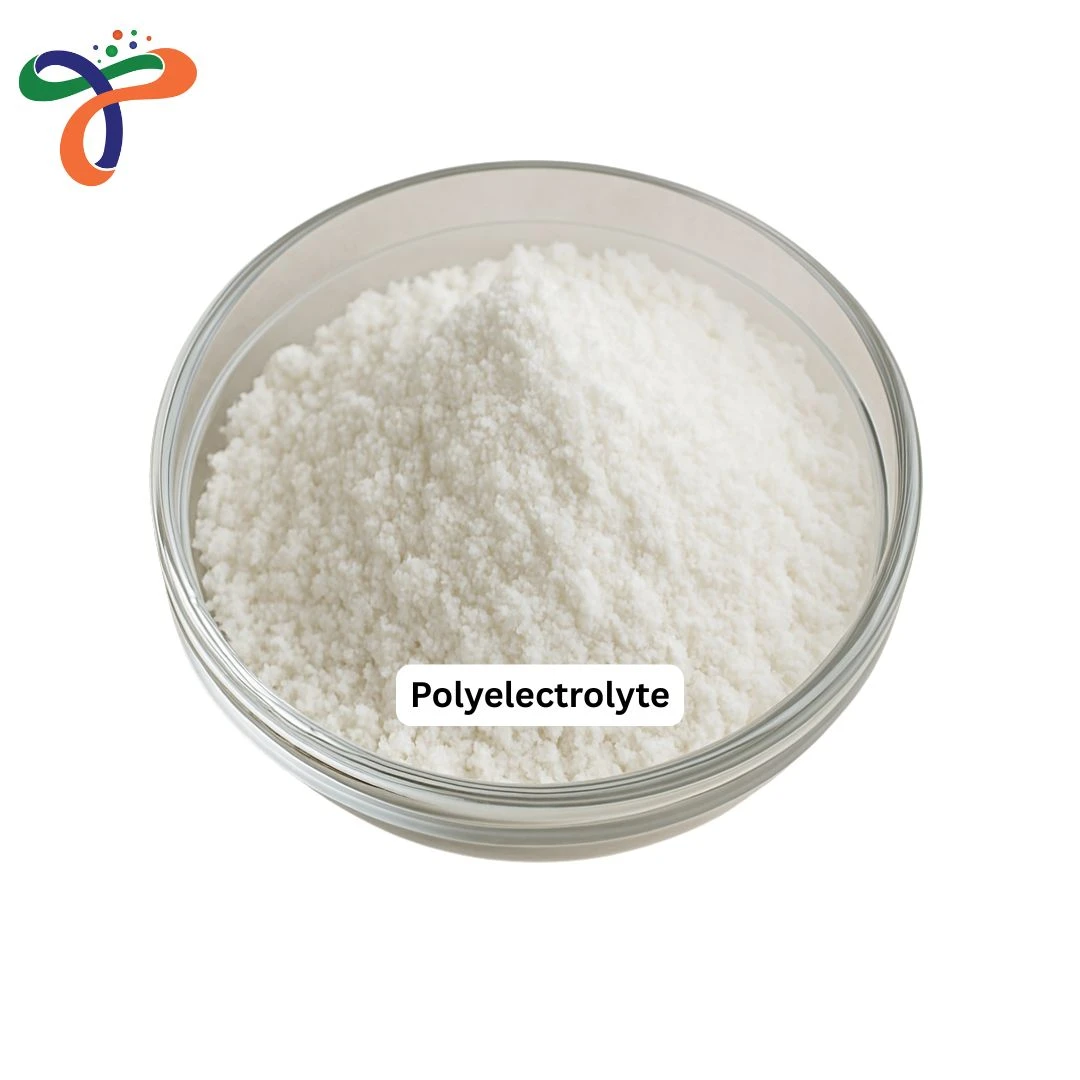
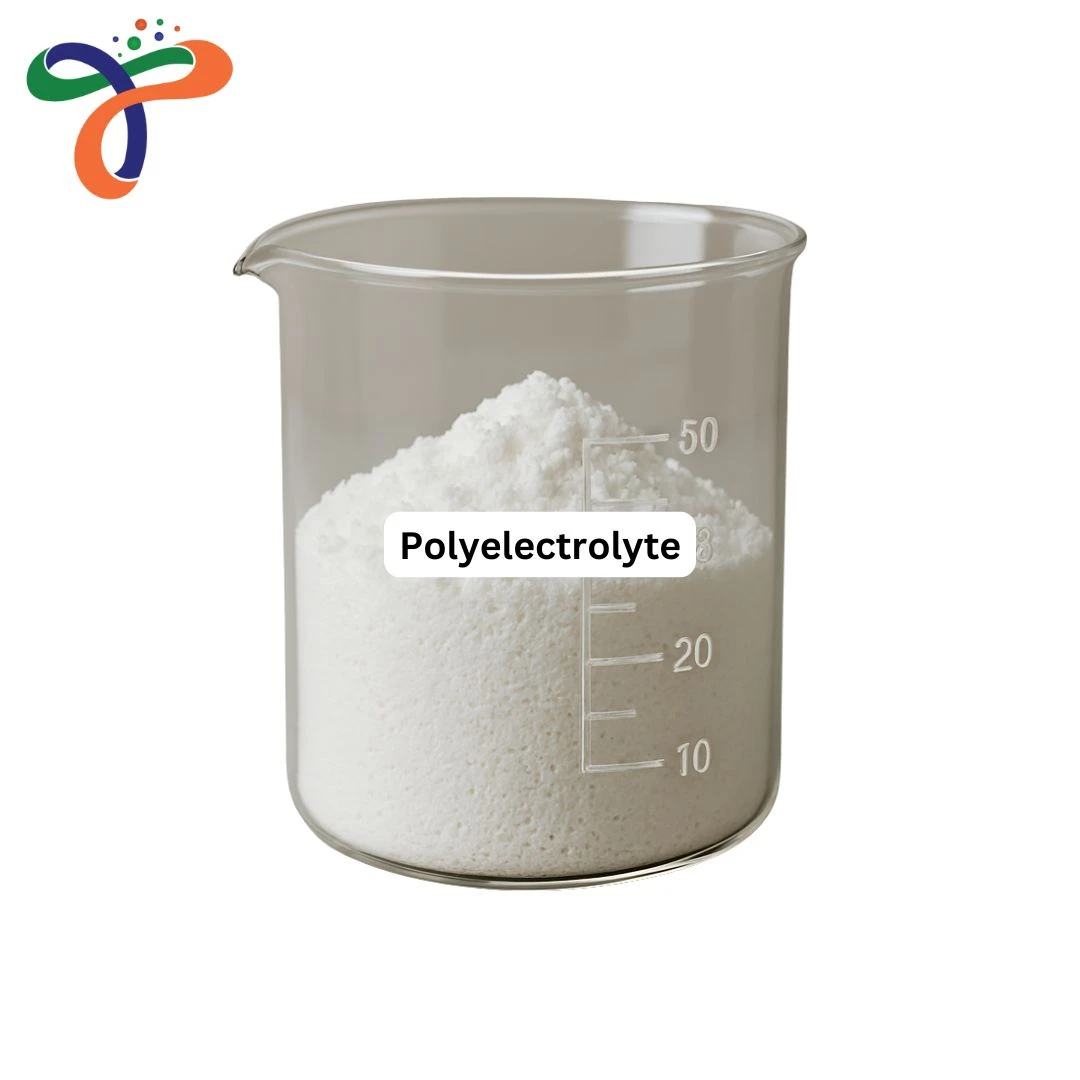
Polyelectrolyte
Form :
Powder
Molecular Weight :
150000 G/mol
Boiling Point :
350 °c
Melting Point :
180 °c
Flash Point :
250 °c
Solubility :
Water-soluble; Soluble In Polar Solvents; Insoluble In Nonpolar Solvents
Description :
Overview of Polyelectrolyte
Polyelectrolyte (including anionic, cationic, and non-ionic types) is a high-molecular-weight water-soluble polymer used as a flocculant and coagulant aid in water and wastewater treatment. Polyelectrolyte powder is the most common form for easy handling and dosing.
Polyelectrolyte formula: Typically based on polyacrylamide (PAM) derivatives. Polyelectrolyte in water treatment: Enhances particle aggregation and sedimentation.
Applications of Polyelectrolyte
Wastewater and Water Treatment
-
Polyelectrolyte used in wastewater treatment: Sludge dewatering, clarification, and turbidity reduction
-
Polyelectrolyte powder: Effective for primary/secondary/tertiary treatment in ETPs and STPs
Industrial Sectors
-
Paper and pulp mining and textiles: Retention drainage and solid-liquid separation
-
Sometimes, it is combined with fillers such as Calcite Powder to provide greater clarity in processing
Safety and Handling Guidelines
-
Protect yourself with goggles and gloves, and wear appropriate clothes
-
Do not inhale dust; take respiratory protection if necessary.
-
Stop contact with skin for prolonged periods and eye exposure to
-
Keep in sealed, dry containers in order to avoid caking.
-
Be sure to follow MSDS guidelines as well as standard safety procedures
Where to Buy Polyelectrolyte
Polyelectrolyte Manufacturer
Polyelectrolyte Supplier & Distributor
-
Bulk and export-grade anionic/cationic types with COA, TDS & MSDS
Polyelectrolyte MSDS
Provides details on hazards, handling, storage, and emergency precautions
Frequently Asked Questions (FAQs)
-
What is a polyelectrolyte used in wastewater treatment?
As a flocculant to aggregate suspended solids, improve sedimentation, and reduce COD/BOD in effluents. -
What are the types of polyelectrolyte powder?
Anionic for inorganic solids, cationic for organic matter, and non-ionic for general use in water treatment. -
How is polyelectrolyte powder applied in industry?
Dissolved in water and dosed for clarification, dewatering, and solid separation in various sectors.
ChemicalBull supplies Polyelectrolyte across India, serving customers in Andhra Pradesh, Arunachal Pradesh, Assam, Bihar, Chhattisgarh, Goa, Gujarat, Haryana, Himachal Pradesh, Jharkhand, Karnataka, Kerala, Madhya Pradesh, Maharashtra, Manipur, Meghalaya, Mizoram, Nagaland, Odisha, Punjab, Rajasthan, Sikkim, Tamil Nadu, Telangana, Tripura, Uttar Pradesh, Uttarakhand, and West Bengal, as well as the Union Territories of Andaman & Nicobar Islands, Chandigarh, Dadra & Nagar Haveli and Daman & Diu, Delhi, Jammu & Kashmir, Ladakh, Lakshadweep, and Puducherry. We serve pharmaceutical, chemical, research, academic, laboratory, manufacturing, and industrial customers with reliable nationwide delivery.