Busulfan | 55-98-1
Cas No :
55-98-1
Form :
Solid
Molecular Weight :
246.30 G/mol
Molecular Formula :
C6H14O6S2
Boiling Point :
320 °c
Melting Point :
128 °c
Flash Point :
150 °c
Solubility :
Slightly Soluble In Water; Soluble In Methanol And Dmso
Description :
Overview of Busulfan
Busulfan is a pharmaceutical-grade antineoplastic agent that is extensively utilized in oncology and hematology. Busulfan is an established chemotherapeutic drug recognized for its alkylating capacity and its predictable therapeutic behavior under medically controlled use.
In the field of pharmaceutical chemistry, Busulfan is admired as a conditioning agent in protocols prior to bone marrow or stem cell transplantation. Its definite structural structure, and its unchanging pharmacological actions make it ideal for clinical situations where precise dosage and precise quality control are crucial.
As a pharmaceutical chemical, Busulfan plays a vital role in cancer treatment protocols and advanced therapeutic procedures.
Applications of Busulfan
Oncology & Chemotherapy Use
Busulfan is primarily used in the treatment of certain blood disorders and cancers, including chronic myelogenous leukemia. It is also widely used as part of conditioning regimens before hematopoietic stem cell transplantation.
In chemotherapy formulations, Busulfan is often evaluated alongside agents such as Methotrexate and Cyclophosphamide in combination therapy planning.
Pharmaceutical Chemistry & Drug Development
In pharmaceutical chemistry, Busulfan is recognised as an alkylating agent that works by interfering with DNA replication. Its controlled reactivity makes it suitable for carefully designed therapeutic regimens.
It is also studied in comparison with other cytotoxic agents, such as Melphalan, in oncology research and formulation development.
Clinical & Hospital-Based Pharmaceutical Use
Busulfan is used in hospital settings where specialised handling, dosing accuracy, and patient monitoring are required. It is supplied in formulations suitable for oral and injectable administration under strict medical supervision.
Safety & Handling Guidelines
-
Store in a cool, humid, dry and well-controlled space
-
Make sure containers are tightly sealed and clearly labeled
-
Beware of inhaling dust or vapours
-
Avoid contact with the skin or eyes
-
Use protective gloves, goggles, and appropriate pharmaceutical-grade protective clothing
-
Handle under strictly controlled pharmaceutical and hospital conditions
-
Dispose of waste according to hazardous pharmaceutical waste regulations
Where to Buy Busulfan?
Busulfan Manufacturer
Busulfan is manufactured for pharmaceutical applications where strict quality, potency control, and conformity with standards for oncology drugs are vital.
Busulfan Supplier & Distributor
Busulfan is supplied in pharmaceutical-grade packaging for hospitals, oncology centres, and formulation manufacturers. As a pharmaceutical chemicals supplier and distributor, Chemicalbull Pvt. Ltd. supports customers with reliable sourcing and standard documentation.
MSDS for Busulfan
The MSDS for Busulfan provides detailed information on hazards, safe handling practices, storage conditions, exposure controls, first-aid measures, and emergency response procedures. Always review the MSDS before pharmaceutical use.
Frequently Asked Questions (FAQs)
-
Is Busulfan an alkylating agent?
Yes, Busulfan is classified as an alkylating agent. It works by forming cross-links in DNA, which inhibits cell replication and leads to cell death. -
What is another name for Busulfan?
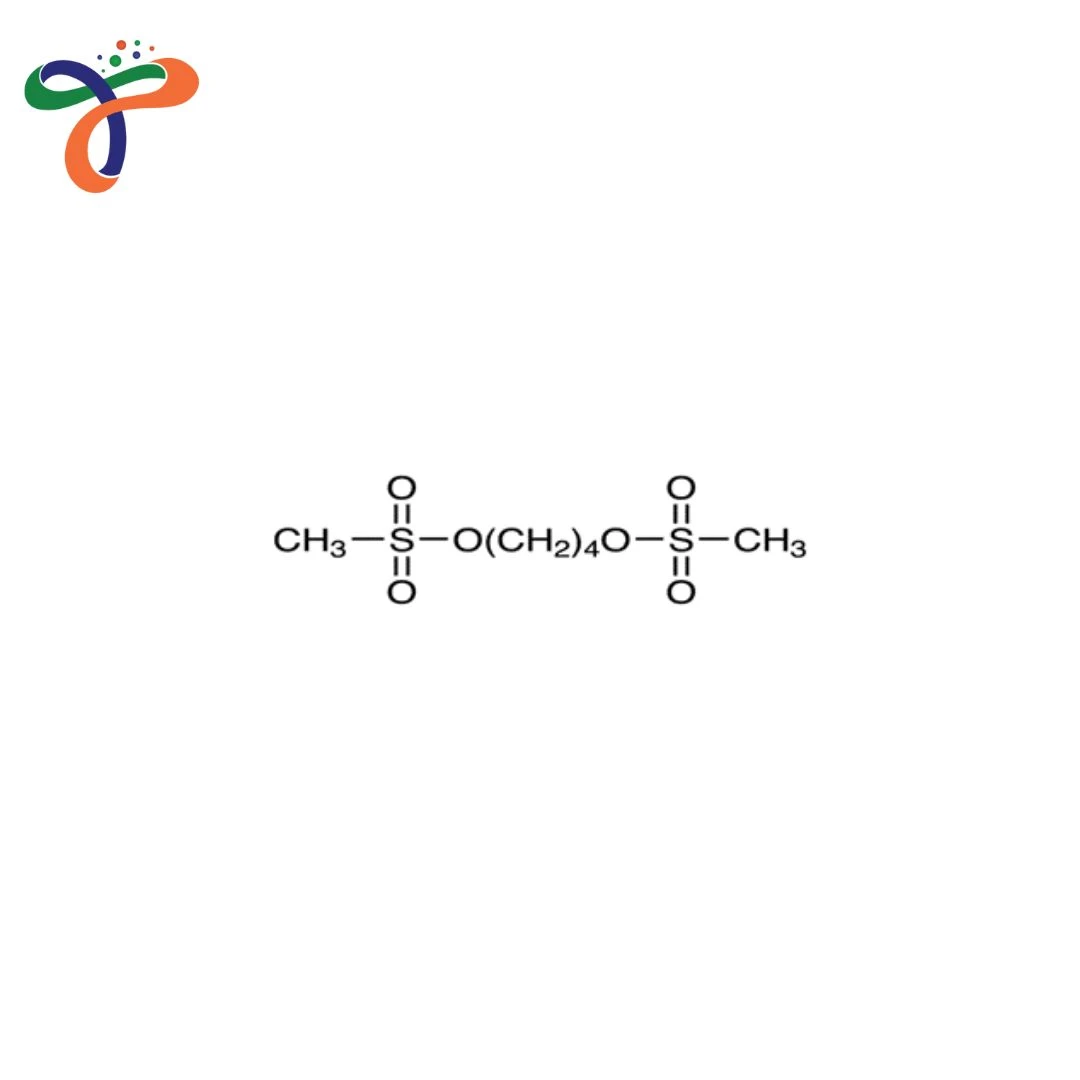
Busulfan is also known by its chemical name 1,4-butanediol dimethanesulfonate. -
What is the structure of Busulfan?
Busulfan structure consists of a four-carbon alkyl chain with two methanesulfonate groups, which are responsible for its alkylating activity. -
How is Busulfan synthesised?
Busulfan synthesis typically involves the reaction of 1,4-butanediol with methanesulfonyl chloride under controlled conditions to form the dimethanesulfonate ester. -
What are the side effects of Busulfan?
Busulfan side effects may include bone marrow suppression, increased infection risk, gastrointestinal disturbances, and other dose-related toxicities, requiring strict medical supervision.
ChemicalBull supplies Busulfan across India, serving customers in Andhra Pradesh, Arunachal Pradesh, Assam, Bihar, Chhattisgarh, Goa, Gujarat, Haryana, Himachal Pradesh, Jharkhand, Karnataka, Kerala, Madhya Pradesh, Maharashtra, Manipur, Meghalaya, Mizoram, Nagaland, Odisha, Punjab, Rajasthan, Sikkim, Tamil Nadu, Telangana, Tripura, Uttar Pradesh, Uttarakhand, and West Bengal, as well as the Union Territories of Andaman & Nicobar Islands, Chandigarh, Dadra & Nagar Haveli and Daman & Diu, Delhi, Jammu & Kashmir, Ladakh, Lakshadweep, and Puducherry. We serve pharmaceutical, chemical, research, academic, laboratory, manufacturing, and industrial customers with reliable nationwide delivery.